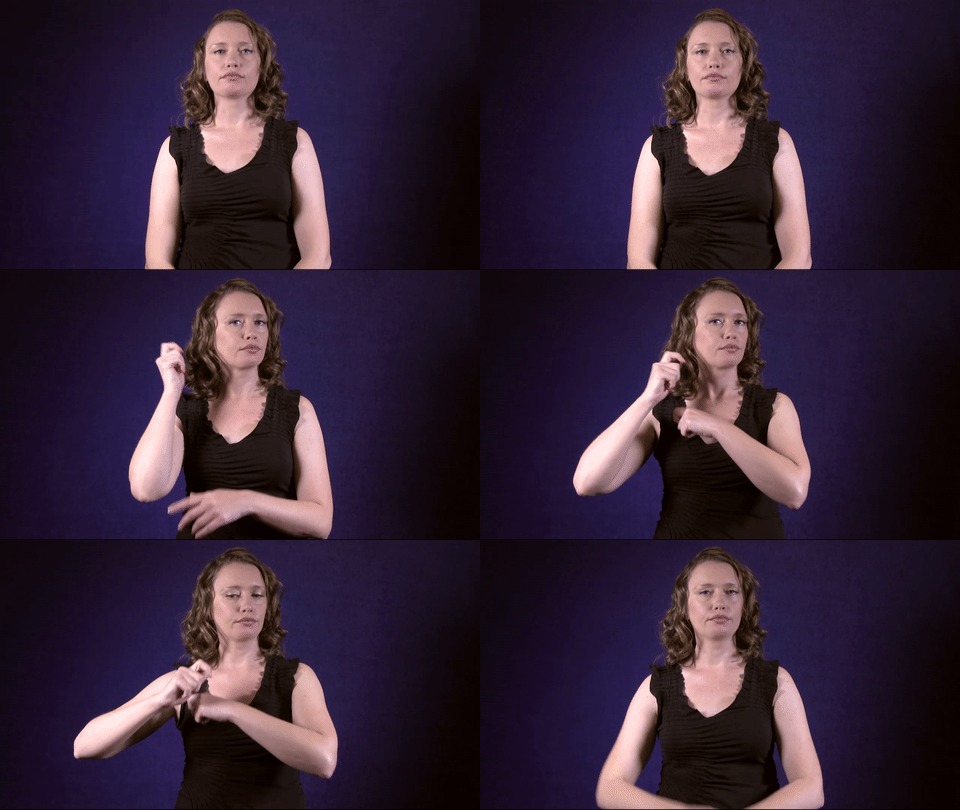
Definition: To weave hair into a braid.
Sign for BRAID in ASL

Practice Activities:
A great way to begin practicing the sign for BRAID in ASL is to isolate the movement and repeat it in front of a mirror. Focus on keeping your handshape and movement consistent, mimicking the weaving or interlocking motion that represents braiding hair. Repeating this sign slowly and then at regular conversational speed helps build muscle memory.
Once you’re confident with the isolated sign for BRAID in ASL, start incorporating it into simple sentence practice. For example, sign “I braid my hair” or “She loves to braid.” Try changing the subject and object of the sentence to get comfortable using the sign with different pronouns and nouns like “her” or “sister.” Using a mirror during this exercise helps you monitor your facial expressions and clarity.
Try combining the sign for BRAID in ASL with other common signs related to grooming or daily activities. Practice linking signs like HAIR, COMB, BRUSH, or STYLE to create descriptions such as “Every morning, I braid my daughter’s hair.” This promotes fluid transition between signs and helps expand useful vocabulary around the theme.
Storytelling is a great way to deepen your understanding and recall. Make up a story about someone preparing for a special event and braiding their hair. Use signs like DRESS, BEAUTIFUL, MORNING, and MOM to make it more detailed. Practice with a partner or record yourself for review.
If you’re working with a partner, take turns being the âdresserâ and the âstylist.â One person will ask âCan you braid my hair?â and the other responds using the correct sign. Switch roles for variety and reinforcement. Add timing challenges for funâhow many times can you correctly use the sign for BRAID in ASL in a one-minute conversation?
Finally, watch videos or clips of people using the sign in context. Pause and mimic each use, then try to create a short narrative or description of the interaction using the same vocabulary, including the sign for BRAID in ASL.
Cultural Context:
In American Sign Language, appearance and hair-related signs carry rich cultural value, and the sign for braid in ASL is no exception. Braiding hair is deeply rooted in many cultures across the world, symbolizing tradition, identity, and community. For Deaf individuals, explaining hairstyles like braids through signs is essential in expressing daily routines and style.
The sign for braid in ASL often mimics the physical action of weaving hair together, making the meaning intuitive for visual learners. This visual connection is important in Deaf culture, where clear communication supports self-expression in personal grooming and appearance. Understanding how to use the sign naturally in conversation helps build stronger connections in the community.
The term braid can reflect more than just a hairstyle. In many cultures, especially among Indigenous, African, and Black communities, braided hair carries historical and communal significance. Learning the sign for braid in ASL opens the door to respectful cultural discussions within the Deaf community when talking about heritage and identity â .
Hairstyles are often a key part of storytelling, particularly in social and educational settings in ASL. Using the sign for braid in ASL to describe a character in a story, or to talk about a personâs appearance, brings depth and visual flair to communication. It allows signers to honor both cultural background and individual style.
Braiding also represents care and interpersonal relationships, such as when a parent braids a childâs hair or when friends braid each otherâs hair at social gatherings. Using the sign for braid in ASL during conversations about these moments enhances emotional expression. It reminds us that ASL is not just about wordsâit’s about feelings and shared experiences .
In Deaf events and community spaces, hairstyles are often noticed and appreciated, so having vocabulary like the sign for braid in ASL supports more meaningful exchanges. Whether someone is describing their own appearance or commenting on a friendâs hairstyle, this sign fits naturally into everyday dialogue. It enriches communication while celebrating diversity.
Teaching the sign for braid in ASL is also important in schools and programs focused on ASL instruction and inclusive education. Children and students learn to describe their hairstyles and understand others, promoting both linguistic and cultural fluency. Helping young signers express themselves accurately through ASL signs like braid fosters a positive environment for growth.
As ASL continues to evolve and reflect diverse experiences, the sign for braid in ASL will remain a valuable part of the vocabulary. It supports inclusive storytelling, self-identity, and
Extended Definition:
The sign for braid in ASL is a visually descriptive sign that mimics the weaving motion of hair strands. This sign is typically performed by using the fingers to represent the overlapping patterns of hair being braided. It is a common sign used when discussing hairstyles, grooming routines, or describing someoneâs physical appearance.
In American Sign Language, the sign for braid captures the concept of intertwining strands, similar to how braiding works in real life. This sign can vary slightly depending on regional usage or the context in which itâs used. However, the general structure remains recognizable across most signing communities.
The sign for braid in ASL is often used when talking about different types of hairstyles, including traditional braids, French braids, or cornrows. Whether you’re at the hair salon, chatting with friends, or giving directions about styling, this sign helps make the conversation clear and expressive. It plays a vital role in daily communication about personal care and grooming.
Understanding the sign for braid in ASL also helps you become more fluent in describing textures and patterns. Since hair braiding can carry cultural, personal, or stylistic significance, the ability to sign about it adds richness and depth to conversations. You might use this sign when describing how someone looks or retelling an event that involved preparing for a celebration or ceremony.
Learning the proper handshape and movement when signing braid ensures that your meaning is clear and culturally respectful. ASL is a visual language with its own grammar and rules, and mimicking everyday actions like braiding brings contextual depth to your signs. Practicing this sign helps reinforce other vocabulary related to hair, beauty, and appearance.
When teaching others the sign for braid in ASL, it’s helpful to reference real-life examples or use classifiers to show the length or complexity of the braid. This can enhance understanding and give more detail about the specific style being described. Whether youâre a student, teacher, or interpreter, mastering this sign expands your expressive toolkit.
The sign for braid in ASL is also useful in storytelling, especially in narratives involving characters, traditions, or identity. Many childrenâs books and folktales include references to hairstyles, and knowing how to sign braid allows for a fuller interpretation. This is especially meaningful in settings like Deaf storytelling sessions or educational environments.
Some people might also use this sign alongside others to describe the process of braiding or unbraiding hair. You can combine the sign for braid with signs for hair, comb, or finish to create fluid, expressive sentences.
Synonyms: plait, weave, twist, interlace, entwine
Educational resources: Find related learning materials in our course bank!
Want more? Check out some of our popular learning activities on the homepage!
Need to look up a sign? Use our highly rated dictionary: https://aslinteractive.com/best-asl-dictionary/
Follow us on tiktok: https://www.tiktok.com/@aslinteractive. More social media links at the bottom of this page!
Long-tail Keywords: what is the sign for braid in ASL, how do you sign braid in American Sign Language, how to say braid in ASL
Categories:
tags: Clothing, Hair, Hairstyles, Beauty, Language Learning
Parameters
*Handshape*:
The handshape for the sign for BRAID in ASL involves using both hands in a modified claw or curved 5 handshape. The fingers are spread slightly and bent as though grasping sections of hair. Each hand alternates moving downward while mimicking the motion of interweaving strands. This motion effectively represents the physical act of braiding.
The sign for BRAID in ASL visually imitates the process of weaving multiple hair strands together. The curved finger positioning plays a crucial role in resembling the shape and motion of braiding. This handshape choice helps clearly communicate the concept through movement and structure.
*Palm Orientation*:
The palm orientation for the sign for BRAID in ASL typically begins with both hands in an open 5-handshape, palms facing downward or slightly inward. As you mimic the braiding motion, the palms alternate and shift orientation slightly toward each other in a crossing pattern.
During the motion, the palm orientation may briefly switch to sideways or inward-facing as the hands “weave” together. This mimics the intertwining strands, reinforcing the concept behind the sign for BRAID in ASL.
*Location*:
The sign for BRAID in ASL is typically produced in front of the head or slightly to the side near the scalp area. Since braiding hair involves movement along the head, this location helps show where braids are usually formed. The hands mimic the overlapping strands of hair, usually near the side of the head.
Using the appropriate head-level location enhances the clarity of the sign for BRAID in ASL by visually connecting it with the actual action of braiding. This placement makes the concept immediately recognizable and relatable within context.
*Movement*:
To produce the sign for BRAID in ASL, start with both hands in clawed 5-handshapes, positioned near the top sides of the head, as if grasping sections of hair. The hands then move downward while alternating in front and behind each other in a crisscross pattern, mimicking the weaving motion of braiding hair.
The sign for BRAID in ASL visually resembles the interlacing of hair strands. The motion should be fluid and slightly curved, emphasizing the twist and weave typical in braiding. ââïž
*Non-Manual Signals*:
Facial expression plays a key role when using the sign for BRAID in ASL. The signer typically displays a concentrated or slightly focused expression, as if carefully weaving strands together. Slight eyebrow furrowing and narrowed eyes help enhance the visual imagery of intertwining hair.
The sign for BRAID in ASL is often paired with eye gaze following the hands, emphasizing the braiding motion. Mouth morphemes may mimic effort or precision, such as slight pursing of lips or a soft âmmmâ sound to add realistic context.
*Prosody, Dominant/Non-Dominant Hand*:
The sign for braid in ASL uses both hands to mimic the motion of weaving or intertwining strands of hair. The dominant hand typically performs the shaping action while the non-dominant hand steadies the gesture near the scalp or side of the head.
To produce the sign for braid in ASL, the dominant hand shows a repeated crossing motion over imaginary hair strands. The non-dominant hand may follow or remain stationary to support the concept of braiding. This motion resembles the visual structure of a braid and clearly conveys the intended meaning.
Tips for Beginners:
The sign for BRAID in ASL can be a bit tricky at first because it requires a specific hand movement that mimics the braiding process. To begin, be sure you understand the concept of a braid and imagine how the hair intertwines. This mental image will help bring clarity to your hand movements and make your sign look more natural and fluid.
A helpful way to master the sign for BRAID in ASL is to practice in front of a mirror. Watching your hand shapes and movements allows you to self-correct and build muscle memory. If you’re mimicking the act of braiding hair, use both hands to alternate visible weaving motions downwards, as if sectioning and crossing strands. This sign can vary slightly based on region or whether you are describing a singular braid or multiple ones, so observing native signers can improve your accuracy.
One common challenge for beginners is making the movement too stiff or mechanical. Try to keep your movements relaxed and deliberate rather than rushed. It helps to say the word silently or visualize actual braiding as you’re signingâthis connects the motion to its meaning.
Finger dexterity plays an important role, so if your fingers feel clumsy at first, donât worry. Regular warm-up exercises like finger spreads and wrist rolls can make a big difference. Also, if you’re describing something specific like a French braid or cornrows, you might need to add descriptive signs before or after the main braid sign for clarity.
Consistency is crucialâpractice the sign for BRAID in ASL daily, especially in context such as conversations about hairstyles or grooming. The more varied your practice situations, the more natural the sign becomes in everyday use. Don’t hesitate to ask fluent signers for feedback to help refine your technique and build confidence.
Connections to Other topics:
The sign for BRAID in ASL ties into various vocabulary that deals with hairstyles, appearance, and grooming. Itâs connected conceptually to signs like HAIR, STYLE, COMB, BRUSH, and HAIRSTYLE, because they all describe how a person can modify or maintain their hair. Learning the sign for BRAID in ASL supports broader conversations about cultural identity, personal expression, and daily routines.
This sign can also be related to compound descriptors in ASL. For instance, someone might use the sign for HAIR followed by the sign for BRAID to specify HAIR + BRAIDED STYLE. This is especially helpful in describing different kinds of braiding techniques such as two-strand, three-strand, or cornrows, sometimes clarified by using classifiers or further contextual details.
The sign for BRAID in ASL may appear alongside signs for COLOR, such as BLACK, BROWN, or BLONDE, when discussing the appearance of braids. It can also be mixed into phrases when talking about getting ready, such as GET-UP, DRESS, or BEAUTIFUL, to indicate part of a grooming routine. This makes it practical when conversing about events, traditions, or routines tied to hair preparation.
Representations of more complex hairstyles might involve classifiers showing the shape or direction of the braid, especially in educational or storytelling contexts. The classifier “CL:3” or “CL:1” can sometimes represent long braided hair hanging down. These connections help learners visualize intricate hairstyles, enhancing spatial thinking in ASL.
Additionally, culture-specific signs may come into play when describing traditional or ceremonial braiding, especially from Indigenous, African-American, or island communities. Understanding the sign for BRAID in ASL opens pathways for richer cultural exchange, personal storytelling, and fashion discussion. It also prepares learners to discuss hair in visual detail, an important aspect of representation in the Deaf community. â
Summary:
The sign for BRAID in ASL is a beautiful and expressive motion that mirrors the action of intertwining strands of hair. It is both iconographic and intuitive, offering a clear visual of the concept it represents.
To perform the sign for BRAID in ASL, dominant hand fingers usually mimic the process of crossing or twisting imaginary strands. Hands may use an alternating grasping or pulling motion near the side of the head or down along the back, depending on how long the braid is being depicted.
This sign is often performed with two or three pinching motions, where the thumb and index finger of one or both hands simulate grabbing and pulling down hair sections. Facial expressions help reinforce the idea, especially if the braid is tight, messy, or decorative.
Regional variations of the sign for BRAID in ASL exist, with some communities emphasizing different aspects of the braiding process. In these areas, some users might fingerspell B-R-A-I-D, especially in more formal or unfamiliar contexts.
The fingerspelled version tends to appear more in storytelling, descriptive language, or when introducing specific cultural practices. For example, when referencing a cultural hair braiding technique unique to an ethnic group, fingerspelling can show respect and specificity.
Interestingly, the sign for BRAID in ASL can also be adapted for metaphoric or figurative use. It often shows up in poetic ASL storytelling to represent concepts like intertwining lives, community connections, or intergenerational wisdom.
ASL linguistics scholars note that the depiction of physical actions, such as braiding, falls under highly iconic signs. These signs demonstrate a spatial-temporal relationship between movement and meaning, a hallmark of signed languages.
Braiding as an act has strong cultural implications. In many Indigenous and African cultures, braids symbolize identity, belonging, history, or social role. The sign for BRAID in ASL can, therefore, carry culturally significant weight when used in storytelling.
When exploring the grammatical usage of the sign for BRAID in ASL, it functions primarily as a verb. For example, phrases such as âbraid your hairâ or âshe braids her daughterâs hairâ require verb structure and directional signing.
The directional nature in ASL can be applied when indicating who is braiding whom. Signers can modify the direction or location of the sign for BRAID to show subject-object relationships built into verb morphology.
This dynamic aspect is one of the strengths of ASL verbs; it reduces the need for pronouns and clarifies action efficiently. With the sign for BRAID, signing toward oneself or another informs the viewer of the person performing the action.
Some users also accompany the sign for BRAID with classifier constructions. Classifiers in ASL serve as building blocks for describing the texture, length, or number of braids in a detailed visual-spatial manner.
For example, a signer may use a three-finger classifier movement down the side of the head to depict traditional three-strand braids. They may also tilt their hands or include facial shifts to suggest complex braided patterns or decorative styles like beads or ribbons.
The tactile quality of the sign for BRAID supports its use in teaching. Educators and language learners often find this sign accessible because of its visual mimicry of the tactile action it describes.
Applied linguistics taps into such signs as teaching tools for cognitive inference. Students learning ASL more easily remember signs like BRAID because they tie directly into physical experiences and muscle memory.
Non-manual markers are crucial to correctly signing the concept. A relaxed or gentle facial expression can indicate a soft, caring braiding of a childâs hair, while a tense or focused look can suggest precision or tight cornrows.
In Deaf culture, hair and how it’s styled can serve as a form of identity expression. The sign for BRAID in ASL can be used when describing cultural events, expressions of fashion, or even religious practices involving hair preparation.
Hair braiding ceremonies, such as those in African diasporic traditions, are often shared in ASL narratives told at community gatherings. These stories use the sign for BRAID alongside signs for culture, heritage, and family.
Due to its visual and expressive nature, the sign for BRAID frequently appears in ASL poetry and visual vernacular. These creative genres use ASLâs spatial and facial elements to represent the beauty and complexity of everyday rituals.
In visual storytelling, the act of braiding often unfolds metaphorically to symbolize life paths crossing or histories interwoven. The sign can rhythmically mimic the process of threading through time, connecting generations.
The evolution of this sign illustrates how everyday actions become codified into linguistic usage. Early ASL dictionaries capture versions that reflect the simplicity of form while modern users embellish to match changes in hairstyles and cultural patterns.
Language change in ASL often arises from generational differences and social exposure. Young Deaf individuals influenced by both mainstream and heritage cultures may combine fingerspelling with the sign for BRAID when discussing trends like box
Want more? Check out some of our popular learning activities!
ASL Interactive Resources
ASLInteractive YouTube Channel
Follow us on tiktok: @aslinteractive.com
Follow us on Instagram: aslinteractive
Facebook page: aslinteractive
Facebook group: aslinteractive
LInkedIn: ASL Interactive LLC
Twitter: @ASL_interactive
*Some information on this page is AI-generated. AI can make mistakes. Please check the information.


Responses