Definition: Having fuzzy thinking, feeling scatterbrained or less mentally sharp, or feeling as if you’re in a daze or your thinking is cloudy
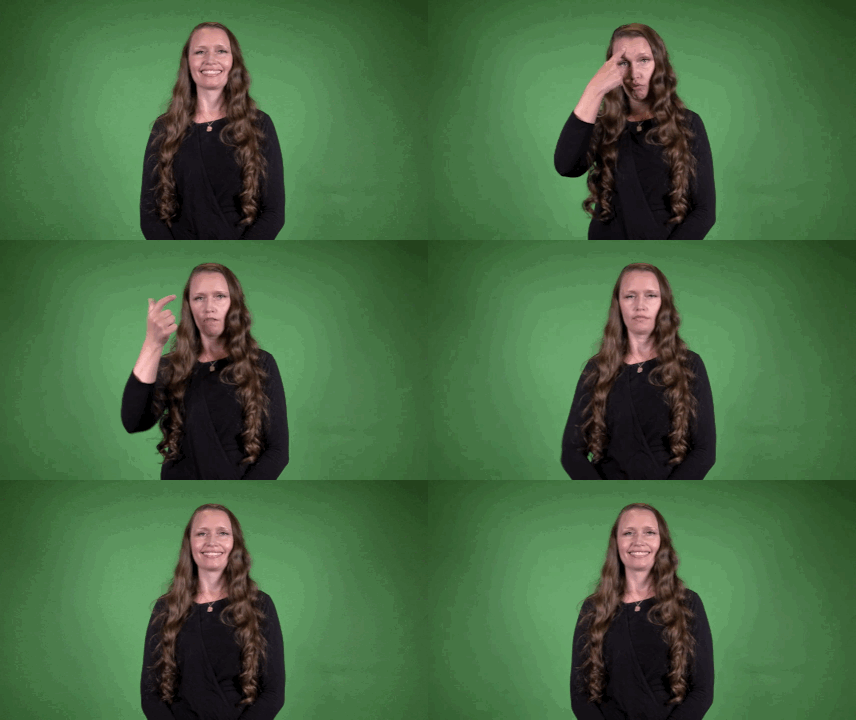
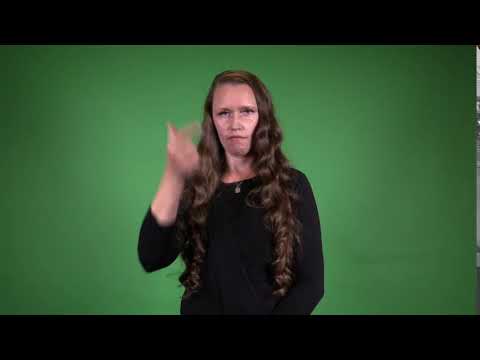
Sign for BRAIN FOG in ASL

Practice Activities:
To practice the sign for BRAIN FOG in ASL, begin by working on the components individually. Start by familiarizing yourself with the sign for BRAIN, which typically uses a tapped motion on the side of the head with the index finger, and then add a gesture representing fog, often shown by fluttering fingers near the head to indicate cloudiness. Repeat the full sign several times in front of a mirror to build muscle memory and smooth transitions.
Next, try using the sign for BRAIN FOG in ASL in short phrases. Practice sentences like âI canât think clearlyâbrain fogâ and âAfter staying up too late, I have brain fog.â Use these phrases during daily routines, like when you wake up or after work, to reinforce the concept linked to real-life situations. Record yourself and evaluate your signing clarity, handshape, and facial expressions.
Create flashcards with different scenarios where the sign for BRAIN FOG in ASL would be applicable. Examples include âwaking up too early,â âbeing sick with a cold,â or âtoo much screen time.â Use these prompt cards to create quick storytelling exercises. Sign two to three sentences describing the moment using the target sign.
Try a partner activity where one person acts out or signs a context, and the other guesses and responds using the sign for BRAIN FOG in ASL. For example, act out being exhausted after exams, and your partner replies with the appropriate sign and a response like âOh no! BRAIN FOG?â This type of interaction builds recognition and fluency.
Wrap up your practice session each time by signing a short story that includes the feeling of mental fuzziness. Include the target sign at least twice to reinforce usage within context. Adding facial expressions to suggest confusion or tiredness will make the meaning of the sign clearer and more appropriate.
Cultural Context:
The sign for brain fog in ASL is a relatively new addition to the evolving vocabulary of American Sign Language. As more people discuss mental health, chronic illness, and post-viral symptoms, the need for a clear sign for brain fog in ASL has grown. Like many signs, it captures not just the words but the shared experiences behind them.
Brain fog is described as a feeling of mental cloudiness, confusion, or lack of clarity. In the Deaf community, conveying such abstract health-related concepts clearly is essential. The sign for brain fog in ASL uses visual and spatial cues to symbolize the idea of a cloudy or unfocused mind, which is crucial for effective communication.
With increased awareness around long COVID, autoimmune disorders, ADHD, and other neurological conditions, more Deaf individuals and interpreters are seeking a sign for brain fog in ASL. It helps describe a state that isnât easy to express with traditional vocabulary. Having a culturally relevant and widely understood sign enhances conversations between Deaf people and health professionals.
American Sign Language is deeply connected to the cultural identity of its users. When new concepts like brain fog become common, ASL grows to include them. The sign for brain fog in ASL reflects how the Deaf community adapts language to talk about invisible but real experiences.
Many signs in ASL emerge from the community itself, not academic institutions. The sign for brain fog in ASL is one such term that has grown organically. It often varies slightly depending on region or personal preference, but itâs gaining traction through social media and community use.
Describing brain fog through ASL is vital for accessibility in both medical and everyday settings. Whether someone is talking about struggling to focus at school, memory lapses at work, or feeling mentally exhausted, the sign for brain fog in ASL makes these discussions possible. As society becomes more inclusive, so do conversations related to cognitive health.
The ASL community relies heavily on visual storytelling. That makes signs like the one for brain fog incredibly effective. The sign uses facial expression along with handshape and movement to fully communicate a mental state, providing a complete picture of the speakerâs experience.
In Deaf spaces, clarity and mutual understanding are central. So when someone uses the sign for brain fog in ASL during a conversation or appointment, it bridges an important gap. It opens the door to the kind of empathy and support thatâs often hard to find when talking about cognitive struggle.
Deaf creators, educators, and healthcare providers play a key role in
Extended Definition:
The sign for brain fog in ASL conveys the feeling of mental cloudiness, confusion, or difficulty thinking clearly. This term is often used to describe a temporary lapse in mental function, common in situations involving fatigue, illness, or stress. In American Sign Language, expressing this concept combines signs that relate to the brain and the visual idea of fog or mental haze.
When signing brain fog in ASL, the communication relies heavily on facial expressions and body language to demonstrate the lack of clarity or confusion a person might feel. This supports the visual and gestural nature of ASL, which brings abstract ideas like brain fog into a more physical and understandable form. Since there is no exact one-word translation for brain fog, the sign is often conceptual and may be adapted depending on how severe or disruptive the mental fog feels.
To show the sign for brain, you may point to the side of your head or use a typical sign indicating the brain or mind. Fog is more metaphorical and usually signed by showing hands moving in a misty or cloudy formation in front of the face. Together, the sign for brain fog in ASL paints a picture of someone whose thoughts are not clear, representing a foggy mental condition.
This expression is especially useful in conversations about health, both mental and physical. People dealing with conditions like long COVID, chronic fatigue syndrome, or insomnia often report experiencing repeated episodes of brain fog. In these contexts, being able to sign brain fog in ASL helps Deaf and hard-of-hearing individuals communicate their experiences accurately during medical consultations or support group conversations.
The use of the sign for brain fog in ASL also shows how flexible and creative ASL can be. New phrases and signs often evolve as people need to describe modern or medical concepts. While there may not be a standard universal sign for brain fog, the combination of signs and expressions makes the concept understandable to fluent ASL users. This fluidity allows authentic and meaningful communication even for newer or non-traditional vocabulary.
For interpreters or ASL learners, knowing how to sign brain fog can enhance fluency and improve interpreting accuracy in healthcare and emotional wellness settings. It’s important to observe how native signers communicate this idea to ensure the expression reflects the intended meaning of disorientation or mental slowdown. Paying close attention to the signerâs tone, speed, and facial grammar gives more context to the sign itself.
Remember that the sign for brain fog in ASL may shift depending on the region or community. Some signers may simplify it
Synonyms: mental cloudiness, cognitive dysfunction, mental fatigue, sluggish thinking, lack of clarity
Educational resources: Find related learning materials in our course bank!
Want more? Check out some of our popular learning activities on the homepage!
Need to look up a sign? Use our highly rated dictionary: https://aslinteractive.com/best-asl-dictionary/
Follow us on tiktok: https://www.tiktok.com/@aslinteractive. More social media links at the bottom of this page!
Long-tail Keywords: what is the ASL sign for brain fog, how to sign brain fog in ASL, brain fog in American Sign Language
Categories:
tags: emotions, health, mental state, language learning, everyday activities
Parameters
*Handshape*:
The handshape for the sign for BRAIN FOG in ASL typically uses a bent “5” handshape. The tips of the fingers are placed near the forehead to represent the mind or brain. Then, the hand moves outward in a twisting or swiping motion, using a loose, foggy gesture to symbolize mental cloudiness.
This visual representation helps convey the feeling of confusion or disorientation. The bent “5” handshape effectively captures the meaning behind the sign for BRAIN FOG in ASL ïž.
*Palm Orientation*:
In the sign for BRAIN FOG in ASL, the dominant hand begins in a flat “O” handshape near the temple with the palm facing inward toward the side of the head, representing the brain. As the movement transitions to represent “fog,” both hands shift to open “5” handshapes with palms angled slightly forward and down, moving across the face in a wavy, clouded motion ïž.
The palm orientation is key in capturing the concept in the sign for BRAIN FOG in ASL, shifting from a focused inward direction to a diffused, outward pattern to express mental cloudiness. Both hands remain relaxed, contributing to the foggy, unclear feeling conveyed in the sign.
*Location*:
The sign for BRAIN FOG in ASL is typically produced near the forehead and upper face area, representing both mental function and confusion. The dominant hand moves in or around the temple, often paired with a wavy or cloud-like motion to indicate a lack of clarity.
This location aligns with where signs relating to thinking or the mind are usually formed. The sign for BRAIN FOG in ASL uses this spatial reference to visually convey the idea of mental cloudiness or sluggishness .
*Movement*:
To show the sign for brain fog in ASL, start by touching the side of your forehead lightly with the tips of your dominant hand fingers, representing âbrain.â Then, proceed to move both hands in front of your face, open and slightly spread, making small, circular, cloud-like motions to suggest a hazy or foggy mental state.
This motion mimics the visual of fog clouding the head, effectively combining the concepts in the sign for brain fog in ASL. Add a slight furrowing of the brow to visually reinforce mental confusion.
*Non-Manual Signals*:
The non-manual signals for the sign for BRAIN FOG in ASL include a slightly furrowed brow and a dazed or unfocused facial expression . The eyes may blink slowly or seem to scan without focus, mimicking the feeling of mental cloudiness or confusion.
Mouth movement may include a puff of air or slight “mm” to signal difficulty in thinking clearly. These facial cues help reinforce the concept of the sign for BRAIN FOG in ASL by visually expressing cognitive sluggishness.
*Prosody, Dominant/Non-Dominant Hand*:
The sign for BRAIN FOG in ASL uses the dominant hand to point to the temple with the index finger, symbolizing “brain.” Then, both hands move in front of the face with wiggling fingers, as if clouding the area to represent “fog.” This movement represents a mental haziness or confusion.
The dominant hand leads most of the expression, while the non-dominant hand mirrors the fog motion. The gaze often becomes unfocused to reinforce the meaning of the sign for BRAIN FOG in ASL. ïž
Tips for Beginners:
When learning the sign for BRAIN FOG in ASL, it’s important to understand that this is a conceptual compound sign. Since BRAIN and FOG are typically signed separately, youâll often combine the sign for THINKING or BRAIN (pointing to your temple or the forehead) with a clouded or murky movement, like a swirling motion in front of your face. This movement represents the feeling of cloudiness or mental confusion, which conveys the overall concept of brain fog effectively.
Begin by practicing each piece individually. Make sure your facial expressions match the meaningâuse furrowed brows, squinted eyes, or a puzzled look to express confusion or lack of mental clarity. ASL relies heavily on facial grammar, especially for abstract concepts like the sign for BRAIN FOG in ASL. Without expressive features, the sign can look incomplete or unclear.
A common mistake is rushing through the motion or not defining the swirling motion clearly. Slow, deliberate hand movements are helpful to reflect the “foggy” sensation. Also, avoid stiff fingersâyour hands should loosely move in circles or wavy lines in front of your face to resemble fog. Practicing in front of a mirror can help improve clarity and consistency.
Another helpful tip is to watch multiple deaf signers perform the sign for BRAIN FOG in ASL. You might notice slight variations, which is natural in ASL. Exposure to these differences helps build fluency and adaptability. Record yourself signing and review how your movements and expressions look compared with fluent signers.
Lastly, donât skip fingerspelling alternate forms, especially for communicating with new signers. If someone doesn’t recognize the sign, you can fingerspell brain fog and then sign it, pairing both for reinforcement. With consistent practice and attention to detail, youâll find this abstract sign becomes easier to use naturally in conversation.
sign for BRAIN FOG in ASL, ASL sign for brain fog, how to sign brain fog in ASL, brain fog sign language, learn brain fog in ASL
Connections to Other topics:
The sign for BRAIN FOG in ASL connects strongly with concepts related to mental clarity, cognitive health, and emotional states. It often combines signs like THINK, CLOUDY, or CONFUSED, using facial expressions to capture the haziness implied by “fog.” This layered expression ties in with how ASL handles abstract ideas by blending visual metaphors with concrete signs.
In ASL, conceptual combinations are commonâsigns like STRESSED or DISTRACTED can overlap with the sign for BRAIN FOG in ASL depending on the context. For example, a student explaining difficulty concentrating due to anxiety might sign something close to BRAIN FULL or HEAD CLUTTERED, echoing the sensation conveyed by the sign for BRAIN FOG in ASL. These variations support the flexible, conceptual nature of ASL in expressing nuanced mental experiences.
This sign also relates to the mental health and wellness signing space, where signs for DEPRESSION, EXHAUSTED, and OVERWHELMED are frequently used. Since brain fog is a symptom in conditions like long COVID, lupus, or chronic fatigue, the sign fits well into medical and wellness discussions in ASL. Interpreters and medical professionals often adapt it fluidly based on who is being communicated with, ensuring cultural and linguistic accessibility.
Another relevant link is with temporal and sensory signs. Signs related to SLEEP DEPRIVED, NO FOCUS, or FORGET are commonly used alongside the sign for BRAIN FOG in ASL to build clearer meaning in storytelling, personal narratives, or educational contexts. Learners can improve comprehension by associating this sign with physical or emotional statesânot just its literal meaning.
Overall, the sign for BRAIN FOG in ASL embodies how ASL communicates complex inner experiences via expressive, succinct combinations of handshapes, movement, and non-manual markers. Understanding these connections deepens the learnerâs grasp on how ASL contextualizes mental and emotional states.
Summary:
The sign for BRAIN FOG in ASL is an expressive construction that blends conceptual metaphor with visual-spatial grammar. Rather than a standardized single sign, it often uses a combination of signs such as BRAIN or THINK combined with a sign indicating CLOUDY, CONFUSION, or FOG, depending on context and intensity.
In typical use, the dominant hand taps or points to the side of the head, representing the brain, followed by a swirling motion in front of the face. This swirling or foggy gesture suggests mental obscurity or clouded thoughts. It captures the essence of the idiom rather than translating each word separately.
The sign for BRAIN FOG in ASL may vary slightly depending on the signerâs region, age, or personal signing style. ASL is rich with variation and expressive devices, and idiomatic expressions like this often lean heavily on classifiers and descriptive techniques. Brain fog isnât a formal medical term, which allows greater flexibility in its ASL representation.
When communicating the idea of brain fog, some signers might use the sign for THINK followed by the sign for CONFUSEDâa circular movement over the forehead with both hands. This matches the common feeling of sluggish mental processing or being unable to think clearly. The facial expression is crucial for conveying the struggle or frustration that often accompanies brain fog.
Facial grammar in ASL plays a major role in the sign for BRAIN FOG in ASL. Raised eyebrows, a slack jaw, or exaggerated blinks can all enhance the representation of cognitive sluggishness. These non-manual markers ground the signâs meaning and give it emotional depth.
The cultural context of this sign is deeply tied to experiences common in both Deaf and hearing communities. Brain fog is often associated with chronic illness, medications, stress, or neurological conditions. In the Deaf community, awareness of mental and physical health tends to be shared through visual storytelling and experiential descriptions.
ASL excels at encapsulating abstract experiences through vivid, space-based expression. The sign for BRAIN FOG in ASL becomes more than a phraseâit turns into a visual metaphor that shows, rather than tells. It transforms a mental state into an image made through the body.
Deaf signers may adapt this sign in creative ways when discussing fluctuating cognitive conditions. For example, if someone is recalling how their brain fog worsened throughout the day, the signer might show the BRAIN sign and then demonstrate an increasingly dense âfogâ encasing their face using broad swirling hand movements.
From a linguistic viewpoint, this sign illustrates how ASL uses compound structures. Combining conceptsâsuch as brain and fogâusing sequential or simultaneous signs is a core mechanism for building meaning in ASL. Itâs a natural fit for how the language layers time, space, and movement.
Applied linguistics further illuminates the flexibility of such signs in real-world contexts. When Deaf educators teach about mental health symptoms, the sign for BRAIN FOG in ASL enables accurate, relatable descriptions that connect with lived experiences. It helps bridge experiential knowledge and communication.
The signâs semantic field overlaps with other signs such as TIRED, CONFUSED, SLOW, and STRESSED. This suggests a spectrum of mental states that can be modified with directional movements, handshape changes, or more intense facial affect. Signers can easily shift its meaning within conversation.
ASLâs visual storytelling capability is also relevant here. When a storyteller or vlogger explains a moment of feeling mentally overwhelmed, they often use space dramatically. They depict internal fog as rolling hands or wiggly fingers that hide or block the face. This embodiment enhances narrative clarity.
While some may fingerspell the term for precision, especially in medical or academic contexts, the majority rely on conceptual signs. Spelling out B-R-A-I-N F-O-G may appear in bilingual settings where clarity for hearing interlocutors is needed. However, fingerspelling is limited in emotive expression compared to classifiers and role-shifted depiction.
The sign for BRAIN FOG in ASL also resonates with broader themes in disability discourse. For people with cognitive fatigue due to ME/CFS, fibromyalgia, ADHD, or long COVID, communicating brain fog becomes essential. Using a visually descriptive sign validates the hidden, often misinterpreted nature of cognitive symptoms.
In educational settings, conveying brain fog effectively helps students and teachers understand one anotherâs challenges. ASL learners are encouraged to anchor their communication in empathy and clear representation rather than relying strictly on English gloss. This enhances real comprehension and connection.
In ASL poetry or visual vernacular performances, the metaphor of fog invading the brain can be expanded into powerful narratives. A performer might show the mind being slowly overtaken by cloudy matter, blocking thoughts or ideas. Such expressions emphasize ASLâs capacity to externalize internal experience.
The sign for BRAIN FOG in ASL also contributes to mental health literacy. In therapy sessions conducted in ASL, being able to express states like brain fog, depression,
Want more? Check out some of our popular learning activities!
ASL Interactive Resources
ASLInteractive YouTube Channel
Follow us on tiktok: @aslinteractive.com
Follow us on Instagram: aslinteractive
Facebook page: aslinteractive
Facebook group: aslinteractive
LInkedIn: ASL Interactive LLC
Twitter: @ASL_interactive
*Some information on this page is AI-generated. AI can make mistakes. Please check the information.


Responses