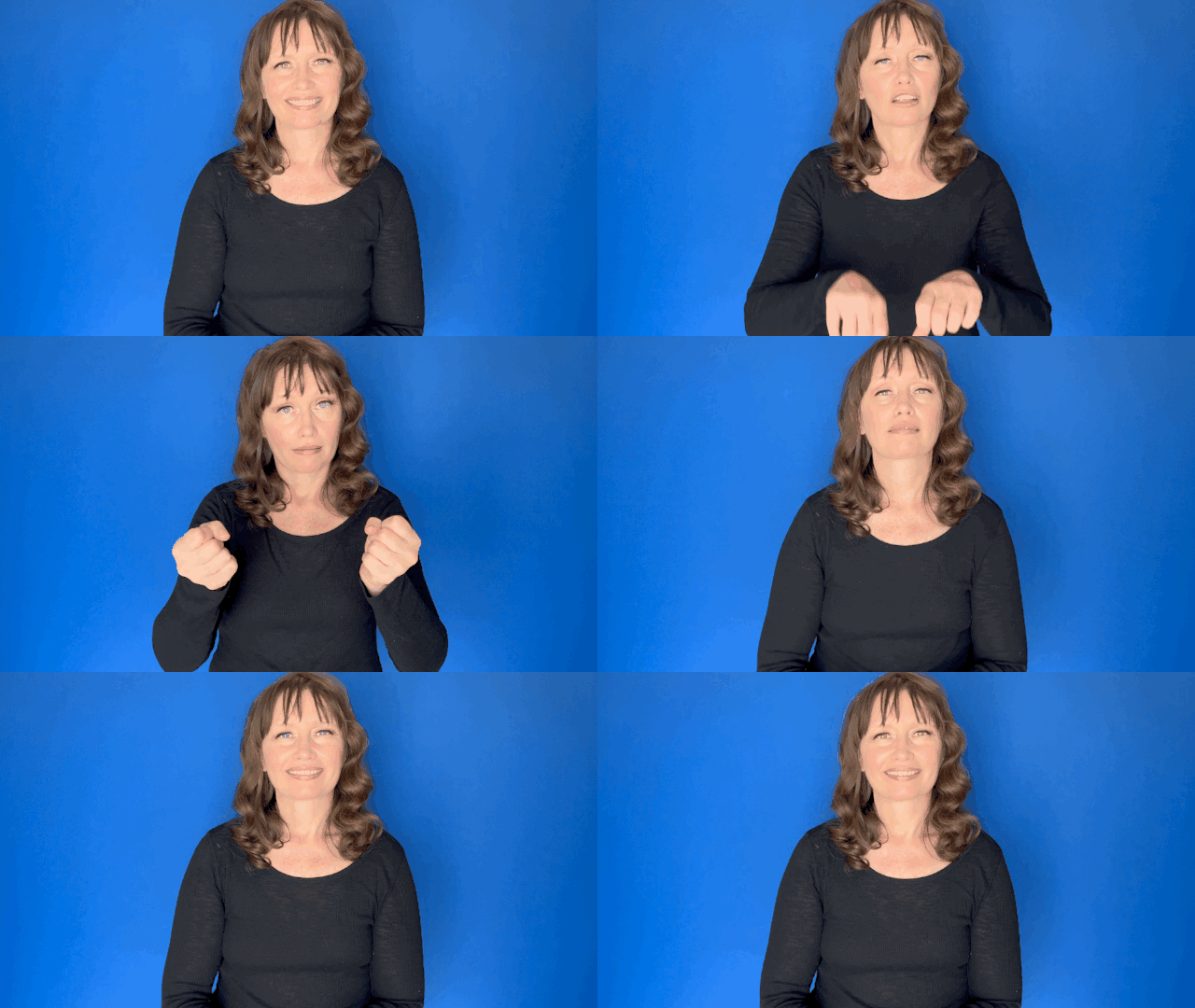
Sign for BREAK BROKEN in ASL | ⛓️‍💥 ASL Dictionary

Definition: To break something into pieces.

Sign for BREAK BROKEN in ASL 

YouTube player

Practice Activities:

To practice the sign for BREAK BROKEN in ASL, begin by isolating the movement. Use two flat hands, palms facing each other, and “break” them apart as if snapping a stick. Repeat this motion slowly and deliberately in front of a mirror to ensure accuracy. Try varying the speed to match the intensity of different scenarios, such as a light snap versus a dramatic break.

Next, create flashcards with different objects or situations that commonly break, such as “glass,” “pencil,” or “machine.” Practice signing each word followed by the sign for BREAK BROKEN in ASL. For example, sign “GLASS – BREAK BROKEN” or “PENCIL – BREAK BROKEN.” Focus on fluid transitions between the signs.

Use storytelling to reinforce context. Tell a short story using the sign for BREAK BROKEN in ASL, such as describing a day when your phone broke or something unfortunate happened. Practice narrative structure: set up the scene, introduce the object, and describe how it broke using the appropriate facial expressions for emotion.

Partner activities can strengthen usage in conversation. One partner signs a sentence using BREAK BROKEN, and the other responds appropriately. Example: “My computer BREAK BROKEN – what now?” A good response could be “FIX?” or “NEW BUY?” This practices both expressive and receptive skills.

Prompt writing helps translate thoughts into sign. Write five sentences in English that contain the word “break” in either a literal or figurative context. Translate them into ASL using appropriate structure and sign choices, and include the sign for BREAK BROKEN in ASL where applicable.

Role-play scenarios where something breaks unexpectedly, like a chair or a toy. Engage your whole body and facial expressions to add realism. These activities will help cement your understanding and fluid usage of the sign for BREAK BROKEN in ASL.

Cultural Context:

In American Sign Language, cultural understanding is just as important as learning vocabulary. The sign for BREAK BROKEN in ASL goes beyond a literal translation and carries deeper meaning based on context, relationships, and community values. Deaf culture emphasizes visual clarity and conceptual accuracy, so signing the concept of something being broken involves more than just mimicking a physical break.

When using the sign for BREAK BROKEN in ASL, it’s helpful to consider which object or concept is being discussed. A broken object, a broken system, or a broken relationship may all use variations of the same core sign, but the movement, facial expressions, and hand shapes change to reflect the situation. ASL is a highly visual language, so these adjustments are key in sending the correct message.

Within Deaf culture, using the correct sign for BREAK BROKEN in ASL also reflects understanding and respect. Misusing this sign by failing to show the cause of the break or the object involved can easily lead to confusion. For example, breaking a cup versus breaking a promise may use similar hand movements, but the surrounding signs, facial expressions, and contextual clues will direct the meaning clearly.

It’s also common for native signers to use classifiers alongside the core sign for BREAK BROKEN in ASL. Classifiers add deep layers of meaning by showing what kind of object is involved, how it broke, or what part was affected. This kind of visual detail brings fluency and richness to conversations in ASL.

Facial expressions are another cultural element that influences how the sign for BREAK BROKEN in ASL is understood. A serious or shocked expression can communicate the emotional impact of the break, such as something precious being destroyed or a serious rule being broken. Without these cues, the meaning can appear flat or be taken out of context.

In group conversations, reactions to the sign for BREAK BROKEN in ASL can also show cultural values. For instance, if someone signs about a broken relationship, other participants might use facial expressions and space to react appropriately, giving the speaker a moment of empathy or support. These subtle cues are part of how respect and connection are built in the Deaf community.

ASL learners often focus first on vocabulary, but understanding the cultural components of signs like the sign for BREAK BROKEN in ASL leads to better communication and stronger connections with Deaf individuals. Whether you’re discussing a broken toy, broken agreement, or broken heart, each situation requires cultural awareness and visual precision for the sign to be understood correctly.

Using the sign for BREAK

Extended Definition:

The sign for BREAK BROKEN in ASL represents the action of separating something into parts, often due to force or pressure. This common sign is useful when describing physical objects that have snapped, cracked, or been damaged. It can also be used metaphorically to refer to emotional states or non-physical concepts.

In American Sign Language, the sign for BREAK BROKEN is performed by bringing both fists together and then pulling them apart quickly, as if snapping a stick. The motion visually represents the concept of breaking something in two. The non-manual signals like facial expression can add depth, like surprise, frustration, or sadness, depending on context.

The placement and speed of the sign for BREAK BROKEN in ASL may vary slightly depending on what is being described. If an object is fragile, a more gentle movement might be used. For something accidentally shattered, like glass or a plate, the motion may be more sudden or exaggerated.

This sign is not limited to physical breakage. It can describe broken relationships, broken systems, or broken promises. When discussing emotions, the sign for BREAK BROKEN in ASL helps convey feelings of disappointment or distress by showing that something previously whole is now damaged.

In daily conversations, this sign might come up when talking about car troubles, like a broken engine or tire. You might also use it when referring to broken electronics or household items. It’s an essential part of everyday vocabulary for ASL users.

Children learning American Sign Language often use the sign for BREAK BROKEN when describing accidents or toy mishaps. Teachers and caregivers also use this sign frequently when guiding children through responsibility after something breaks. It layers both language learning and socio-emotional communication.

In storytelling or narrative signing, the sign for BREAK BROKEN in ASL can be used dramatically to show destruction, loss, or a turning point in a plot. The visual nature of the sign makes it particularly impactful during more emotional or intense moments.

When signing with others in a learning setting, it’s helpful to pair the sign with other descriptive signs like what broke, how it broke, or why it broke. This gives context and develops a fuller understanding of the situation. For example, pairing it with signs for “accident,” “by mistake,” or “wind” can clarify meaning.

If you’re just beginning to learn ASL, the sign for BREAK BROKEN should be one of your early vocabulary additions. It’s versatile, easy to remember, and widely understood within the Deaf community. Because ASL often

Synonyms: shatter, fracture, crack, smash, rupture

Educational resources: Find related learning materials in our course bank!

Want more? Check out some of our popular learning activities on the homepage!

Need to look up a sign? Use our highly rated dictionary: https://aslinteractive.com/best-asl-dictionary/

Follow us on tiktok: https://www.tiktok.com/@aslinteractive. More social media links at the bottom of this page!

Long-tail Keywords: what is the ASL sign for break broken, how do you sign break broken in ASL, ASL sign for break broken

Categories:

tags: Actions, Verbs, Commands, Activities, Everyday activities

Parameters

*Handshape*:

The handshape for the sign for BREAK BROKEN in ASL uses both hands in an “S” handshape. Each hand forms a fist, symbolizing two parts of an object. The motion simulates the object being snapped or broken apart.

This sign visually represents the concept of something being fractured by pulling the fists apart as if breaking a stick. The sign for BREAK BROKEN in ASL effectively conveys physical damage or separation through this vivid handshape.

*Palm Orientation*:

For the sign for BREAK BROKEN in ASL, both hands are typically held in fists with the palms facing each other or slightly down toward the floor. The hands are brought together and then pulled apart in a snapping or pseudo-breaking motion. This gesture mirrors the concept of something breaking into two, highlighting the meaning behind the sign for BREAK BROKEN in ASL.

*Location*:

The sign for BREAK BROKEN in ASL is typically made at chest level, centered in front of the body. Both hands start in the “S” handshape and come together, then move apart sharply as if something is being snapped in two.

This movement mimics the physical action of something breaking, and the location near the torso gives it clear visibility. In conversational settings, signing the sign for BREAK BROKEN in ASL at mid-chest ensures it’s easily understood.

*Movement*:

In the sign for break broken in ASL, both hands are formed into fists and brought together in front of the chest so the knuckles or sides touch. Then, in one quick motion, the hands are pulled apart slightly and turned outward, as if snapping a stick in two.

This sign visually mimics something being snapped or severed. It’s commonly used to communicate the concept of something being physically broken or figuratively disrupted.

*Non-Manual Signals*:

The non-manual signals for the sign for BREAK BROKEN in ASL typically include a surprised or slightly shocked expression to emphasize the suddenness or unexpectedness of the event. The brows may raise or furrow slightly, and eyes often widen.

Mouth movements can include a slight gasp or an “ah” shape to support the urgency or seriousness of something breaking. These facial cues help reinforce the emotion behind the sign for BREAK BROKEN in ASL .

*Prosody, Dominant/Non-Dominant Hand*:

The sign for BREAK BROKEN in ASL uses both hands in modified “S” handshapes. Start by bringing the fists together, touching at the knuckles or mid-fingers, then swiftly pull them apart to mimic something being snapped or broken. The dominant hand leads the movement slightly, while the non-dominant hand remains steady.

This action visually represents the concept of something coming apart, like a stick breaking. The sign for BREAK BROKEN in ASL is context-flexible and often used to describe physical objects, though it can also metaphorically apply to relationships or systems.

Tips for Beginners:

When learning the sign for BREAK BROKEN in ASL, start by practicing the handshape and movement slowly to build muscle memory. This sign uses both hands in an “S” handshape, resembling a breaking motion, which should look natural and deliberate. Make sure your hands meet smoothly at the center and then pull apart with intention, as if breaking a stick or object in two.

A common mistake with the sign for BREAK BROKEN in ASL is rushing the motion or skipping the initial contact point in the center. Missing this contact can make the sign unclear or cause it to resemble other signs. Always pause briefly at the center contact before pulling apart, as this shows the “breaking” part clearly and avoids confusion.

Consistency in handshape and direction is key when mastering the sign for BREAK BROKEN in ASL. Keep your hands in tight “S” positions throughout the motion. Avoid opening your fingers or using different handshapes, as this weakens the clarity of the meaning. Focus on the evenness of the motion and be sure both hands move at the same time.

Practice in front of a mirror or record yourself signing to catch subtle mistakes. Watching how your hands move during the sign for BREAK BROKEN in ASL can help refine your technique and improve fluidity. If the motion looks exaggerated or sluggish, adjust your speed and precision until the sign looks natural.

Finally, use the sign in relevant contexts, such as conversations about broken items, plans, or even relationships, to reinforce its meaning. Getting feedback from fluent signers or instructors can speed up your progress. With consistent, mindful practice, the sign for BREAK BROKEN in ASL can become second nature and clear to any ASL user.

Connections to Other topics:

The sign for BREAK BROKEN in ASL connects closely with the concept of physical damage or interruption, and this can be extended metaphorically depending on context. For instance, it’s related to signs like STOP, INTERRUPT, or ACCIDENT, which all convey a disruption of normal flow. In storytelling, this sign can be essential for illustrating plot developments, like a literal object snapping or a relationship ending .

Compound signs that include the concept of breaking often involve combining the sign for BREAK BROKEN in ASL with object classifiers. For example, to indicate a broken leg, a signer might show the classifier for a leg (often a bent B handshape from hip to foot) followed by the break motion at the point of injury. This use of classifiers demonstrates the spatial and visual nature of ASL and enhances storytelling or medical descriptions.

The sign for BREAK BROKEN in ASL is also important for connecting with emotional states. It is often used metaphorically to sign HEART-BROKEN ❤️, which combines the heart sign and the breaking movement. These idiomatic uses show how ASL allows abstract ideas to be visualized clearly, which helps with emotional expression and nuanced conversation.

In technical or educational contexts, the sign plays a role in discussions about malfunction or structural failure. For example, when troubleshooting equipment, a person may combine the sign for COMPUTER with BREAK BROKEN to convey that a device is no longer working. Similarly, this sign is essential in first aid and emergency interpreting situations to report broken bones or disrupted systems effectively.

When learning the sign for BREAK BROKEN in ASL, it is helpful to study it alongside verbs like FIX, REPAIR, and DESTROY. These oppositional or related concepts are often used together when describing a problem and its solution. Understanding these connections helps learners develop more fluid and expressive communication in ASL.

Summary:

The sign for BREAK BROKEN in ASL typically involves a deliberate snapping motion of both hands coming together and then pulling apart at the center. The hands are usually formed into “S” handshapes, mimicking the idea of breaking something in two, like a stick or a pencil.

This sign is directional in nature and can be modified slightly depending on the noun it refers to. For example, modifying the speed or intensity of the motion may suggest the severity of the break. This provides a level of nuance that contextually enriches communication.

Grammatically, the sign for BREAK BROKEN in ASL functions as a verb and can act as the main predicate in a sentence. It is often accompanied by non-manual markers like a surprised or distressed facial expression when referring to unintended damage or accidents.

In conversation, the sign can be used literally, such as a broken tool, or metaphorically, such as saying “the system is broken.” The sign is versatile and taps into both physical and abstract uses, depending on the context provided visually and through body language.

Culturally, the concept of “breaking” something in Deaf culture often relates to more than physical items—it can point to communication barriers, strained relationships, or institutional inaccessibility. As such, the sign for BREAK BROKEN in ASL may carry emotional weight during certain discussions.

The visual metaphor of breaking something in two is powerful and taps into universal understanding. ASL signs often borrow from iconic representations, and this sign exemplifies how physical metaphor translates into linguistic clarity.

Compared to spoken English, which may have several nuanced verbs like shatter, crack, burst, or fracture, ASL tends to rely on a core sign like BREAK BROKEN and then enriches meaning through context and facial expression. This makes it more efficient while still conveying full semantic weight.

The sign can also be incorporated into compound signs or phrases. For instance, combining it with CAR visually expresses a broken or malfunctioning vehicle, without the need to fingerspell the entire phrase.

In some dialectal or regional variation, signers may alter the handshape slightly or use nearby space to add personal referents. This is especially common in storytelling or poetic ASL, where the imagery of something breaking reflects narrative tone or mood.

Related signs include DESTROY, DAMAGE, or TORN, and these convey similar but distinct ideas. While the sign for BREAK BROKEN in ASL often implies separation or fracture, DAMAGE may suggest a more general sense of impairment.

There are important linguistic elements in this sign’s structure. The symmetrical use of both hands with mirrored motion classifies it as a two-handed symmetrical sign, relying on visual symmetry to emphasize physical disconnection.

The handshape being an S also reinforces the metaphor. These tight fists simulate strength or unyielding structure before releasing, dramatizing the break and echoing the concept of tension and release built into the idea of something breaking.

ASL’s spatial modality is fully leveraged in this sign. By adjusting the direction of the separation, a signer can convey who or what caused the break, or who was affected by it—embedding syntactic information directly into the movement.

This directionality and use of simultaneity exemplify what makes ASL linguistically unique. One sign can carry layered meanings, unfolding visually over time and encoded through body alignment, hand motion, and facial expression.

The sign for BREAK BROKEN in ASL can also appear in jokes, idioms, and visual puns. In storytelling, especially in Deaf theater or humorous narratives, the visuality of something shattering can be exaggerated for dramatic effect.

In education, particularly for Deaf children, learning the sign allows for discussions around accidents, responsibility, and repair—both physically and emotionally. It opens language to conversations about cause and effect and teaches descriptive vocabulary.

Applied linguistics finds this sign beneficial when studying student error correction or social problem-solving in ASL. Teachers may notice how using signs like BREAK BROKEN informs schema about consequence and action and helps students develop cohesive narratives around personal experience.

The sign is frequently taught early in ASL instruction because it’s intuitive and easily visually linked to real-world experience. Demonstrating the sign using an actual object like chalk can leave a strong mnemonic impression on beginners.

Parents and caregivers often employ the sign with Deaf children to enforce boundaries or explain situations like a toy being broken. This reflects the sign’s social and behavioral utility, not just its lexical significance.

From an intercultural standpoint, the idea of breaking something may carry different connotations. In ASL, it’s often straightforward and descriptive, whereas in some verbal languages it may imply guilt, shame, or value. ASL neutralizes some of that emotional baggage unless facial expressions are used to add it back in.

There are notable differences between signs for breaking objects versus breaking rules or breaking news. The latter concepts are typically expressed through alternatives or explained contextually because the sign for BREAK BROKEN in ASL refers physically to an object being severed or damaged

Want more? Check out some of our popular learning activities!

ASL Interactive Resources

ASLInteractive YouTube Channel

Follow us on tiktok: @aslinteractive.com

Follow us on Instagram: aslinteractive

Facebook page: aslinteractive

Facebook group: aslinteractive

LInkedIn: ASL Interactive LLC

Twitter: @ASL_interactive

*Some information on this page is AI-generated. AI can make mistakes. Please check the information.

Sign for BREAK BROKEN in ASL 

Responses