Sign for BUTTONS DOWN FRONT in ASL | 👕 ASL Dictionary

Definition: Buttons located down the front of a garment.

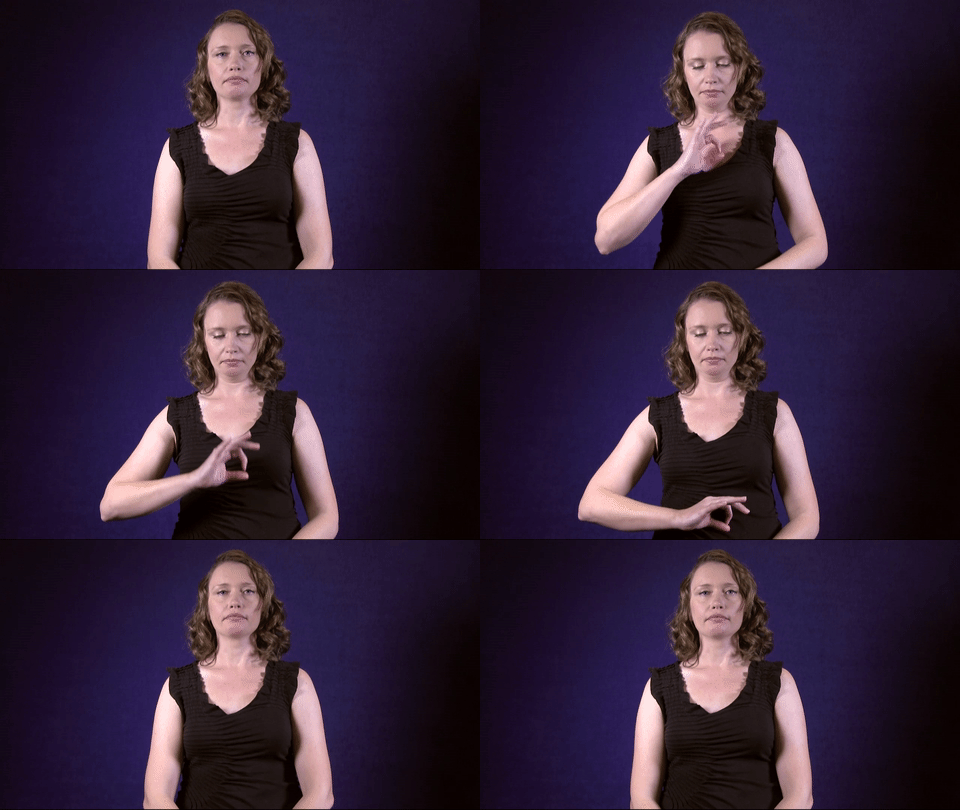
Sign for BUTTONS DOWN FRONT in ASL

YouTube player

Practice Activities:

To practice the sign for BUTTONS DOWN FRONT in ASL, begin by isolating the motion. Stand in front of a mirror and use your dominant hand to tap down the center of your torso, mimicking the shape and placement of buttons. Pay close attention to spacing and alignment to maintain accuracy with each repetition. Practice slowly at first, then increase your speed to build fluency and natural movement.

After mastering the sign on its own, start incorporating it into short phrases and sentences. Try phrases like “shirt with buttons down front” or “I lost a button on my coat.” Sign them slowly and clearly. Record yourself or practice in front of a mirror to check if your motion consistently travels down the front torso in a straight line.

Use storytelling to reinforce the concept. For example, describe your morning routine and mention putting on a shirt with buttons down the front. You can expand your story by describing the color, fabric, or number of buttons. This helps place the sign in a broader narrative for better retention.

For partner activities, take turns describing different types of clothing. Include the sign for BUTTONS DOWN FRONT in ASL when describing shirts, coats, sweaters, or jackets. Partners can guess the clothing item based on the signed description. This activity builds both vocabulary and receptive understanding.

Try comparing clothing with and without buttons. Sign about a pullover sweater versus a button-down shirt. Explain which one you prefer and why using expressive facial grammar.

Daily practice using the sign for BUTTONS DOWN FRONT in ASL in everyday conversation will help solidify your understanding. Comment on what you or others are wearing or describe outfits from photos or fashion ads. This situational use builds confident, natural signing skills in context.

Cultural Context:

In American Sign Language (ASL), clothing-related signs often reflect the function or appearance of the item. The sign for BUTTONS DOWN FRONT in ASL is a good example of how visually descriptive ASL can be. It mirrors the way buttons are typically arranged down the center of a shirt or blouse.

This sign is especially useful in everyday conversations when describing clothing preferences, choosing an outfit, or identifying someone’s apparel. Whether casually chatting about fashion or giving instructions for dressing a child, the sign for BUTTONS DOWN FRONT in ASL comes up often.

Different regions or age groups may have slight variations in how they sign BUTTONS DOWN FRONT in ASL, but the core concept remains the same: indicating the presence of multiple buttons aligned vertically. This aligns with ASL’s tendency to use classifiers and handshapes that show placement, shape, or action for clothing items.

In Deaf culture, visual communication is key, which means the sign for BUTTONS DOWN FRONT in ASL doesn’t just convey a word; it creates a picture in the air. This visual aspect of ASL enhances clarity and requires less explanation. A single motion can describe a shirt style quickly and efficiently.

The sign for BUTTONS DOWN FRONT in ASL may also be combined with other clothing signs to describe full outfits. For example, someone might sign “shirt” and then add the sign for BUTTONS DOWN FRONT in ASL to clarify the type of shirt. This layered approach helps conversations flow more naturally and visually.

Teachers, interpreters, and parents often use the sign for BUTTONS DOWN FRONT in ASL in educational and caregiving environments. It supports accessibility and independence, especially for children learning to dress themselves or follow clothing guidelines. The sign encourages clear understanding without needing spoken instructions.

When shopping or working in retail, the sign for BUTTONS DOWN FRONT in ASL helps facilitate inclusive communication. It makes discussions about style, fit, or fashion preferences more inclusive and respectful of Deaf customers or clients. It’s also a practical vocabulary addition for interpreters working in customer service or apparel-related settings.

For Deaf individuals, clothing isn’t just about fashion—it’s about expressing personality and culture. The sign for BUTTONS DOWN FRONT in ASL supports that self-expression by allowing detailed and accurate descriptions. It reinforces autonomy in making style choices and helps bridge communication gaps across language barriers.

Because clothing trends change over time, the way the sign for BUTTONS DOWN FRONT in ASL is used may evolve slightly, especially with the popularity of different shirt styles

Extended Definition:

The sign for buttons down front in ASL describes an article of clothing, typically a shirt, that fastens with a line of buttons running down the center. This sign is a combination of elements that represent both the concept of buttons and their placement on the front of the body. It conveys the idea of how the shirt is designed and worn.

In American Sign Language, showing placement on the body is a common way to describe clothing. The sign for buttons down front in ASL involves pantomiming the action of buttoning something down the middle of your torso. This visual representation makes it easy for others to understand the type of clothing being referred to.

To sign buttons down front in ASL, you typically use both hands alternately to move down the middle of your chest, mimicking the motion of fastening buttons. Finger movement is essential here, as it shows a realistic sequence of buttoning actions. The gesture starts near the top of the chest and moves downward to indicate a vertical line of buttons.

This sign can refer to a variety of garments, such as button-down shirts, some styles of dresses, or even pajamas. The specific type of clothing isn’t always detailed unless emphasized through added signs like shirt, dress, or jacket. Still, the standard movement clearly shows that the clothing has buttons on the front.

Clarity and context help define the meaning of the sign more precisely. If you want to mention a specific item, you can start by signing that item, like shirt, and then follow with the sign for buttons down front in ASL. This way, you can build more descriptive sentences in ASL that are helpful during conversations.

This sign is useful when shopping, doing laundry, or describing outfits. It’s also frequently used in educational settings, especially when teaching children or new ASL learners how to identify types of clothing. The gesture encourages natural learning through movement and visual cues.

Like many signs in ASL, the sign for buttons down front may vary slightly from signer to signer or by region. However, the overall structure and visual logic of the sign remain widely understood in the Deaf community. It is a practical and common sign used in daily life.

When signing this, facial expressions and body positioning help reinforce the meaning. Pointing to your own shirt while signing underscores the personal nature of what you’re wearing. These nonverbal cues are essential parts of communicating fully in ASL.

Including this phrase in your ASL vocabulary helps build the ability to describe clothing and appearance more accurately.

Synonyms: button-up, button-front, button-down closure, front-buttoned, front-fastened

Educational resources: Find related learning materials in our course bank!

Want more? Check out some of our popular learning activities on the homepage!

Need to look up a sign? Use our highly rated dictionary: https://aslinteractive.com/best-asl-dictionary/

Follow us on tiktok: https://www.tiktok.com/@aslinteractive. More social media links at the bottom of this page!

Long-tail Keywords: what is the sign for buttons down front in ASL, how do you sign buttons down front in ASL, ASL sign for buttons down front

Categories:

tags: buttons down front ASL, ASL buttons down front sign, how to sign buttons down front in ASL, buttons down front American Sign Language, buttons down front gesture ASL

Parameters

*Handshape*:

The handshape for the sign for BUTTONS DOWN FRONT in ASL uses the dominant hand in a modified F handshape, where the thumb and index finger form a small circle to represent a button. This handshape imitates the feel and look of a button being touched or secured.

In the sign for BUTTONS DOWN FRONT in ASL, the F handshape moves down the center of the torso in a vertical line, mimicking the motion and placement of buttons on a shirt. This deliberate handshape helps clearly convey the image of buttons running in a line down the front of clothing.

*Palm Orientation*:

For the sign for BUTTONS DOWN FRONT in ASL, the palm orientation begins with the dominant hand, typically in a flat “F” handshape, facing inward toward the chest. The fingers and thumbs form a circle as they tap down the centerline of the torso to represent the placement of buttons.

Throughout the sign for BUTTONS DOWN FRONT in ASL, the palm consistently maintains the inward orientation to mimic the real-life action of fastening or touching buttons on a shirt. The non-dominant hand is not required unless emphasizing multiple rows.

*Location*:

The Sign for BUTTONS DOWN FRONT in ASL is typically made along the center of the torso. The signer begins near the top of the chest, just below the neck, and moves downward in a straight line toward the stomach. This vertical motion reflects the path of buttons on a shirt or blouse.

Both hands, using a pinching motion with the thumb and index finger, mimic the fastening action of buttons as they travel down the front of the body. The location emphasizes the literal placement of buttons, making the Sign for BUTTONS DOWN FRONT in ASL both iconic and easy to understand.

*Movement*:

Start with the dominant hand in a flat “F” handshape (thumb and index finger touching to form a small circle), placed near the upper center of the chest. Make small, downward tapping movements in a vertical line, touching the “F” hand to the torso several times as if indicating buttons on a shirt.

Repeat the motion in a straight line down the front of the body to represent a series of buttons. The sign for buttons down front in ASL mimics the placement and action of buttoning a shirt, providing a visual representation of the concept.

*Non-Manual Signals*:

When demonstrating the sign for BUTTONS DOWN FRONT in ASL, maintain a neutral or slightly attentive facial expression to support the descriptive nature of the sign. Slight eye movement following the downward motion of the fingers mimics the buttons being shown along the front of a shirt.

Keep the mouth relaxed, and optionally, use slight pursing of the lips if emphasizing the vertical arrangement. These non-manual signals enhance clarity and help visually segment the concept being conveyed in the sign for BUTTONS DOWN FRONT in ASL.

*Prosody, Dominant/Non-Dominant Hand*:

The sign for BUTTONS DOWN FRONT in ASL uses both hands with index fingers and thumbs forming small circles as if mimicking button shapes. Starting at the upper chest, the dominant hand taps downward in a vertical line, mimicking buttons along the front of a shirt. The non-dominant hand may mirror or stay neutral.

To clearly articulate the sign for BUTTONS DOWN FRONT in ASL, ensure even spacing between each tap as the dominant hand moves downward. This motion visually represents the layout of buttons on a shirt, enhancing clarity and accuracy.

Tips for Beginners:

When learning the sign for BUTTONS DOWN FRONT in ASL, it’s important to visualize the placement of buttons on a shirt or blouse. This sign typically involves a dominant hand using a repetitive pinching motion moving vertically down the center of the torso, mimicking where buttons would be on a shirt. Make sure your hand stays aligned with the center of your chest so that the spatial location reflects real-world logic.

A major pointer for beginners is to keep the motion steady and evenly spaced. Each small movement represents a button, so avoid rushing or making uneven spacing between each motion. The clarity of the sign is highly dependent on precision, so try practicing in front of a mirror to get the alignment just right.

One common mistake to avoid when practicing the sign for BUTTONS DOWN FRONT in ASL is letting your hand drift away from the center of your torso. The vertical line down the body is key to making this sign easily understood. If the movement is too wide or off to one side, it can confuse the viewer or resemble other signs.

Facial expressions are not critical in this context, but maintaining general ASL grammar with body posture still enhances your communication. Say you’re pointing to your shirt while signing—doing so can offer context and reinforce understanding, especially in casual conversations.

Repetitive practice is essential. Try incorporating the sign into everyday conversations about clothing or while getting dressed. The more frequently you use the sign for BUTTONS DOWN FRONT in ASL, the quicker your muscle memory will adapt. Practicing in realistic settings, like describing your outfit, also helps reinforce the meaning naturally .

Don’t hesitate to ask feedback from fluent signers or teachers—they can spot subtle alignment or movement issues you might miss. With consistency and mindful repetition, you’ll gain confidence using the sign for BUTTONS DOWN FRONT in ASL accurately and clearly.

Connections to Other topics:

The sign for BUTTONS DOWN FRONT in ASL connects closely with clothing-related vocabulary in American Sign Language. It is often used in conversations that include signs like SHIRT, JACKET, or COAT, where referencing the functional parts of clothing becomes important. This sign conveys both a description and placement, making it visually iconic and easily associated with real-life objects and textures.

In ASL, many descriptive signs combine basic signs to convey complex ideas that might require multiple words in English. The sign for BUTTONS DOWN FRONT in ASL can integrate with others like OPEN or CLOSE to indicate how a garment is put on or removed. For example, one might sign COAT, then BUTTONS DOWN FRONT, followed by CLOSE to show fastening a coat.

This sign also aligns with directional and classifier techniques in ASL. Since BUTTONS DOWN FRONT includes a downward motion along the torso, it can act similarly to classifier constructs where the hand traces or illustrates object placement on the body. For learners, understanding how location and movement inform meaning is essential for mastering signs like BUTTONS DOWN FRONT in ASL.

The sign also helps reinforce the concept of sequencing and spatial grammar. Showing a row of buttons aligned vertically echoes how ASL uses physical space to map descriptions clearly. This structure makes it easier to contrast other clothing signs, such as BUTTONS ON CUFF or ZIPPER UP FRONT, all of which use location and motion to clarify meaning.

In conversational ASL, the sign for BUTTONS DOWN FRONT can be part of descriptions about dressing, shopping for apparel, or storytelling. It’s also useful in contexts where ASL users describe someone’s appearance or clothing during narrative exchanges. Integrating this sign with others helps learners build more complete and nuanced sentences. ‍

Summary:

The sign for BUTTONS DOWN FRONT in ASL typically mimics the motion of fastening small, round objects along the central vertical axis of a shirt or blouse. To produce this sign, use the dominant hand in a pinching motion (index finger and thumb) to represent fastening buttons while moving downward along the torso, visually simulating actual buttons on a garment.

This sign is iconographic, as it visually mirrors the real-world act of buttoning clothing down the front. It embodies a high level of iconicity, which is quite common in ASL and helps new learners connect signs to physical experiences. ASL often uses these types of signs to ground abstract language into familiar kinetic experiences.

The sign for BUTTONS DOWN FRONT in ASL overlaps with other clothing-related signs such as SHIRT, JACKET, and BUTTON. It’s essential to distinguish it from the single BUTTON sign, which may only indicate one button, whereas BUTTONS DOWN FRONT implies a row of buttons for a top or shirt. These distinctions help reinforce ASL’s attention to visual specificity and spatial awareness.

This sign is spatially anchored to the torso, usually starting from the upper chest area and moving downward to the midsection or waistline. This use of bodily referential space is a core part of ASL grammar, making signs like this intuitive and semantically rich. The downward motion supports the linguistic grammar of topic-comment structures when describing attire.

In ASL storytelling and detailed description, the sign for BUTTONS DOWN FRONT in ASL plays a key role when talking about appearance, getting dressed, or describing characters’ clothing. Clothing description holds cultural value, especially when expressing formality, identity, or social occasions. Within Deaf culture, being able to describe oneself or others clearly is critical both visually and socially.

This sign might be paired with classifiers to depict different types of clothing that have buttons going down the front. For instance, a jacket classifier can be followed with the button-down motion for a full description. The coupling of classifiers and specific signs enriches the linguistic economy of ASL, maximizing expressiveness with minimal signs.

Grammatically, the sign for BUTTONS DOWN FRONT in ASL functions as a descriptive element, modifying a noun like SHIRT or BLOUSE. It could be used in topicalized sentence structures, such as “SHIRT, BUTTONS DOWN FRONT” to emphasize details of attire. This grammatical flexibility reflects the non-linear and spatially organized nature of ASL syntax.

In conversations about fashion, uniforms, occupational wear, or even historical clothing, BUTTONS DOWN FRONT in ASL becomes a signifier of both object function and social context. School uniforms, waiter attire, business shirts, or vintage dresses often involve buttons. By using ASL’s spatial grammar, these items can be richly layered with meaning, including design era or gendered fashion cues.

From a linguistic perspective, the sign exemplifies morphological transparency, embodying its meaning wholly through the physical motion and space used. There’s little to no arbitrariness in its structure, unlike many spoken language words, which often separate meaning from form. This transparency makes such signs highly intuitive and mnemonic for ASL learners.

Applied linguistics also benefits from analyzing how ASL signs like BUTTONS DOWN FRONT in ASL map onto real-world knowledge. When teaching Deaf children or second-language learners about professions, social norms, or storytelling, signs that reference physical objects build both language fluency and cultural literacy. Visual-spatial learners especially benefit from signs like this that build on kinesthetic memory.

Culturally, clothing has layers of significance—professional, casual, ceremonial, or gendered—and ASL signs reflect these distinctions through nuanced movements and spatial variation. BUTTONS DOWN FRONT in ASL may be performed more precisely if the shirt being discussed has ornate or fancy buttons, adding expressive variance. This subtle adaptation mirrors the descriptive agility found in visual languages.

This sign also supports emergent bilingualism in Deaf children growing up with both ASL and English. They learn to correlate the physical act of buttoning with both the English term and the ASL sign, creating cross-lingual cognitive bridges. It enhances semantic mapping and supports reading comprehension when encountering phrases like “button-down shirt” in English texts.

The sign’s efficiency also underscores one of ASL’s core communicative values—clarity through embodiment. By mimicking the act of fastening buttons, it transcends arbitrary representation and invites aspectual refinement. For example, pacing of the motion may suggest careful versus quick buttoning, adding pragmatic meaning to the sign.

In workshops and interpreter settings, clarity on clothing signs like BUTTONS DOWN FRONT in ASL is vital. Misrepresentation could alter the tone or professionalism of a message, such as in medical settings, job interviews, or court proceedings. Interpreters need to understand and accurately convey these signs to maintain semantic integrity across languages.

In artistic ASL expression such as poetry or performance, physical movement signs like these bring visual rhythm. The repeated downward motion mirrors cadence

Want more? Check out some of our popular learning activities!

ASL Interactive Resources

ASLInteractive YouTube Channel

Follow us on tiktok: @aslinteractive.com

Follow us on Instagram: aslinteractive

Facebook page: aslinteractive

Facebook group: aslinteractive

LInkedIn: ASL Interactive LLC

Twitter: @ASL_interactive

*Some information on this page is AI-generated. AI can make mistakes. Please check the information.

Sign for BUTTONS DOWN FRONT in ASL

Responses