
Definition: A place where students eat.
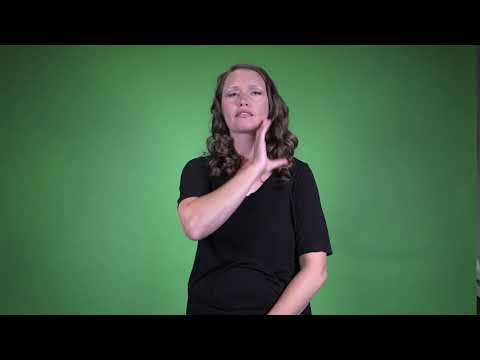
Sign for CAFETERIA 1 in ASL
Practice Activities:
Start by practicing the sign for CAFETERIA 1 in ASL in front of a mirror. Repeat the movement slowly, then increase your speed while ensuring the motion remains clear. Focus on the handshape and the direction of movement across the face to build muscle memory.
To reinforce the sign, try using it in a few basic sentences. For example, sign “I go cafeteria,” “Cafeteria food good,” or “Where cafeteria?” Record yourself and check for accuracy in facial expression and fluidity of the sign for CAFETERIA 1 in ASL. Challenge yourself by changing the subject of your sentence, such as “My sister love cafeteria,” or “School cafeteria big.”
Work with a partner and take turns asking and answering questions about the cafeteria. One student can ask, “What time cafeteria open?” and the other can respond with a signed answer. Incorporate context such as school routines or lunchtime preferences to make it feel more real. If you don’t have a partner available, set up a stuffed animal or toy and practice as if you’re having a conversation.
Storytelling is another strong strategy to deepen learning. Create a short story about your day at school with a focus on lunchtime, using the sign for CAFETERIA 1 in ASL several times. Include relevant vocabulary such as EAT, LUNCH, FRIEND, and FOOD. Sign the story to a classmate or film yourself for review later.
Flashcard practice is useful as well. Create a set that features school-related words and review them daily. Use the card for CAFETERIA and try to respond with the correct sign in under three seconds. Gradually combine this sign with others to form simple phrases. Consistent repetition in a variety of contexts will keep your signing skills sharp and embedded in memory.
Cultural Context:
The sign for cafeteria 1 in ASL is widely used in both schools and public settings to refer to a common eating area. In American Deaf culture, cafeterias are more than just places to eat—they are social spaces where meaningful connections happen. Using the correct sign for cafeteria 1 in ASL helps foster clear communication in these community environments.
Understanding the sign for cafeteria 1 in ASL also reflects the cultural importance placed on accessibility and inclusion. Deaf and hard-of-hearing individuals rely on visual language to navigate both educational and everyday spaces. A cafeteria may be bustling with noise, but ASL provides a clear and respectful way to communicate in these environments.
In schools with Deaf programs, students are taught the sign for cafeteria 1 in ASL early on. It becomes a daily part of their school routine, helping them navigate their day independently. For many in the Deaf community, the cafeteria is a backdrop for learning, peer interaction, and shared stories in ASL.
The history behind signs for everyday locations like cafeterias often grows from community usage. The sign for cafeteria 1 in ASL is standardized to maintain mutual understanding. Still, regional variations may occur depending on local Deaf communities, but this version is commonly recognized and taught.
In a cultural sense, knowing the sign for cafeteria 1 in ASL is about more than vocabulary—it supports autonomy and participation in communal spaces. It allows Deaf individuals to ask for directions, meet friends, or follow school and work schedules with ease. Learning and using the correct sign shows respect for ASL users and their lived experiences.
Events hosted in cafeterias that include Deaf participants will often have interpreters or Deaf-friendly communication options. Using the sign for cafeteria 1 in ASL makes these spaces more welcoming and inclusive. For ASL learners, this reinforces how language and culture go hand-in-hand in shaping accessible environments.
Parents, educators, and interpreters also benefit from teaching and practicing the sign for cafeteria 1 in ASL. It helps bridge communication between hearing and Deaf individuals, especially in mixed-use areas like school lunchrooms or workplace dining halls. Reaffirming this sign supports everyday inclusion and smoother interactions.
Deaf culture values shared spaces where ASL can be fully expressed, and cafeterias often become hubs for these moments. Lunch Table conversations in ASL can include storytelling, jokes, and community discussions—all supported by knowing location-specific signs. Incorporating the sign for cafeteria 1 in ASL into daily vocabulary enriches not only language skills but
Extended Definition:
The sign for cafeteria 1 in ASL is a specific motion used to describe a place where people eat, commonly at schools, workplaces, or institutions. In American Sign Language, this sign is formed using a modified sign for food or eat and incorporates elements to identify it as a designated eating area, like a cafeteria.
To create the sign for cafeteria 1 in ASL, you begin by using the sign for eat – bringing your dominant hand in an “O” shape to your mouth, resembling eating. Then, move your hand to each side of your mouth in a repeated motion, indicating the concept of food on both sides, which helps distinguish it from the standalone sign for food.
This sign is a visual representation and is easy for learners to remember once associated with the idea of a busy eating area. Cafeterias are common in community spaces, and the ASL sign captures the essence of shared meal locations in a clear and concise way. When signing, it’s essential to maintain facial expressions that reflect the context, especially if you’re describing a noisy, crowded, or school-based cafeteria.
When introducing the sign for cafeteria 1 in ASL to beginners or children, it helps to use visuals and real-world connections. Show images or videos of a cafeteria and pair them with the ASL sign to reinforce the meaning. Consistent practice helps anchor the sign with the place it represents.
Understanding how to differentiate cafeteria from similar signs such as kitchen or restaurant is crucial. While all are related to food, the sign for cafeteria 1 in ASL is more generic and covers a wider array of settings. Restaurants may have a different sign altogether, highlighting their public and service-based feel.
The importance of knowing specific place signs like cafeteria lies in daily conversation. Whether it’s planning where to meet someone, describing your school routine, or even telling stories, the sign for cafeteria 1 in ASL becomes a building block in constructing full sentences with clarity. It supports smooth communication among deaf and hearing ASL users alike.
In educational settings, knowing how to sign cafeteria allows teachers, students, staff, and interpreters to facilitate clear directions and improve accessibility. Including accurate signs like this improves inclusion throughout a school day. For instance, a teacher might direct students with, “After class, go to the cafeteria,” using both spoken language and ASL.
The sign for cafeteria 1 in ASL also appears frequently in videos and educational content. ASL learners find that repetition and usage in real-life scenarios make
Synonyms: dining hall, lunchroom, canteen, mess hall, food court
Educational resources: Find related learning materials in our course bank!
Want more? Check out some of our popular learning activities on the homepage!
Need to look up a sign? Use our highly rated dictionary: https://aslinteractive.com/best-asl-dictionary/
Follow us on tiktok: https://www.tiktok.com/@aslinteractive. More social media links at the bottom of this page!
Long-tail Keywords: what is the sign for cafeteria in ASL, how do you sign cafeteria in ASL, cafeteria ASL sign
Categories:
tags: Facilities and other locations/needs, Colleges/Universities/schools, Language Learning, Everyday activities, Objects in the Classroom
Parameters
*Handshape*:
The handshape used in the sign for CAFETERIA 1 in ASL is the open “C” handshape . This handshape is formed by curving the fingers and thumb into a “C” shape, with the palm generally facing inward toward the face.
In the sign for CAFETERIA 1 in ASL, the hand moves to touch one side of the mouth and then the other, symbolizing a place where food is eaten. The consistent use of the “C” handshape visually cues the concept of “cafeteria.”
*Palm Orientation*:
For the sign for CAFETERIA 1 in ASL, the palm orientation begins with the dominant hand in an open “C” shape facing inward toward the mouth. The hand moves from one side of the mouth to the other, often starting at the dominant side. Both movements maintain the same palm orientation toward the face throughout the sign.
This sign resembles the motion for “restaurant” but uses a “C” handshape to represent “cafeteria.” The palm faces the signer rather than turning outward, which makes the sign for CAFETERIA 1 in ASL distinct and easy to recognize.
*Location*:
The Sign for CAFETERIA 1 in ASL is produced near the lower face area. The hand moves between the right cheek and the left cheek, touching each side near the corner of the mouth. This location emphasizes where food enters the body, making it visually logical for the concept.
When signing the Sign for CAFETERIA 1 in ASL, positioning the motion on both cheeks helps distinguish it from other food-related signs. Keep the hand close to the face to ensure clarity and accurate communication.
*Movement*:
To perform the sign for CAFETERIA 1 in ASL, form the hand into the shape of the letter “C” . Starting at the corner of the mouth on one side, move the “C” hand across to touch the other corner of the mouth, similar to the motion for EAT but in a distinct side-to-side pattern.
The movement is smooth and lateral, emphasizing both corners of the mouth to indicate a place where food is consumed. The sign for CAFETERIA 1 in ASL clearly conveys the idea of a dining hall or communal eating area through this double-touch motion.
*Non-Manual Signals*:
When using the sign for CAFETERIA 1 in ASL, maintain a neutral to pleasant facial expression, as this sign refers to a location people associate with meals and social activity. Raise your eyebrows slightly to indicate a general noun if asking about it or introducing the concept.
The non-manual behavior for the sign for CAFETERIA 1 in ASL is calm and natural, avoiding any exaggerated emotion unless contextually needed. Appropriate eye contact helps convey clarity and engagement.
*Prosody, Dominant/Non-Dominant Hand*:
The sign for CAFETERIA 1 in ASL uses the dominant hand in a flat “C” handshape. Begin at the dominant side of the mouth, trace the “C” from one corner of the mouth to the other, then repeat on the non-dominant side. It mimics the same movement used in the sign for “restaurant” but replaces the “R” handshape with a “C.”
Both hands are not used simultaneously—only the dominant hand performs the motion, while the non-dominant hand remains inactive. The sign for CAFETERIA 1 in ASL emphasizes clarity and facial expression to convey meaning ️.
Tips for Beginners:
When learning the sign for CAFETERIA 1 in ASL, consistency in hand shape and movement is key. This version uses the letter “C” handshape, touching one side of the mouth and then the other, similar to the sign for “restaurant,” but with a “C” instead of an “R.” Make sure your handshape stays clear and tight, as loose or inconsistent fingers can cause confusion.
A common beginner mistake is switching hands or angles mid-sign. Stay in the same motion plane and keep the same dominant hand throughout for clarity. Touch the corner of your mouth with the “C” handshape first on one side and then move to the other side in a smooth arc, avoiding exaggerated gestures.
Maintain proper facial expressions when signing, even for basic vocabulary like the sign for CAFETERIA 1 in ASL. Neutral or slightly pleasant expressions work best to support comprehension. Overdoing expressions can distract rather than clarify.
Practice signing in front of a mirror to become aware of how your “C” handshape moves across your face. Watching yourself can help with alignment and smooth transitions between each side of the mouth. It also lets you identify if your palm orientation is correct—remember, it should face inward.
To reinforce vocabulary acquisition, try using the sign for CAFETERIA 1 in ASL in real-life scenarios, such as talking about where you had lunch or where a cafeteria is located. Repeated, contextual use will help you remember the movements and improve fluency.
If you’re practicing with Deaf signers, ask for feedback. Sometimes it’s a slight misdirection or a handshape held too loosely that affects understanding. Don’t rush—keep movements deliberate and smooth. With repetition and attention to detail, this sign will become part of your natural ASL vocabulary.
sign for cafeteria 1 in asl, cafeteria sign language, how to sign cafeteria in asl, cafeteria asl sign
Connections to Other topics:
The sign for CAFETERIA 1 in ASL is closely related to other location-based signs such as RESTAURANT, KITCHEN, and DINING ROOM. These signs often share similar handshapes and movements because they all pertain to places associated with food consumption. Understanding the connection helps learners see the logic and economy in ASL vocabulary, where visual categorization reduces the need for completely distinct signs.
The sign for CAFETERIA 1 in ASL commonly uses directional movement on the face, similar to how RESTAURANT and DINING ROOM are signed using the same handshape but placed on different parts of the face. This visual-spatial consistency is vital in ASL. It helps learners understand how placement, movement, and handshape can change meaning while still linking signs thematically.
In context, the sign for CAFETERIA 1 in ASL can appear in compound expressions like SCHOOL CAFETERIA or HOSPITAL CAFETERIA. These are typically constructed using topic-comment structure, often placing the sign for the institution first followed by the cafeteria sign. This structure supports ASL grammar and provides insight into how compound ideas are naturally expressed in sign language.
The sign is also linked thematically to food-related signs such as EAT, LUNCH, and SNACK. In conversation, one might transition from CAFETERIA to signs for specific meals or dietary needs, making it essential to understand the flow between location and action. This connection strengthens narrative skills and supports conversational fluency.
Additionally, the sign for CAFETERIA 1 in ASL reinforces an understanding of classifier use in discussions involving navigating through places or describing environments. For example, when explaining where a cafeteria is located within a building, classifiers showing location or movement would accompany the base sign. This interaction strengthens spatial reasoning, a core part of ASL communication.
Summary:
The sign for CAFETERIA 1 in ASL typically mirrors the motion used for the sign for “restaurant,” using a dominant hand in the “C” handshape. The hand touches the corner of the mouth on one side, then moves to the other corner in a small arc, suggesting the act of eating or a place related to food. This version of the sign differentiates itself with the choice of handshape that visually relates to the first letter of the word “cafeteria.”
This particular sign emphasizes a clear visual connection with feeding, which holds cultural resonance in both Deaf and hearing communities. Cafeterias represent communal eating spaces, often associated with schools, hospitals, or workplaces where people gather and socialize. Therefore, using a sign that reflects nourishment and interaction aligns with the social context of the word.
In American Sign Language, location and handshape work together to distinguish meanings. The use of the “C” handshape in the sign for CAFETERIA 1 in ASL adds specificity, differentiating it from similar signs like “restaurant” (which typically uses the “R” handshape). This distinction plays a key grammatical role in sentence construction, especially in settings like academic institutions or workplaces.
The sign for CAFETERIA 1 in ASL is directional in nature. Movement from one side of the face to the other is subtle but necessary. It adds dimension to the description of a designated location where food is consumed, a vital element in Deaf culture, where spatial awareness enhances clarity.
Conceptually, this sign traces back to a broader set of signs linked to eating, dining, and social interaction. It shares parameters with signs like “food,” “eat,” and “dining hall” but maintains its uniqueness through the first-letter handshape approach. This kind of linguistic method helps categorize similar signs while preserving identity and clarity.
The roots of the sign for CAFETERIA 1 in ASL resonate with iconic signs—those that visibly represent their meanings. Iconicity makes signs more intuitive, especially for beginning learners. The “C” handshape and mouth-centric movement reinforce the idea of a place where food is central.
In applied linguistics, signs like this one serve as a useful example of letter-influenced initialization. Initialization is a linguistic strategy in ASL where handshapes correspond to the English letter of the word. Though sometimes criticized in purist discussions, it remains helpful in academic and professional contexts to convey concepts quickly.
Touching both sides of the mouth implies the duality of eating and drink access, making the sign spatially balanced. This mirrors the cafeteria environment, which offers a variety of food from different stations—symbolized metaphorically through the sign’s bilateral movement. This enhances narrative storytelling and description within ASL.
The keyword phrase sign for CAFETERIA 1 in ASL is often used in educational videos, interpreter chatting domains, and signed classroom instruction. It helps standardize vocabulary across learning platforms and keep classroom communication fluid. Educators prefer the initialized version because it helps bridge English and ASL for students familiar with both languages.
Cross-linguistically, many signed languages also incorporate initialized signs, but meanings can diverge. What is appropriate as the sign for CAFETERIA 1 in ASL may have no equivalent duplicate in, for instance, French Sign Language (LSF). This nuance shows how culturally embedded ASL terminology can be and how signs carry both linguistic and cultural weight.
The evolution of the sign for CAFETERIA 1 in ASL reflects broader trends in the Deaf community around language planning and lexical borrowing. While some older variants rely more on mime, this version employs alphabetic representation, suggesting how ASL adapts over time without losing its core visual grammar. Regional variation may still result in other acceptable signs in different communities.
In casual conversation, classifiers can also supplement the sign for CAFETERIA 1 in ASL to give more detail. For example, after signing “CAFETERIA,” a signer may describe the environment, location in a building, or busyness level using spatial referencing or classifiers. This expansion allows more expressive discourse around this keyword phrase.
Grammatically, the sign functions as a noun and will typically follow directional verbs or prepositions in ASL syntax. A signer might say, THROUGH-HALLWAY, ENTER, CAFETERIA, using spatial referencing to indicate location. Directional and locative markers may accompany it depending on narrative intent and the space available to the signer.
In classroom settings, the sign for CAFETERIA 1 in ASL is taught early as one of the essential school-related vocabulary words. Its use helps communicate time and location-related information like lunchtime, schedules, or destinations. Deaf students use this sign frequently in their daily conversations within educational institutions.
The semiotic richness of this sign also opens doors to discussions of how physical space influences sign choice. The human body is often used as a map for spatial organization in ASL. So, signs like CAFETERIA rely on
Want more? Check out some of our popular learning activities!
ASL Interactive Resources
ASLInteractive YouTube Channel
Follow us on tiktok: @aslinteractive.com
Follow us on Instagram: aslinteractive
Facebook page: aslinteractive
Facebook group: aslinteractive
LInkedIn: ASL Interactive LLC
Twitter: @ASL_interactive
*Some information on this page is AI-generated. AI can make mistakes. Please check the information.

Responses