Sign for CAKE in ASL | 🍰 ASL Dictionary

Definition: A sweet baked dessert.

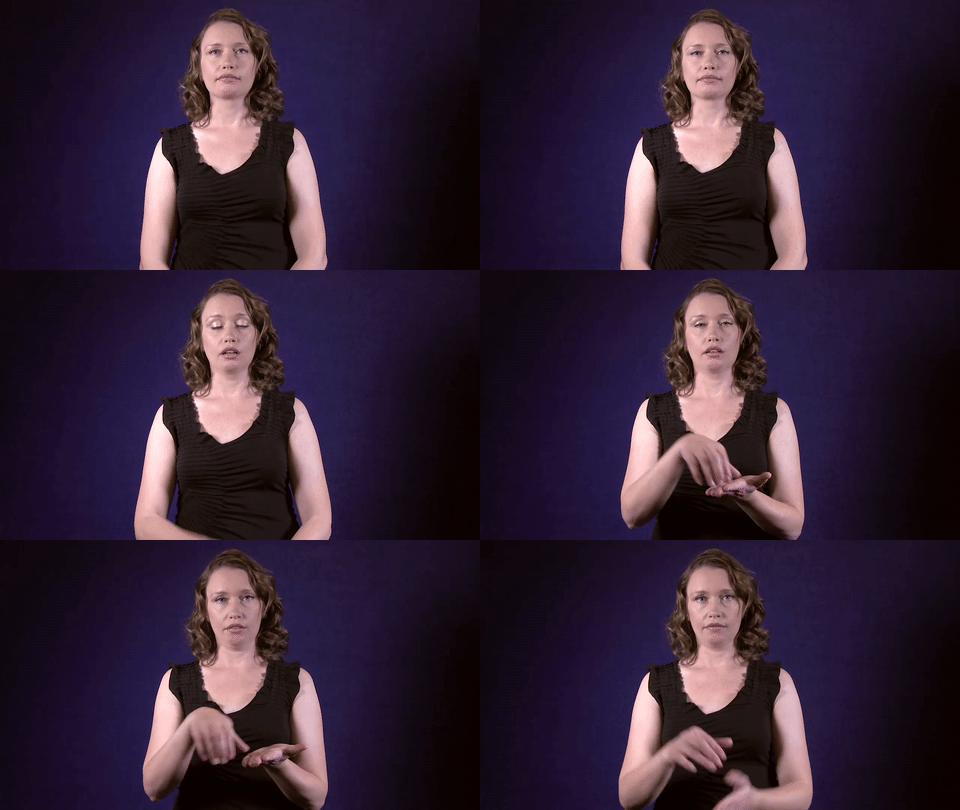
Sign for CAKE in ASL

YouTube player

Practice Activities:

Start by practicing the sign for CAKE in ASL in front of a mirror to check your handshape and movement. Repeat the sign slowly ten times, then try speeding up while maintaining accuracy. After you feel confident, try signing CAKE while saying it aloud or mouthing the word to build a stronger connection between the sign and its meaning.

Create flashcards with other dessert or food signs like PIE, COOKIES, and ICE CREAM. Practice distinguishing the sign for CAKE in ASL from others by doing quick recall drills. Mix the cards up and sign them randomly to reinforce your ability to recall CAKE consistently in a group of related signs.

Use the sign in simple sentences to develop fluency. Some examples include: I EAT CAKE, BIRTHDAY CAKE GOOD, and WANT CHOCOLATE CAKE. Make sure to use appropriate facial expressions for each sentence to show emotion and emphasis. Challenge yourself to make up your own sentences using the sign for CAKE in ASL with different contexts like celebrations or baking.

Practice a short storytelling activity about a birthday party. Begin by setting the scene, then include the sign for CAKE when you mention bringing or eating the cake. This helps reinforce vocabulary in a narrative setting and strengthens your ability to describe entire events using ASL.

If possible, work with a partner to quiz each other on dessert and party-related vocabulary. Take turns describing a scene, and incorporate the sign for CAKE in ASL naturally. You can also play a guessing game where one person signs clues like SWEET, OVEN, FROSTING, and the other guesses CAKE.

Record yourself signing different sentences and mini-stories that include CAKE. Then review the video to check for accuracy and expressiveness. This self-reflection will support your overall signing development.

Cultural Context:

In American Sign Language, food signs often carry cultural significance beyond their basic meaning. The sign for CAKE in ASL is not only common in everyday conversation but also plays a role in social events and celebrations where cake is a central focus like birthdays, weddings, and graduations. Understanding the sign for CAKE in ASL helps Deaf and hearing individuals participate fully in cultural moments within the community.

The sign for CAKE in ASL is a widely used vocabulary word in both casual and formal settings. Native signers grow up seeing this sign used during birthday parties in school settings, family gatherings, and community events. Knowing how to produce the sign accurately ensures smoother communication and adds a visual element that reinforces the spirit of the occasion.

Culturally, food is often used as a tool of connection, and the sign for CAKE in ASL is no different. Sharing dessert or just talking about a favorite cake flavor involves lively storytelling and bonding—something the Deaf community deeply values. Using the sign for CAKE in ASL during such interactions allows for expressive dialogue and shared joy.

American Sign Language is a rich, visual language where facial expressions and context matter. When using the sign for CAKE in ASL, signers often include facial expressions that enhance the meaning, whether they’re showing excitement about a sweet treat or surprise over an unexpected cake. Incorporating this natural visual grammar is an important part of conveying emotional tone.

The sign for CAKE in ASL can also be part of teaching tools in Deaf education. Teachers who use food signs like CAKE create an engaging learning environment. It gives students fun and relatable vocabulary while teaching concepts such as sharing, choices, and celebrating others.

Cake as a concept is inherently tied to celebration, and the sign for CAKE in ASL is often one of the first party-related signs that children learn. The importance of being able to request, offer, or decline food helps Deaf children build autonomy and social skills. The sign is clearly understood across different regions and is a great example of cultural relevance in ASL vocabulary.

The sign for CAKE in ASL isn’t only limited to conversation about dessert. It shows up in storytelling, educational games, and conversations around nutrition. In Deaf storytelling spaces, the mention or visual of cake, accompanied by the sign for CAKE in ASL, can evoke feelings of nostalgia, humor, or celebration.

When attending signed events, such as a Deaf club celebration or a community fundraiser, you’ll often see the sign

Extended Definition:

The sign for cake in ASL is a simple yet expressive way to communicate one of the most beloved desserts. In American Sign Language, “cake” is represented through a combination of hand movements that reflect the appearance or concept of a cake being placed or served. This sign is common in conversations about food, celebrations, birthdays, or baking.

To perform the sign for cake in ASL, one hand typically remains flat with the palm facing up, symbolizing a plate or surface. The other hand is curved slightly, as if representing the rounded shape of a cake, and gently taps the center of the flat hand. The movement suggests placing a cake onto a plate or cutting into it. Clear facial expressions are also crucial to deliver the meaning effectively, especially in more emotive contexts like birthdays or parties.

The sign for cake in ASL is widely used among deaf and hard-of-hearing communities, as well as among ASL learners. It appears frequently in discussions involving food, especially dessert, making it an essential vocabulary word for daily use. By learning the sign for cake in ASL, users can easily discuss treats, desserts, and special events with clarity and cultural respect.

Teaching the sign for cake in ASL to children or new learners is a fun and interactive way to introduce food vocabulary. Since cakes are usually associated with happy occasions, signing it can create a positive learning environment. Parents, teachers, and interpreters often incorporate this sign into songs, games, and storytelling to build engagement and help memory recall.

This sign is also commonly used during seasonal festivities, like birthdays, weddings, and holidays, where cakes are a central part of the celebration. Knowing how to use the sign for cake in ASL can help everyone feel included, especially in diverse settings or inclusive classrooms. Practicing this sign with real-life objects, such as pretending to bake or serve cake, can also enhance retention and understanding.

For advanced learners, combining the sign for cake in ASL with other food signs can lead to more fluent, natural communication. Examples include signing phrases like chocolate cake, birthday cake, or I like cake. This improves grammar fluency and expands vocabulary within themed topics.

Different regions may introduce slight variations in the sign for cake in ASL. Fingerspelling the word “cake” may also be used in certain formal or academic situations. However, the standard sign is widely recognizable, making it practical for most contexts.

Learning the sign for cake in ASL is beneficial not only for communication, but

Synonyms: dessert, pastry, sweet treat, baked good, confection

Educational resources: Find related learning materials in our course bank!

Want more? Check out some of our popular learning activities on the homepage!

Need to look up a sign? Use our highly rated dictionary: https://aslinteractive.com/best-asl-dictionary/

Follow us on tiktok: https://www.tiktok.com/@aslinteractive. More social media links at the bottom of this page!

Long-tail Keywords: what is the sign for cake in asl, how do you sign cake in asl, how to say cake in asl

Categories:

tags: Cake, Dessert, Birthday, Occasions, Celebrations

Parameters

*Handshape*:

The handshape used in the sign for CAKE in ASL typically involves a bent or curved hand with fingers together and the palm facing downward. This C-shaped hand lightly taps the fingertips into the upturned palm of the opposite hand, which is held flat to represent a plate or surface.

This gesture mimics the motion of placing a soft item, like a cake, on a plate . The specific bent handshape is key in clearly expressing the sign for CAKE in ASL and differentiates it from similar food-related signs.

*Palm Orientation*:

For the sign for CAKE in ASL, the dominant hand typically has palm orientation facing down. The non-dominant hand is held flat with the palm facing up, representing a plate. The dominant hand, curved into a “C” shape to mimic the shape of a cake, moves downward to touch the palm of the non-dominant hand. This downward motion with the palm orientation facing the ground helps visually convey the idea of placing a cake on a surface.

The palm orientation is essential in clearly expressing the sign for CAKE in ASL . It visually supports the concept by aligning with how a cake is often placed onto a plate or flat surface.

*Location*:

The sign for CAKE in ASL is typically located in the neutral space just above the non-dominant hand, which is held palm-up at about chest or stomach level. The dominant hand makes a curved motion resembling a rounded object resting on a surface, mimicking the shape of a cake. This neutral mid-torso space allows clear visibility, making the sign for CAKE in ASL easy to differentiate from other food-related signs.

*Movement*:

Start with your non-dominant hand held flat, palm facing up, representing a plate. Then take your dominant hand in a slightly curved “C” shape, as if holding an invisible piece of cake. Bring the curved hand downward and lightly tap it onto the middle of the non-dominant palm once.

This downward motion mimics placing a slice of cake on a plate. The sign for cake in ASL visually represents the shape and serving of a piece of cake .

*Non-Manual Signals*:

When demonstrating the sign for CAKE in ASL, the face typically remains neutral or slightly pleasant, reflecting the positive nature often associated with cake. A slight smile is common, especially in casual or celebratory contexts, such as birthdays or parties .

Avoid exaggerated expressions unless emphasizing sweetness or excitement. The non-manual signals for the sign for CAKE in ASL generally support clarity and contextual tone, aligning naturally with the gesture.

*Prosody, Dominant/Non-Dominant Hand*:

The sign for CAKE in ASL involves the dominant hand in a curved “C” shape representing the top of a cake. The non-dominant hand stays flat, palm facing up to represent a plate. The dominant hand moves in a slight arc and lands atop the non-dominant hand, mimicking the placement or serving of a cake.

Both hands work together to clearly show the concept of the sign for CAKE in ASL. This sign is easily recognized because the curved shape and placement motion resemble presenting or slicing a cake.

Tips for Beginners:

When learning the sign for CAKE in ASL, be sure to focus on the correct handshape and motion. Use your dominant hand in a claw shape (like you’re cupping something), and bring it down as if you’re placing it gently on the palm of your non-dominant hand, which is held flat and horizontal. This motion represents the image of a cake sitting on a dish or plate.

Consistency in motion and palm orientation is key to making the sign clearly understood. Many beginners incorrectly tap their dominant hand or move too quickly, which could make the sign unclear or resemble other signs. Slow down your motion when learning the sign for CAKE in ASL, and practice in front of a mirror to ensure the motion matches demonstrations.

Finger and wrist positioning also matter. Don’t let your fingers spread out too much or relax too loosely. Keep your dominant hand curved evenly like a “C” or claw to represent the roundness of a typical cake. The height and spacing between your hands should suggest a cake sitting naturally on a hand or surface.

It helps to visualize the object while signing. When thinking of the sign for CAKE in ASL, mentally picture a birthday cake being placed down—this association helps with accuracy and memory retention. Also, try incorporating this sign into realistic practice scenarios such as birthday conversations or discussing desserts during holidays.

Watching native signers and recording your own signing sessions can provide valuable feedback. It’s also beneficial to check in with a fluent signer or instructor for clarification, especially if you see different versions of the sign online.

Don’t forget facial expression—it’s a core part of ASL. While signing CAKE, your face can reflect delight or anticipation, as you might feel when discussing or offering cake . These subtle non-manual signals enhance your ASL fluency and make your message clearer.

Connections to Other topics:

The sign for CAKE in ASL connects closely with food-related vocabulary and concepts, allowing learners to build context around meals, celebrations, and desserts. Since CAKE is often associated with birthdays, holidays, and special events, it naturally pairs with signs like BIRTHDAY, PARTY, and CELEBRATE. These combinations help deepen cultural and situational understanding for learners of ASL.

This sign also supports compound expressions such as BIRTHDAY CAKE or WEDDING CAKE, where the context of use allows for nuanced facial expressions and classifiers that describe the cake’s size, shape, or decorations. Using the sign in compound phrases allows for storytelling and visual descriptions, a key feature in ASL grammar. Facial expressions and non-manual signals play a significant role here.

Another connection lies in the use of the same handshape and movement seen in other food signs. For instance, the sign for CAKE is sometimes related in movement or location to signs like COOKIE and PIE, forming a group of dessert-related signs. These similarities make it easier to remember visual distinctions while keeping vocabulary grouped by category .

The sign for CAKE in ASL may also be used metaphorically in jokes or idioms shared within the Deaf community, such as referring to something being “a piece of cake” (easy). While ASL may not translate English idioms directly, understanding their cultural equivalents or how humor works in ASL can enrich interpretation skills.

This sign supports thematic units on food, events, and culture, which are commonly taught in ASL curricula. Learning the sign for CAKE in ASL promotes better conversational flow when discussing cooking, baking, or celebrating with friends and family. Connections to classifiers used for slicing, serving, or decorating cakes also reinforce visual-spatial reasoning essential to language fluency.

Summary:

The sign for CAKE in ASL is a visually descriptive sign that uses handshape and space to represent a round cake being placed on a flat surface. It typically begins with the non-dominant hand held flat with the palm up, representing a plate or dish. The dominant hand forms a curved “C” shape and taps down gently onto the non-dominant hand, suggesting the act of setting a cake on a plate.

This sign falls into the category of classifier-based signs. Classifiers are a crucial part of ASL grammar and add specificity and visual depth. In the case of the sign for CAKE in ASL, the dominant hand resembles the shape of an actual cake, which helps convey deeper meaning beyond a simple noun.

The sign captures more than just the object—it reflects the culture of celebration and family gatherings. Cakes are common in American traditions like birthdays, weddings, graduations, and holidays. Because of this, the sign is frequently used in storytelling, event planning themes, and casual conversations about festivities in Deaf culture.

Culturally, food signs are important in ASL because they carry associations far beyond the items themselves. In the Deaf community, food vocabulary often signals moments of shared experience and cultural exchange. The sign for CAKE in ASL is often used in narratives to denote celebration, hospitality, or memory-linked storytelling.

The sign is also grammatically flexible. It can be used in noun-verb pairs, a concept in ASL where the motion changes slightly to indicate the difference between a noun and a related verb. For example, while CAKE is a noun, you can modify related signs such as SLICE or SERVE to show action happening to or with the cake.

Phonologically, the sign makes use of spatial referencing and symmetry. The palm-up hand acts as a grounding surface, often seen in signs for prepared food. The dominant “C” handshape gives a consistent form that is visually iconic and naturally suggestive of a circular or round object, contributing to the linguistic transparency of the sign.

For learners studying the sign for CAKE in ASL, it’s helpful to break the sign into its constituent features: handshape, location, movement, and facial expression. The facial expression can be neutral or reflect the context—like joy or surprise—which adds nuance to the sentence.

There are some dialectal variations of the sign depending on region and personal signing preferences. Some signers may use a slightly modified movement or emphasize the roundness more by making a gentle semicircular gesture before landing the dominant hand onto the base. These variations communicate the same concept but subtly differ in articulation.

Linguists studying sign language acquisition note that signs like CAKE are often learned early due to their high visibility and relevance in a child’s environment. The sign’s iconicity makes it more accessible for young children and ASL learners, aligning with cognitive research that shows visual resemblance aids memory retention in sign language vocabulary.

In constructed dialogues within ASL classrooms, the sign is often taught alongside signs like ICE CREAM, PIE, and DESSERT to build groupings of conceptually related signs. This helps learners develop semantic fields and improve fluency in discussing related topics. The sign for CAKE in ASL therefore holds pedagogical importance.

The sign plays a role in syntax when placed within temporal structures or conditional phrases. For instance, in sentences like IF YOU BRING CAKE, I COME PARTY, the sign holds a central thematic function that drives the action. This underscores its utility within conditional, cause-effect, and narrative structures in ASL grammar.

In poetic ASL, especially visual vernacular or Deaf storytelling, the sign for CAKE in ASL might be modified artistically. A storyteller may use expanded movement, exaggerated facial expressions, or use different classifiers to show a wedding cake toppling or a birthday candle being blown out. Such creative uses highlight the sign’s adaptability.

Emoji use is common in ASL-transliterated social media, and the cake emoji often accompanies the sign in digital conversations. Whether celebrating someone’s special moment or marking an event, ASL users pair the emoji and sign for better visual storytelling.

The sign’s integration in ASL song translations or performances shows how even simple food signs help convey emotion. In birthday songs translated into ASL, this sign frequently marks the high point where performers pretend to offer the cake visually, adding a kinesthetic dimension to signed music.

There’s also a community aspect to the sign for CAKE in ASL. In Deaf social events, potlucks and communal meals are common. Referencing specific food helps organize roles, signal contributions, and foster inclusion, making the sign part of a wider conversation about food preparation and celebration.

Signed discussions about health might also include the sign for CAKE in ASL paired with signs for SUGAR, DIET, or HEALTH. This shows how it integrates into discourse beyond parties, becoming part of lifestyle and wellness narratives in signed interaction.

The sign contrasts with fingerspelled

Want more? Check out some of our popular learning activities!

ASL Interactive Resources

ASLInteractive YouTube Channel

Follow us on tiktok: @aslinteractive.com

Follow us on Instagram: aslinteractive

Facebook page: aslinteractive

Facebook group: aslinteractive

LInkedIn: ASL Interactive LLC

Twitter: @ASL_interactive

*Some information on this page is AI-generated. AI can make mistakes. Please check the information.

Sign for CAKE in ASL

Responses