
Definition: A “calendar” is a visual representation of days, weeks, and months used to organize and plan events, appointments, or schedules.
Sign for CALENDAR 2 in ASL
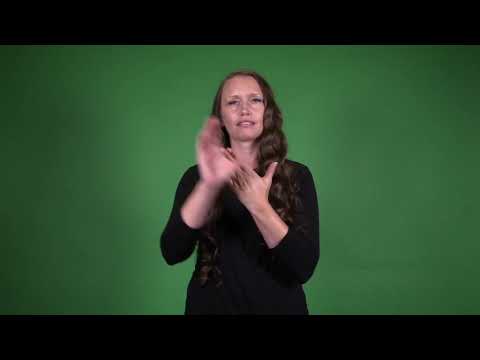
Practice Activities:
To effectively practice the sign for CALENDAR 2 in ASL, begin by isolating the sign and repeating it in front of a mirror to build muscle memory. Pay attention to handshape, movement, and facial expressions. Practice switching between the sign for CALENDAR 2 in ASL and related signs like DATE, DAY, and MONTH to reinforce connections.
Create flashcards with days of the week, months, and major holidays. Sign each one and then connect it with CALENDAR 2 to form short phrases or questions. For example, sign “JULY” then follow with CALENDAR 2 while raising your eyebrows to indicate a question, as in asking when something occurs.
Try forming simple sentences such as “I CHECK CALENDAR” or “CALENDAR FULL THIS WEEK.” Challenge yourself by describing your weekly schedule in ASL using signs for events, days, and times. Practice storytelling prompts like “Tell about a memorable day using a calendar to track events” to develop narrative fluency.
In pair activities, take turns asking questions such as “WHAT DAY MEETING?” or “VACATION WHICH MONTH?” using the sign for CALENDAR 2 in ASL to make the question clear. Role play as someone planning an event, pointing to different calendar dates in an imaginary setting. This encourages practical use and comprehension.
Recreate your personal schedule for the week, using the sign for CALENDAR 2 in ASL each time you mention a date or event. Record yourself signing and review the video for clarity and accuracy.
Use a printed calendar and label each day in ASL. Practice explaining what happens on each day using related vocabulary, always incorporating the sign for CALENDAR 2 in ASL as a reference point. Repetition and contextual use will help build confidence and mastery.
Cultural Context:
In American Sign Language, the sign for CALENDAR 2 in ASL reflects both functionality and cultural expression. Deaf culture places great importance on visual clarity and efficiency, and this sign fits seamlessly into that communication style. The sign for CALENDAR 2 in ASL is used when differentiating between versions or variations, especially in educational or formal settings.
The need for specificity in ASL has led to several signs for similar concepts. That’s where the sign for CALENDAR 2 in ASL becomes useful. This variation may appear in contexts such as schools, meetings, or scheduling events, where distinguishing between similar terms is needed to avoid confusion.
Deaf communities often rely on clear visual representations, and the sign for CALENDAR 2 in ASL provides crucial detail. When planning meetings, appointments, or school activities, the use of this sign helps streamline communication. Its usage is especially important when multiple calendars or systems are involved, such as a school year calendar versus a personal calendar.
This distinction also supports the visual learning environment in the Deaf world. ASL allows for variation in signs based on context, and sign for CALENDAR 2 in ASL shows how evolving language meets diverse needs. It’s more than just a word—it’s a practical tool rooted in Deaf experience and visual grammar.
Cultural norms in Deaf culture value accuracy and clarity, particularly with planning and schedule-related discussions. Using the correct version of the sign, like the sign for CALENDAR 2 in ASL, shows respect and understanding of these norms. It helps prevent miscommunication and builds stronger social connections within Deaf communities.
Teachers, interpreters, and Deaf professionals benefit from using this specific sign. The sign for CALENDAR 2 in ASL supports organized communication, especially when comparing two types of schedules. For example, a student may use it to distinguish between a school calendar and a family calendar, adding essential context.
Conversations in ASL often involve comparing ideas, and this sign allows for that flexibility. When someone refers to a second calendar or an alternate version, using the sign for CALENDAR 2 in ASL keeps everyone visually and conceptually aligned. It enhances the natural flow of ASL, which centers around facial grammar, body movement, and spatial awareness.
In Deaf events or community gatherings, clear communication about dates is key. The sign for CALENDAR 2 in ASL ensures that everyone is talking about the same system or schedule. Whether it’s shared planning for workshops, conferences, or social meet-ups
Extended Definition:
The sign for calendar 2 in ASL represents the concept of looking at or referencing a specific day or date on a calendar. This version of the sign may vary depending on region or context but generally involves mimicking the action of flipping or viewing pages in a calendar layout. It’s a useful sign in daily conversation, especially when talking about appointments, schedules, or planning events.
To perform the sign for calendar 2 in ASL, one common variation uses a dominant hand in a bent “L” shape moving down and into the non-dominant flat hand, which resembles the action of placing or checking something on a calendar. Another version might involve simulating the motion of flipping through a calendar page, which gives a clear visual representation of tracking or identifying a date. This visual concept helps reinforce understanding and makes communication more effective.
Whether at school, work, or during casual plans with friends, the sign for calendar 2 in ASL is a practical sign for scheduling and coordination. Deaf and hard of hearing individuals frequently rely on this visual way of discussing dates, and the sign helps reduce confusion by clearly indicating the subject of planning or referencing time. It also fits easily into larger sentence structures in ASL, which often rely on time-related context.
The sign for calendar 2 in ASL differs subtly from other versions, such as the original or regional signs that use different handshapes or motions. It’s important to observe how it’s used by native signers and confirm context to ensure the correct variation is used. Exposure to fluent signers or formal ASL settings, like classrooms or interpreter services, can help solidify understanding of this particular version.
Like many ASL signs, calendar 2 sign uses spatial referencing to connect the abstract concept of a calendar to a physical space or visual cue. This helps non-verbal communication take on richer meanings and allows for descriptive storytelling or detailed planning. Whether discussing an upcoming meeting, remembering a holiday, or setting a goal, this sign fits naturally into many conversations.
Learning signs like calendar 2 enhances communication and connection within the Deaf community. It also increases accessibility for people who interact with Deaf individuals regularly, such as teachers, employers, and peers. Using the correct version of the sign shows cultural respect and a desire to communicate effectively.
When considering ASL resources, always check that you’re learning the correct version of a sign, especially for terms like calendar where there may be multiple variations. Watching live demonstrations or videos can be incredibly helpful in mastering the sign for
Synonyms: calendar, calender, cal, planner, schedule
Educational resources: Find related learning materials in our course bank!
Want more? Check out some of our popular learning activities on the homepage!
Need to look up a sign? Use our highly rated dictionary: https://aslinteractive.com/best-asl-dictionary/
Follow us on tiktok: https://www.tiktok.com/@aslinteractive. More social media links at the bottom of this page!
Long-tail Keywords: what is the sign for calendar in ASL, how do you sign calendar in ASL, learn the ASL sign for calendar
Categories:
tags: Calendar, Time, Months, Days of the week, Events
Parameters
*Handshape*:
The handshape used in the sign for CALENDAR 2 in ASL involves a flat open B-hand for the non-dominant hand, held vertically to represent a wall or surface. The dominant hand also uses a B-handshape, starting behind the non-dominant hand and then moving forward in an arc, as if flipping a calendar page forward ️.
This motion mimics the action of a calendar being pulled from behind a surface. The sign for CALENDAR 2 in ASL relies on both hands working together to convey the concept clearly, with the handshape emphasizing the idea of passage through time.
*Palm Orientation*:
For the sign for CALENDAR 2 in ASL, the dominant hand typically starts with the palm facing in toward the non-dominant hand. The non-dominant hand remains stationary in a horizontal position with the palm facing down. The dominant hand then moves in a downward arc, simulating flipping a page, with the palm orientation shifting slightly outward during the motion. This palm orientation effectively conveys the concept of a turning calendar page.
The palm orientation is key in distinguishing the sign for CALENDAR 2 in ASL from similar concepts like schedule or agenda. Maintaining clear palm directions ensures the sign is recognized correctly and understood in context.
*Location*:
The sign for CALENDAR 2 in ASL is produced in the neutral space directly in front of the torso, typically a few inches outward from the chest. This positioning allows clear visibility for both signer and viewer, ensuring the movement is easily followed from top to bottom or side to side, depending on the sign’s motion.
The neutral space location for the Sign for CALENDAR 2 in ASL helps maintain clarity, especially when contrasting it with other signs that might also refer to time or schedules. This sign remains centered for optimal legibility in conversational settings. ️✨
*Movement*:
Start with your non-dominant hand in a flat B-handshape, palm facing you, held upright to represent a wall or planner. With your dominant hand in a C-handshape, move it downward behind the non-dominant hand and then flip it forward to land in front, mimicking the action of flipping a calendar page.
The sign for calendar 2 in ASL captures the motion of pages being turned. This movement visually emphasizes the concept of dates and monthly transitions, reinforcing the meaning of the sign for calendar 2 in ASL ️.
*Non-Manual Signals*:
The facial expression for the sign for CALENDAR 2 in ASL typically remains neutral, though slight eyebrow furrowing can be used to emphasize organization or planning. Mouth movements are minimal, with a light pursing of the lips or a subtle “mm” sound indicating precision or structure.
Eye gaze should follow the dominant hand as it moves to mimic the grid structure of a calendar. The head may tilt slightly to the side, especially if referencing dates or timelines, emphasizing clarity during the sign for CALENDAR 2 in ASL ️.
*Prosody, Dominant/Non-Dominant Hand*:
The sign for CALENDAR 2 in ASL uses the non-dominant hand held flat, palm facing the body to represent a surface or schedule. The dominant hand, shaped like a “C,” moves down behind the non-dominant hand and then flips forward, symbolizing flipping a page or turning to a new date.
This variation of the sign for CALENDAR 2 in ASL emphasizes the action of revealing future events. The dominant hand drives the motion, while the non-dominant hand remains still, providing a reference point.
Tips for Beginners:
When practicing the sign for CALENDAR 2 in ASL, begin by paying close attention to the orientation and movement of your dominant hand. For this variation, you generally use a flat non-dominant hand held upright, palm facing you, while the dominant hand moves down behind the non-dominant hand, representing a calendar page being turned or moved through. Consistency in motion speed and handshape matters a lot to convey the concept clearly.
A helpful tip is to practice in front of a mirror. This allows you to self-correct if your angles are off or if the sign is too subtle to be understood. When performing the sign for CALENDAR 2 in ASL, avoid rushing the movement. A steady and deliberate motion enhances visibility and comprehension, especially during a conversation.
Another common issue beginners face is confusing this variation with similar signs like “schedule” or other calendar-related words. Be sure to observe the distinct motion that involves moving the dominant hand behind and downward, not to the side or directly over. Proper palm orientation and spacing between the hands also ensure you are truly signing the correct term.
If you struggle with left-right coordination, consider slowing the motion down during practice. Speed will naturally come with repetition. Rehearsing the sign for CALENDAR 2 in ASL during natural contexts—like discussing dates with a friend—can make retention easier ️. You’ll develop both muscle memory and intuitive use.
Joining an ASL study group or community class can help you gain feedback. Watch how native or fluent signers use the sign for CALENDAR 2 in ASL to understand differences in regional styles while sticking to the core motion. Repetition with feedback is the fastest path to improvement.
Connections to Other topics:
The sign for CALENDAR 2 in ASL connects closely with concepts of time management and organization. It is often used alongside other time-related signs like DAY, WEEK, MONTH, and YEAR. This version of the sign for calendar can emphasize planning or tracking in structured formats, which is useful in educational, workplace, or scheduling contexts.
This sign is frequently incorporated into compound signs or phrases such as “work calendar,” “school schedule,” or “calendar event.” By combining it with BUILDING or SCHOOL, for instance, signers can refer to institutional calendars or public schedules. These compound structures help convey specific meanings depending on the context, emphasizing how the sign for CALENDAR 2 in ASL integrates with broader themes of schedule and routine.
Learners will find that this sign supports narratives involving planning and recurring events. In conversation, it allows users to refer back to previously mentioned timelines or to reference future appointments. It also shows up in discussions involving weather tracking or social events, further connecting it with the signs for WEATHER, PARTY, and HOLIDAY.
The sign for CALENDAR 2 in ASL can be contrasted with clock- or time-specific signs like TIME, HOUR, or MINUTE. This distinction is helpful in separating general planning from exact measurement of time. For example, while TIME answers “what time,” the sign for CALENDAR 2 in ASL answers “which day” or “what month.”
Additionally, the sign appears frequently in educational settings, especially in routines like classroom calendar time or monthly lesson planning. It can also relate to digital communication, where a signer may refer to syncing or checking a virtual calendar. Understanding how to use this sign in tandem with digital signs like COMPUTER or PHONE enhances conversational flexibility.
Summary:
The sign for CALENDAR 2 in ASL involves a two-handed motion where the dominant hand, forming a flat B-handshape, moves downward past the non-dominant flat B-hand, mimicking the action of flipping a calendar page. This variation typically begins with the non-dominant hand held vertically to represent a wall calendar. The dominant hand then moves downward and slightly forward, signifying the transition of time or passing of a day or a month.
This sign emphasizes a visual-spatial aspect of time management by depicting how we interact with real-world calendars. The motion reinforces the concept of days or months moving sequentially, aligning with how ASL often uses space metaphorically. The directionality provides not just a literal but a symbolically temporal orientation, critical in ASL’s narrative structure.
Grammatically, the sign for CALENDAR 2 in ASL functions as a noun and is often used in topic-comment constructions. For example, a signer might structure a sentence with the calendar as the topic first: CALENDAR 2, ME CHECK DAILY. This usage highlights the importance of spatial grammar in ASL, where visual cues set context and timing for actions.
This sign is frequently used in educational, workplace, and scheduling contexts, embodying the organizational regiment embedded in American culture. It also demonstrates how signing communities express routine and scheduling visually, prioritizing the tactile and movement-based representation of abstract concepts like time. Calendars hold a central place in discussions of appointments, holidays, and planning sessions, making this sign practically essential.
The sign for CALENDAR 2 in ASL offers insight into how ASL captures movement and structure to convey deeper linguistic meaning. Unlike spoken languages reliant on linear syntax, ASL compresses time and sequence through spatial movement and visual metaphor. This enables nuanced storytelling and precise communication of temporal flow.
In Deaf culture, the concept of time is structured visually and contextually, rather than dictated strictly by clock time alone. The sign for CALENDAR 2 in ASL aligns with cultural preferences for clarity, directness, and meaningful visual cues. Planners, bullet journals, and visual schedule boards are often used in tandem to reinforce such routines, showing how language, culture, and lifestyle converge.
It’s also notable how this sign may vary slightly depending on regional influences or family-centric sign dialects. Some signers may adopt a smoother flip motion, while others emphasize a more deliberate downward slice, especially in formal or instructional settings. These small adjustments reflect the adaptability and personalization inherent in signed communication.
The physicality of the sign for CALENDAR 2 in ASL showcases the embodied cognition that defines ASL. When signers produce this sign, they are also engaging muscle memory to represent abstract time passage. Such gestural literacy is an integral part of how Deaf individuals process and conceptualize time-bound discussions.
In many conversations, signers will follow this specific sign with time indicators such as NEXT WEEK, LAST MONTH, or JANUARY to further specify. This sequencing allows ASL to mirror the layered structure of English while maintaining its own grammatical integrity. The sign operates as a bridge into more detailed temporal expressions, offering linguistic flexibility.
The sign for CALENDAR 2 in ASL also appears in discussions about history, future plans, anniversaries, or time management. It is a useful tool in classroom settings to teach Deaf students how to navigate time-related vocabulary. Teachers often accompany this sign with visual aids like wall calendars or digital scheduling apps to reinforce language-to-concept mapping.
In storytelling or personal vlogs, users frequently integrate this sign with expressions of routine or anticipation. For instance, pointing to a specific day before or after making the sign can indicate when events will occur. Thus, the sign isn’t just informative—it helps structure narrative flow in ASL literature and daily conversation.
Linguistically, the sign for CALENDAR 2 in ASL contributes to a broader categorization of temporal signs. These include WEEK, MONTH, DAY, YEAR, and TIME, all of which use spatial metaphors and consistent handshapes. Together, they develop a full lexical field around time and scheduling, critical for everyday interpersonal and institutional communication.
ASL relies heavily on classifiers to denote specific meanings tied to objects or actions, but CALENDAR 2 is more iconic than classifier-based. Its visualization makes this sign more accessible for early learners or people new to sign language. This kind of visual transparency aids in second language acquisition and enhances curriculum design for both children and adults.
In a sociolinguistic context, signs like CALENDAR 2 carry significance beyond the literal meaning. They symbolize participation in communal time standards, such as shared holidays or collective schedules. As such, they tie users into larger social systems through linguistic engagement.
Calendar usage intersects with religious observance, cultural holidays, and school timetables. Signing CALENDAR 2 within these contexts brings powerful clarity to communal planning. For Deaf individuals attending events or organizing group gatherings, this sign is vital for aligning shared expectations
Want more? Check out some of our popular learning activities!
ASL Interactive Resources
ASLInteractive YouTube Channel
Follow us on tiktok: @aslinteractive.com
Follow us on Instagram: aslinteractive
Facebook page: aslinteractive
Facebook group: aslinteractive
LInkedIn: ASL Interactive LLC
Twitter: @ASL_interactive
*Some information on this page is AI-generated. AI can make mistakes. Please check the information.

Responses