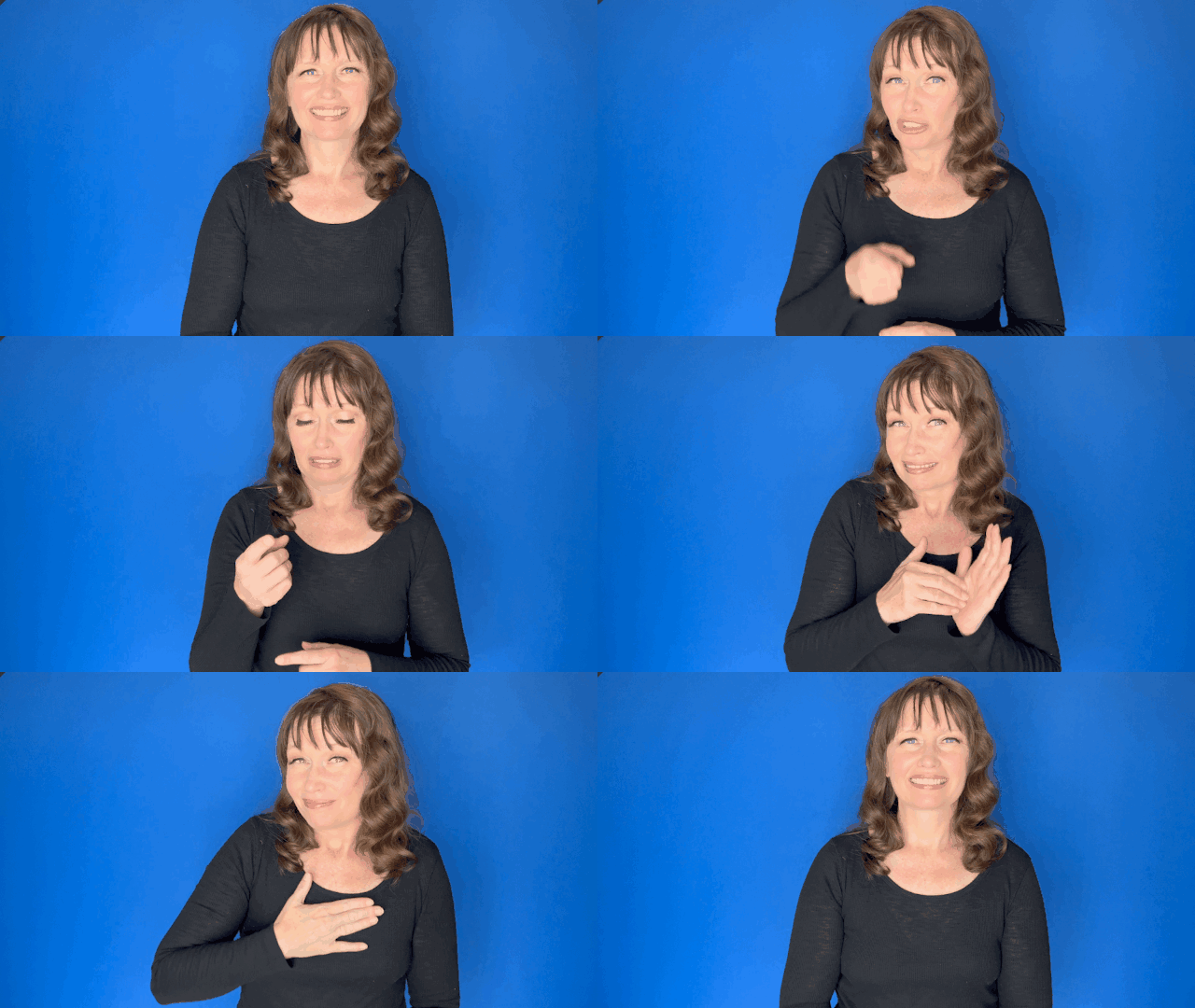
Sign for CAN YOU PLEASE SIGN THAT AGAIN? in ASL | 🔁 ASL Dictionary

Definition: A request to sign something again.

Sign for CAN YOU PLEASE SIGN THAT AGAIN? in ASL

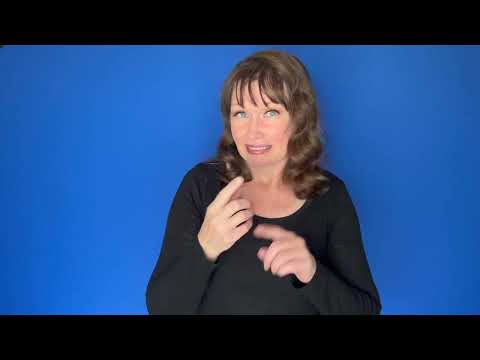
YouTube player

Practice Activities:

To practice the sign for CAN YOU PLEASE SIGN THAT AGAIN? in ASL, start by breaking down each individual sign. Practice signing “can you” using a forward motion pointed toward the person, then smoothly transition into “please” with a circular motion of a flat hand on the chest. Follow it with “sign” using both index fingers tracing small alternating circles toward the signer, and end with “again” by touching the bent fingers of one hand to the opposite open palm. Repeat these parts several times slowly to build fluency and consistency.

Use a mirror to practice the phrase as a complete question. Focus on clarity and facial expression, which should convey polite inquiry. Eyebrows should be slightly raised to indicate you are asking a yes/no question. You can also record yourself signing to assess smoothness and clarity of transitions between signs.

Create short skits or dialogues with a partner using the sign for CAN YOU PLEASE SIGN THAT AGAIN? in ASL in natural conversation. One person signs something unfamiliar or very fast, and the other responds with the full phrase appropriately. Switch roles and vary the context such as in a classroom, on the street, or at work. This helps reinforce when and how to use the phrase.

Develop your receptive skills by having a partner sign the sentence at varying speeds, then repeat it back. Use example sentences like: “Can you please sign that again? I didn’t catch the last part.” or “Sorry, that was fast—can you please sign that again?” Try adding emotions like confusion or curiosity for practice with expression.

Storytelling prompts can also integrate the sign for CAN YOU PLEASE SIGN THAT AGAIN? in ASL. Try narrating a story where a student misunderstands an instruction and politely asks the teacher to repeat the sign. Incorporate the phrase naturally and use it multiple times throughout the story for repetition practice.

Cultural Context:

In Deaf culture, repetition is a very natural and respectful part of communication. The sign for CAN YOU PLEASE SIGN THAT AGAIN? in ASL is a polite and essential phrase often used during conversations when something is missed or not clearly understood. Whether you’re a beginner learning signs or fluent in American Sign Language, using this phrase shows care, attention, and a desire to fully understand the signer.

The sign for CAN YOU PLEASE SIGN THAT AGAIN? in ASL helps build trust in communication. It tells the other person you’re engaged and actively listening, even if you need them to repeat what was said. In Deaf interactions, it’s completely normal to ask someone to sign something again for clarity .

From a cultural perspective, asking for repetition is not seen as a failure or a lack of skill. Instead, the use of the sign for CAN YOU PLEASE SIGN THAT AGAIN? in ASL represents a commitment to clear and respectful communication. Consistent visual contact and eye connection are key parts of Deaf culture, and repeating signs helps maintain clear understanding between people.

In ASL, clarity is very important. Facial expressions, hand movements, and body language all contribute to meaning. So, when a signer uses the sign for CAN YOU PLEASE SIGN THAT AGAIN? in ASL, it allows both people to ensure that the message being shared is fully understood without offense or awkwardness.

This phrase is often used in classrooms, conversations with friends, or interactions between Deaf and hearing people. The sign for CAN YOU PLEASE SIGN THAT AGAIN? in ASL empowers people to keep the conversation going without pretending to understand. It keeps communication flowing naturally and honestly .

Using this phrase also shows respect for the other person’s effort. When you use the sign for CAN YOU PLEASE SIGN THAT AGAIN? in ASL, you’re showing that what the other person is saying matters. In Deaf culture, taking the time to ask for clarification is much better than guessing or ignoring part of a message.

For ASL learners, mastering this phrase early can help build confidence. It takes the pressure off getting every sign right the first time and encourages open, two-way communication. The repeated use of the sign for CAN YOU PLEASE SIGN THAT AGAIN? in ASL during learning settings or real-life interactions supports ongoing language development.

Communicating effectively is more than just learning vocabulary. It’s about participating in a shared culture and understanding the values behind expressions and phrases. The sign for CAN YOU PLEASE SIGN THAT AGAIN? in ASL reflects the value placed on clarity,

Extended Definition:

The sign for CAN YOU PLEASE SIGN THAT AGAIN? in ASL is a useful and polite phrase often used by learners or in conversations where the signer needs clarification. This phrase blends a request with a touch of politeness, which makes communication smoother and more respectful in American Sign Language. It’s especially important in environments like classrooms, meetings, or interpreting sessions where clear understanding is key.

To sign CAN YOU PLEASE SIGN THAT AGAIN? in ASL, the phrase is typically broken down into several signs. The individual signs include CAN, YOU, PLEASE, SIGN, THAT, and AGAIN. These signs are strung together fluidly and delivered with a polite facial expression that matches the respectful tone of the question. Facial expressions in ASL help give context to the request, conveying sincerity and need for repetition.

Each part of the sign carries meaning. CAN is signed by using both fists and pulling them downward slightly to show ability. YOU is indicated by pointing directly at the person. PLEASE is signed using a flat hand that circles on the chest. SIGN is a two-handed motion that mimics the movement of fingers drawing a shape in the air. THAT often uses a pointing gesture, and AGAIN involves tapping a curved hand into the palm of your opposite hand. Together, these build a full and clear request in ASL.

The sign for CAN YOU PLEASE SIGN THAT AGAIN? in ASL is essential for both beginner and advanced ASL users. As you learn, it’s normal to miss certain signs or misunderstand a conversation. Being able to quickly and courteously ask for repetition helps maintain flow and shows you want to engage actively. ✋

This phrase is not just about repeating words—it’s part of cultural etiquette in the Deaf community. Asking something in a polite and grammatically correct way shows respect for those you’re interacting with. It keeps communication collaborative rather than one-sided, which is an important value in ASL culture.

In teaching contexts, instructors often encourage students to use the sign for CAN YOU PLEASE SIGN THAT AGAIN? in ASL to build confidence and reinforce active learning. It’s a practical tool that opens the door to better comprehension. Tutors, interpreters, and peers appreciate the effort when someone takes the time to make this gesture part of their regular vocabulary.

This phrase can also be modified slightly depending on the setting or urgency. For example, the sign can be delivered more slowly in a learning environment or a bit quicker in casual conversation. Tone is set through facial expressions, which in ASL carry as

Synonyms: Can you repeat the sign? Can you show me the sign again? Can you sign that again, please? Could you show the sign again? Could you repeat the sign, please?

Educational resources: Find related learning materials in our course bank!

Want more? Check out some of our popular learning activities on the homepage!

Need to look up a sign? Use our highly rated dictionary: https://aslinteractive.com/best-asl-dictionary/

Follow us on tiktok: https://www.tiktok.com/@aslinteractive. More social media links at the bottom of this page!

Long-tail Keywords: what is the sign for Can you please sign that again in ASL, how do you sign Can you please sign that again in ASL, ASL sign for Can you please sign that again

Categories:

tags: can you please sign that again in ASL, how to ask to repeat a sign in ASL, ASL phrase can you sign that again, asking for repetition in ASL, learn ASL phrases for asking clarification

Parameters

*Handshape*:

The handshape for the Sign for CAN YOU PLEASE SIGN THAT AGAIN? in ASL involves multiple movements using standard ASL handshapes. It begins with both hands in the ‘1’ handshape for the word SIGN, circling each other in front of the body. The dominant hand then uses a flat hand to gesture PLEASE by making a circular motion over the chest.

Next, the index finger points toward the person for YOU, followed by a polite facial expression. For AGAIN, the dominant hand, shaped like a bent hand, taps into the open non-dominant palm. Each handshape in the Sign for CAN YOU PLEASE SIGN THAT AGAIN? in ASL is clearly defined and helps convey the message naturally and respectfully.

*Palm Orientation*:

For the sign for CAN YOU PLEASE SIGN THAT AGAIN? in ASL, the palm orientations vary slightly with each component of the phrase. For “sign,” both hands face each other with palms inward, moving in small circular motions. For “please,” the dominant hand has the palm flat and facing in, circling over the chest.

When signing “again,” the dominant hand is curved with the palm facing sideways or upward, tapping the palm of the non-dominant hand, which faces up. These subtle palm orientation differences are essential for clarity in the full sign for CAN YOU PLEASE SIGN THAT AGAIN? in ASL.

*Location*:

The location for the sign for CAN YOU PLEASE SIGN THAT AGAIN? in ASL begins in the signing space directly in front of the body. Both hands are situated near chest level when signing “sign,” and then the dominant hand moves slightly toward the listener when signing “you.” The phrase “please” is made with a circular motion of the dominant hand on the chest.

For “again,” the dominant hand taps the palm of the non-dominant hand around mid-torso level. The overall sign for CAN YOU PLEASE SIGN THAT AGAIN? in ASL stays within the neutral signing space from waist to shoulders, maintaining clear visibility and intentional movement.

*Movement*:

To sign the phrase can you please sign that again? in ASL, begin by signing CAN with both fists starting in front of the chest, palms down, and pushing downward slightly. For YOU, point directly at the person. PLEASE is signed with a flat hand circling clockwise over the chest.

SIGN is done by circling both index fingers around each other in alternating forward motions. THAT is indicated by forming a Y-handshape and dropping it downward. AGAIN uses the dominant bent hand tapping into the palm of the non-dominant flat hand. The full sign for can you please sign that again? in ASL flows fluidly, maintaining clear pauses between each concept while keeping a respectful facial expression. ✅

*Non-Manual Signals*:

When performing the sign for CAN YOU PLEASE SIGN THAT AGAIN? in ASL, raise your eyebrows slightly and lean your head forward to indicate that you’re asking a question politely. Maintain soft eye contact and an inquisitive facial expression to show your interest and attentiveness.

Include a slight head tilt and a light smile for politeness, especially when emphasizing the word “please.” These non-manual cues help convey the full meaning behind the sign for CAN YOU PLEASE SIGN THAT AGAIN? in ASL

*Prosody, Dominant/Non-Dominant Hand*:

The sign for CAN YOU PLEASE SIGN THAT AGAIN? in ASL uses both hands, beginning with a one-handed movement for “can you” using a flat dominant hand held outward, palm down, gently bobbed down once. “Please” is signed with a circular motion over the chest using the dominant flat hand.

For “sign that again,” both hands form index fingers rotating in alternating inward circles to indicate “sign.” The dominant hand then lightly touches the non-dominant palm in a short repeated motion to express “again.” The sign for CAN YOU PLEASE SIGN THAT AGAIN? in ASL carries a polite and clear tone, often paired with raised eyebrows to indicate a question.

Tips for Beginners:

When learning the sign for CAN YOU PLEASE SIGN THAT AGAIN? in ASL, try breaking the full phrase into its individual components: CAN, YOU, PLEASE, SIGN, THAT, and AGAIN. Practice each sign clearly and separately before attempting to string them together smoothly. Once you’re comfortable, focus on fluidity between transitions while keeping your hands and face expressive with appropriate non-manual signals.

Facial expression plays a major role in this question. Raise your eyebrows slightly to signal a yes/no question when signing CAN YOU. Use a polite and slightly pleading facial expression during PLEASE to show respect. These subtle expressions help convey your tone and make your question sound courteous instead of demanding.

The sign for SIGN should be performed with both index fingers circling each other smoothly, in a gentle forward motion. MANY beginners mistakenly reverse the direction or twist their wrists awkwardly. Practice this movement in front of a mirror for better coordination and to ensure your hands stay relaxed yet deliberate.

For the sign AGAIN, bring your dominant bent fingers into the palm of your non-dominant hand confidently. One common issue is doing this movement too quickly or without full contact—this can cause confusion with similar-looking signs. Repeat it slowly and clearly until it becomes natural.

Don’t forget the power of eye contact in ASL. When asking someone to repeat something, maintain visual connection—this signals attentiveness and helps reinforce the question you’re signing. Also, consider signing a bit slower than usual when you’re still learning. Pace allows more time to form accurate signs and gives your conversation partner a better chance to understand you.

To master the sign for CAN YOU PLEASE SIGN THAT AGAIN? in ASL, consistent practice and real-time usage are key. Signing with fluidity takes time, so practice with patient friends or in ASL learning groups where feedback is available. The more you use this phrase, the more confident you’ll become in everyday conversations.

Connections to Other topics:

The sign for CAN YOU PLEASE SIGN THAT AGAIN? in ASL connects closely with the broader topic of clarification and strategies for effective communication in ASL. This phrase is especially essential for ASL learners or in conversations where clarity is vital, such as between Deaf and hearing signers using different levels of fluency. Understanding how to request repetition or clarification is a foundational interaction skill in ASL.

This sign incorporates elements such as CAN, YOU, PLEASE, SIGN, and AGAIN, each of which is a basic, standalone sign in ASL. The ability to combine these signs into a polite, functional question is a great example of how sentence structure and sign order reflect ASL grammar. This structure differs from English, requiring learners to engage with ASL sentence patterns more deeply to formulate questions or statements naturally.

The sign for CAN YOU PLEASE SIGN THAT AGAIN? in ASL also relates to the concept of repetition in signing. The word AGAIN is commonly used not just to ask for repetition, but also as a building block in compound signs like LEARN-AGAIN (REVIEW) or TELL-AGAIN (REPEAT). These related signs offer nuance in context, showing how ‘again’ can be adapted for different communicative intentions.

This phrase also demonstrates polite request forms in ASL. Adding PLEASE transforms a direct command into a more respectful, courteous question. Understanding how to include or omit PLEASE in various interactions shows the social competency required in Deaf culture.

Additionally, this phrase encourages fluency with directional verbs. For instance, SIGN in this question can be directed toward the person you are addressing, showing who should perform the action. These directional markers are crucial in ASL to show subject-object relationships clearly. Learning how to modify movement and incorporate facial expressions enriches the overall delivery of this simple yet powerful phrase.

Summary:

The sign for CAN YOU PLEASE SIGN THAT AGAIN? in ASL is not a single, fixed sign but a phrase composed of several individual signs. It reflects a polite and common request often used in ASL communication, particularly when clarity or repetition is needed. Each part of the phrase has its own grammatical and expressive function, combining into a courteous question.

The sign begins with CAN, which involves both hands in an “S” handshape, palms down, moving slightly downward to indicate ability or possibility. This sets the modality of the sentence, asking whether something is possible. It’s direct and efficient, reflecting ASL’s tendency to streamline expressions.

Next comes YOU, a straightforward index point toward the person being addressed. This is a common pronoun sign in ASL and is inherently directional. In ASL grammar, pronouns rely heavily on spatial referencing, and this small sign aligns subject focus effectively.

PLEASE is signed with a flat hand moving in a circular motion over the chest. This adds the element of politeness to the request. Cultural norms in Deaf communities often value directness, but adding PLEASE softens the tone when appropriate, showing respect and establishing rapport.

SIGN refers to the act of signing, and this is shown by both hands in “1” handshape, circling each other at chest level. These circles typically rotate in opposite directions. It visually mimics a flowing conversation and is one of the most frequently used signs in the language.

THAT typically requires a generalized pointing gesture or the use of the Y-handshape moved forward, depending on how the signer references previously established space or objects. In this context, THAT acts as a demonstrative for what was just signed, building cohesion. ASL’s spatial grammar lets signers index physical space to refer back, similar to pronouns.

AGAIN is signed by taking the dominant hand in a bent B-handshape and tapping it against the palm of the non-dominant flat hand. The palm acts as a base, representing the action that has already occurred, while the motion of repeating onto it illustrates the concept of repetition. This is key for a language that depends on visual transmission—errors in visual perception aren’t uncommon, so this request is practical.

Combined, the sign for CAN YOU PLEASE SIGN THAT AGAIN? in ASL consists of multiple conceptual units flowing in a logical ASL grammatical order. Typically, a Deaf signer might omit the word CAN entirely depending on context. ASL grammar tends toward brevity and emphasis on essential signs. Facial expressions, eye gaze, and head movement also contribute to the phrasing of a question.

Non-manual markers are especially crucial. Raised eyebrows, a slight head tilt, and direct eye contact transform the phrase into an interrogative. Without these, the phrase could be mistaken as a command or as a plain statement. This reflects ASL’s reliance on a combination of manual and non-manual features to encode grammar.

The sign for CAN YOU PLEASE SIGN THAT AGAIN? in ASL is particularly common in classrooms, interpreting sessions, and informal interactions. It is essential for learners and communication partners to master such common interactional phrases for smoother exchanges. Deaf culture encourages asking for clarification rather than pretending to understand, so this phrase is both accepted and expected.

Grammatically, ASL allows for flexible order, but general conventions guide signers toward natural phrasing. This phrase typically maintains subject-object-verb ordering adjusted for clarity. ASL signs also often take on different directional aspects depending on context. In this phrase, you may sign YOU and THAT referencing spatial locations tied to entities being discussed.

Linguistically, the phrase integrates both content words and polite markers, showing a bridge between pure semantic value and social intent. The presence of PLEASE is linguistically optional but socially significant. This reveals how ASL interacts with pragmatic elements of language in dynamic ways.

From a sociolinguistic perspective, frequent use of the sign for CAN YOU PLEASE SIGN THAT AGAIN? in ASL underscores the importance of mutual understanding. Visual language requires cooperative exchange, and clarification strategies are part of communicative competence. Language negotiation and repair are rich fields in applied linguistics, and ASL offers practical contributions.

Variation exists in the execution of certain components based on region, age of the signer, and personal stylistic choices. For instance, subtle changes to AGAIN and PLEASE might occur depending on regional dialects in ASL. This indicates ASL’s flexibility and the role of linguistic variation within the Deaf community.

Delving into cultural context, this phrase shows how politeness and repetition strategies mirror shared cultural values. Deaf culture strongly values clarity, effective communication, and directness, yet maintains room for politeness and mutual support. This phrase embodies those principles well.

Eye contact is critical when using the sign for CAN YOU PLEASE SIGN THAT AGAIN? in ASL. It reinforces the interpersonal connection and ensures visual attention. Without sustained eye contact, the request may not register effectively, highlighting how visual attention substitutes for vocal cues.

Lear

Want more? Check out some of our popular learning activities!

ASL Interactive Resources

ASLInteractive YouTube Channel

Follow us on tiktok: @aslinteractive.com

Follow us on Instagram: aslinteractive

Facebook page: aslinteractive

Facebook group: aslinteractive

LInkedIn: ASL Interactive LLC

Twitter: @ASL_interactive

*Some information on this page is AI-generated. AI can make mistakes. Please check the information.

Sign for CAN YOU PLEASE SIGN THAT AGAIN? in ASL

Responses