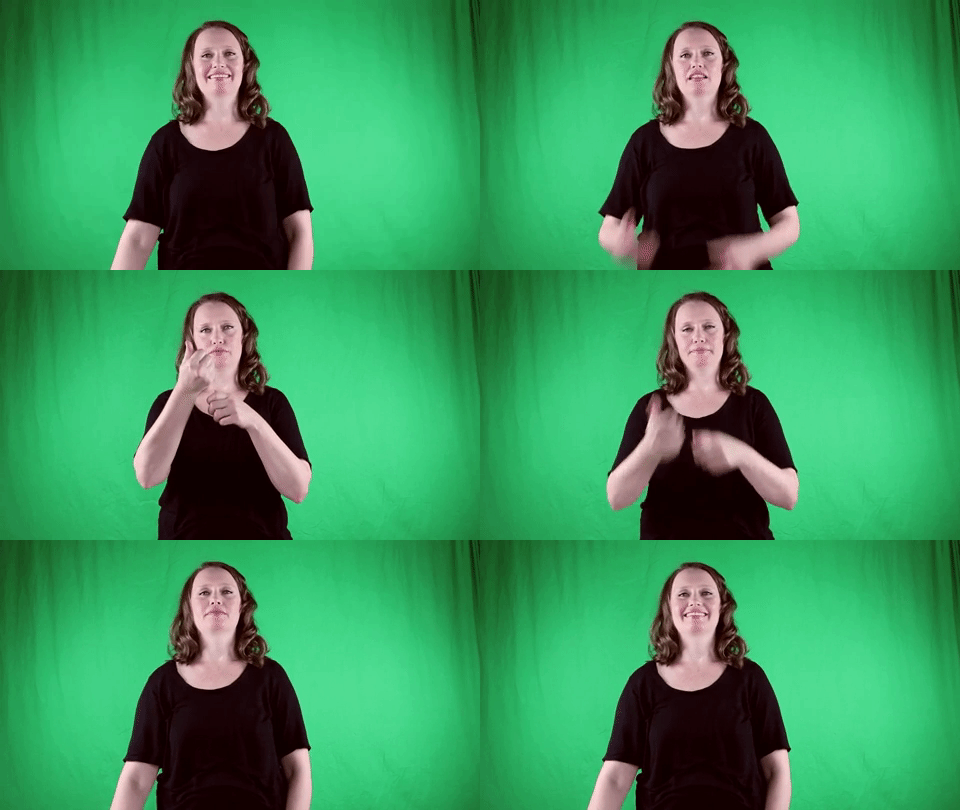
Definition: A sparkling wine.
Sign for CHAMPAGNE in ASL

Practice Activities:
To begin practicing the sign for CHAMPAGNE in ASL, start by signing it in isolation several times, using a mirror to check your handshape, movement, and facial expression. This helps reinforce muscle memory and ensures clarity when using the sign in conversation. Make sure to mimic the motion associated with a cork popping or miming the pouring of champagne, depending on your regional variation.
Next, incorporate the sign into thematic vocabulary practice. Create a list of celebration-related signs like party, toast, happy, wedding, and holiday. Practice combining them with the sign for CHAMPAGNE in ASL to build smooth transitions. For example, sign phrases such as “Happy New Year, champagne toast!” and “We drank champagne at the wedding.”
Use storytelling to deepen your retention. Try describing a celebration where champagne was involved. For example, narrate a birthday or graduation party and include at least three different details using descriptive signs along with the sign for CHAMPAGNE in ASL. Focus on sequencing events using signs like first, next, then, and finally.
Partner practice can boost your receptive and expressive skills. With a friend or classmate, role-play a scenario like making a toast at a wedding. Each person can take turns signing a short speech that includes the sign for CHAMPAGNE in ASL. Give each other feedback on clarity and fluency.
Watch videos or clips showing celebrations including champagne, then try retelling what happened using ASL. Pause and mirror each segment, identifying how non-manual markers, expressions, and hand movements support natural signing. Repetition and active use are key to mastering the sign. Add a timer to speed practice and build accuracy under mild pressure for more advanced reinforcement.
Cultural Context:
In American Sign Language, the sign for champagne in ASL carries more than just a visual representation of a bubbly drink—it reflects the cultural associations and celebratory contexts tied to champagne in many communities. When someone uses the sign for champagne in ASL, it’s often done in festive environments, highlighting moments of joy, success, and special occasions.
The sign for champagne in ASL is commonly used during discussions or storytelling about weddings, New Year’s Eve, anniversaries, and other moments marked by celebration. Just as champagne is considered a symbol of luxury or festivity in the hearing world, the same symbolic meaning carries over visually in ASL.
When teaching the sign for champagne in ASL, it’s important to include the social contexts where this sign is likely to appear. Deaf culture places a strong emphasis on storytelling and shared experience. So when someone signs champagne, it often invites others to recall a party, toast, or milestone moment. ♂️
The visual nature of the sign for champagne in ASL also allows for expressive storytelling. Users may add facial expressions and body movement to reflect the joyful, popping nature of champagne. This dynamic adds more meaning than the sign alone, allowing the signer to fully convey the scope of the celebration.
In Deaf culture, representation of alcohol-related signs like champagne is often approached thoughtfully and respectfully. While these signs are part of vocabulary learning, they are typically used in appropriate settings. Teaching the sign for champagne in ASL includes understanding not just motion but the cultural meaning behind it.
The use of the sign for champagne in ASL doesn’t necessarily imply consumption—it might reference an event featuring champagne or even represent elegance and sophistication in a conversation. Much like in spoken language, context is key in ASL. The sign could even show up metaphorically in poems or visual vernacular performances.
Events like Deaf weddings or Deaf community milestone celebrations might include the sign for champagne in ASL as part of the storytelling during ceremonies or social video shares online. Social media in ASL often features glimpses into Deaf party culture, where the sign becomes part of digital communication.
Popular ASL content creators may use the sign for champagne in ASL during skits or vlogs to celebrate subscriber milestones or successes. This use normalizes the sign and strengthens its cultural ties to accomplishment and joy, especially among younger Deaf audiences who engage heavily with visual social platforms like TikTok and Instagram.
Understanding the proper context and usage of the sign for champagne in ASL can also help interpre
Extended Definition:
The sign for champagne in ASL is a fun and expressive gesture that captures the bubbly feeling of the drink itself. It typically involves mimicking the action of opening a champagne bottle and the fizz that follows. This visual and lively sign helps convey both the literal meaning and the celebratory emotion tied to champagne.
In American Sign Language, the sign for champagne reflects the drink’s association with celebrations, parties, and special occasions. The use of mime-like movements in this sign makes it easy to remember and visually striking. Since ASL is a visual language, signs for beverages like champagne often use handshapes and movements that symbolize how the drink is used in everyday life.
When you’re learning the sign for champagne in ASL, it’s helpful to imagine the moment a bottle of champagne is popped open. The handshape often represents the bottle, with an upward motion to indicate the cork popping. Some variations include a follow-up movement showing the fizziness or spraying of the champagne, especially in informal or festive contexts.
This sign is commonly used in conversations about weddings, New Year’s Eve parties, anniversaries, and other joyful events. Understanding how to sign champagne allows ASL users to fully participate in discussions about drinking, toasts, and luxury celebrations. It’s also useful in interpreting or performing in settings like theater, film, or live events where such references often occur.
The sign for champagne in ASL differs slightly from similar signs like wine or beer, which focus more on the type of container or how it is held and consumed. Champagne’s sign adds a dramatic touch, enhancing the storytelling aspect of communication. This makes it more than just a label—it becomes part of a vivid narrative.
Many ASL learners find the sign for champagne especially interesting because it involves physical movement and expressive flair. This offers a great opportunity to practice fluid transitions and facial expressions that align with the festive tone. Cultural context also plays a role, as certain gestures might be emphasized more during celebratory events within the Deaf community.
When teaching the sign for champagne in ASL, instructors often stress the importance of facial expressions. Since ASL relies heavily on non-manual markers, an excited or joyful facial expression can elevate the meaning and make it more dynamic. This aligns well with the general excitement that champagne typically brings to any celebration.
Online videos and visual dictionaries often demonstrate this sign with slight regional variations. Some dialects within the ASL community may have unique ways of signing champagne depending on familiarity with the context or usage frequency. Regardless of these
Synonyms: sparkling wine, bubbly, sparkling beverage, sparkling vino, fizz
Educational resources: Find related learning materials in our course bank!
Want more? Check out some of our popular learning activities on the homepage!
Need to look up a sign? Use our highly rated dictionary: https://aslinteractive.com/best-asl-dictionary/
Follow us on tiktok: https://www.tiktok.com/@aslinteractive. More social media links at the bottom of this page!
Long-tail Keywords: what is the sign for champagne in ASL, how do you sign champagne in ASL, ASL sign for champagne
Categories:
tags: Celebration, New Year’s Eve, Occasions, Toasting, Drinks
Parameters
*Handshape*:
The handshape for the sign for CHAMPAGNE in ASL typically involves both hands forming the “S” handshape, resembling how one would grasp a bottle. The dominant hand mimics removing a cork by twisting and shooting upward, symbolizing the popping motion of champagne being opened. This action closely mirrors the celebratory action commonly associated with champagne .
In the sign for CHAMPAGNE in ASL, the shape and motion of the hands effectively capture the cultural gesture of opening a bottle. The “S” handshape makes the act visually strong and easy to understand for viewers familiar with the drink.
*Palm Orientation*:
For the sign for CHAMPAGNE in ASL, the palm orientation begins with both hands in an upright position, typically mimicking the shape of a champagne bottle and cork. The dominant hand is often positioned on top of the nondominant hand, with palms facing each other or slightly inward, resembling the motion of popping a cork.
As the dominant hand moves upward in a flicking motion, the palm may face briefly out or upward to emphasize the release of the cork. This distinct movement helps visually communicate the celebratory action central to the sign for CHAMPAGNE in ASL .
*Location*:
The sign for CHAMPAGNE in ASL is typically produced near the mouth or just below chin level, depending on the variation used. This location reflects the association with drinking and beverages, helping to visually tie the meaning of the sign to its usage.
Since the sign mimics the popping of a champagne cork or the clinking of glasses, the location around the face or upper chest area is ideal. When demonstrating the sign for CHAMPAGNE in ASL, be sure to keep the movement close to your face to maintain clarity and contextual accuracy.
*Movement*:
The sign for champagne in ASL mimics a popping bottle. Begin with both hands in fists; keep the non-dominant hand still in front of your chest as if holding a bottle, while the dominant hand flicks off the “cork” with the thumb, then opens and moves upward slightly as if the cork is flying off.
The sign for champagne in ASL uses visual metaphor to represent the burst of a cork popping open. The movement is quick and celebratory, echoing the effervescence and festivity associated with actual champagne.
*Non-Manual Signals*:
The non-manual signals for the sign for champagne in ASL typically include a facial expression that conveys excitement or celebration, often with a slight raised eyebrow or a light smile . These expressions help reinforce the festive or elegant nature associated with champagne.
When using the sign for champagne in ASL, a light, buoyant facial expression can enhance the visual representation, especially when mimicking bubbles popping or the cork popping sensation. The mood communicated should align with enjoyment or ceremonial context.
*Prosody, Dominant/Non-Dominant Hand*:
The sign for champagne in ASL uses both hands. The non-dominant hand stays in a loose fist, palm facing down, as if holding an imaginary champagne bottle. The dominant hand forms a “Y” handshape and moves upward from the mouth of the “bottle” in a small, fizzy motion to represent bubbles or foam. This movement visually mimics the pop and effervescence of champagne.
The sign for champagne in ASL captures both the bottle and the sparkling effect in one fluid motion. It’s a great example of how ASL incorporates visual metaphors. Keep your motions smooth and clear to make the concept of champagne recognizable.
Tips for Beginners:
When learning the sign for CHAMPAGNE in ASL, it’s important to start by observing native signers or verified video resources to understand the motion and facial expression that accompanies this celebratory sign. The sign mimics the act of opening a champagne bottle with one hand grasping the top and the other popping the cork upward with a flicking gesture. It’s especially important to keep your movements fluid but deliberate to communicate the action clearly.
One of the most common mistakes beginners make with the sign for CHAMPAGNE in ASL is either making the popping motion too abrupt or forgetting to use facial expression to convey the joyful or celebratory emotion tied to this sign. Remember, ASL is as much about facial expression as it is about hand movement. To improve accuracy, practice the sign in front of a mirror to ensure both hands are coordinated and the motion flows naturally.
Use your non-dominant hand to simulate the bottle being held while your dominant hand slides up and pops—think about the fizzy energy of real champagne bottles. Practice slow and intentional repetition to build muscle memory. Also, make sure your fingers are relaxed and slightly curved rather than stiff when performing the popping motion.
When using the sign for CHAMPAGNE in ASL during conversation, context is key. If you’re signing about a wedding, party, or celebration, this helps reinforce the meaning. Don’t forget to pair the sign with appropriate facial expressions such as a smile or raised eyebrows to enhance understanding .
It’s also beneficial to watch how experienced signers transition in and out of the sign. This helps with developing flow in conversation and ensures your use of the sign for CHAMPAGNE in ASL feels natural rather than forced. Practice often and stay consistent for best results .
Connections to Other topics:
The sign for CHAMPAGNE in ASL connects to a broader group of signs related to celebrations, alcoholic beverages, and luxury items. Similar signs include WINE, BEER, and ALCOHOL, which often use similar handshapes or concepts, such as mimicking the action of holding a bottle or glass. Understanding these thematic signs can help reinforce vocabulary related to parties, toasts, and special occasions.
The sign for CHAMPAGNE in ASL may also appear in compound forms or within storytelling contexts to describe toasting at weddings, New Year’s Eve, or anniversaries. For example, it can be used in combination with signs like CELEBRATE, TOAST, or PARTY to express festive actions. This allows learners to recognize how individual signs work together in conveying complex social interactions.
It is valuable to note the connection between the sign for CHAMPAGNE in ASL and its visual representation. Often the sign mimics the action of a cork popping or the effervescence of bubbles rising, which ties into the descriptive nature of many ASL signs. This visual analogy supports learning by making the concept more memorable.
Learners should also be aware of regional or stylistic variations of the sign for CHAMPAGNE in ASL. In some areas, fingerspelling may be used, especially in formal contexts or when differentiating between types of sparkling wine or branded labels. Understanding when to use a lexicalized sign versus a fingerspelled word enhances communication clarity.
Additionally, this sign can be used as a springboard to learn about other themed vocabulary such as GLASS, DRINK, BOTTLE, and CLINK, each of which enhances expressive ability. Recognizing how these signs interact deepens cultural and linguistic understanding, especially when describing social rituals involving champagne or similar beverages.
Summary:
The sign for CHAMPAGNE in ASL captures a gesture that mimics the action of popping a champagne bottle, symbolizing elegance, festivity, and celebration. This sign is both intuitive and expressive, utilizing visual elements to reflect the effervescence and bubbling nature of the drink it represents.
To produce the sign for CHAMPAGNE in ASL, begin by forming an “S” handshape with the non-dominant hand to represent the neck of a bottle, held vertically with moderate height. The dominant hand forms a flattened “O” or “F” handshape and simulates a popping motion at the top edge, sometimes followed by wiggling fingers to represent fizz or foam bursting out.
The movement and construction of this sign make it highly iconic. The tactile and visual action resembles the experience of removing a cork and the celebratory foam that follows. This mirrors how iconic signs often work in ASL: grounding meaning in visual-spatial concepts.
Culturally, champagne is associated with parties, weddings, New Year’s Eve, and other milestones. Therefore, the sign for CHAMPAGNE in ASL is frequently used in discussions about celebration, luxury, or high social status. Its presence in social narratives underlines its symbolic power in both Deaf and hearing communities.
The sign often appears alongside other party-themed or alcohol-related signs such as WINE, BEER, TOAST, and CELEBRATE. These related signs are useful for building semantic fields within conversations about social gatherings. Partnering them provides cohesive and nuanced dialogue opportunities.
Grammatically, the sign for CHAMPAGNE in ASL serves as a noun but can also act as part of verb phrases such as “drink champagne” or “toast with champagne,” where classifiers and role-shifting enhance narrative clarity. Incorporating this sign distinctly into sentences requires timing and spatial awareness to maintain smooth grammar flow.
This sign is commonly used in Deaf storytelling, particularly in visual descriptions of wedding toasts or New Year’s countdowns. Viewers easily connect the movement with the fizz of CO2 escaping a bottle. These visual associations reinforce the sign’s memorability through sensory mapping.
From a linguistic standpoint, the sign illustrates how ASL leverages iconicity—specifically, handshape and motion tied to real-world referents. The popping action and foaming fingers exploited in this sign echo real experiences, a cornerstone technique in ASL sign development. It’s a case study in embodied cognition: tying gesture to physical experience.
Languages evolve to fit the communities that use them, and the visual metaphor within the sign for CHAMPAGNE in ASL shows dynamic alignment with Deaf cultural values. Emphasis is placed on visually rich, easily translatable symbols that enhance communication without sound, enabling a shared sensory lexicon.
Applied linguistics can analyze this sign through cross-cultural comparisons. For instance, signs for “champagne” in other signed languages may differ, reflecting regional customs or alcohol’s social acceptability. Such comparisons offer insights into how different Deaf communities encode the same concept.
It’s worth noting that the sign also communicates mood and tone. A relaxed, expressive motion may convey cheer, while an exaggerated pop and high arc of foam fingers can suggest exuberance. Signing style—aesthetic, emotional, or understated—carries its own linguistic load.
The sign is sometimes adapted or exaggerated in performance art, such as Deaf theater or poetry, with creative variations for visual impact. For instance, modifying the direction of the foam—a wiggle upward or to the side—can represent surprise, chaos, or even comic clumsiness.
Learners acquiring the sign for CHAMPAGNE in ASL benefit from exposure to authentic visual contexts. Watching event descriptions or Deaf vlogs focused on celebrations showcases the natural usage. This immersive learning helps reinforce the connection between motion, meaning, and social context.
Some argue that this sign’s iconicity improves retention and recall, particularly for new ASL learners. That makes it a useful teaching tool to demonstrate how visual metaphor correlates with conceptual memory. The visual nature makes it stand out among more abstract signs.
Historically, champagne’s social currency has made it an enduring symbol in visual narratives. This is reflected in the visual language of ASL—where symbolism often takes center stage to create metaphor-rich discourse. Concepts like class, success, and festivity can be embedded within how the sign is delivered.
In conversational ASL, the sign for CHAMPAGNE in ASL offers an opportunity for storytelling. Combined with non-manual markers like facial expressions of joy or surprise, it paints a full picture of the situation. These layered communicative strategies mirror the richness of spoken language.
The sign is also flexible in pacing. A slower cork popping gesture might portray dramatic tension, while a fast pop and fizz can express sudden excitement. Temporal manipulation of a single sign allows for nuanced storytelling, a strength of ASL’s spatial grammar.
Additionally, classifiers can extend the meaning. For example, using
Want more? Check out some of our popular learning activities!
ASL Interactive Resources
ASLInteractive YouTube Channel
Follow us on tiktok: @aslinteractive.com
Follow us on Instagram: aslinteractive
Facebook page: aslinteractive
Facebook group: aslinteractive
LInkedIn: ASL Interactive LLC
Twitter: @ASL_interactive
*Some information on this page is AI-generated. AI can make mistakes. Please check the information.


Responses