Sign for CHANUKAH in ASL | 🕎 ASL Dictionary

Definition: A Jewish festival.

Sign for CHANUKAH in ASL

YouTube player

Practice Activities:

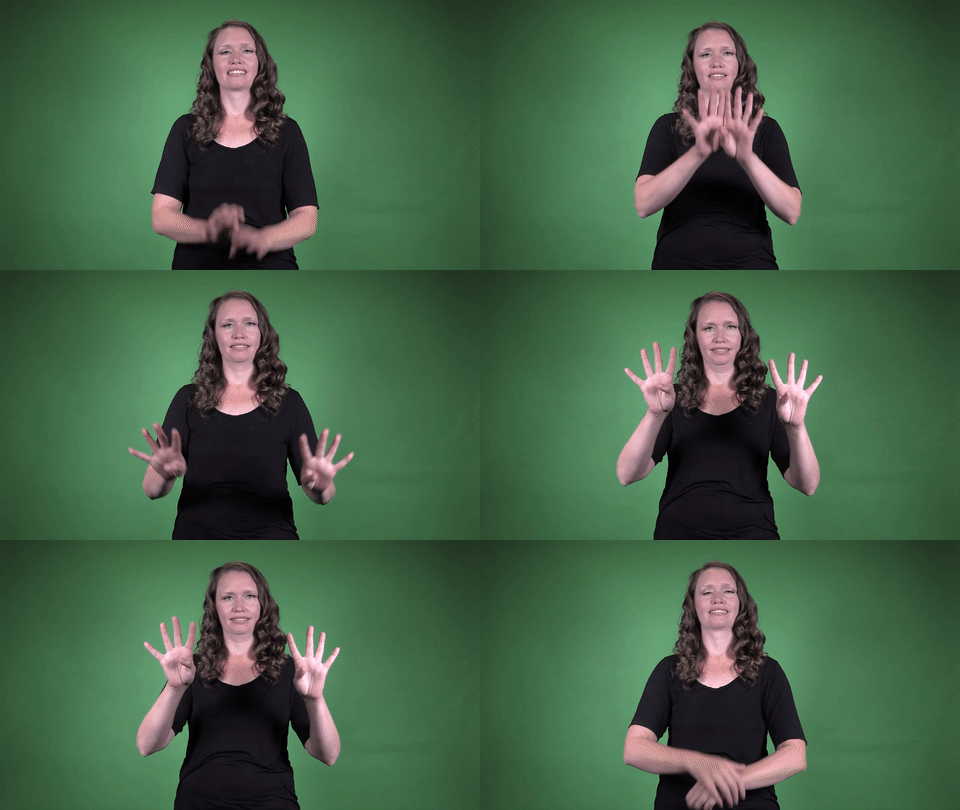
Start by practicing the sign for CHANUKAH in ASL in isolation. Focus on the correct handshape and movement—both hands open with fingers spread, starting together in front of the body and moving outward to the sides in a slight arc. Repeat slowly while watching yourself in a mirror to ensure symmetry and accuracy.

Once the isolated form feels comfortable, try using the sign in context with short, repetitive phrases. For example, practice sentences like I like CHANUKAH, We celebrate CHANUKAH every year, or My family lights candles on CHANUKAH. Sign them several times, gradually increasing your speed and fluency.

Work on storytelling skills by describing a typical CHANUKAH celebration. Include visual descriptions like lighting the candles, playing dreidel, or eating latkes. This encourages the use of multiple related signs, improving fluency and narrative skills while naturally reinforcing the sign for CHANUKAH in ASL.

Engage in a partner activity where one person signs a sentence involving CHANUKAH, and the other person has to translate or match the sentence to a written version. Swap roles to build receptive and expressive skills. Incorporate time signs and family member signs to expand vocabulary within the practice.

Try a themed memory game using flashcards. Write sentences involving CHANUKAH traditions on cards, and challenge yourself to sign each sentence as you draw a card. This helps reinforce not only the sign for CHANUKAH in ASL but also holiday-related vocabulary.

Finish by watching ASL videos of holiday celebrations or cultural discussions. Pause the video and identify each time the sign for CHANUKAH is used. Mimic the signer’s pace and facial expressions for more natural, fluent signing.

Cultural Context:

The sign for CHANUKAH in ASL is more than just a direct translation of a holiday name. It brings with it layers of cultural meaning and connection to Jewish tradition, faith, and identity expressed visually in American Sign Language. Like many cultural signs, the sign for CHANUKAH in ASL communicates more than words—it conveys shared history and emotion.

CHANUKAH, also spelled Hanukkah, is the Jewish Festival of Lights, celebrated over eight days with the lighting of a menorah, prayer, food, and family gatherings. The sign for CHANUKAH in ASL reflects the symbolism of the menorah’s candles. It visually represents the miracle of light and the enduring spirit of Jewish people, making it a powerful sign in both language and culture.

In Deaf Jewish communities, using the sign for CHANUKAH in ASL provides a sense of inclusion and visibility during religious celebrations. It allows Deaf individuals to actively participate in holiday storytelling, blessings, and education. Community-specific signs like this strengthen identity, reinforcing both cultural and linguistic pride.

The sign for CHANUKAH in ASL may vary slightly based on region or community practices, but often includes a gesture that shows the progressive lighting of candles. Each movement holds meaning, symbolizing joy, peace, and resilience, core values of the holiday. This sign connects generations and keeps traditions alive through the visual beauty of sign language.

Because CHANUKAH includes many rituals, ASL users may also create or use related sign phrases such as “light the menorah,” “dreidel,” or “latkes.” Still, the sign for CHANUKAH in ASL remains central during the season. Whether in an educational setting, religious service, or festive gathering, signing CHANUKAH in ASL builds a bridge between cultures.

The use of ASL in Jewish traditions highlights how language adapts to express spiritual identity. The sign for CHANUKAH in ASL is one example of American Sign Language evolving alongside rich cultural observances. This makes CHANUKAH not just an eight-day celebration but also a vibrant part of ASL expression throughout the winter.

Jewish Deaf individuals often celebrate both faith and language by teaching children signs like the sign for CHANUKAH in ASL. This inheritance is both spiritual and visual, offering a full-bodied experience of culture. Decorations, songs, and food all become more accessible and inclusive when signs are part of the moment ✡️ .

Extended Definition:

The sign for chanukah in ASL is a beautiful and meaningful gesture that captures the essence of this important Jewish holiday. In American Sign Language, it typically involves a movement that represents the lighting of the menorah, a central symbol of chanukah. This sign helps communicate the celebration’s traditions and spiritual significance within the Deaf community.

When signing chanukah in ASL, the hands are generally used to represent the menorah’s candles. Movements often mimic the placement or lighting of the candles from left to right. This dynamic gesture not only conveys the concept of chanukah but also brings a visual connection to the rituals of the holiday.

The sign for chanukah in ASL may vary depending on regional dialects, Deaf community preferences, or family traditions. Just as spoken languages feature different accents or vocabulary, American Sign Language includes diverse variations influenced by culture and geography. This makes it important to learn signs from reputable ASL resources or fluent signers for accurate understanding.

Chanukah, also known as the Festival of Lights, lasts for eight days and nights and commemorates the rededication of the Second Temple in Jerusalem. The traditional lighting of the menorah is a key part of this celebration, and the ASL sign for chanukah reflects this joyful practice. Using the correct sign shows respect for both the Deaf and Jewish cultures.

In conversations about holidays, the sign for chanukah in ASL allows Deaf individuals to share their traditions, memories, and experiences. Whether talking about lighting candles, spinning a dreidel, or enjoying latkes, this sign opens the door for deeper understanding and inclusion. It helps bridge communication between hearing and Deaf individuals during seasonal celebrations.

Teaching young children the sign for chanukah in ASL can be a fun way to introduce holiday vocabulary and cultural awareness. Parents and educators may include the sign during storytelling, singing, or holiday crafts to support language development and appreciation for diversity. Signing the word during holiday activities can make learning more engaging and interactive

Whether used in classrooms, temples, or holiday events, the sign for chanukah in ASL fosters connection and accessibility. It ensures everyone can participate in the storytelling and rituals that define this time of year. Through visual language, the shared experiences of chanukah can be honored and celebrated by all

Resources for learning the sign for chanukah in ASL include video dictionaries, ASL classes, or recorded lessons from fluent signers. Practicing the

Synonyms: Hanukkah, Chanukkah, Festival of Lights, Feast of Dedication, Jewish holiday

Educational resources: Find related learning materials in our course bank!

Want more? Check out some of our popular learning activities on the homepage!

Need to look up a sign? Use our highly rated dictionary: https://aslinteractive.com/best-asl-dictionary/

Follow us on tiktok: https://www.tiktok.com/@aslinteractive. More social media links at the bottom of this page!

Long-tail Keywords: what is the sign for Chanukah in ASL, how do you sign Chanukah in American Sign Language, ASL sign for Chanukah holiday

Categories:

tags: Hanukkah, Holidays, Occasions, Celebrations, Jewish traditions

Parameters

*Handshape*:

The handshape used in the sign for CHANUKAH in ASL involves both hands forming the number 4 handshape, where all four fingers are extended and spread apart, and the thumbs are tucked in against the palms. This handshape symbolizes the eight candles of the menorah, a central part of the holiday’s tradition.

In the sign for CHANUKAH in ASL, the hands begin near the center and then sweep outward to show the increasing number of candles. The number 4 handshape is crucial to visually represent the significance of the celebration and its eight nights.

*Palm Orientation*:

The palm orientation for the sign for CHANUKAH in ASL typically involves both hands facing forward with palms open and fingers extended. The fingers start together in front of the body and then move outward in an arc, symbolizing the lighting of the menorah.

This expressive motion in the sign for CHANUKAH in ASL helps convey the expanding light and celebratory nature of the holiday. The outward sweep mimics the candles spreading across the menorah.

*Location*:

The sign for CHANUKAH in ASL is produced in the neutral space in front of the chest. Both hands begin together at the center, palms facing forward and fingers extended, then move outward to the sides in a slight arc, mimicking the shape of a menorah. This location in the signing space ensures visibility and clarity when expressing the sign for CHANUKAH in ASL during conversation. ✨

*Movement*:

Both hands use the four-handshape (like the number 4), palms facing forward and fingers spread. Begin with the fingertips of both hands touching or nearly touching in the middle.

Move the hands outward in a slight arc, mimicking the shape of a candelabrum. The sign for CHANUKAH in ASL captures the idea of the menorah’s candles spreading out. This movement is smooth and horizontal, typically performed at chest level.

*Non-Manual Signals*:

Facial expression for the sign for CHANUKAH in ASL is typically neutral to slightly positive, showing a respectful or celebratory attitude. Lightly raised eyebrows and a soft, pleasant smile reflect the festive nature of the holiday.

Maintain relaxed eyes and a calm expression to match the cultural reverence of the sign for CHANUKAH in ASL. There’s no exaggerated emotion, but a subtle warmth can enhance the meaning.

*Prosody, Dominant/Non-Dominant Hand*:

The sign for CHANUKAH in ASL uses both hands. The dominant hand and non-dominant hand are extended, palms facing forward, with all fingers spread. Starting close together, they move outward from the center, mimicking the lighting of the menorah’s candles.

The prosody in the sign for CHANUKAH in ASL highlights a celebratory and visual representation of the holiday. The movement outward is often graceful and fluid, reflecting both cultural significance and visual symmetry.

Tips for Beginners:

When learning the sign for CHANUKAH in ASL, it’s important to focus on handshape and movement. This sign mimics the lighting of the menorah candles, so it involves a specific motion of both hands that suggests the shape of the menorah’s arms. Keep your fingers extended and slightly curved, and make sure your palms are facing forward as your hands move outward in a slight arc.

A common issue beginners face with the sign for CHANUKAH in ASL is forgetting the smooth outward movement from the center. It should look like your hands are growing from a central point, not just separated. Practice in a mirror to ensure symmetry in both hands—uneven or stiff motions can make the sign unclear.

Clarity is key. Don’t rush through the movement; keeping a steady pace will help others recognize the sign. If you speed up or your handshapes aren’t clear, the sign may be misunderstood or missed altogether in a conversation. Also, be aware of your facial expressions, which should match the spirit of the holiday—warm or celebratory expressions help convey the context.

To practice, try incorporating the sign for CHANUKAH in ASL into holiday greetings. This repetition will help reinforce muscle memory and comfort with the motion. You can also sign along with holiday songs or stories that mention Chanukah, adding context and fun to your learning.

One helpful tip is to watch native signers perform holiday signs and mimic their fluidity and style. This will make your own signing feel more natural over time . Lastly, don’t hesitate to ask Deaf community members for feedback—they can provide tips to improve accuracy and cultural appropriateness when using the sign for CHANUKAH in ASL.

Connections to Other topics:

The sign for CHANUKAH in ASL is closely connected to signs used for other Jewish holidays, such as PASSOVER and YOM KIPPUR. These signs often feature culturally specific gestures or incorporate meaningful spatial movements that reflect the uniqueness of each tradition. Understanding the sign for CHANUKAH in ASL enriches one’s ability to discuss Jewish culture within the broader context of religious holidays in ASL.

This sign also connects with the concept of LIGHT, as CHANUKAH celebrates the miracle of the oil and the lighting of candles. Learners often see this theme in signs for CANDLE, LIGHT, or BURN, which may be used to describe the traditional menorah lighting. Using the sign for CHANUKAH in ASL in combination with LIGHT or CANDLE can help convey the significance of the holiday more clearly.

Many compound ideas can evolve when discussing CHANUKAH, such as GIFT-GIVE, EAT-LATKE, or PLAY-DREIDEL. These combinations offer a broader vocabulary for talking about specific customs associated with the holiday. In ASL storytelling or classroom discussions, these compound signs enhance communication by blending cultural elements with descriptive action.

Historical signs like MIRACLE or OIL can deepen discussions about CHANUKAH’s origins. These signs tie into religious studies and can be used to explain the Temple, the Maccabees, or the concept of faith. Knowledge of these related signs makes it easier to contextualize CHANUKAH when explaining the holiday in academic or interfaith settings.

The sign for CHANUKAH in ASL also supports social and educational inclusion. Being able to sign about CHANUKAH encourages diversity awareness and helps deaf students engage in cultural and holiday-based discussions with their peers. It supports shared learning environments where various traditions are acknowledged and respected.

Summary:

The sign for CHANUKAH in ASL beautifully captures both the spirit and tradition of the Jewish celebration. It visually represents the menorah, a central symbol of the holiday, through handshape and motion.

To sign CHANUKAH, start with your open hands in front of your chest, palms facing forward and fingers spread. Then, move your hands outward in a smooth, curved motion, as if tracing the shape of a menorah with its branches extending on each side.

This gesture mimics the visual of the nine-branched candelabrum used in the observance of Chanukah. The curved motion reflects the arms of the menorah, conveying not just the object but the reverent context in which it is used.

The sign for CHANUKAH in ASL serves as both a linguistic and cultural representation. It communicates more than a holiday name—it carries a connection to history, religious perseverance, and light symbolically.

ASL, being a visual and spatial language, allows signs like this one to bridge concepts and culture. When someone performs the sign for CHANUKAH, they’re engaging in a form of visual storytelling that aligns with the holiday’s narrative of resilience and triumph.

This sign emphasizes clarity in handshape and movement to convey the idea effectively. The smooth outward motion of the open hands resembles the display of the glowing candles spread across the menorah, evoking warmth and festivity.

The sign also demonstrates how ASL adapts to cultural concepts that are specific to one faith or region yet expressed with universal clarity. It allows signers from both Jewish and non-Jewish backgrounds to recognize and engage with the holiday.

From a grammatical perspective, the sign for CHANUKAH in ASL functions as a proper noun and is typically used as a standalone sign. It might appear in a sentence like “YOU CELEBRATE CHANUKAH?” where its delivery is marked with facial expressions indicating inquiry or emphasis.

Sometimes, fingerspelling is used as an alternative or supplement to the sign, especially among those still learning vocabulary or in formal religious settings. In these contexts, CHANUKAH may be fingerspelled to ensure specificity or respect.

Linguistically, the sign aligns with the tendency in ASL to use transparent, iconic signs when referring to visible or familiar cultural objects. Unlike arbitrary signs, the sign for CHANUKAH is more easily learned due to its visual correlation with the actual menorah.

ASL frequently reflects sociocultural contexts, and religious holidays like CHANUKAH are increasingly seen in Deaf community events and educational materials. This helps grow linguistic diversity and cultural understanding within ASL usage.

The sign’s spatial mapping across the body reflects broader trends in ASL where physical space is used to mirror real-world arrangements. Each of the extended fingers can metaphorically reference the menorah’s arms, helping viewers immediately connect the sign with the object.

The sign’s cooperative motion of both hands adds expressive power. Using both hands equally symbolizes the collective nature of Jewish observance—families gathering together to light candles, share prayers, and enjoy traditions.

The sign for CHANUKAH in ASL also resonates with themes of identity and visibility. Just as the menorah literally brings light into darkness, signing CHANUKAH visually inserts Jewish presence into conversations and shared space.

In translation contexts, interpreters use the sign for CHANUKAH when conveying holiday greetings, prayers, or references in services. Its elegant form provides clarity in religious storytelling or educational environments.

Educators often teach this sign when discussing holidays around the world. They present it alongside signs like CHRISTMAS, KWANZAA, or DIWALI to promote inclusivity and comparative cultural awareness.

The facial expressions accompanying the sign for CHANUKAH in ASL often highlight celebration or reverence. Raised eyebrows or a warm smile may go with it, depending on context—similar to tone in spoken language.

Occasionally, variations in execution may appear depending on the region or how familiar the signer is with Jewish customs. Nonetheless, the core movement remains consistent, preserving its recognizability.

The sign integrates seamlessly into holiday storytelling. For example, in narratives involving the Maccabees, temple rededication, or miracle of the oil, the sign may work symbolically even in poetic ASL interpretations.

It’s also a sign that frequently appears in arts-based ASL performances, such as interpreted theater or holiday concerts. Whether in a Deaf choir signing traditional blessings or a children’s ASL rendition of a dreidel song, the sign for CHANUKAH is both functional and evocative.

The sign helps visually represent holidays that might not be universally celebrated but remain central to many Deaf individuals’ lives. It allows for religious and cultural self-expression in shared or mixed communities.

The usage of the sign can also spotlight broader issues such as religious diversity in Deaf spaces or how spiritual practices are rendered in visual language. The presence of the sign in

Want more? Check out some of our popular learning activities!

ASL Interactive Resources

ASLInteractive YouTube Channel

Follow us on tiktok: @aslinteractive.com

Follow us on Instagram: aslinteractive

Facebook page: aslinteractive

Facebook group: aslinteractive

LInkedIn: ASL Interactive LLC

Twitter: @ASL_interactive

*Some information on this page is AI-generated. AI can make mistakes. Please check the information.

Sign for CHANUKAH in ASL

Responses