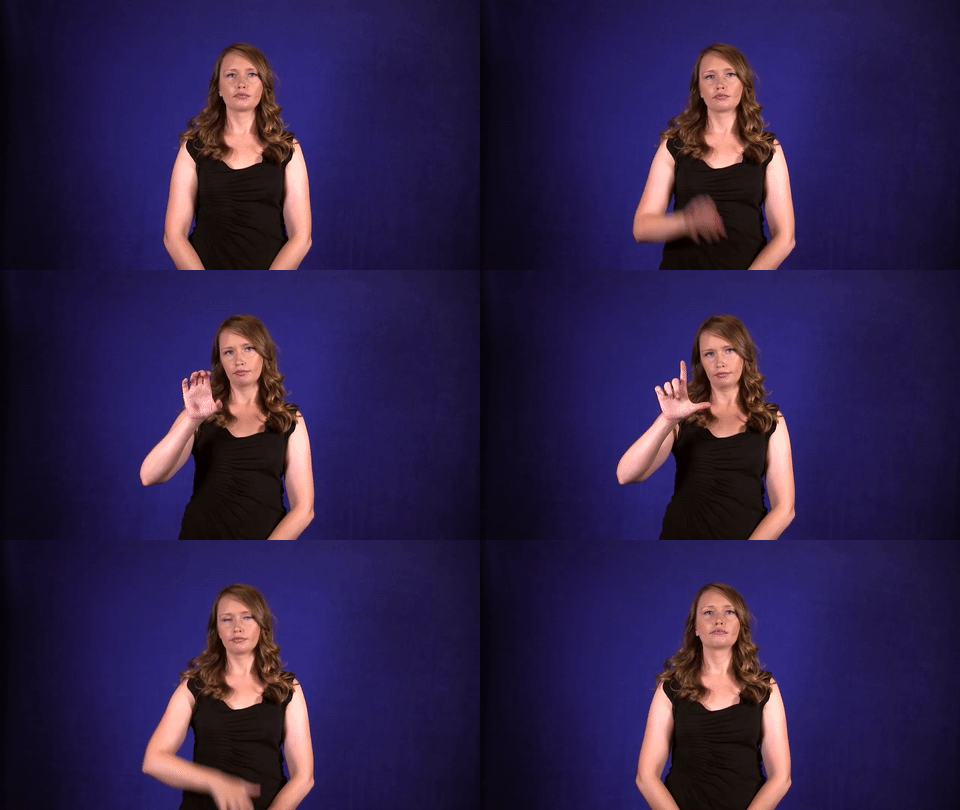
Sign for CLASSIFIER in ASL | 🙌 ASL Dictionary

Definition: A symbol representing something.

Sign for CLASSIFIER in ASL

YouTube player

Practice Activities:

To practice the sign for CLASSIFIER in ASL, begin by reviewing the most common handshapes used in classifier systems. Spend time forming these handshapes in front of a mirror, such as CL:1, CL:3, and CL:5, ensuring handshape accuracy and a smooth transition between movements. Try using them in isolation to represent concepts like a person walking, a vehicle moving, or a group of people.

Next, create short descriptive phrases that involve movement or arrangement. Describe a bike leaning against a wall, a cat jumping on a table, or two people running side by side. Practice incorporating the sign for CLASSIFIER in ASL by stating that you’re using a specific type of classifier to describe each action.

Work with a partner or record videos of yourself describing scenes using classifiers. One activity could involve your partner reading a short sentence, like “A car drives down a winding road,” and you translate it into ASL using appropriate classifiers. Then reverse roles, giving both people time to practice expressive and receptive skills.

Storytelling is a great way to incorporate the sign for CLASSIFIER in ASL naturally. Try telling a short story that includes movement, shape, or interaction, and specify the classifier being used by signing CLASSIFIER before selecting a handshape. For example, sign CLASSIFIER and then show CL:1 for one person walking through a park.

To challenge yourself, describe a complex scene like a busy city intersection or a playground full of children. Use multiple classifiers throughout, indicating handshape changes and referencing the sign CLASSIFIER to make your structure clear. Practice with feedback from an instructor or peers.

Wrap up each session by identifying which classifiers were used and what they represented. This reinforces your understanding of how the sign for CLASSIFIER in ASL organizes the way physical details are conveyed through sign.

Cultural Context:

In American Sign Language, classifiers play a central role in how ideas, actions, and descriptions are expressed. The sign for classifier in ASL is used frequently in both casual storytelling and formal communication. Classifiers allow a signer to visually and efficiently describe objects, their movement, and their interaction within space.

The concept behind the sign for classifier in ASL is deeply rooted in Deaf culture. Classifiers are not just signs; they are visual markers that replace nouns and are shaped by context. This special feature is a powerful reflection of the visual and spatial nature of ASL, highlighting how the language differs from spoken English.

When someone uses the sign for classifier in ASL, they are often about to introduce a handshape that represents something specific in their story or explanation. These handshapes can represent people, vehicles, animals, or even abstract concepts like movement or texture. Because of this, mastering classifiers means you can communicate a lot using very few signs.

In Deaf education and community storytelling, classifiers are viewed as essential. Knowing how to use the sign for classifier in ASL is considered one of the foundations of fluent signing. It allows the signer to dive into rich, detailed descriptions without relying heavily on fingerspelling or direct translations of English words.

If you’re learning ASL, it’s important to understand not just the vocabulary but also how classifiers shape the grammar and structure of the language. Using the sign for classifier in ASL correctly shows that a signer is becoming more advanced in their skills. It also opens up the ability to fully engage in Deaf cultural events, poetry, and conversations.

In Deaf literature and ASL poetry, classifiers are tools for artistic expression. When someone introduces the sign for classifier in ASL during a performance, it usually signals a shift into visual metaphors and rich imagery. Performers use classifiers to captivate the audience with highly descriptive visual stories that would be impossible to tell using only traditional signs.

Parents and educators within the Deaf community often teach children how to use classifiers early in their ASL education. The use of the sign for classifier in ASL in these learning settings shows how vital the concept is for building strong communication skills. Through games, visual aids, and interactive lessons, learners begin to understand how handshapes relate to meaning in unique and effective ways.

Interpreters working between English and ASL also rely heavily on their knowledge of classifiers. When they use the sign for classifier in ASL, it prepares others for visual explanations that may not have a direct spoken

Extended Definition:

The sign for classifier in ASL refers to a handshape or set of handshapes used to represent nouns and their functions or describe actions, sizes, shapes, and movements. In American Sign Language, classifiers are essential components that offer a visual way to convey detailed information. The sign for classifier in ASL is not a singular fixed sign but rather depends on the context and type of classifier being used.

Classifiers in ASL are categorized into several types, such as descriptive, semantic, locative, plural, and instrumental classifiers. For example, a classifier handshape can indicate whether something is long and thin, round, small, or large. The sign for classifier in ASL helps depict spatial relationships, directions, and physical characteristics that spoken language might describe with adjectives or prepositions.

To sign classifier in ASL when explaining the concept, you can use the initialized sign with the letter “C” followed by an explanation using facial expressions and handshapes that demonstrate the type of classifier. This is especially useful in ASL classrooms or when teaching about the grammar structure of the language. The sign is often used with fingerspelling for emphasis or clarity, especially when introducing the term for the first time.

In ASL, classifiers are more than just vocabulary; they reflect the grammar and visual richness that characterizes the language. When using a classifier, you’re often substituting a conventional noun sign with a specific handshape and movement that gives the viewer more detailed imagery. The sign for classifier in ASL plays a foundational role in storytelling, narratives, and daily conversation.

Being able to recognize and produce the correct sign for classifier in ASL improves fluency and comprehension. Learners often begin with basic classifiers like “CL:1” for a person or stick-like object, then progress to more complex uses. Classifiers allow signers to show rather than tell, which is a core feature of visual languages.

When using the sign for classifier in ASL, it’s important to pay attention to the non-manual markers, such as facial expressions and body shift. These work together with handshapes to clarify the meaning. For example, tilting your head or squinting your eyes can add more detail to the message you’re conveying with the classifier.

Even though classifiers can seem complicated at first, they are a rewarding and natural part of ASL. Understanding how to use the correct sign for classifier in ASL opens up greater expressive potential. It enables signers to create more vivid and engaging communications that

Synonyms: category, label, type, division, classification

Educational resources: Find related learning materials in our course bank!

Want more? Check out some of our popular learning activities on the homepage!

Need to look up a sign? Use our highly rated dictionary: https://aslinteractive.com/best-asl-dictionary/

Follow us on tiktok: https://www.tiktok.com/@aslinteractive. More social media links at the bottom of this page!

Long-tail Keywords: what is the sign for classifier in asl, asl sign for classifier, how to sign classifier in asl

Categories:

tags: classifiers, language learning, sign parameters, verbs, basic grammar

Parameters

*Handshape*:

The handshape used in the sign for CLASSIFIER in ASL typically begins with both hands forming the “F” handshape —thumb and index finger touching while the other fingers are extended upward. These handshapes are held in front of the body with some space between them.

In the sign for CLASSIFIER in ASL, the “F” handshapes may be used to emphasize categorization or grouping. Since “classifier” is conceptually fingerspelled, it often shifts into a discussion involving various ASL classifiers, each using distinct handshapes depending on the meaning or context.

*Palm Orientation*:

The palm orientation for the sign for CLASSIFIER in ASL typically depends on the specific classifier being used, but generally, both hands are involved with palms facing each other, outward, upward, or inward based on context. For instance, when showing a person or object moving, the dominant hand’s palm may face downward or sideways.

In many variations of the sign for CLASSIFIER in ASL, the hands are adjusted to match the shape or movement of what is being represented. Palm orientation is flexible to visually convey details like direction, position, or interaction.

*Location*:

The sign for CLASSIFIER in ASL is typically produced in the neutral space in front of the body, around chest to shoulder level. This sign often utilizes two hands, and the handshapes or movements can change depending on what is being classified.

Because the sign for CLASSIFIER in ASL refers to a broad category of descriptive signs, the location remains in front of the torso, allowing flexibility and visibility. This positioning ensures clarity as the signer uses different classifier handshapes to represent objects, movements, or people.

*Movement*:

To produce the sign for CLASSIFIER in ASL, form both hands into the “F” handshape, then hold them in front of your chest, palms facing outward. Move your hands outward and slightly apart, as if outlining the shape of an object . This sign emphasizes the idea of categorizing or describing attributes using designated handshapes, which is the essence of the sign for CLASSIFIER in ASL.

The movement is smooth and deliberate, helping introduce the concept of depicting nouns through handshape representations. The sign for CLASSIFIER in ASL is used as a foundation for referencing spatial relationships and characteristics of people or objects.

*Non-Manual Signals*:

Facial expressions for the sign for CLASSIFIER in ASL can vary based on the specific type and function of the classifier being described. Raised eyebrows and slight head tilts are common when introducing or identifying a classifier, indicating that additional descriptive information will follow.

When using the sign for CLASSIFIER in ASL to show spatial or size differences, puffed cheeks or narrowed eyes may be used to emphasize large or small size, respectively. The signer might also lean forward slightly to focus attention and clarify what the classifier represents.

*Prosody, Dominant/Non-Dominant Hand*:

The sign for CLASSIFIER in ASL typically uses both dominant and non-dominant hands. The dominant hand forms the appropriate handshape for the specific classifier, while the non-dominant hand may serve as a base or reference point, depending on the context.

Prosidy plays a key role in the sign for CLASSIFIER in ASL, as facial expressions and movement intensity help convey size, shape, or motion. Handshapes vary based on what is being described, so prosodic elements reinforce the spatial and descriptive nature of classifiers.

Tips for Beginners:

When learning the sign for CLASSIFIER in ASL, it’s essential to first understand that classifiers are not a single sign but rather visual representations using specific handshapes. These handshapes symbolize categories like vehicles, people, or objects and show position, movement, and appearance. So, the foundational step is to master a variety of classifier handshapes and how they function in context.

A common beginner mistake is trying to use classifiers before understanding what they represent. Spend time observing fluent signers and how they transition from a noun to a classifier. For example, a signer might first sign “car” and then shift to use the 3-handshape to represent the car’s movement or location. This narrative flow is vital to conveying meaning clearly.

Facial expressions and body shifts are also integral when using the sign for CLASSIFIER in ASL. These are not optional; they provide crucial grammar and context. Without proper use of facial expressions to show size, speed, or direction, the classifier sign becomes vague or confusing. Practice in front of a mirror or record yourself to check your expression and handshape consistency.

Exposure to a variety of contexts will help. Watch ASL storytelling videos or attend Deaf events to see how classifiers function in natural conversation. This will enhance your ability to apply the sign for CLASSIFIER in ASL with confidence and fluency. Try practicing by describing simple scenes like a person walking or a ball rolling.

Finally, don’t be discouraged if you make mistakes early on. Classifiers are among the most nuanced features of ASL and require patience to master. Use feedback from native signers or teachers to refine your technique and clarity over time. Keep practicing and stay consistent—it gets easier with engagement and repetition.

Connections to Other topics:

The sign for CLASSIFIER in ASL is deeply linked to the broader topic of ASL grammar and the unique ways ASL conveys visual-spatial information. CLASSIFIERS are handshapes used to represent nouns and show their movement, shape, or location, so understanding this sign helps illuminate how ASL relies more on spatial logic than on spoken word translation. Unlike standard vocabulary signs, classifiers function like linguistic building blocks that describe relationships, movement, and physical features in space.

Learning the sign for CLASSIFIER in ASL also opens the door to mastering various types of classifiers, including descriptive, semantic, locative, and plural classifiers. These categories connect directly to verbs and directional signs in ASL. For example, using a vehicle classifier can show a car turning, stopping, or crashing, which integrates smoothly into storytelling and narrative signing.

The concept of classifiers supports compound or derived signs as well, such as combining a person classifier with walking movement to show “a person walking.” These combinations become natural extensions of the sign for CLASSIFIER in ASL and encourage fluid communication in conversations and narratives. Students learning classifiers often discover how to express size, shape, or relative position, enriching their vocabulary and descriptive skills.

In ASL storytelling or visual vernacular, classifiers supply the visual grammar needed to convey entire scenes without using formal signs for every object or action. For example, a signer may use a 3-handshape to mimic a vehicle following a winding road, expressing a journey more vividly than a linear sentence structure. This conceptual linking highlights how knowing the sign for CLASSIFIER in ASL supports fluency and creativity.

Learners who focus on classifiers also strengthen their spatial awareness and enhance simultaneity in signing, such as describing multiple actions or objects at once. This interconnection to visual structure and meaning shows that the sign for CLASSIFIER in ASL is not just a vocabulary term—it’s key to unlocking the visual depth of the language.

Summary:

The sign for CLASSIFIER in ASL refers to a group of handshapes used within American Sign Language grammar to represent nouns and their movements, locations, and appearances. Rather than a single sign, the term encompasses a system of symbolic hand gestures that depict physical characteristics or actions.

When referring to the sign for CLASSIFIER in ASL, most signers fingerspell the word C-L-A-S-S-I-F-I-E-R. This reflects how the concept functions more as a linguistic tool than a singular noun. After fingerspelling, the signer typically follows with an example of a specific classifier to illustrate its meaning.

Classifiers serve a structural role in ASL. They act as morphemes—units of meaning—that allow signers to describe motion, texture, quantity, and shape concisely. For example, a bent V-handshape might represent legs, or a 3-handshape can indicate a vehicle.

The sign for CLASSIFIER in ASL opens a gateway to visual storytelling. It encourages spatial thinking and three-dimensional representations. Classifiers take advantage of the visual-gestural modality of ASL, making descriptions richer than spoken equivalents in many contexts.

Classifiers fall into categories such as semantic, size and shape specifiers, locative, and instrumental. Each category supports vivid conceptualization, allowing signers to “show” rather than merely “tell.” This distinguishes ASL from linear, speech-based languages which depend more heavily on descriptive words or adjectives.

In ASL grammar, classifiers follow noun introductions. For instance, a signer may first sign TREE, then use a 1-handshape moving upward in a swaying motion to represent the tree’s motion in the wind. This chaining together of basic signs and classifiers supports nuanced meaning.

The sign for CLASSIFIER in ASL reflects the complexity and depth of deaf linguistics. It embodies both clarity and abstraction, creating a visual shorthand for meaningful expression. Classifiers allow spatial configuration of ideas, particularly useful when recounting accidents, describing environments, or detailing physical interactions.

Size and shape classifiers can express something small and round, like a pebble, versus something long and narrow, like a pencil. These subtle distinctions depend on handshape, palm orientation, and movement pattern to convey meaning efficiently. This makes classifiers both cognitively efficient and semantically rich.

Children acquiring ASL develop their use of classifiers over time. This developmental progression implies cognitive sophistication as classifiers require understanding of reference frames, perspective-taking, and symbolic representation. Studies in applied linguistics often focus on how classifiers exemplify ASL’s unique morphological features.

Interpreters must have deep familiarity with the sign for CLASSIFIER in ASL because signed narratives often rely heavily on classifier construction for clarity and accuracy. A sign language interpreter who misuses classifiers may distort the intended meaning or nuance. Therefore, interpreter training routinely includes classifier-intensive practice.

Classifiers also demonstrate ASL’s dynamic syntax. Classifier constructions often follow topic-comment sentence structures, prioritizing the visual nature of referents. This contrasts with English’s subject-verb-object syntactic norms.

A number of variations exist when teaching new learners the sign for CLASSIFIER in ASL. Many instructors encourage learners to fingerspell the word at first, then explore examples such as CL:1 or CL:3 as introductory classifier types. From there, learners learn how to use referent agreement and accurate hand positioning.

The cultural importance of classifiers is prominent within Deaf communities. They represent more than linguistic tools; they showcase the creativity and expressiveness inherent in ASL. Classifiers allow for individualized storytelling styles, which are prized in Deaf culture’s strong narrative traditions.

Sometimes, Deaf artists use classifier forms in sign poetry and performance art. This adds an aesthetic layer that elevates the language beyond its communicative function. Through this artistic use, the sign for CLASSIFIER in ASL transcends linguistic boundaries.

Classifiers also play roles in technical or academic signing. Deaf scientists and educators rely on classifier constructions to model processes, explain mechanisms, or describe spatial changes in data. For example, describing the way molecules move or how tectonic plates shift becomes easier using classifiers.

Educational curriculum for Deaf students often includes explicit lessons on classifier types and usage. Mastery of classifiers improves academic and expressive fluency, particularly in subjects like Earth science, physics, and literature. With the sign for CLASSIFIER in ASL built into academic content, students gain deeper access to the language’s full power.

Technology has also embraced classifier usage. ASL avatars and translation software models increasingly endeavor to replicate classifier-based expressions. However, algorithms struggle with this aspect of ASL, showing how deeply human and context-sensitive classifiers remain.

In bilingual ASL-English classrooms, teaching the sign for CLASSIFIER in ASL requires contrastive analysis. Instructors must explain how ASL uses visual representation where English relies on adjectives or verbs. This comparison illustrates the visual grammar divergence between spoken and signed languages.

The use of classifiers in describable environments empowers Deaf professionals in fields like architecture, engineering

Want more? Check out some of our popular learning activities!

ASL Interactive Resources

ASLInteractive YouTube Channel

Follow us on tiktok: @aslinteractive.com

Follow us on Instagram: aslinteractive

Facebook page: aslinteractive

Facebook group: aslinteractive

LInkedIn: ASL Interactive LLC

Twitter: @ASL_interactive

*Some information on this page is AI-generated. AI can make mistakes. Please check the information.

asl instrument classifiers asl semantic classifiers asl locative classifiers asl descriptive classifiers, Sign for CLASSIFIER in ASL
Sign for CLASSIFIER in ASL

Responses