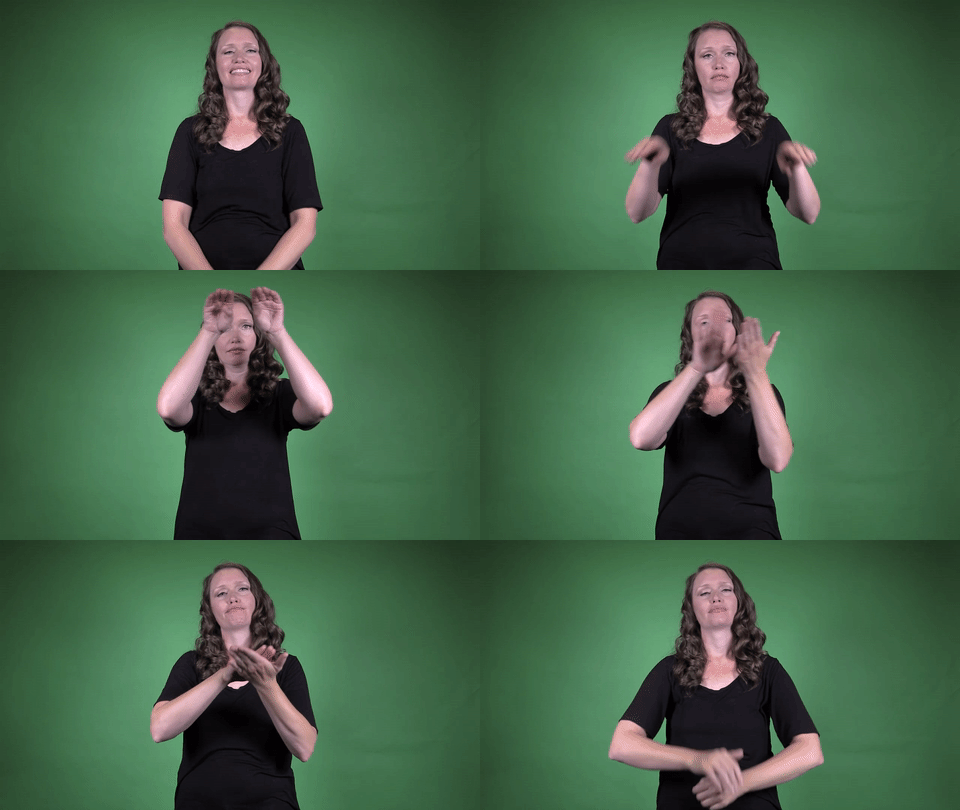
Sign for CLEAN SHELVES in ASL | 🧼 ASL Dictionary

Definition: To clean the shelves.

Sign for CLEAN SHELVES in ASL

YouTube player

Practice Activities:

To effectively practice the sign for CLEAN SHELVES in ASL, begin by focusing on each part of the concept separately. Start with the sign for CLEAN and drill the motion repeatedly, ensuring smooth, clear movement across the palm. Practice in front of a mirror to check that your handshape and directionality are consistent.

Next, practice the noun SHELVES by visually outlining shelves in the air with both hands. Move your hands horizontally to represent multiple shelf levels. Try repeating this shape several times to get comfortable with it and visualize actual shelves from your environment as you sign.

Once the individual signs are comfortable, combine them together. Practice the sign for CLEAN SHELVES in ASL as a full phrase, paying attention to the transition between the two signs. Mimic cleaning motions on the space where the shelves were set up in your signing space.

Create example sentences to give practice context. For example, sign: I FINISH CLEAN SHELVES EVERY SATURDAY or YESTERDAY I CLEAN SHELVES AT WORK. Act out these sentences with facial expressions that emphasize whether the sign is a chore or something you enjoy.

Use storytelling prompts like: Describe a time when you had to clean very messy shelves. Sign a short narrative in ASL, focusing on clarity and sequencing. Include signs such as DIRTY, DUST, TRASH, or FIND to add detail and reinforce context.

Practice with a partner by taking turns describing a room that needs cleaning. One person can sign tasks while the other responds, adding CLEAN SHELVES as part of the chore list.

Use visual aids like a picture of a cluttered room and create a to-do list in ASL. The sign for CLEAN SHELVES in ASL should be used frequently in these descriptions to reinforce repetition and improve fluency.

Cultural Context:

In American Sign Language, the concept behind the sign for clean shelves in ASL is more than just a literal translation. It reflects how Deaf culture often focuses on visual and spatial organization. Clean and tidy spaces, especially shelving and surfaces, are important in both home environments and shared community spaces. The sign for clean shelves in ASL communicates more than just cleanliness—it shows respect for shared spaces and a focus on visual clarity.

When using ASL, clarity and efficiency are highly valued. A clean shelf is not only a practical household element but a sign of good organization. Visual spaces in the Deaf community often require open, uncluttered areas to improve communication through signing. That’s why the concept of clean shelves in ASL can also symbolize readiness for communication and order in everyday life.

The sign for clean shelves in ASL is closely linked to the signs for clean and shelf or shelves. It often involves combining these concepts in a smooth and logical sequence, just like how ASL expresses many compound ideas. Using the sign for clean shelves in ASL shows an understanding of how to match descriptive elements and actions, which is a key part of fluent signing.

In many Deaf households, children learn early the importance of visual cues and keeping spaces clean and organized. Using the sign for clean shelves in ASL may come up when discussing chores, classroom settings, or preparing for guests. The concept of visual neatness plays a functional role in communication, especially when expressions and space are vital.

Teachers, interpreters, and Deaf parents often teach the sign for clean shelves in ASL during daily routines. It’s a great example of combining vocabulary in realistic, everyday ways. Signing this phrase reinforces both language learning and life skills. Whether in a classroom or a home, using this sign connects language with responsibility and helps children and adults alike understand expectations.

The sign for clean shelves in ASL also reflects how signs are formed based on context. If you’re cleaning your own shelf versus asking someone to clean a public space, the expression and direction may change. These nuanced elements of the sign for clean shelves in ASL show how much ASL depends on situational meaning and shared understanding of space and purpose.

In shared community centers or Deaf schools, you might see reminders to keep shelves clean and organized. The sign for clean shelves in ASL is commonly used in such environments to maintain visual order. The sign supports a community-focused lifestyle where visual cues help everyone understand their role and responsibilities.

Using the sign for clean shelves in ASL strengthens

Extended Definition:

The sign for CLEAN SHELVES in ASL is a combination of two separate signs: CLEAN and SHELVES. To express CLEAN SHELVES in American Sign Language, you first sign CLEAN, then immediately follow with the sign for SHELVES. This compound phrase communicates the concept clearly to native ASL users through visual cues and spatial grammar.

The sign for CLEAN involves placing the dominant palm flat and brushing it across the non-dominant palm, indicating the wiping away of dirt or clutter. This gesture visually represents the act of cleaning or making a surface neat. It can also convey the idea of order or tidiness when used in combination with other signs.

The sign for SHELVES uses classifiers to show the spatial arrangement of shelves. Typically, you use your hands to show horizontal surfaces stacked one above the other, depending on how many shelves you are referring to. This can be done with one hand representing the base and the other mimicking the levels of shelving being referenced.

When you combine the signs for CLEAN and SHELVES, the meaning becomes a specific action or description: that the shelves have been cleaned or someone is cleaning the shelves. You establish the subject first, then modify it with the action. This word order aligns with natural ASL grammar and syntax, making the phrase easily understandable within a full sentence or conversation.

In ASL, facial expressions and body shifts add essential context when signing phrases like CLEAN SHELVES. A satisfied facial expression might indicate the chore has been completed, while a more intense or hurried motion could imply someone is actively cleaning. This level of detail is standard in ASL and helps convey not just actions but emotions.

Understanding how to use the sign for CLEAN SHELVES in ASL can be helpful in everyday life, especially when discussing household tasks, workplace responsibilities, or maintaining order. For example, in a classroom setting, students might be asked to clean up their shelves at the end of the day. Using ASL effectively ensures everyone knows what action is expected.

When teaching this sign combination to others, especially beginners or children, it’s useful to break it down into its parts. Start with the individual signs for CLEAN and SHELVES, then gradually practice blending them into a smooth, single expression. Repetition and usage in various contexts help reinforce understanding.

The sign for CLEAN SHELVES in ASL can be adapted to include timing or duration, depending on how you space out the signs. A quicker motion can suggest a brief task, while a

Synonyms: tidy shelves, organize shelves, declutter shelves, neat shelves, straighten shelves

Educational resources: Find related learning materials in our course bank!

Want more? Check out some of our popular learning activities on the homepage!

Need to look up a sign? Use our highly rated dictionary: https://aslinteractive.com/best-asl-dictionary/

Follow us on tiktok: https://www.tiktok.com/@aslinteractive. More social media links at the bottom of this page!

Long-tail Keywords: what is the sign for clean shelves in ASL, how do you sign clean shelves in ASL, ASL sign for clean shelves

Categories:

tags: Everyday activities, chores, actions, verbs, cleaning

Parameters

*Handshape*:

The handshape for the sign for CLEAN SHELVES in ASL combines two key components. For “clean,” the dominant hand forms a flat “B” handshape and moves across the palm-up non-dominant hand, which is also in a flat “B” handshape. This creates a wiping or brushing motion to suggest cleanliness.

To indicate “shelves,” both hands remain in the flat “B” handshape and move horizontally outward from the center, as if tracing multiple shelf levels in the air. The sign for CLEAN SHELVES in ASL uses precise, horizontal motion with flat palms to visually depict the concept of wiping and arranging shelves.

*Palm Orientation*:

For the sign for CLEAN SHELVES in ASL, the dominant hand typically starts with the palm facing down against the non-dominant hand, also palm-down, as if wiping across a surface side to side. This motion simulates cleaning a shelf.

Next, the palms in the sign for CLEAN SHELVES in ASL switch to a neutral position as both hands move outward and then slightly downward, mimicking the flat levels of multiple shelves. The palm orientation helps emphasize both the cleaning motion and the representation of shelf tiers.

*Location*:

The sign for CLEAN SHELVES in ASL is produced in the neutral space in front of the torso. The CLEAN part of the sign is made by brushing the dominant hand, palm-down, across the flat palm of the non-dominant hand. The SHELVES part is often signed by using both hands in front of the body, moving outward to mimic the shape of horizontal shelves.

The neutral signing area allows for clear visibility and ease of movement, helping distinguish between the two components of the sign for CLEAN SHELVES in ASL. This location keeps the sign central and visually accessible, making it easy to understand.

*Movement*:

To produce the sign for CLEAN SHELVES in ASL, begin with the dominant hand in a flat B-handshape, palm facing down, while the non-dominant hand also forms a flat B-handshape and is held steady with the palm facing upward. Move the dominant hand across the non-dominant palm in a single, sweeping motion to mimic cleaning.

Next, for the shelves portion, place both hands in a flat B-handshape at chest height, palms facing each other. Move them away from each other horizontally in a parallel motion, as if outlining multiple shelf levels. Repeat this outward extension two or three times to represent more shelves, maintaining even spacing between movements. The clean sweeping and shelf-building motions work together fluidly to form the complete sign for CLEAN SHELVES in ASL .

*Non-Manual Signals*:

When performing the sign for CLEAN SHELVES in ASL, maintain a neutral or slightly positive facial expression to reflect the concept of cleanliness and tidiness. Slight eyebrow raise can emphasize the action’s completion or clarity, especially in narrative or instructional contexts.

Use concise head movements to match the directional motion of the sign, typically moving left to right across the space, simulating shelf surfaces being wiped clean. The non-manual markers support the visual clarity of the sign for CLEAN SHELVES in ASL .

*Prosody, Dominant/Non-Dominant Hand*:

The sign for CLEAN SHELVES in ASL uses both hands to convey separate but related concepts. The dominant hand, usually the right, performs the sign for “clean” by brushing the flat dominant hand across the open non-dominant hand, palm up, in a wiping motion.

Then, transition to “shelves” by stacking flat non-dominant and dominant hands one above the other to mimic the appearance of horizontal surfaces. This movement is repeated twice to show multiple shelves. When signing the full phrase, ensure the transition is smooth to clearly express the sign for CLEAN SHELVES in ASL .

Tips for Beginners:

When learning the sign for CLEAN SHELVES in ASL, it’s helpful to first break down the concept into its component signs. CLEAN and SHELF or SHELVES are typically signed separately in sequence. For CLEAN, use a flat dominant hand sweeping gently over the non-dominant palm. For SHELVES, you’ll usually use both hands in a flat position, creating horizontal lines at different levels to mimic shelf placement. Accuracy in handshape and movement is essential to ensure you’re understood clearly.

Start by practicing each individual component of the sign for CLEAN SHELVES in ASL slowly and deliberately in front of a mirror. Get comfortable with the directional flow of the CLEAN sign and keep your movements smooth—not too fast or jerky. For SHELVES, spreading the hands evenly and making level horizontal motions help portray multiple shelves correctly. This descriptive visuality is key in ASL, where spatial setup conveys physical structure.

One common mistake is signing CLEAN in a way that’s too forceful or imprecise, which might confuse it with other palm-sweeping signs. Likewise, when forming SHELVES, make sure the hands are parallel and follow consistent spacing. Sloppy spacing can make the structure unclear. Keep your gestures deliberate but natural. This helps reinforce meaning without stiffness.

When practicing the sign for CLEAN SHELVES in ASL with others, try incorporating context. Sign about cleaning bookshelves, or organizing storage units to give conversation relevance. This applied practice makes the sign stick better in memory. Additionally, maintain consistent facial expressions to support the act of cleaning or organizing—it adds depth and context in real conversations. Don’t forget to pause slightly between signs to distinguish the concepts clearly. Consistency and practice are key!

Connections to Other topics:

The sign for CLEAN SHELVES in ASL combines two core concepts: CLEAN and SHELVES. CLEAN is a common verb sign in ASL, typically signed by brushing one flat hand across the palm of the other, symbolizing wiping or polishing. The sign for SHELVES mimics the physical layout of shelves by using classifier handshapes to represent horizontal surfaces layered one above the other. Together, these signs form a compound structure used in the context of tidying or organizing a physical space.

This compound form reflects ASL’s broader strategy of combining signs to express complex actions or ideas efficiently. Other similar compound signs include CLEAN FLOOR or CLEAN TABLE, where the object being cleaned modifies the context of the cleaning action. These combinations help build a learner’s understanding of spatial referencing and clarifying determiners in ASL.

Knowing how to express the sign for CLEAN SHELVES in ASL also builds awareness of noun-verb pairs. In this case, SHELVES is a noun, while CLEAN acts as the verb. Being able to distinguish and combine such concepts is fundamental to fluid ASL expression, especially in conversations about chores, routines , or giving directions in shared spaces.

This sign also connects to broader discussions around household vocabulary, which includes terms like KITCHEN, BATHROOM, and ORGANIZE. CLEAN SHELVES could easily appear in storytelling or instructional settings, particularly those focused on daily life tasks. Practicing such signs in sequence helps learners become more natural in their signing flow and grammatical accuracy.

Using directional and locative signs alongside the sign for CLEAN SHELVES in ASL enables even clearer communication. For example, adding HERE or OVER THERE can indicate exactly where the shelves are being cleaned. This integration of spatial grammar is key to mastering ASL structure and reinforces the visual and iconic nature of the language.

Summary:

The sign for CLEAN SHELVES in ASL is typically a compound construction that visualizes both the act of cleaning and the spatial element of shelves. It involves first signing CLEAN, usually done by brushing the dominant hand over the palm of the non-dominant hand in a flat, sweeping motion. This motion represents wiping or removing dirt and prepares the signer conceptually for the next part.

To communicate SHELVES, the signer typically shows stacked horizontal planes using both hands. The palms face downward and move in horizontal space, indicating multiple levels or spaces like shelf tiers. This spatial classifier visually mimics the setup of physical shelves, offering a powerful visual metaphor built into the language structure itself.

When combined, the sign for CLEAN SHELVES in ASL conveys a specific task or activity rather than a static noun compound. It reflects an ongoing or completed action involving maintenance or tidying of surfaces typically used for storage. This combination is not always a single fluent compound, but can also be two sequential signs done in quick succession.

In conversation, the sign for CLEAN SHELVES in ASL might be contextualized by time markers or additional descriptors. For example, one might add signs like YESTERDAY, FINISH, or MUST to clarify when the cleaning happened or the urgency of the task. This adds grammatical richness to the visual storytelling typical of ASL communication.

Culturally, the concept of cleaning shelves resonates with broader themes of homekeeping, hospitality, and organization, especially in Deaf households where visual order is often emphasized for accessibility reasons. Neatness and efficiency in physical space contribute to better visual navigation, a principle valued in many signing environments.

There are related signs such as WIPE, TIDY, or ARRANGE which carry overlapping meanings but are used in different contexts or with different emphases. WIPE may be used when emphasizing the cleaning motion, while ARRANGE could lean more toward organization after cleaning. The nuances depend heavily on context and facial expressions.

Grammatically, ASL allows for classifier usage to further illustrate how the shelves are being cleaned. For instance, a flat hand classifier can glide across a space representing a long bookshelf. These classifier constructions blend iconicity with linguistic rules, offering layered meaning.

The manual-visual nature of ASL means ideas like CLEAN SHELVES can be embedded within space and motion in a way written English cannot achieve. Movement is directional and meaningful, not auxiliary. The action through space conveys both literal movement and metaphorical completion.

Applied linguistics reveals how learners of ASL must understand both lexical signs and spatial grammar to express ideas like CLEAN SHELVES clearly. Unlike English speakers who rely on prepositions and articles, ASL signers rely on movement path, palm orientation, and body positioning. These elements collectively encode information about where and how the action is taking place.

The sign for CLEAN SHELVES in ASL also illustrates how compound constructions can emerge around daily tasks. While English might have a set phrase for this chore, ASL visualizes it in consecutive or fused movements. This reinforces the strong visual-logical connection in Deaf culture and thinking.

Pragmatically, signing CLEAN SHELVES might signal not just a literal act but also routines, habits, or expectations. In storytelling or role play, a signer may exaggerate the motion to imply exhaustion or tedious repetition, adding emotional layers to the communication.

This sign can also play a role in community events or school settings where cleanliness and organization are part of shared responsibilities. It becomes a narrative marker for routines and responsibilities that often go unspoken but are understood within communal contexts.

In educational settings, teaching the sign for CLEAN SHELVES in ASL offers a window into compound formation, topic-comment structure, and the use of space. It gives learners the chance to practice correctness in both handshape and spatial mapping. This builds fluency beyond vocabulary memorization.

The semantics of the sign highlight temporality—was the cleaning done, or is it yet to be done? ASL can encode this within the facial expression, use of signs like FINISH, or temporal markers like NOW or LATER. These variations allow for dynamic and context-sensitive expression.

In expressive ASL, signers might mime specific types of cleaning tasks to add drama or context. For instance, using a pretend rag or lifting imaginary items from the shelves conveys the physicality of cleaning, building engagement in visual storytelling. These embellishments help make the concept concrete.

The sign for CLEAN SHELVES in ASL may also intersect with occupational vocabulary, such as janitorial work, classroom roles, or store maintenance. In these contexts, the sign holds functional weight, often linked to routine schedules or task assignments.

ASL classifiers enhance precision here. A person might use hand shapes that suggest scrubbing, dusting, or stacking. These enhancements transform a basic sign into a full event simulation, adding depth and clarity for the viewer.

From a sociolinguistic view, the use of these signs might carry

Want more? Check out some of our popular learning activities!

ASL Interactive Resources

ASLInteractive YouTube Channel

Follow us on tiktok: @aslinteractive.com

Follow us on Instagram: aslinteractive

Facebook page: aslinteractive

Facebook group: aslinteractive

LInkedIn: ASL Interactive LLC

Twitter: @ASL_interactive

*Some information on this page is AI-generated. AI can make mistakes. Please check the information.

Sign for CLEAN SHELVES in ASL

Responses