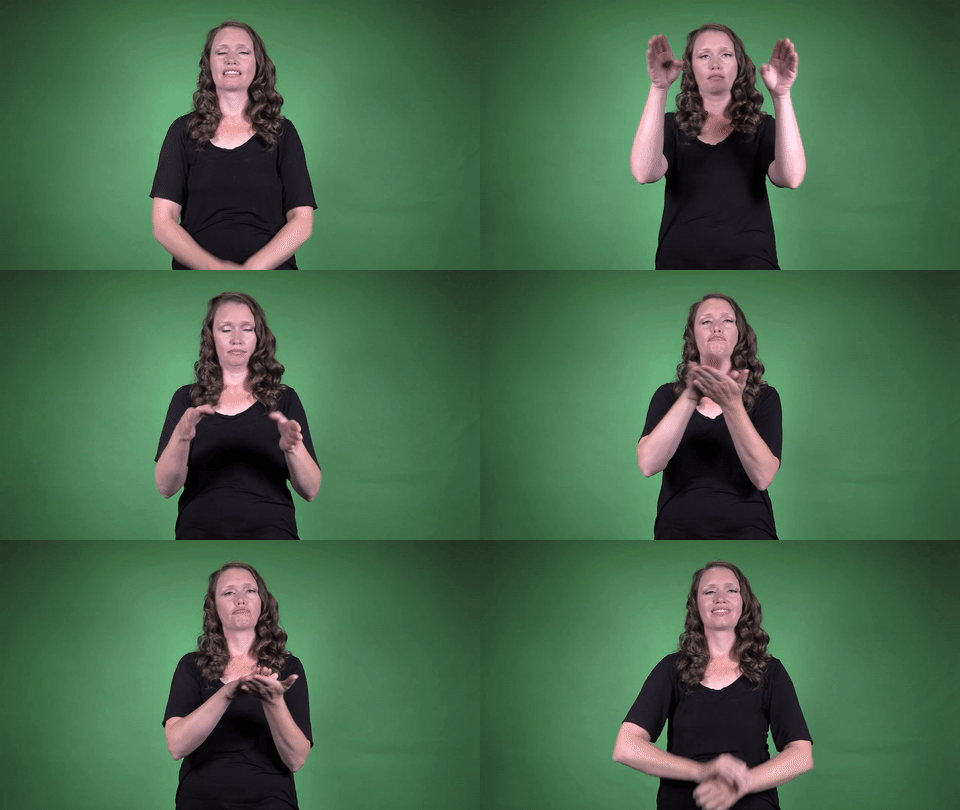
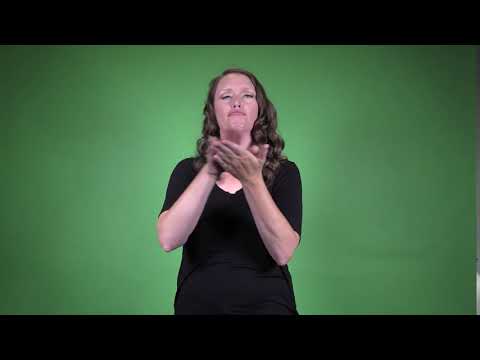
Definition: To clean the house.
Sign for CLEAN THE HOUSE in ASL

Practice Activities:
To practice the sign for CLEAN THE HOUSE in ASL, start by isolating each part of the phrase. Practice the sign for CLEAN by using a flat dominant hand brushing across the non-dominant flat hand, resembling the motion of wiping. Then sign HOUSE by outlining the shape of a roof and walls using both hands. Repeat these signs separately and then combine them smoothly.
Try using the sign for CLEAN THE HOUSE in ASL with different time indicators to build fluency. Practice sentences such as “I CLEAN THE HOUSE every Saturday” or “Tomorrow, I will CLEAN THE HOUSE.” Work on your facial expressions to show when something is a routine, a chore, or an urgent task. Remember that in ASL, eyebrows and facial grammar help convey meaning and intent.
Create a simple story using signs you already know. For example: “I wake up, eat breakfast, then I CLEAN THE HOUSE.” Sign this story in front of a mirror to self-monitor accuracy, or record yourself and review for clarity and smoothness. Practice transitioning fluidly between everyday actions and the target phrase.
With a partner, alternate giving and responding to prompts like “When do you CLEAN THE HOUSE?” or “Do you like to CLEAN THE HOUSE?” Respond with full ASL sentences and consider adding additional information such as places in the home you clean or tools you use. This supports context-building and vocabulary expansion.
Turn household activities into an immersive signing session. As you do chores, pause and sign what you are doing including the sign for CLEAN THE HOUSE in ASL. Sign aloud in your mind or to yourself as you move through each room. Use this method regularly to reinforce language in a realistic way and to make practicing feel natural and integrated.
Cultural Context:
In American Sign Language (ASL), the sign for CLEAN THE HOUSE in ASL carries more than just a simple instruction. It reflects values of responsibility, family roles, and daily routines that are deeply embedded in both Deaf and hearing cultures. Cleanliness and maintaining one’s living space are seen as fundamental acts of self-care and respect for others who share the home.
The sign for CLEAN THE HOUSE in ASL combines two key concepts: CLEAN and HOUSE. Each concept has its unique sign, but together, they form a compound that mimics how people naturally use the phrase in real life. This sign is often used in daily conversations, especially when discussing chores or giving instructions during family or group activities.
In Deaf culture, using the proper sign for CLEAN THE HOUSE in ASL shows not only language fluency but also cultural awareness. Many Deaf households emphasize visual structure and how chores are communicated through clear, direct signs. Using the right signs helps avoid misunderstandings and keeps communication smooth and respectful.
ASL is a fully developed language that relies on facial expressions, body movements, and hand shapes. When signing CLEAN THE HOUSE in ASL, it’s not just about replicating hand movements—you must also show intent and context through expression and movement. For instance, emphasizing the motion can indicate a deeper level of cleaning, like a spring cleaning, rather than a surface tidying.
Children in Deaf families often learn the sign for CLEAN THE HOUSE in ASL at a young age. It becomes part of their daily vocabulary as they help with chores and take on responsibilities. This supports the development of independence and reinforces routines that contribute to strong family dynamics and community involvement.
The sign for CLEAN THE HOUSE in ASL is also a common phrase used in educational settings. Teachers might assign this sign as part of a vocabulary list during themed lessons on home, hygiene, or daily routines. Practicing this sign helps Deaf and hearing students connect language with life skills, creating a meaningful learning experience.
In social media and storytelling within the Deaf community, the sign for CLEAN THE HOUSE in ASL is frequently used in vlogs or skits to set the scene. It might signal the beginning of a narrative about hosting guests, preparing for holidays, or sharing humorous experiences related to household chores.
The concept of cleaning isn’t just practical—it also has symbolic value. For example, in some traditions, cleaning the home is associated with mental clarity, new beginnings, or even spiritual preparation. When using the sign for CLEAN THE HOUSE in ASL,
Extended Definition:
The sign for clean the house in ASL is a common and useful phrase in both casual and structured conversations within the Deaf and hard of hearing community. It involves combining the sign for “clean” or “clean up” with the sign for “house”, creating a clear and actionable expression related to domestic responsibilities.
When you sign clean the house in ASL, you’re communicating more than just an action; you’re referencing one of the most routine tasks carried out in everyday life. Whether you’re talking about chores, a weekend routine, or preparing for visitors, the sign is highly practical and easy to learn.
To sign clean the house in ASL, you typically start by using the flat hands to sign “clean”—one hand palms up and the other brushing across it in a sweeping motion. Then follow up with the sign for “house”, which is made by forming the outline of a house using your hands. The combination of these two signs effectively conveys the full meaning in a natural and visual manner.
The sign for clean the house in ASL can be modified slightly based on context or intensity. For example, if you’re talking about deep cleaning or specific chores like vacuuming or mopping, you might use facial expressions or additional signs to give more detail. Non-manual signals such as eyebrows raised or head nods can also emphasize urgency or satisfaction with the task.
This phrase is often taught early in ASL learning programs because it introduces time management vocabulary and supports daily routine discussions. It’s useful when scheduling activities, assigning roles in a shared space, or simply recounting what you’ve done during the day. Mastering how to sign clean the house in ASL opens up clearer communication about responsibilities and environments, which are key topics in many conversations.
In family settings, the phrase can be used to request help or assign chores to children using sign language. In schools or group homes where ASL is the primary form of communication, knowing how to sign clean the house in ASL helps build cooperation and structure among students or residents. It’s also an expression that can be seen in everyday narratives, storytelling, or even social media videos made by Deaf creators sharing aspects of their daily life.
From a cultural standpoint, maintaining cleanliness is often linked to respect for shared spaces and others living within them. So, the sign for clean the house in ASL carries social and communal significance as well. It helps foster a sense of responsibility and contributes to mutual understanding in group settings.
In ASL storytelling or casual talk, this phrase may
Synonyms: tidy the house, clean up the home, do housework, straighten up the house, clean the house
Educational resources: Find related learning materials in our course bank!
Want more? Check out some of our popular learning activities on the homepage!
Need to look up a sign? Use our highly rated dictionary: https://aslinteractive.com/best-asl-dictionary/
Follow us on tiktok: https://www.tiktok.com/@aslinteractive. More social media links at the bottom of this page!
Long-tail Keywords: What is the sign for Clean the house in ASL?, How do you sign Clean the house in ASL?, ASL interpretation for Clean the house
Categories:
tags: chores, activities, housing, home, verbs
Parameters
*Handshape*:
The handshape for the sign for CLEAN THE HOUSE in ASL involves two flat hands. For the “clean” portion, one hand is held palm-up while the other flat hand brushes across it in a sweeping motion, mimicking a cleaning motion. The hands remain open with fingers together, forming a flat “B” handshape.
For the “house” part, both hands stay in the flat “B” shape and mimic the outline of a house. They start together at the fingertips to form the roof, then move vertically downward to show the walls. This sequence pairs well to reflect the meaning conveyed by the sign for CLEAN THE HOUSE in ASL .
*Palm Orientation*:
For the sign for CLEAN THE HOUSE in ASL, the dominant hand, flat and open, has the palm facing downward as it makes a sweeping motion across the non-dominant palm, which is also flat and facing upward. This mimics the act of wiping or cleaning a surface.
To complete the sign for CLEAN THE HOUSE in ASL, the sign for HOUSE is made with both hands forming a flat roof shape, palms facing each other and then moving downward to outline the walls. Throughout the phrase, palm orientation adjusts to show the change in actions from cleaning to describing a home.
*Location*:
The sign for CLEAN THE HOUSE in ASL is produced in two parts and involves specific signing spaces. The sign for CLEAN is usually made in front of the lower chest or mid-torso, where one hand brushes across the other palm in a wiping motion. The sign for HOUSE then moves slightly outward and upward to about chest level, mimicking the shape of a house with both hands.
This location transition between the torso and chest area helps visually break down the concept. Since the sign for CLEAN THE HOUSE in ASL combines two distinct signs, keeping the signing space central and clear enhances understanding and flow.
*Movement*:
To show the sign for CLEAN THE HOUSE in ASL, start by making a flat dominant hand and miming a wiping motion across the non-dominant flat palm, as if cleaning a surface. This represents “clean.”
Then for “house,” use both open hands with fingers together to outline the shape of a peaked roof and walls in front of your body. Combine the two signs smoothly to complete the sign for CLEAN THE HOUSE in ASL .
*Non-Manual Signals*:
When performing the sign for CLEAN THE HOUSE in ASL, use a pleasant and focused facial expression to reflect the task-oriented nature of cleaning. Eyebrows remain neutral or slightly raised to show attentiveness, while the mouth may form a small smile or stay relaxed to reinforce the positive or routine tone of the activity .
The non-manual signals play a key role in conveying that the sign for CLEAN THE HOUSE in ASL refers to a specific and complete chore. Proper eye gaze should follow the movement of the hands, especially when signing HOUSE, to show spatial awareness and completeness.
*Prosody, Dominant/Non-Dominant Hand*:
The sign for CLEAN THE HOUSE in ASL typically uses both hands. The dominant hand (flat palm) brushes across the non-dominant flat palm, mimicking a wiping or cleaning motion. This movement shows the concept of “clean.” Then, sign HOUSE by forming both hands into flat B-handshapes and outlining the shape of a house with a roof and walls.
The dominant hand is active in both parts, with the non-dominant hand staying steady or following the motion briefly. Facial expressions may emphasize effort or routine, depending on the context. Using proper prosody and pacing when signing CLEAN THE HOUSE in ASL helps ensure clarity and natural flow.
Tips for Beginners:
When learning the sign for CLEAN THE HOUSE in ASL, it helps to break it down into two separate signs: CLEAN and HOUSE. Make sure to practice each part individually before combining them. For CLEAN, use your dominant flat hand to make a sweeping motion across your non-dominant flat hand, palm up. For HOUSE, form a roof shape by touching your fingertips together, then trace the outline of a house in the air with your hands forming vertical sides.
Facial expressions can help support your sign. A calm, neutral expression is best to convey a literal meaning like this. Be mindful of your handshape and palm orientation when signing CLEAN — both hands should remain flat. Beginners often curve the hands or move them incorrectly, which can change the meaning. Take your time and practice slowly to ensure accuracy.
Keep movements smooth and deliberate. Jerky hand motions might confuse the viewer or lessen the clarity of the sign for CLEAN THE HOUSE in ASL. Hand placement is also crucial; try to maintain clean lines and consistent space between your hands when signing HOUSE.
A common mistake is over-emphasizing or rushing through the combination. Avoid blending the two signs into one fluid motion until you’re confident with the individual parts. It’s best to pause briefly between CLEAN and HOUSE at first, then gradually reduce the gap as your fluency improves.
Repetition is key. Practice the sign daily in different contexts—such as while actually cleaning your home—to build muscle memory. Signing in front of a mirror can help with self-correction, and watching videos of native signers can reinforce correct form and pacing. Remember, the more natural and relaxed your signing becomes, the clearer the sign for CLEAN THE HOUSE in ASL will be to others.
clean the house in asl, asl sign clean house, how to sign clean the house, clean house american sign language, learn clean house sign
Connections to Other topics:
The sign for CLEAN THE HOUSE in ASL connects closely with everyday activities and the broader topic of domestic routines in sign language. It typically involves two separate signs—CLEAN (an action of wiping one flat hand across the other) and HOUSE (made by outlining the shape of a house with both hands). These two signs are combined in sequence to convey the full meaning.
Understanding the sign for CLEAN THE HOUSE in ASL opens the door to related concepts such as chores, routines, and home-based activities. For example, signs like CLEAN ROOM, SWEEP FLOOR, or VACUUM are often used in similar contexts and can be combined with HOUSE to be more specific. These compound phrases enrich the conversation and allow signers to describe daily responsibilities in detail.
This sign is also linked to temporal structures like DAILY, EVERY WEEK, or WEEKEND when discussing cleaning routines. For instance, CLEAN THE HOUSE EVERY SATURDAY is a common sentence structure that uses time signs to provide context. Including temporal markers strengthens grammar and clarity in ASL, reinforcing how time and activity intertwine.
Learners may also explore expressive shifts such as intensity and repetition to indicate degree. Signing CLEAN over and over, with more force, can communicate deep cleaning, while a single, quick motion might indicate light tidying. This layering adds nuance and precision to the basic form of the sign for CLEAN THE HOUSE in ASL.
It’s also useful to compare it to other action + place combinations like COOK DINNER or FIX CAR, which follow a similar structure. These teach how ASL often builds meaning through spatial order and functional sequences. Recognizing this pattern helps learners create more natural, fluent expressions in their conversations about home and daily life activities .
Summary:
The sign for CLEAN THE HOUSE in ASL uses a compound approach that reflects the concept through two key ideas: cleaning and the house itself. The sign combines the individual signs for CLEAN and HOUSE, merging their meanings and motions smoothly to communicate a cohesive idea.
To sign HOUSE, both hands form flat B-handshapes, starting at the fingertips and tracing the shape of a roof down to the base of a house. This imagery makes the sign iconic, giving a visual cue that mimics drawing the outline of a house in space.
The sign for CLEAN typically involves one flat hand sliding across the palm of the other, representing the act of wiping or tidying. The dominant hand wipes the non-dominant hand in a quick, clean motion—a metaphorical sweep to indicate cleanliness. This visual is important when considering both literal and metaphorical uses.
In combination, the sign for CLEAN THE HOUSE in ASL transitions fluidly from outlining the house to mimicking the wiping gesture across the palm right afterward. This preserves the sequence of meaning and emphasizes the completion of an action inside the conceptual space of a home.
Grammatically, ASL allows for flexibility in word order, so the sign for CLEAN THE HOUSE in ASL can be modified depending on the context or emphasis. For example, a signer might emphasize the action (cleaning) by using non-manual markers like facial expressions, raised eyebrows, or mouth morphemes such as “puff” to mimic effort.
Context dictates whether the sign leans more toward a literal sense—like someone doing chores—or a figurative one, such as preparing for guests. ASL often builds context through spatial referencing and role shifting, which helps clarify intent.
Facial expressions and body language play an important role in delivering the full meaning of signs like CLEAN THE HOUSE. A tired look may signal burden, while an excited expression might suggest enthusiasm about cleaning before a party.
Linguistically, CLEAN and HOUSE function as separate morphemes combining into a compound unit in the sign for CLEAN THE HOUSE in ASL. This is consistent with ASL’s morphological structure, where compounding can condense meanings into singular, fluid gestures for efficiency and expression.
Language learners exploring this sign often observe how compounding interacts with temporal inflection. For instance, using repeated motions of the CLEAN sign can suggest habitual action, such as cleaning every weekend. A single, firm motion may express recent or intentional action.
The noun-verb distinction plays out here too. A single swift motion represents the verb CLEAN, while repeated or extended movements with timing adjustments could imply describing the chore or the condition of cleanliness, aligning with noun-like usage.
In Deaf culture, cleaning the house may carry additional meanings beyond the chore itself. Preparing one’s home for visitors may be seen as a gesture of respect or hospitality. So the sign for CLEAN THE HOUSE in ASL isn’t purely functional; it may imply social readiness or deeper intentions shaped by the culture.
Moreover, this compound sign is tied to communal events. For some Deaf families, preparing a house might link to holidays or Deaf community gatherings. The sign, then, encapsulates not only action but shared values of connection and inclusion.
When fingerspelling is combined with signs in more specific contexts, such as CLEAN GRANDMA’S HOUSE, spatial referencing becomes essential. Signers often localize PEOPLE and PLACES in the signing space to clarify who is cleaning whose house. CLEAN THE HOUSE, then, becomes adaptable and personalized.
The sign for CLEAN THE HOUSE in ASL can be expressed in different emotive tones. A sign paired with exaggerated or repeated it’s CLEAN signs might suggest effort or reluctance. Rapid signing combined with strong facial expressions could convey urgency or stress, showing the sign’s dynamism.
From a semantic angle, CLEAN connects to concepts like NEAT, TIDY, and even ORGANIZED. These semantic clusters enrich how a signer might alter the sign clusters to be more precise. One might say CLEAN THE HOUSE including ORGANIZE or DUST or SWEEP, chosen based on the actual cleaning activity.
The variance in signs across regional dialects of ASL can have slight modifications in how the sign for CLEAN THE HOUSE in ASL appears. In some areas, signers may further simplify the motion or replace CLEAN with a more specific sign like SWEEP or VACUUM, depending on the activity being focused on.
Children learning ASL often start with individual signs like CLEAN and HOUSE before combining them. Educators use illustrations and physical prompts to help them understand how combining signs communicates compound ideas like CLEAN THE HOUSE.
In applied linguistics, analyzing signs like these provide evidence of ASL’s efficiency in symbol-to-meaning representation. The clean sweep of CLEAN mimics motion and intention, while the structure of HOUSE gives context and location—making the compound accessible and powerful.
Interpreters must be mindful of both cultural context and temporal markers when interpreting this sign into spoken English. The signer may intend to convey cleaning planned in the future, happening
Want more? Check out some of our popular learning activities!
ASL Interactive Resources
ASLInteractive YouTube Channel
Follow us on tiktok: @aslinteractive.com
Follow us on Instagram: aslinteractive
Facebook page: aslinteractive
Facebook group: aslinteractive
LInkedIn: ASL Interactive LLC
Twitter: @ASL_interactive
*Some information on this page is AI-generated. AI can make mistakes. Please check the information.


Responses