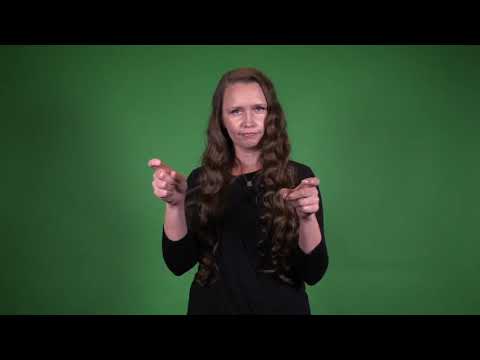
Sign for CONTROL in ASL | 🕹️ ASL Dictionary

Definition: To influence, direct, or regulate actions or behavior to maintain authority or manage outcomes effectively.

Sign for CONTROL in ASL

YouTube player

Practice Activities:

Start by practicing the sign for CONTROL in ASL in isolation. Repeat the sign multiple times while watching yourself in a mirror to ensure correct handshape, movement, and palm orientation. Try alternating between slow and fast signing to build muscle memory and accuracy.

Once comfortable, move on to short phrases. Use this sign in different contexts such as “self-control,” “remote control,” or “you control it.” Sign each phrase slowly, then speed up and add facial expressions that match the intent. Focus on how the meaning shifts depending on the usage.

Incorporate the sign for CONTROL in ASL into simple sentences. Practice sentences such as “I need to control myself,” “She controls the team,” or “They don’t have control anymore.” Try signing the same sentence in different ways to emphasize different aspects like subject, object, or intensity.

For storytelling, create a brief narrative about a time you or someone else had control over a tough situation. Focus on using sequencing signs like “then,” “next,” and “finally.” Add other relevant signs like “decide,” “lead,” and “stop” to provide a richer story while reinforcing how the sign for CONTROL in ASL fits naturally within the context.

Try a partner activity where one person explains a situation involving control and the other re-tells the story using ASL, emphasizing the sign for CONTROL in ASL multiple times. This builds listening comprehension and expressive skills. You can also roleplay real-life situations like managing a classroom, operating machinery, or helping someone stay calm.

To build vocabulary around the sign, list 5-10 related signs and practice creating compound phrases. For example, link signs like “power,” “manage,” “limit,” and “authority” with the sign for CONTROL in ASL. This helps broaden your expressive range and deepens understanding of how it functions in real dialogue.

Cultural Context:

In Deaf culture, the sign for control in ASL carries both literal and metaphorical meanings. It can refer to physical control, emotional restraint, or even authority in social interactions. Because ASL is more than just a language—it’s a cultural experience—the context in which control is used matters deeply.

The sign for control in ASL is often used in conversations around behavior and boundaries. Whether discussing self-control, classroom management, or interpersonal relationships, this sign plays a vital role in expressing power dynamics. Deaf community members may use the sign when reflecting on how authority is shared or imposed within their culture.

In educational settings, the sign for control in ASL comes up when talking about classroom behavior, especially when comparing teaching strategies. Teachers in Deaf schools may use this sign to indicate who is in charge or how order is maintained. It’s not just a word; it’s a gesture loaded with meaning about leadership and expectations.

Deaf parents teaching their children might sign control while setting rules or explaining consequences. It helps establish a healthy understanding of limits and guidelines within the family. Because ASL is a visual and spatial language, signs like control must be clear and purposeful when communicating complex ideas.

In discussions about emotional wellbeing, the sign for control in ASL is often used to indicate self-regulation or managing strong feelings. Whether talking with a counselor or a friend, members of the Deaf community may use it to express how they handle stress, frustration, or anger. It helps support emotional vocabulary and builds better personal connections.

In the workplace, the sign for control in ASL is useful when talking about job responsibilities and decision-making authority. It might appear in conversations about who manages teams, handles tasks, or oversees final decisions. Miscommunication about control can lead to bigger issues, so having a clear sign is essential.

The Deaf community values equal communication access, and control is often a part of advocacy talks. Advocates might sign control in conversations involving autonomy, accessibility, and the need to manage one’s environment. It becomes a powerful way to express independence and stand up for rights.

Media and performance arts within the Deaf world also reflect the nuances of signs like control. Actors and storytellers play with facial expressions and body movements to show how control looks and feels. The sign becomes a tool for dramatic storytelling and conveys different layers of meaning.

Through social media and community discussions, Deaf people share personal stories where control played a pivotal role. These might include school experiences, relationships, or moments where they had to assert their voice.

Extended Definition:

The sign for control in ASL refers to the concept of managing, directing, or having power over a situation or object. It’s commonly used in everyday conversations when discussing topics like personal emotions, remote devices, or leadership roles. The sign can shift slightly depending on the context, but its root meaning ties back to regulation or command.

To produce the sign for control in ASL, both hands are usually in a modified X-handshape. The dominant hand leads as it moves in a small arced motion, suggesting the idea of directing or holding authority. Facial expressions are important to match the tone—serious or neutral depending on the conversation.

In ASL, the sign for control often comes up in discussions about emotional regulation. For example, someone might use it when telling a story about staying calm in a stressful moment . In these cases, it reflects the ability to manage one’s reactions, a key aspect of self-awareness.

Another common use of the sign for control in ASL appears in tech-related discussions. People might talk about taking control of a remote or managing device settings. The same sign applies, showing how flexible ASL is in adapting to new concepts .

Control also appears in dialogues about authority and leadership. When talking about who is in charge of a group project or who controls an organization, the sign gives a visual marker of ownership or responsibility. The depth of meaning behind the sign allows for clear and concise communication ‍ .

Context helps define the exact meaning. In some situations, the sign for control in ASL might be paired with other signs to clarify whether it’s emotional control, technical control, or social power. This combination adds clarity and helps the signer convey their exact intention.

Idiomatic usage is also common. Phrases like “out of control” or “take control” have visual equivalents in ASL using the core sign for control. These expressions might include dramatized facial expressions or additional gestures to emphasize the message .

When teaching beginners, the sign for control in ASL is introduced early since it connects with multiple aspects of communication. It’s a foundational sign that paves the way for understanding more complex expressions involving influence and responsibility.

In storytelling, narrators frequently use the sign to express shifts in power or decision-making. Whether in personal vlogs or classroom settings, the sign becomes an anchor point for describing how events unfold or who leads the way.

Children learning ASL often pick up the sign easily due to its physical clarity and

Synonyms: manage, regulate, govern, supervise, oversee

Educational resources: Find related learning materials in our course bank!

Want more? Check out some of our popular learning activities on the homepage!

Need to look up a sign? Use our highly rated dictionary: https://aslinteractive.com/best-asl-dictionary/

Follow us on tiktok: https://www.tiktok.com/@aslinteractive. More social media links at the bottom of this page!

Long-tail Keywords: what is the sign for control in ASL, how do you sign control in ASL, ASL sign for control

Categories:

tags: Commands, Language Learning, Basic Grammar, Everyday Activities, Actions

Parameters

*Handshape*:

The handshape used in the sign for CONTROL in ASL typically involves both hands forming flat “C” shapes . The palms face down or slightly inward, with fingers curved to create the “C” formation, representing the idea of guiding or directing something.

This handshape helps express the concept of authority or regulation, which is central to the sign for CONTROL in ASL. The “C” shape links directly with the word, reinforcing its meaning visually and linguistically.

*Palm Orientation*:

The palm orientation for the sign for CONTROL in ASL typically involves both hands in a flat “C” or open “5” handshape, with palms facing downward slightly or towards each other. The dominant hand taps or lightly moves across the non-dominant hand in a controlled, horizontal motion.

In the sign for CONTROL in ASL, the palms stay steady to reflect stability and authority. This orientation supports the meaning of maintaining or guiding direction, which is central to the sign.

*Location*:

The location for the sign for CONTROL in ASL is typically in the neutral space in front of the body, slightly below chest level. Both hands are used in a horizontal movement, staying within the central signing space without touching the body.

This neutral space allows clear visibility and keeps the motion focused in the signer’s midline area. The sign for CONTROL in ASL maintains consistent spatial orientation to convey the concept effectively.

*Movement*:

To produce the sign for CONTROL in ASL, both hands form the letter “X” handshape. They alternate slightly in a forward-and-back motion, shifting direction as if steering or managing something. The hands remain about chest-height while making this movement.

The motion should be firm and deliberate, suggesting guidance or supervision. This back-and-forth action reinforces the concept behind the sign for CONTROL in ASL, showing the hands actively adjusting or directing.

*Non-Manual Signals*:

When demonstrating the sign for CONTROL in ASL, the signer typically maintains a serious and focused facial expression. Slight eyebrow lowering and direct eye contact help convey authority or management over a situation.

The non-manual signals emphasize the command or regulation aspect embodied in the sign for CONTROL in ASL. A firm mouth posture, such as a slight press of the lips together, enhances the sense of structure or dominance implied by the gesture.

*Prosody, Dominant/Non-Dominant Hand*:

The sign for CONTROL in ASL typically uses both hands in a palm-down “X” handshape. The dominant hand leads while the non-dominant hand mirrors below it, moving slightly forward in a staggered rhythm, indicating a sense of direction or command.

Both hands work in tandem, with the dominant hand setting the motion. This movement shows a symbolic grasp or regulation, fitting the meaning behind the sign for CONTROL in ASL.

Tips for Beginners:

When you’re first learning the sign for CONTROL in ASL, it’s important to pay close attention to handshape and movement. This sign often uses both hands in a modified “X” handshape or can vary slightly based on region or context. Take time to watch experienced signers and mirror their placement and movement accurately.

One common challenge with the sign for CONTROL in ASL is maintaining consistent palm orientation. Beginners sometimes rotate their wrists incorrectly, which can make the sign look like something entirely different. Practice the movement slowly in the mirror to become confident with its directional flow.

Remember that facial expressions enhance the sign’s clarity and intent. For example, a more serious expression may be used when the concept of control refers to dominance or regulation, while a neutral face might accompany a general reference. Always match your non-manual signals with the overall message for authentic communication.

Keep your sign within the “signing space” — the area extending from the top of your head to your mid-torso and slightly wider than your shoulders. Signing too high or too low can confuse viewers and diminish clarity. This technique will help improve your expressiveness and readability right from the start.

Try practicing the sign for CONTROL in ASL within full phrases instead of isolated repetition. Use it in short everyday contexts like “self-control” or “remote control” to build fluency. Repetition within context helps reinforce comprehension and memory.

Lastly, don’t be afraid to ask for feedback. Join a Deaf community group or language exchange where members can observe your use of the sign for CONTROL in ASL and offer corrections. Real-time feedback is one of the best tools to refine your signing and improve over time. Keep practicing and stay patient — fluency will come with consistency!

Connections to Other topics:

The sign for CONTROL in ASL shares conceptual space with signs like MANAGE, DIRECT, and POWER. Each of these terms deals with the idea of exerting influence or guidance, often over people, tasks, or systems. This makes the sign for CONTROL in ASL useful when discussing authority, leadership, or regulation in various contexts.

CONTROL is frequently found within compound ideas such as REMOTE CONTROL or SELF-CONTROL. For REMOTE CONTROL, one might combine the sign for CONTROL with a gesture implying distance or a device, depending on the context. For SELF-CONTROL, the sign for SELF can precede or be integrated with CONTROL, underscoring personal restraint or discipline, often used in conversations around emotions or behavior.

The structure of the sign for CONTROL can suggest manipulation or precise handling, which links it to other verbs like HANDLE or OPERATE. This highlights how physical orientation and context can slightly alter meaning while staying within a network of related concepts. In teaching environments, for example, CONTROL might be used when referring to classroom management or behavior regulation strategies.

The sign for CONTROL in ASL can also be discussed in contrast with its opposites like CHAOS, CONFUSION, or OUT-OF-CONTROL. These comparisons help illustrate the function and significance of the concept in a greater semantic field. Such comparisons can be essential when expressing abstract or emotional states.

Additionally, the sign often appears in professional settings, such as talking about job roles or systems — for instance, “production control,” “quality control,” or “inventory control.” Each context shifts its nuance but relies on the central idea of oversight or mastery. Understanding these layers helps learners grasp the flexibility and range the sign can have across topics.

Summary:

The sign for CONTROL in ASL commonly involves the movement of the dominant hand in a managing gesture, often using flat or slightly curved hands. Directionality plays an important role in this sign, especially when indicating who is controlling whom or what.

Typically, the sign features the dominant hand in a bent “V” handshape or using “X” handshapes directed outward and downward in a rhythmic, steady motion. This conveys the idea of maintaining order or regulating something with deliberate effort.

Signers may alter facial expressions to match the degree or type of control being expressed. A firm expression may suggest strict control, while a neutral or more relaxed face could suggest minimal or gentle regulation.

There can be slight movement toward the signer or away, depending on whether the sign references self-control or external control. This makes the sign for CONTROL in ASL dynamic in terms of space usage.

The context in which the sign is used significantly alters its interpretation. CONTROL over emotions versus CONTROL over a machine may prompt slight differences in expression or accompanying signs.

In storytelling and conversation, the sign for CONTROL in ASL is often paired with descriptors or classifiers to clarify the type of control being discussed. This adds richness to the narrative and signals nuanced meaning.

It’s also not uncommon to see a fingerspelled version of the word used in official or formal settings when discussing technical control systems or in academic settings. This is especially true when talking about institutional control or legal frameworks.

From a linguistic viewpoint, the sign reflects a concept that is abstract and yet physically demonstrated through gestural parameters like handshape, location, and motion. This highlights how ASL handles intangible ideas through tangible movements.

The sign for CONTROL in ASL can be compared with signs for related concepts like MANAGE, DOMINATE, or AUTHORITY. These comparisons show subtle shifts in power dynamics and intent, which ASL effectively communicates through sign modifications.

Socially and culturally, control is a sensitive concept. Using the sign for CONTROL in ASL within an interpersonal dialogue can evoke complex issues around autonomy, agency, and power relations.

Grammatically, control can act as a noun or a verb, and ASL flexibly conveys both forms. Context and sentence structure determine whether the signer means someone is in control or exercising control.

In terms of applied linguistics, understanding how control is expressed in different sign languages offers significant insight into cultural prioritization of autonomy versus hierarchy across communities. ASL’s take incorporates an interplay of movement and intensity.

The sign is also relevant in discourse about emotional regulation, self-discipline, and professional boundaries. The sign for CONTROL in ASL is often utilized in therapeutic, educational, and social settings to metaphorically describe inner stability.

In Deaf culture, autonomy and self-representation are critical, so the sign for CONTROL in ASL might also symbolize empowerment or taking control of one’s narrative against audism or systemic oppression.

ASE users may substitute or pair the sign with facial expressions or with other signs depending on regional dialects and the signer’s familiarity with the topic. This makes the communication highly adaptive to the context.

For learners, mastering the sign for CONTROL in ASL offers access to conversations in a variety of fields, from tech to psychology. It’s a conceptual sign that spans contexts from daily use to professional jargon.

There are subtle regional variations in how CONTROL is signed, but the general concept remains consistent. These variations point to the organic and community-driven evolution of ASL.

In multitopic discussions, particularly ones involving behavior management or governance, the sign provides a foundational marker. It serves as a cognitive anchor in discourse, easily modifiable to fit particular scenarios.

The sign is also highly relevant in academic ASL programs where discussions include social control theories, pedagogical control, or administrative structures. These high-level uses require contextual fluency and deeper sign vocabulary.

The sign for CONTROL in ASL naturally links with classifiers showing control over objects or people. For instance, a signer might show control of a steering wheel, a person, or a pet through classifier movement after using the control sign.

When discussing emotions or behavior, the sign can be delivered with internalized, centered motion near the torso, often indicating self-control. The location of the sign helps discern internal versus external control.

In performance art or theatrical ASL, the sign can be exaggerated or stylized for dramatic effect. It helps convey emotional layers related to power struggles or character intention on stage.

The versatility of this sign makes it suitable across genres, from mental health counseling to classroom management to personal development seminars. Such breadth of application shows its semantic richness.

From a pedagogical view, teaching the sign for CONTROL in ASL early helps students explore agency and responsibility. It encourages abstract thinking and expression in visual language users.

Culturally, the idea of control intersects with advocacy, with discussions around Deaf rights often involving the notion of taking back control from hearing-dominated systems. This makes the sign symbolically potent.

The sign aids in real-world conversations such as controlling machines, exercising

Want more? Check out some of our popular learning activities!

ASL Interactive Resources

ASLInteractive YouTube Channel

Follow us on tiktok: @aslinteractive.com

Follow us on Instagram: aslinteractive

Facebook page: aslinteractive

Facebook group: aslinteractive

LInkedIn: ASL Interactive LLC

Twitter: @ASL_interactive

*Some information on this page is AI-generated. AI can make mistakes. Please check the information.

Sign for CONTROL in ASL

Responses