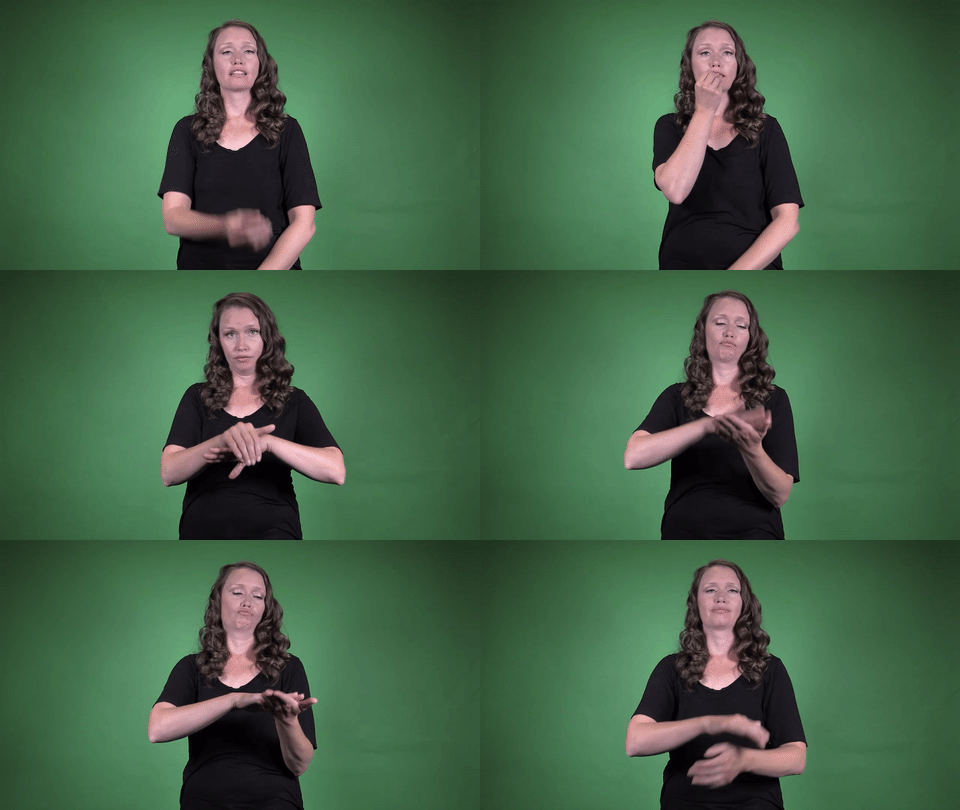
Sign for COOK DINNER in ASL | 👩‍🍳 ASL Dictionary

Definition: To prepare dinner.

Sign for COOK DINNER in ASL 

YouTube player

Practice Activities:

To practice the sign for COOK DINNER in ASL, begin by practicing the signs for COOK and DINNER individually. Practice in front of a mirror to check handshape and movement. Use the COOK sign by flipping your dominant hand, palm-down to palm-up, on your non-dominant hand, mimicking food being flipped. Then follow with the DINNER sign by forming the letter “E” handshape and tapping it near the mouth to show the evening meal.

Once you feel confident with the sign for COOK DINNER in ASL in isolation, try signing short phrases like “I cook dinner” or “cook dinner every night.” Practice saying these while signing to reinforce the connection between English and ASL structure. You can also try different time signs like YESTERDAY or TOMORROW to change when the action happens.

Use flashcards for daily routines and mix in COOK DINNER to create sentences like “Mom cook dinner” or “We cook dinner together.” Try recording yourself signing and compare it with ASL videos or model signers to improve your fluency and accuracy. Repetition builds muscle memory and confidence.

In a classroom or partner setting, take turns signing daily activities where one person acts out an evening routine and the other guesses. Include the sign for COOK DINNER in ASL within a story about what you cooked and with whom. This helps tie vocabulary into meaningful context.

Create practice skits about planning dinner, preparing food, or setting the table at night. Sign the full routine using proper ASL grammar and structure. Add facial expressions to show emotions like excitement, frustration, or hunger. These expressive elements strengthen communication skills while using the sign for COOK DINNER in ASL in realistic scenarios.

Cultural Context:

In American Sign Language, the sign for cook dinner in ASL reflects much more than a simple action—it carries deep cultural meaning within the Deaf community. For many, cooking and sharing a meal with family or friends is a treasured time, filled with connection, communication, and community. Using the sign for cook dinner in ASL during daily routines can highlight the importance of these shared experiences.

When using the sign for cook dinner in ASL, the movements mimic actual cooking actions, like placing something on a surface and flipping it. This visual and physical representation ties into the Deaf community’s strong reliance on sight and body language to express ideas clearly. Such signs don’t just describe an action; they help convey the rhythm and intention behind everyday life in a visual and expressive way.

Dinner time often serves as a social space in Deaf households. It’s when stories are shared, jokes are told, and updates are given—all without spoken words. The sign for cook dinner in ASL becomes a part of this rich tapestry, emphasizing not just the act of preparing food, but the gathering and sharing that follow.

In Deaf culture, food often plays a central role in events and get-togethers, so knowing how to use the sign for cook dinner in ASL is essential for fluent interaction. Whether it’s a casual weeknight meal or a big celebration, being able to sign phrases like this helps deepen participation and understanding within the community. It brings clarity to conversations and shows respect for culture and communication norms.

Learning the sign for cook dinner in ASL is more than building vocabulary—it’s an invitation to understand the values and habits of a visually expressive culture. When a sign closely mirrors real-life physical actions, like flipping food while cooking, it makes the language more intuitive and easier to remember. This type of visual storytelling is central to American Sign Language and adds richness to communication.

The sign for cook dinner in ASL also helps bridge gaps between hearing and Deaf individuals. When hearing people take the time to learn signs related to daily life, like cooking dinner, it creates space for more inclusive and meaningful exchanges. It says, I see you, and I want to connect in your language.

Deaf families often raise their children with daily exposure to signs like the sign for cook dinner in ASL, which strengthens early language development and encourages independence. Signing these activities regularly creates routine and helps children internalize both the language and the cultural rhythms of daily life. It’s a beautiful example of visual learning at its best.

In

Extended Definition:

The sign for cook dinner in ASL combines two separate concepts: cooking and dinner. Each part of the sign carries its own meaning, and when used together, they communicate the full idea of preparing and serving an evening meal. The sign is visual and easy to understand once you learn the individual components.

To sign “cook” in ASL, one hand represents a pan and the other mimics turning something over on it, similar to flipping food while it’s cooking. It’s a repeated motion that shows the action of preparing food using heat. This part captures the essence of the word “cook” in a simple and clear gesture.

The word “dinner” in ASL is usually signed by referring to the evening meal. It often involves signing “eat” followed by a time reference indicating the evening, or by using a distinct sign for dinner if one is available. Pairing the sign for “cook” with the sign for “dinner” forms the complete sign for cook dinner in ASL.

When you put it together, the concept of preparing an evening meal becomes clear through the sign. This is especially helpful in conversations about daily routines, responsibilities, or sharing tasks at home. The sign for cook dinner in ASL is useful in both casual and structured interactions.

It’s common to see this phrase used when asking someone what they’re preparing for dinner or offering to help with meal prep. For example, if you’re asking a friend what they plan to make tonight, you can use the sign for cook dinner in ASL followed by a questioning facial expression. Facial grammar plays an important role in ASL, so your expression will help communicate the full meaning of your question.

Knowing how to sign cook dinner in ASL also supports language development for Deaf and hard-of-hearing children learning about daily routines. It can be used in homes, schools, and therapy settings to build vocabulary and comprehension. Teachers and parents often introduce this sign during activities focused on mealtime or schedules.

Some learners break down the sign for cook dinner in ASL into two clear parts when first starting out. As fluency develops, the signs become more fluid and natural, fitting smoothly into conversation. Watching fluent ASL users can help you understand the pacing and transitions between signs.

The sign for cook dinner in ASL can also be adjusted depending on the context. For example, if you’re referring to a holiday dinner or a special event, your facial expressions and body language can emphasize the importance of the meal. ASL is expressive, and

Synonyms: prepare dinner, make dinner, fix dinner, cook the evening meal, prepare the evening meal

Educational resources: Find related learning materials in our course bank!

Want more? Check out some of our popular learning activities on the homepage!

Need to look up a sign? Use our highly rated dictionary: https://aslinteractive.com/best-asl-dictionary/

Follow us on tiktok: https://www.tiktok.com/@aslinteractive. More social media links at the bottom of this page!

Long-tail Keywords: What is the sign for cook dinner in ASL, How do you sign cook dinner in ASL, ASL sign for cook dinner

Categories:

tags: cooking, meals, verbs, everyday activities, chores

Parameters

*Handshape*:

The handshape used in the sign for COOK DINNER in ASL involves both hands using flat “B” handshapes . One hand, typically the non-dominant, is held palm-up to represent a pan or dish, while the dominant hand mimics flipping or cooking motion above it, also in a flat “B” shape.

When combining the sign for “cook” with “dinner,” which often uses the same or similar handshapes, the motion emphasizes the preparation of an evening meal. The handshape consistency helps reinforce the concept in the sign for COOK DINNER in ASL, making it visually intuitive and easy to remember.

*Palm Orientation*:

The palm orientation for the sign for COOK DINNER in ASL begins with one flat hand, palm facing upward, representing a pan or surface. The other hand, also flat, starts with the palm facing downward and flips over once or twice as if flipping food.

This motion mimics the act of cooking dinner. For DINNER, the hands may shift to portray the evening meal, often involving the signs for EAT and NIGHT combined. The palm orientation throughout the sign for COOK DINNER in ASL remains mostly horizontal, showing a cooking surface and meal context. ️

*Location*:

The sign for COOK DINNER in ASL is typically performed in the neutral space in front of the body, around waist to chest level. Hands are positioned near an imaginary table surface or stove to suggest the cooking action.

To express the sign for COOK DINNER in ASL clearly, maintain the movement in front of the torso. This ensures the viewer can see the mimicry of flipping or cooking food, reinforcing the concept of preparing a meal. ️

*Movement*:

The sign for COOK DINNER in ASL uses the dominant hand in a flat “B” shape, like a spatula, flipping back and forth once on the palm of the non-dominant flat hand, mimicking the motion of flipping food. Then the hands transition to the sign for DINNER, which is made by brushing the dominant hand in the “E” handshape near the mouth, indicating the evening meal.

When signing the sign for COOK DINNER in ASL, maintain a smooth movement from COOK to DINNER to indicate the full concept naturally. The gesture blends visual cues for both cooking and the time of the meal, enhancing clarity in conversation. ️

*Non-Manual Signals*:

When doing the sign for COOK DINNER in ASL, maintain a calm, pleasant facial expression to match the idea of preparing and enjoying an evening meal. Light eye contact and a soft smile can enhance the meaning, especially when discussing routine or family settings.

The non-manual markers for the sign for COOK DINNER in ASL should reflect a relaxed and warm mood. Slight head nods and natural blinking may accompany the sign, helping express comfort and familiarity with the action.

*Prosody, Dominant/Non-Dominant Hand*:

The sign for COOK DINNER in ASL usually uses both hands. The non-dominant hand remains flat, palm facing up to represent a pan or surface, while the dominant hand, also flat, flips back and forth above it like a piece of food being cooked.

To complete the phrase, follow COOK with the sign for DINNER, made by tapping a flat dominant hand (sign for “eat”) near the mouth, then transitioning to a downward motion (evening). The sign for COOK DINNER in ASL naturally combines both ideas to express preparing the evening meal ️.

Tips for Beginners:

When learning the sign for COOK DINNER in ASL, it’s helpful to break it down into two parts: COOK and DINNER. Start with COOK, which mimics the idea of flipping something in a pan. You place your non-dominant hand palm-up like a dish, and then pretend to flip an imaginary food item with your dominant hand. Make sure your movements are deliberate and not too fast, so others can clearly see your intent.

DINNER involves signing the concept of the evening meal, typically by signing EAT followed by NIGHT. The EAT sign involves bringing your dominant hand, closed in a flat “O” handshape, toward your mouth. NIGHT is shown by forming an arched dominant hand over the back of your flat, non-dominant hand to represent the setting or dark sky. Practicing this full sequence together as one fluid action is key to clarity.

One common mistake with the sign for COOK DINNER in ASL is rushing the movements or blending them too quickly, which might confuse the person watching. Stay mindful of hand orientation and speed, especially when transitioning from one sign to the next. Filming yourself or practicing in front of a mirror helps build control and awareness of any awkward angles.

Use facial expressions when signing DINNER to add context. Looking satisfied or content helps reinforce the concept. Real-life use might involve signing COOK DINNER followed by a facial expression that conveys “it was delicious” or “I’m full.” These little non-manual signals go a long way in ASL comprehension.

Repeat the sign for COOK DINNER in ASL regularly in context—at home when cooking, or while discussing your daily routine. The more you integrate it into your everyday signing, the more natural it will become over time.

Connections to Other topics:

The sign for COOK DINNER in ASL connects closely to other everyday life signs, particularly those related to meals, routines, and household activities. It combines the sign for COOK—where one hand represents a pan and the other hand flips like food cooking—with the sign for DINNER, which typically involves the handshape for the letter “E” tapped near the mouth, representing the evening meal. These individual components also appear in a wide range of conversations about food, meal prep, and nutrition.

This compound structure illustrates how ASL builds meaning through combination. Just as COOK DINNER merges two ideas, so do other common phrases like EAT BREAKFAST or MAKE LUNCH. Each part holds its own meaning and can be used independently. For example, COOK may be used to say “I cook every night,” while DINNER can be used to ask “What’s for dinner?” The sign for COOK DINNER in ASL allows for clear conveyance of sequencing and time, particularly when paired with time signs like TODAY or TOMORROW.

Understanding the sign for COOK DINNER in ASL also supports learning broader themes such as family roles, daily schedules, or past experiences. In storytelling, this compound sign may be expanded upon visually to show how someone cooks a specific meal, such as spicing food or setting the table. This supports ASL’s visual-spatial grammar and creates a more vivid narrative.

Related signs include KITCHEN, EAT, HUNGRY, and PREPARE. These can be linked in a sentence with COOK DINNER to explain full scenarios like “I cook dinner in the kitchen every night.” The use of directional or facial expressions further enhances context, showing whether the cooking is routine, forced, or celebratory ️. Mastering signs like COOK DINNER supports more fluid conversation around daily life in ASL.

Summary:

The sign for COOK DINNER in ASL involves combining the individual signs for COOK and DINNER. To sign COOK, place your non-dominant hand palm-up as if it’s a pan, then flip your dominant hand, palm-down, back and forth as if flipping food. This motion visually represents the action of cooking something on a stove or pan.

For DINNER, you use the sign for EAT followed by the sign for NIGHT. The sign for EAT is done by tapping your fingertips to your mouth, imitating the motion of putting food into your mouth. The sign for NIGHT involves placing your dominant curved hand over your non-dominant flat hand, which rests horizontally, mimicking the sun setting over the horizon.

When signing COOK DINNER, it’s important to maintain the proper sequence to convey the meaning accurately in ASL grammar. The sign for COOK should come first, followed by the sign for DINNER. This matches common sentence structure in ASL where the action often precedes time or meal context.

The sign for COOK DINNER in ASL is often used to describe someone preparing the evening meal. It can be modified by facial expressions or additional signs to convey if it’s being done now, later, or in the past. ASL relies heavily on non-manual signals to add temporal or emotional context.

The cultural importance of the sign for COOK DINNER in ASL is tied closely to family and shared meals. Cooking and eating dinner often represent connection, daily routine, and love within a Deaf household. Preparing food is an essential and expressive theme in Deaf culture, and this sign captures both the action and the intimate setting of an evening meal.

Unlike some spoken languages, ASL incorporates visual-spatial elements that let the signer indicate not just what is being done, but to whom and where. When using the sign for COOK DINNER in ASL, placing the action in space can show who’s cooking or for whom it is prepared. Indexing and directional verbs can be paired with this sign for more complex ideas.

Grammatically, this sign functions as a verb-noun combination when broken into its components. In Deaf linguistics, there’s a fascinating interplay between classifier use and context when discussing actions like cooking. ASL allows for rich storytelling about meal preparation using space, classifiers, and role-shifting techniques.

The components of the sign for COOK DINNER in ASL are highly iconic. Iconicity in ASL is when the sign visually resembles what it represents. Both the signs for COOK and for NIGHT rely heavily on this feature, making them easier to remember and learn for many.

The motivation behind the ASL sign for cooking is deeply rooted in visual metaphor. Flipping the hand over a “pan” closely mimics a relatable cooking motion. The sign for DINNER echoes both sustenance (EAT) and time (NIGHT), making the compound meaning more easily understood by context and gesture alone.

While fingerspelling is used for specific meal names or detailed food terms, the sign for COOK DINNER in ASL offers a natural flow in conversations about daily routines. Whether you’re learning ASL as a family member, an interpreter, or a student, this compound sign is one of the foundational vocabulary terms tied to everyday life.

In real interactions, the sign for COOK DINNER in ASL is often accompanied by additional contextual signs, such as WHAT, WHO, or WHEN. Eye gaze and head shifts may indicate the subject and recipient of the action. Fluent ASL users may also use space to set up locations, like referencing the kitchen before using the sign.

The linguistics of ASL shows that combining signs like COOK and DINNER allows for layering of meaning while maintaining a visual and spatial structure. This systematic use of compound signs reflects how ASL users economize hand movement while still delivering rich content.

When telling a story or describing a sequence of events, the sign for COOK DINNER in ASL fits naturally in timelines. It can be used in narratives alongside signs like FINISH, BEFORE, AFTER, or CLEAN. These storyline-building signs help organize actions in time, which is critical in both storytelling and daily discourse.

The sign for COOK DINNER in ASL demonstrates how time of day is shown through signing rather than spoken references. In English, tone or words like “tonight” are required, but in ASL, a slight waving or cocking motion during the NIGHT sign can convey subtle meanings like evening quiet or relaxation.

In applied linguistics, teaching the sign for COOK DINNER in ASL provides learners the chance to talk about routines and responsibilities. This suits real-world language acquisition models that encourage semantic relevance in vocabulary acquisition. Students appreciate learning signs they would actually use at home.

There’s a psychological element to the expressivity of this sign, particularly in the way Deaf individuals use it to describe care for loved ones. Making dinner is an act of

Want more? Check out some of our popular learning activities!

ASL Interactive Resources

ASLInteractive YouTube Channel

Follow us on tiktok: @aslinteractive.com

Follow us on Instagram: aslinteractive

Facebook page: aslinteractive

Facebook group: aslinteractive

LInkedIn: ASL Interactive LLC

Twitter: @ASL_interactive

*Some information on this page is AI-generated. AI can make mistakes. Please check the information.

Sign for COOK DINNER in ASL 

Responses