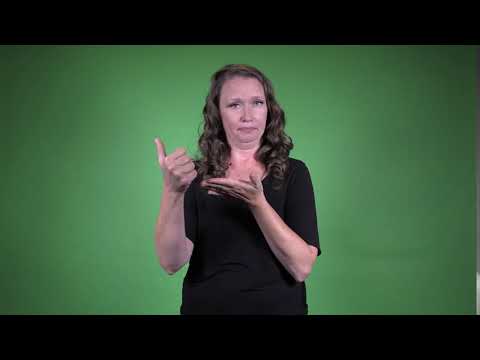
Definition: A dairy product made by skimming cream.
Sign for CREAM in ASL

Practice Activities:
Start by practicing the sign for CREAM in ASL in front of a mirror. Focus on the handshape and movement, making sure your fingers glide consistently along your non-dominant hand as though scooping cream. Repeat the sign ten times slowly, then try increasing speed while maintaining accuracy.
Pair the sign with fingerspelled variations such as heavy cream, whipped cream, and ice cream. Use flashcards with images of common food items that use cream and sign the name of each item, ending with the sign for CREAM in ASL. For example, show a picture of coffee, sign “coffee CREAM” to reinforce context usage.
Make a list of phrases or sentences like “Do you want cream?” or “I like cream in my tea” and sign them several times. This will help you get comfortable using the sign for CREAM in ASL in everyday situations. You can also try creating a morning routine dialogue where you sign about making breakfast, including adding cream to a dish.
Work with a partner if possible and take turns role-playing different scenarios. One person can be a barista or server, and the other can be the customer. Incorporate the sign for CREAM in ASL naturally, such as requesting cream or saying a dish already has cream added.
For a storytelling activity, describe a dessert recipe in ASL, adding cream as one of the ingredients. Think of things like “I mix milk and sugar, then add CREAM” with expressive facial grammar. This allows practice with sequencing while using the target sign meaningfully.
Lastly, engage with ASL videos or vlogs that involve cooking or food discussion. Note how the sign for CREAM in ASL is used, then replicate those signs yourself in similar contexts to build fluency and confidence.
Cultural Context:
In American Sign Language (ASL), the sign for cream is not just about communication—it’s also about culture, shared experiences, and lifestyle. The sign for cream in ASL is often associated with food, recipes, and daily routines, making it a common and useful sign in various conversations. When Deaf community members discuss meals, coffee preferences, or desserts, the need to sign for cream naturally arises.
The sign for cream in ASL helps bridge communication within social settings, especially around meals and gatherings. Whether someone is talking about adding cream to coffee or a dessert recipe, ASL users benefit from a clear and consistent sign. It brings people together through shared ideas and traditions around food and taste.
Food-related signs like the sign for cream in ASL are tied to cultural identity. From family dinners to cooking classes in Deaf education settings, integrating food signs strengthens both language use and cultural pride. Signing for cream is not just functional—it’s a small but rich part of Deaf culture’s daily expressions.
In the Deaf community, food signs often open the door to deeper conversations about preferences, traditions, and even health. Since cream can refer to dairy items, the sign for cream in ASL might also come up in discussions about dietary needs or vegan alternatives. This flexibility makes it an especially important term in the community.
The sign for cream in ASL can vary slightly by region, reflecting the linguistic diversity within the Deaf culture. Even small changes in how someone signs cream can reflect where they grew up or the influences they’ve had. These regional differences showcase the dynamic and living nature of sign language.
Within Deaf social media and cooking content, the sign for cream in ASL frequently appears in video recipes or food reviews. Content creators in the Deaf community use this sign to connect with their audiences in authentic ways. From cream-based pasta to morning coffee routines, the sign enhances storytelling and expression.
Learning the sign for cream in ASL promotes more inclusive communication for those working in food service, education, or caregiving. It allows hearing individuals and ASL learners to respect and understand the needs of Deaf individuals they interact with daily. Knowing terms like this contributes to more meaningful and respectful exchanges.
In Deaf education, students often learn food-related signs like the sign for cream in ASL early on, as these are relevant to their everyday life. Teaching this sign helps build confidence and fluency while anchoring learning in real-world contexts. It supports independent living skills and empowers communication around nutrition and preferences.
The sign for
Extended Definition:
The sign for cream in ASL is a visual representation of the process used to separate cream from milk. To perform the sign, hold one hand flat and stationary while the other hand mimics a scraping motion across the stationary hand. This gesture emphasizes the thick, skimmed-off texture associated with cream.
In American Sign Language, many signs are based on real-world physical actions or concepts. The sign for cream in ASL is no exception—it mimics the consistency and separation process of cream, making it intuitive even for beginner signers. The motion used in the sign reflects the image of skimming cream from the surface of milk.
Like many food-related signs in ASL, this sign helps facilitate clear communication in everyday contexts such as meal planning, grocery shopping, or discussing recipes. Whether you’re asking for cream in your coffee or talking about dessert ingredients, knowing the ASL sign for cream makes communication more inclusive. Because ASL is a visual language, signs like this often carry a strong connection to the object or action they represent.
It’s useful to distinguish the sign for cream in ASL from similar signs such as milk, butter, or cheese. Though they may share similar handshapes or locations, the motion and context help tell them apart. Practicing these distinctions leads to clearer expression and reduces confusion in conversation.
This ASL sign can vary slightly depending on regional dialects, but the core motion remains mostly the same. As with any language, slight differences in movement or location can occur between different signing communities. Watching native signers or videos from reputable sources can help learners grasp the right technique.
When learning signs like this one, it’s helpful to pair the motion with facial expressions. Facial grammar in ASL plays a key role in conveying the speaker’s intent or emotion. For example, a raised eyebrow might indicate a question about whether cream is available, while a nod can show agreement or preference.
Incorporating signs for specific foods, such as the sign for cream in ASL, greatly enriches one’s vocabulary for everyday communication. Whether you’re describing what you like in your coffee ☕ or making a grocery list , this sign can be used in multiple common situations. It makes it easier to involve Deaf or hard of hearing individuals in food-related conversations.
Learning the sign for cream in ASL also supports early childhood language development when teaching children about food. Young learners often respond well to visual language as they associate hand movements with familiar dietary items. Introducing this vocabulary during me
Synonyms: lotion, ointment, salve, balm, moisturizer
Educational resources: Find related learning materials in our course bank!
Want more? Check out some of our popular learning activities on the homepage!
Need to look up a sign? Use our highly rated dictionary: https://aslinteractive.com/best-asl-dictionary/
Follow us on tiktok: https://www.tiktok.com/@aslinteractive. More social media links at the bottom of this page!
Long-tail Keywords: what is the sign for cream in asl, how do you sign cream in asl, asl sign for cream
Categories:
tags: Colors, Objects in the Classroom, Language Learning, Everyday Activities, Describing Objects
Parameters
*Handshape*:
The handshape for the sign for CREAM in ASL involves using both hands. Start with an open “C” handshape on the dominant hand while the non-dominant hand is in a flat “B” shape. The dominant hand scrapes or slides across the back of the non-dominant hand, mimicking the motion of scooping or skimming cream.
This motion captures the texture-related concept of the sign for CREAM in ASL . The curved “C” handshape plays an essential role in emphasizing the thickness or richness often associated with cream.
*Palm Orientation*:
The palm orientation for the sign for CREAM in ASL involves the dominant hand starting in a claw shape with the palm facing down, placed on top of the non-dominant hand, which also holds a claw shape with the palm facing up. As you pull your dominant hand along the back of the non-dominant hand, the palm orientation remains downward throughout the motion.
This motion mimics the idea of scooping or scraping cream, and is essential in accurately performing the sign for CREAM in ASL. Be mindful of maintaining the correct palm orientation to clearly convey the meaning.
*Location*:
The sign for cream in ASL is typically made in the neutral space in front of the body, slightly above the stomach. The dominant hand moves across the back of the non-dominant hand in a scooping motion, mimicking the act of skimming cream from the top of milk.
This motion takes place at mid-torso level, not touching the body but staying close enough for clarity. The location helps visually emphasize the tactile nature of the concept in the sign for cream in ASL.
*Movement*:
The dominant hand starts in an open shape and gently scrapes along the back of the non-dominant closed fist, moving slightly upward. This motion mimics the action of skimming the top layer off cream.
To clearly express the sign for cream in ASL, repeat the gentle upward scraping motion once or twice with a slight curve. Keep the movement smooth and controlled to emphasize the creamy texture suggested by the sign for cream in ASL .
*Non-Manual Signals*:
When performing the sign for cream in ASL, the facial expression is neutral or slightly inquisitive, depending on the context. Your brows may slightly raise when asking about a specific type of cream, such as in a question like “Want cream?”
There’s no extreme emotion involved; the focus should remain on the clear, smooth hand movement. The sign for cream in ASL tends to look more natural with relaxed, attentive eye gaze toward the signer’s hand.
*Prosody, Dominant/Non-Dominant Hand*:
The sign for CREAM in ASL uses both hands. The non-dominant hand remains steady, palm facing in and fingers slightly spread. The dominant hand, shaped in a flat “O” or pinch shape, brushes across the back of the non-dominant hand in a small, curved motion, mimicking the spreading or scooping of cream. Movement is smooth and deliberate.
This natural motion conveys texture, helping to visually depict the sign for CREAM in ASL. Facial expressions may add nuance, especially if referring to whipped or skincare cream . The use of space between hands emphasizes the thickness or richness implied in the sign for CREAM in ASL.
Tips for Beginners:
When learning the sign for CREAM in ASL, it helps to first examine the motion and orientation of your hands. The dominant hand uses the tip of the middle finger and makes a short curved movement across the back of the non-dominant hand. This motion mimics the action of scooping or scraping cream, which helps build a visual memory for the sign.
Beginners often make the mistake of using the wrong finger or making the movement too big or too fast. To ensure clarity, keep the motion small and deliberate. Practice in front of a mirror to monitor the path and orientation of your finger, as small spatial errors can confuse your meaning. Your hands should be relaxed but precise.
Timing and fluidity can also impact how clearly the sign for CREAM in ASL is perceived. Remember that ASL is a visual language, so abrupt or overly rigid movements may disrupt natural communication. Keep your handshape controlled and make smooth transitions between signs if you’re using this word in a sentence.
Take your time to watch native signers and notice their hand positioning and facial expressions. Facial expressions add essential context and emotion to signs, especially when describing something like food texture or taste. Incorporating slight facial cues when signing adds depth and makes your message more engaging.
Another useful tip is to regularly review previously learned food-related signs along with the sign for CREAM in ASL to place it into context. This can help reinforce meaning and fluency. Try using the sign during daily interactions like grocery shopping or meal conversations to increase retention.
Recording yourself and comparing it to reference videos can also help improve your technique. Practice often and take breaks when needed, but maintain consistency—sign language is best learned through repetition and real use.
sign for CREAM in ASL, ASL sign for cream, how to sign cream in ASL, CREAM American Sign Language, ASL vocabulary cream, food signs in ASL, cream sign language meaning, learn ASL cream sign
Connections to Other topics:
The sign for CREAM in ASL connects closely with other food texture and consistency-related signs, such as BUTTER, CHEESE, and MILK. These signs often involve motions near the mouth or hands mimicking texture, showing how related concepts use similar handshapes or movements to convey consistency and physical characteristics.
In describing items like ICE CREAM or WHIPPED CREAM, the sign for CREAM becomes part of compound constructions. These compound signs blend elements of description, such as using the sign for cold with the sign for CREAM to indicate the frozen dessert. This reinforces how the concept of cream can be adapted depending on context—desserts, dairy, texture, or even cosmetics.
The tactile and descriptive nature of the sign for CREAM in ASL also invites connections to signs like SMOOTH, THICK, and SPREAD. These related signs are often used when someone describes food preparation or textures in recipes, making CREAM part of a larger lexicon for cooking and food discussion in ASL.
Outside the kitchen, the sign for CREAM can lead into signs like LOTION or MOISTURIZER, especially in contexts involving skincare. This shows a semantic link between edible cream and cosmetic cream, allowing for layered discussions depending on whether the conversation is about health, food, or body care.
Everyday expressions like SOUR CREAM, CREAM CHEESE, or COFFEE WITH CREAM all rely on the foundational understanding of the sign for CREAM in ASL. These phrases give learners a chance to build vocabulary through meaningful, real-world examples. Using compound signs involving CREAM expands fluency by combining descriptive elements with everyday items.
Understanding the sign for CREAM in ASL also helps in interpreting idiomatic expressions or metaphors which involve cream, such as “cream of the crop.” While idioms may not always translate directly, learners gain insight into conceptual layering through signs that represent both literal and figurative meanings.
Summary:
The sign for CREAM in ASL captures not only a physical description but also a cultural context. In American Sign Language, meaning often goes beyond the literal, incorporating cultural usage, regional differences, and non-manual markers to clarify specific interpretations.
To produce the sign for CREAM in ASL, start by forming the dominant hand into an open “C” shape, while the non-dominant hand remains palm-up and flat. The “C” hand makes a small circular movement on the surface of the non-dominant hand, as if scooping or lifting a creamy texture.
This circular motion is a metaphorical representation. It mimics the act of scooping cream or a soft substance, helping to visually connect the idea of something rich, smooth, or thick with the sign itself.
The sign for CREAM in ASL often overlaps with signs for other viscous or soft substances like LOTION or BUTTER. Context matters greatly. Facial expressions can also provide vital hints—squinting eyes or a softened mouth help convey the cream’s rich, indulgent character.
From a grammatical perspective, the sign for CREAM in ASL functions as a noun but can be fluid when used within sentence structure. ASL syntax allows verbs and descriptors to come before or after it, depending on what the speaker is emphasizing.
There’s no need for articles like “the” or “a” in ASL. Instead, classifiers and facial cues can modify the sign for CREAM in ASL, indicating quantity, texture, or function depending on what kind of cream is referenced—like dessert cream vs. hand cream.
Some native ASL users might fingerspell ‘cream’ instead of signing it, especially in formal or scientific contexts. This reflects language fluidity, where fingerspelling is integrated to fill lexical gaps or specify brands and distinctions.
The fingerspelled version is more common when referring to specific products, such as medicinal creams, cosmetic creams, or flavor variations in food. The standard lexicalized sign typically covers generic definitions of cream as a dairy product or substance.
In multilingual environments or across Deaf communities from different regions, variations in the sign may exist. Some signers might replace the “C” handshape with a bent hand to emphasize texture or thickness, tailored for different regional accents in ASL.
Use of the dominant hand in a “C” shape is iconic in sign formation. It visually mimics the letter of the alphabet and corresponds with the initial of the English word, reinforcing a cognitive link that benefits new learners or younger signers.
The sign for CREAM in ASL encourages strong cognitive anchoring. Through visual-gestural associations like circular hand motions and palm surfaces, users draw parallels with tactile experience, which grounds the sign meaning in physicality.
Applied linguistics highlights how gestures like the sign for CREAM in ASL are multimodal. They draw upon physical sensation, cultural familiarity, and embodied experience, channeling familiar ideas into visual symbols for comprehension without spoken words.
Linguistically, this sign reveals ASL’s capacity to use iconicity—representing real-world ideas through shape and movement. The “C” represents both the phoneme and the shape of a scoop, while repetition and palm contact suggest physicality.
Culturally, cream has associations of richness, luxury, indulgence, and nourishment. So in ASL, the sign is often accompanied by facial expressions that add nuance—slightly smiling or relaxed expressions help convey not just the item but the sentiment.
In interpreting, the sign for CREAM in ASL may also be altered according to context. It’s possible to distinguish between dairy cream used in cooking and cosmetic cream through accompanying signs like FOOD, COOK, or SKIN, depending on the overall topic.
The sign fits into a broader semantic family in ASL that includes texture-focused signs. Lotion, mousse, ointment, yogurt, and paste often share similar circular rubbing or patting incentives, helping categorize them across sensory dimensions like thickness or spreadability.
This creates an internal logic to ASL’s lexicon. Not only is the meaning tied to motion, but similar motions suggest semantic closeness—so CREAM, while distinct, joins a family of signs unified by tactile rhythm and surface contact.
When storytelling in ASL or using poetic forms, the sign for CREAM in ASL might acquire layered meanings. Used metaphorically, it can suggest richness or the best part of something—aligned with how “cream of the crop” is used metaphorically in spoken English.
Settling the grammar-payoff of such a visual pun often involves creative staging, where signs are dramatized or exaggerated. This allows the sign for CREAM in ASL to highlight key themes in narratives such as luxury, reward, or even nurturing warmth.
In cross-linguistic discussions or bilingual ASL-English conversations, code-switching is common. A signer might fingerspell then sign for CREAM, toggling between linguistic systems to clarify meaning or
Want more? Check out some of our popular learning activities!
ASL Interactive Resources
ASLInteractive YouTube Channel
Follow us on tiktok: @aslinteractive.com
Follow us on Instagram: aslinteractive
Facebook page: aslinteractive
Facebook group: aslinteractive
LInkedIn: ASL Interactive LLC
Twitter: @ASL_interactive
*Some information on this page is AI-generated. AI can make mistakes. Please check the information.


Responses