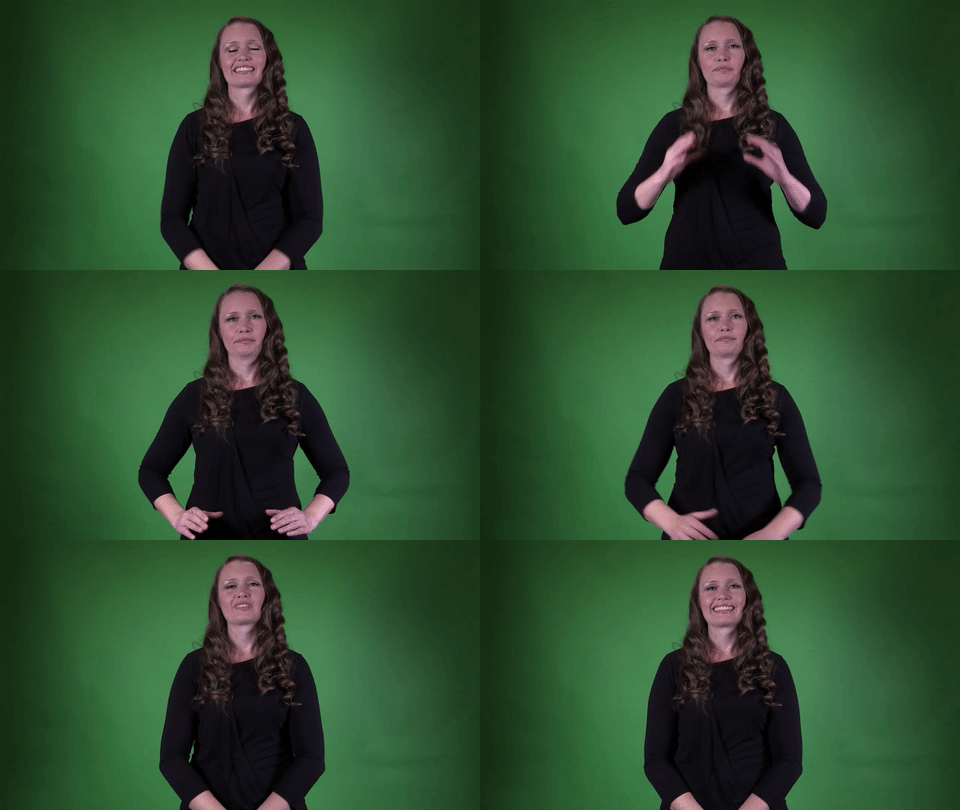
Sign for CUSTOMER in ASL | 🧑‍💼 ASL Dictionary

Definition: A person who buys goods or services.

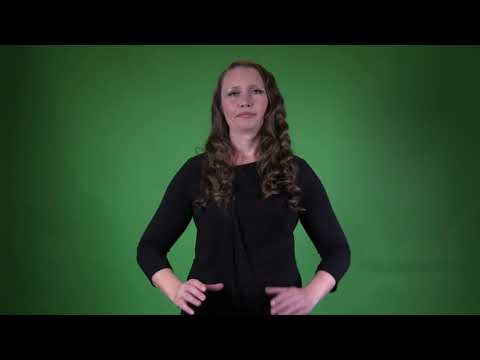
Sign for CUSTOMER in ASL

YouTube player

Practice Activities:

Start by practicing the sign for CUSTOMER in ASL in front of a mirror. Focus on keeping the handshapes and movements clear and consistent. Repeat the sign slowly at first, then increase your speed while staying accurate.

Next, add the sign for CUSTOMER in ASL into short phrases such as “help customer”, “customer wait”, or “I talk to customer”. Use these regularly until they feel natural. Sign the phrases using a neutral facial expression, then try variations with appropriate facial grammar, like questioning or frustration.

Use flashcards with different professions or store-related signs and combine them with CUSTOMER. For instance, pull a card showing “store” or “restaurant” and sign a sentence like “restaurant customer sit”. For increased challenge, include signs for issues (“angry”, “confused”) and describe a possible customer situation.

Storytelling is a great way to build fluency. Create a short story about a day at work where you meet different customers. Sign details like what they bought, how they behaved, and how you responded. You could say something like, “Today customer come store. He look confused. I help him. He happy.” Keep your story short but expressive.

If possible, partner with another learner. Take turns pretending to be a customer and an employee. Use the sign for CUSTOMER in ASL to describe each person’s role and actions. Ask and answer questions like, “What did the customer want?” or “Was the customer polite?”

Watch videos with workplace or service settings and identify when you might use the sign for CUSTOMER in ASL in those situations. Pause and practice inserting the sign at the right moments. This helps with contextual fluency.

Cultural Context:

In American Sign Language, the sign for customer in ASL is more than just a translation—it’s a reflection of how the deaf community interacts with service industries. Communication between a customer and a service provider is essential, and using the correct sign for customer in ASL can establish a respectful and clear interaction.

The role of a customer in deaf culture is similar to that in hearing culture, but the mode of communication is visually based. The sign for customer in ASL helps bridge the gap in retail, restaurants, schools, and other public places where services are exchanged. Fluent use of this sign shows respect for the deaf community’s language and cultural norms.

In deaf-owned businesses or deaf-friendly spaces, the sign for customer in ASL is used often and naturally. These environments value visual language and ensure that customers—deaf or hearing—are welcomed with appropriate and respectful communication tools. Mastering signs like this supports inclusion and accessibility .

For interpreters and frontline workers, understanding the sign for customer in ASL enhances their ability to serve deaf clients. It signals awareness and effort to provide an accessible experience, whether in banks, clinics, or stores. The fact that someone uses this sign can immediately build trust and open better lines of communication.

Cultural respect is a big part of using ASL properly. Using the correct sign for customer in ASL demonstrates more than vocabulary—it expresses an understanding that the deaf community values clear, direct communication. Misusing or guessing signs can lead to miscommunication or even offense, so it’s essential to learn and use them accurately ✅.

In educational settings, teaching this sign early on prepares students for real-world interactions. In business ASL courses, the sign for customer in ASL is commonly taught because of its usefulness across multiple industries. It empowers deaf and hearing people to interact with ease and confidence.

The sign for customer in ASL also plays a role in media, ads, and public announcements targeted toward the deaf community. It’s a foundational sign in content that focuses on shopping, feedback, complaints, or any setting where someone plays the role of a customer. This makes it a core vocabulary word for interpreters creating accessible content .

Everyday interactions between deaf and hearing people are greatly improved when basic signs like customer are included. Simple gestures, when used correctly, honor the language preferences of the deaf community and reduce linguistic barriers. Using the sign for customer in ASL is one small but powerful way to show inclusivity.

In deaf culture, clarity and facial

Extended Definition:

The sign for customer in ASL is a combination of meaningful movements and expressions that represent the concept of a person involved in buying or engaging with services. In American Sign Language, signs often reflect the characteristics of the idea they represent, using clues from daily life and visual structure to convey meaning.

To create the sign for customer in ASL, you typically start with the sign for person and add a modifier indicating business or transaction. This sign uses both hand shapes and directional movement to show the role of a person in a commercial exchange. Understanding the components of this sign can help you piece together other related signs in ASL.

When signing customer in ASL, facial expressions also play a key role. They help convey the context and tone of the interaction, such as a friendly shopper or an upset patron. ASL grammar relies heavily on these non-manual signals, making face and body language just as important as the hand sign itself.

Knowing the sign for customer in ASL is useful in a variety of settings. Hearing and Deaf business owners, employees in retail, or service workers can all benefit from being able to communicate clearly with diverse clients. It’s a practical and respectful way to include Deaf and hard-of-hearing customers in daily interactions.

You might see the sign for customer in ASL used frequently in customer service training videos in ASL or in instruction manuals for Deaf-friendly workplaces. Having clear communication helps avoid misunderstandings and builds trust between businesses and their clients. Learning relevant signs like this one can also improve your fingerspelling and conversational flow in ASL.

In Deaf culture, clear communication is key to equality and inclusion. Knowing how to use the sign for customer in ASL demonstrates cultural awareness and a commitment to accessibility. This sign not only supports better service but also helps to create an inclusive environment where everyone feels acknowledged.

The sign for customer in ASL is often taught alongside other commercial vocabulary like employee, store, and money. This helps learners build functional phrases they can use when visiting or working in retail or service-based environments. It’s part of a broader category of signs that deal with transactions and interactions.

You can modify the sign for customer in ASL by combining it with other signs to describe different types of customers, such as regular customer, new customer, or complaint from a customer. The flexibility of ASL allows you to describe a complete situation with a few concise, meaningful signs. This adaptive nature makes it ideal for real-time communication in varied social and business settings.

If you are

Synonyms: client, buyer, patron, shopper, purchaser

Educational resources: Find related learning materials in our course bank!

Want more? Check out some of our popular learning activities on the homepage!

Need to look up a sign? Use our highly rated dictionary: https://aslinteractive.com/best-asl-dictionary/

Follow us on tiktok: https://www.tiktok.com/@aslinteractive. More social media links at the bottom of this page!

Long-tail Keywords: what is the sign for customer in ASL, how do you sign customer in ASL, customer sign language tutorial

Categories:

tags: Customer, Language Learning, People, Activities, Commands

Parameters

*Handshape*:

The sign for CUSTOMER in ASL uses the “C” handshape for both hands. Each hand forms the letter “C” with fingers curved and thumb and fingertips facing each other.

These “C” handshapes move down the torso in a slight alternating motion, mimicking the gesture used in the sign for “CLERK” or related business contexts. The handshape is central to the sign for CUSTOMER in ASL, helping convey the idea of a client or patron engaging in service.

*Palm Orientation*:

For the sign for CUSTOMER in ASL, both hands form the modified letter “C” shape. The dominant hand starts near the shoulder and moves slightly downward, then the non-dominant hand mirrors this motion below, resembling the sign for SELL performed twice.

The palm orientation remains mostly outward and slightly downward throughout the motion. This positioning helps maintain clarity and distinction in visual communication, highlighting the concept in the sign for CUSTOMER in ASL.

*Location*:

The location for the sign for CUSTOMER in ASL begins in the neutral signing space in front of the upper torso, slightly away from the body. Both hands move in a way that mimics brushing down suspenders, keeping the motion close to the chest.

This sign maintains a centered position, parallel to the torso, with no contact on the body. The location helps differentiate the sign for CUSTOMER in ASL from other professional titles in ASL.

*Movement*:

The movement for the sign for CUSTOMER in ASL begins with both hands shaped in the letter “C” handshape. The dominant “C” hand touches the chest, then arcs forward and slightly downward, as if indicating a person or role interacting in commerce. This mirrors the sign for “business” or “client.”

The non-dominant hand may stay in a stationary position or mirror the arc slightly, depending on regional variation. The sign for CUSTOMER in ASL emphasizes exchange or service-based interaction, aligning with concepts used in financial or business settings.

*Non-Manual Signals*:

When using the sign for customer in ASL, maintain a neutral or attentive facial expression, as this sign typically pertains to a professional or service-based context. Slight eyebrow raise can indicate interest or inquiry depending on the sentence or tone being conveyed. ️

Consistent eye contact is key when communicating roles or titles like the sign for customer in ASL, helping emphasize respect and clarity within the conversation. Keep your head level and posture upright to enhance the formal tone.

*Prosody, Dominant/Non-Dominant Hand*:

The sign for CUSTOMER in ASL uses both hands. The dominant hand forms a “C” handshape and moves slightly downward in front of the chest, followed by the non-dominant hand also forming a “C” and mirroring the motion. This movement shows the concept of a person receiving service.

For prosody, both hands stay symmetrical, reflecting the dual role of a customer engaging with a provider. The sign for CUSTOMER in ASL connects well with signs like “shop” or “buy,” helping build context in a conversation. ️

Tips for Beginners:

When first learning the sign for CUSTOMER in ASL, it’s important to focus on the two-part construction of the sign: combining the sign for BUY with the agent marker. Make sure you master the individual signs first, especially the handshape and direction used in BUY, which involves using your dominant hand to mime placing money into a non-dominant open hand. After that, add the agent marker by sliding both flat hands down the sides of your torso to indicate a person.

One common mistake is sloppy hand positioning in the BUY portion. Keep your movements controlled and intentional—your dominant hand should form an “O” handshape when miming the money exchange. Accuracy in these movements is crucial in making the sign for CUSTOMER in ASL clear and understandable.

Don’t forget about facial expressions. Although it’s a noun and doesn’t require strong emotion, maintaining a neutral or mildly inquisitive expression helps support the meaning of the sign. Watch others sign in real conversation, or practice in front of a mirror to monitor your own clarity and expressions.

Practice the motion from the sign BUY to the agent suffix smoothly. Polish the transition so that it doesn’t appear like two unrelated signs. This creates fluidity, helping the sign for CUSTOMER in ASL look natural during conversations.

Try to sign at a slower pace while you’re learning. Speed can come later with muscle memory and confidence. For now, focus on clarity and precision.

Lastly, review with fluent signers or videos produced by native ASL users. Getting feedback is crucial. This will help you catch anything that feels off or unclear in how you’re forming the sign for CUSTOMER in ASL. Remember, consistent practice and exposure will help you become more comfortable and confident with this term.

Connections to Other topics:

The sign for CUSTOMER in ASL connects closely with occupational and transactional vocabulary. It is typically formed by combining the sign for “buy” or “purchase” with the agentive marker, reflecting a person who engages in buying. This parallels signs for other agentive nouns like “teacher” (teach + person) and “worker” (work + person), making it a useful pattern for developing vocabulary.

Understanding the sign for CUSTOMER in ASL also enhances comprehension of service-related professions. For example, pairing it with the sign for “service” or “employee” helps learners distinguish between parties in a business interaction. In classroom discussions or workplace narratives, this can clarify who is providing versus receiving a service.

This sign also appears in compound expressions and dialogues involving financial transactions or consumer behavior. For instance, in phrases such as “customer support” or “customer complaint,” the sign for CUSTOMER precedes additional descriptors to form more complex concepts. In these cases, combining signs like “help” or “problem” can enrich in-context understanding.

Learning the sign for CUSTOMER in ASL supports broader themes such as consumer rights, shopping experiences, and economics. It frequently appears in scenarios demonstrating interactions at stores, restaurants, or banks. Roleplaying with signs like “cashier,” “buy,” “return,” and “receipt” helps solidify its real-world usage.

Additionally, this sign provides a foundation for modifying or specifying the type of customer, such as “regular customer” or “new customer.” These can be indicated either through facial expressions, placement, or additional signs like “often” or “first time.” This sign encourages exploration of facial grammar and classifiers that help tailor meaning in ASL conversation.

Recognizing how the sign for CUSTOMER in ASL interrelates with commerce-associated signs gives learners a strong foothold in business and consumer contexts. It supports fluency when discussing marketplace interactions, making it a key sign in social and professional discourse.

Summary:

The sign for CUSTOMER in ASL combines the concept of “buy” and the person-agent suffix. It reflects someone who participates in a transaction from the purchasing side. The sign starts with the flat handshape representing a purchase and ends with the agent marker by drawing downward with both flat hands.

This sign is conceptually built from the root sign BUY. To articulate the connection, the signer first shows the action of an item being exchanged from one palm to another. The movement simulates the giving of money or a card from the signer’s hand to the other palm.

After signing BUY, the signer transitions to the AGENT marker. Hands are positioned shoulder-width apart, palms facing each other, and move down vertically in a parallel motion. This signifies that the person is associated with the action—in this case, the buyer becoming a customer.

The sign for CUSTOMER in ASL displays iconic linguistic structuring. It morphologically assembles smaller signs to create a concept-specific label. ASL often constructs roles or occupations by combining an action sign plus the agent marker.

Culturally, the role of a customer can vary by context, and ASL reflects these nuances flexibly. In Deaf culture, accessibility to customer service in various industries is a major issue. Thus, the sign for CUSTOMER in ASL is significant in service-related dialogues and advocacy contexts.

Grammatically, the sign behaves as a noun. It can serve as a subject or object in a sentence such as CUSTOMER VISIT STORE or MANAGER HELP CUSTOMER. The surrounding signs indicate tense, number, and subjectivity.

The sign can be made plural by modifying context or adding classifiers. ASL doesn’t always require the additional sign for MANY or plural markers. The directionality and spatial placement can represent multiple customers arriving or interacting.

From a linguistic standpoint, the sign for CUSTOMER in ASL showcases the agglutinative nature of the language. Signs like this aid in understanding how ASL builds complexity through affixation, demonstrating a systems-based approach to language creation.

When teaching the sign for CUSTOMER in ASL, educators often start by breaking it into its primary components—BUY and AGENT. This scaffolding makes it easier for learners to recognize how signs compound over time. Visual reinforcement helps solidify retention.

The sign works well when paired with related vocabulary such as CLIENT, CONSUMER, and BUYER. While these ideas are closely related, USERS or CLIENTS in fields like therapy or business may require different signs for clarity. Conceptual precision is necessary.

Exploring translational choices, the sign for CUSTOMER in ASL can reflect both casual and formal settings. Whether one is discussing a shopper at a store or a long-term business relationship, modifications in facial expressions and signing pace bring out intended meanings.

This flexibility allows the sign to appear in diverse linguistic registers. For example, a Deaf employee at a coffee shop may sign CUSTOMER casually, while in legal or financial conversations, the sign may be framed with more formal non-manual markers.

The visual-spatial nature of ASL supports referential indexing to identify specific customers during discourse. Signers may establish the referent’s location in space and then reuse it throughout the interaction, maintaining ongoing clarity.

Semantic connections also include signs like BUY, PURCHASE, MARKET, and SELL. These networked signs illustrate customer-related contexts and underscore the interrelationship in the commercial lexicon of ASL.

The sign’s form and structure tie back to applied linguistics themes, particularly the embodiment of meaning. The physical motion mimics lived experiences of exchanging products and participating in commerce, fostering intuitive comprehension for native and non-native signers alike.

In ASL storytelling or performances, customer signs can portray roles in narratives. For example, character introductions such as a difficult or generous customer depend on the core sign, then layered with classifiers and expression for full character portrayal.

In language acquisition, learners benefit from observing how the sign for CUSTOMER in ASL forms part of complete expressions. This alerts them to ASL’s syntax, where topic-comment structure frequently governs sentence flow rather than subject-verb-object order.

Interpreters often need to adjust the delivery of signs like CUSTOMER to match English tone and register. For instance, “valued customer” may require contextual emphasis with signs like IMPORTANT or RESPECT merged into the phrase.

The customer concept is vital in employment conversations. Job descriptions, HR documents, or training sessions often revolve around service dynamics, requiring precise delivery of terms like CUSTOMER. Misinterpretation can lead to confusion about job roles and responsibilities.

Signed environments, like Deaf-owned businesses, respect and prioritize accurate communication with customers. The sign for CUSTOMER in ASL often appears in signage, policy statements, and training materials to support inclusivity.

In classroom environments, role-play activities frequently involve someone acting as a customer to explore consumer situations. These constructs help students solidify vocabulary through engaged, hands-on practice. It’s a natural setting to practice nuanced differences like CUSTOMER vs CLIENT.

Language variation across regions affects how the sign

Want more? Check out some of our popular learning activities!

ASL Interactive Resources

ASLInteractive YouTube Channel

Follow us on tiktok: @aslinteractive.com

Follow us on Instagram: aslinteractive

Facebook page: aslinteractive

Facebook group: aslinteractive

LInkedIn: ASL Interactive LLC

Twitter: @ASL_interactive

*Some information on this page is AI-generated. AI can make mistakes. Please check the information.

Sign for CUSTOMER in ASL

Responses