
Definition: A daycare center 2.
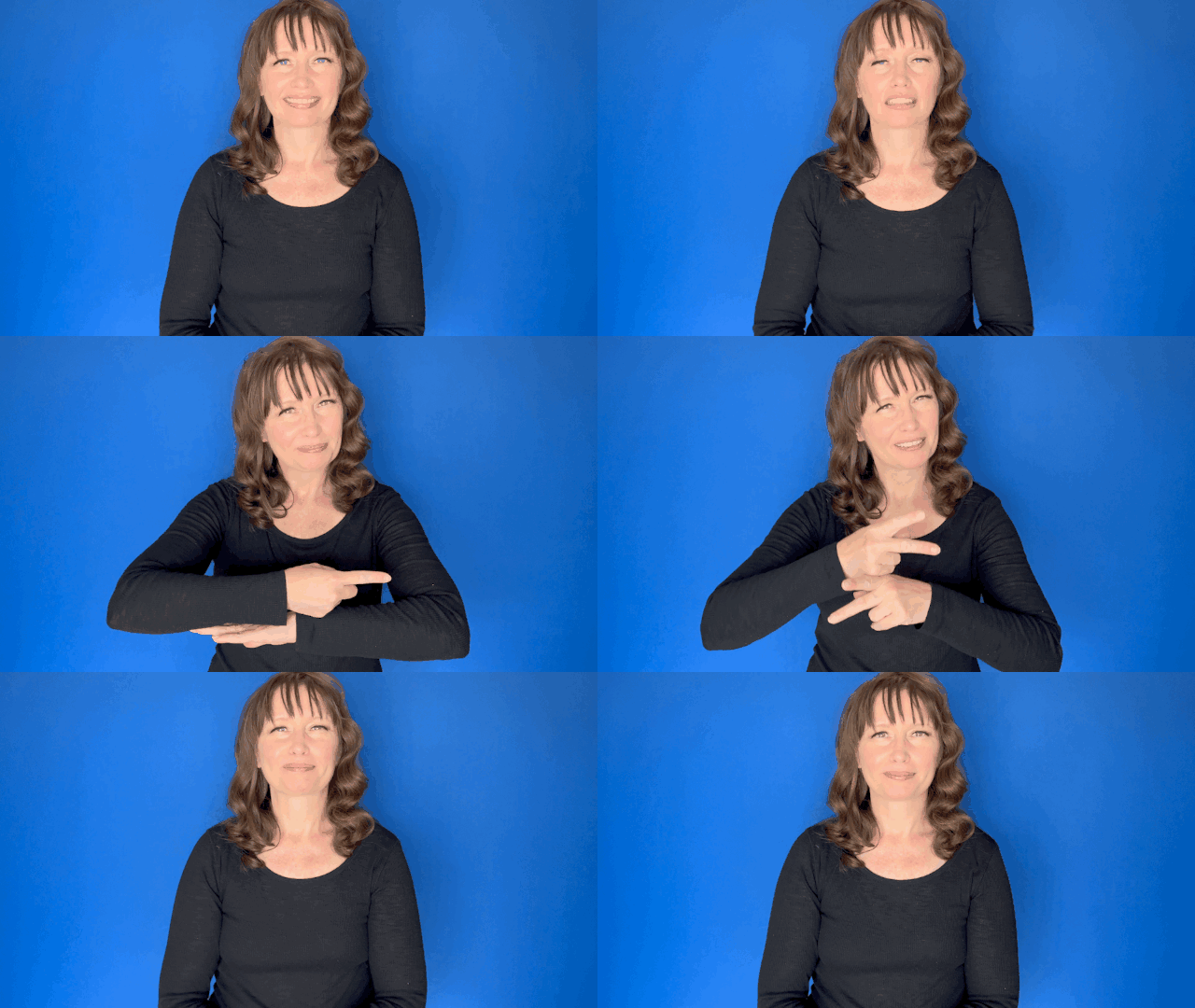
Sign for DAYCARE 2 in ASL

Practice Activities:
To build fluency with the sign for DAYCARE 2 in ASL, begin by practicing the sign in isolation. Repetitively produce the sign in front of a mirror to check your handshapes and transitions. Say the English word silently in your head as you sign to strengthen the association.
Next, try fingerspelling and signing basic vocabulary around the word, such as BABY, CHILD, SCHOOL, and PARENT. Now start creating simple sentences like “CHILD GO DAYCARE” or “PARENT PICK-UP FROM DAYCARE.” Practice these sequences slowly and increase your signing speed gradually.
Create flashcards with related concepts and sign each one followed by the sign for DAYCARE 2 in ASL to build your receptive and expressive skills. You can also create a short daily routine describing a child’s morning using signs like WAKE-UP, EAT, GET-DRESSED, and GO-TO DAYCARE.
Use storytelling to reinforce the sign in context. For example, tell a short story about a child’s first day at a daycare center. Include emotions like HAPPY, NERVOUS, or CRY to showcase expressive signing. Role-play with a partner where one signs as a teacher and the other as a parent discussing daycare pickup times or child behavior.
Watch videos that show children being dropped off or picked up at daycare and describe the scenes using ASL. Tell your own story about attending or working at a daycare and how your day looked. Include transitions from arriving to leaving.
For more dynamic practice, play a matching game where you draw cards with common daycare activities and sign them in sequence. Then insert the sign for DAYCARE 2 in ASL as a transition or location sign and explain the setting. Practice both in front of peers and during solo study time to reinforce accuracy and confidence.
Cultural Context:
In American Sign Language, the sign for DAYCARE 2 in ASL carries valuable cultural and practical meanings within the Deaf community. It reflects common life experiences, particularly for families, children, and caregivers who use ASL as their primary language. Communication about childcare and daily routines is essential in Deaf culture, making signs like the sign for DAYCARE 2 in ASL crucial for clear and effective interaction.
Deaf parents rely on specific signs to share responsibilities and routines with daycare providers, teachers, and even other family members. The sign for DAYCARE 2 in ASL helps bridge communication where consistency and safety are important, especially when leaving children in the care of others. It becomes a tool for planning, discussion, and peace of mind .
In Deaf households, using the sign for DAYCARE 2 in ASL supports early language development. Children exposed to ASL from birth begin to understand and communicate with multiple signs, including those related to their daily environments. Seeing and using signs like the sign for DAYCARE 2 in ASL helps children develop a strong ASL vocabulary while also fostering emotional security .
Within the Deaf community, daycare centers that are ASL-friendly are highly valued. Families seek out environments where their language and culture are understood and respected. Using the sign for DAYCARE 2 in ASL promotes this inclusivity and provides a foundation for trust between parents and caregivers .
Signs related to care and education are more than vocabulary—they are reflections of cultural values. The sign for DAYCARE 2 in ASL shows how important it is to have access to language that supports children’s everyday settings. It’s not just about the word, it’s about the lived experiences behind it and the connections it builds.
In educational spaces, using the sign for DAYCARE 2 in ASL normalizes the use of ASL and supports the cultural identity of Deaf children. Teachers and aides fluent in ASL can use the correct signs to establish routines and communicate expectations, which is vital for young learners. This strengthens the linguistic and social experiences of Deaf children from a young age.
Including the sign for DAYCARE 2 in ASL in ASL dictionaries builds a more comprehensive resource for both native users and learners. It allows community members, interpreters, and educators to access the culturally appropriate way to express concepts used in daily life. The more exposure learners have to authentic signs, the more confident and fluent they will become .
The usage of the sign for DAYCARE
Extended Definition:
The sign for daycare 2 in ASL represents a specific variation of the common sign used to express the idea of a place where children are cared for while parents are at work or otherwise unavailable. In this version, the sign combines the concepts of day and care in a fluid motion but uses a slightly different handshape or movement than the standard option. This version may be more familiar in particular regions or within certain signing communities.
When using the sign for daycare 2 in ASL, it’s important to remember that context matters. This version may be used interchangeably with the standard sign for daycare depending on the person or environment. It’s helpful to observe which sign native Deaf signers are using in your area for accuracy and cultural appropriateness.
To produce the sign for daycare 2 in ASL, you generally begin by signing the word day, combining it swiftly with the concept of care. The sign care is usually represented with two hands forming a gentle cradle shape, symbolizing watchfulness or nurturing. Depending on the version, the movement might differ slightly in flow or in how the hands transition between signs.
ASL is a rich visual language, and the sign for daycare 2 in ASL reflects the language’s flexibility and regional variation. Different signs for the same concept show how ASL users creatively adapt movements to convey meaning while maintaining clarity. Understanding these variations can help both learners and fluent signers connect more effectively with others in the Deaf community.
Parents who frequently discuss childcare facilities or want to communicate clearly with providers may find the sign for daycare 2 in ASL especially useful. This version might appear in conversations about schedules, child registration, or pick-up times. Using the correct variation helps ensure the message is both understood and respectful of community norms.
Children who are native signers themselves might encounter the sign for daycare 2 in ASL in casual or educational settings. Teachers and caregivers in signing environments should be aware of these variations to better support classroom communication. Being familiar with multiple versions of a sign can enrich vocabulary and improve comprehension.
The sign for daycare 2 in ASL might also appear in media, such as signed stories, videos, or early childhood programs designed for Deaf children. Consistency in signing within those platforms helps reinforce understanding and provides visual cues for young learners. When using signed resources, it’s always good to match the signs to what your local community uses.
By incorporating the sign for daycare 2 in ASL into everyday use, signers expand their ability to share ideas
Synonyms: childcare center, nursery school, preschool, early learning center, child development center
Educational resources: Find related learning materials in our course bank!
Want more? Check out some of our popular learning activities on the homepage!
Need to look up a sign? Use our highly rated dictionary: https://aslinteractive.com/best-asl-dictionary/
Follow us on tiktok: https://www.tiktok.com/@aslinteractive. More social media links at the bottom of this page!
Long-tail Keywords: What is the sign for daycare in ASL, how do you sign daycare in ASL, ASL sign for daycare
Categories:
tags: daycare in American Sign Language, how to sign daycare in ASL, daycare ASL translation, learn daycare sign language, ASL dictionary daycare
Parameters
*Handshape*:
The handshape used in the sign for DAYCARE 2 in ASL begins with both hands forming the flat hand (B-handshape). The dominant hand initiates the motion for “day,” typically resting on the non-dominant inner elbow and sweeping outward like a sun setting . Then, to indicate “care,” both hands shift to the modified “C” or slightly curved handshape, crossing one over the other in an X position.
In the sign for DAYCARE 2 in ASL, each handshape transitions smoothly to blend both concepts. The B-handshape represents the passage of time, while the curved hands for “care” show the protective, nurturing aspect of the word. This combination clearly distinguishes DAYCARE in this second variation within American Sign Language.
*Palm Orientation*:
The palm orientation for the sign for DAYCARE 2 in ASL involves starting with both hands in a “C” handshape, facing each other, and palms angled slightly downward. The dominant hand then transitions into the motion representing “CARE,” where the tips of bent “K” hands tap on top of each other.
When forming the sign for DAYCARE 2 in ASL, your palms generally stay inward or face one another, depending on the variation you choose. This helps maintain a fluid connection between the concepts of day and care throughout the sign .
*Location*:
The sign for DAYCARE 2 in ASL is produced primarily in the neutral space directly in front of the upper chest, slightly outward from the torso. The movements and transitions occur between this neutral zone and a brief contact or near-contact with the chin or one hand near the cheek, depending on the variation used.
Maintaining a clear space in front of the body ensures visibility during the sign for DAYCARE 2 in ASL, which incorporates concepts related to both time and care. The positioning makes it easy to follow the handshapes and motions that represent the child care environment.
*Movement*:
The sign for DAYCARE 2 in ASL combines signs for “day” and “care.” Start with your dominant hand in a flat handshape, palm facing down, and rest the elbow on the back of the non-dominant flat arm, simulating the sun moving across the sky. Then transition both hands into “S” handshapes and tap them together in a gentle, alternating motion to show the concept of care or nurturing.
The movement in the sign for DAYCARE 2 in ASL should be fluid between the components. Be sure to maintain facial expressions that reflect warmth or attentiveness, aligning with the nurturing concept of daycare. Keep transitions smooth to clearly convey the complete meaning.
*Non-Manual Signals*:
Facial expression for the sign for DAYCARE 2 in ASL should convey attentiveness and warmth, often accompanied by a slight smile. Eyes focus on the hand movements while the brows may remain neutral or slightly raised depending on context.
The non-manual signals for the sign for DAYCARE 2 in ASL also include calm, relaxed shoulders and head positioning that shows engagement. The expression should support the idea of a nurturing environment, like one might associate with childcare or supervision .
*Prosody, Dominant/Non-Dominant Hand*:
The sign for DAYCARE 2 in ASL uses both hands. The dominant hand generally fingerspells D-A-Y while the non-dominant hand remains steady. After spelling “DAY,” the dominant hand transitions into the sign for “SCHOOL,” where both flat hands tap each other palm to palm. This gives the full meaning of care and education combined.
In the sign for DAYCARE 2 in ASL, the non-dominant hand acts as a foundation during the “SCHOOL” part while the dominant hand leads both the fingerspelling and the final motion. This flow distinguishes the compound nature of DAYCARE, helping clarify context in fluent signing.
Tips for Beginners:
Mastering the sign for DAYCARE 2 in ASL can take a little practice because it involves combining two concepts: “day” and “care”. Make sure you’re comfortable signing each of these individually before attempting to combine them into the full phrase. Use a mirror while practicing to ensure your facial expressions are engaged—this boosts clarity and adds meaning.
One of the most important tips is handshape accuracy. For “day,” the movement typically uses the non-dominant arm flat across the body representing the horizon, while the dominant arm moves from a vertical position downward like the sun setting. For “care,” tend to use the flat “K” handshape layered on the back of the other “K” hand, lightly tapping. For the sign for DAYCARE 2 in ASL, these components are typically blended smoothly, so fluid transitions are key.
Practice each component first in isolation, then slowly put them together. A common beginner mistake is rushing the transitions, which makes the sign look disjointed or unclear. Slow down your movement and focus on how the sign feels physically—building muscle memory will support faster, clearer signing later on.
Another useful tip is to watch fluent signers use the sign for DAYCARE 2 in ASL in context. Look for videos or ASL dictionary clips where the phrase is used in full sentences. This will show you real-world usage and help you understand the pacing and emotion involved.
Finally, record yourself signing and compare it to model videos. Look at your handshape, palm orientation, and facial expressions. Signing clearly and naturally matters more than speed, so take your time and give yourself room to make progress. With consistent practice and feedback, your skill in using the sign for DAYCARE 2 in ASL will become more polished and effective.
Connections to Other topics:
The sign for DAYCARE 2 in ASL builds on foundational concepts like “DAY,” “CHILD,” and “CARE.” These root signs help learners understand how ASL often forms compound signs by merging visually descriptive ideas. For example, combining “CHILD” and “CARE” conveys the core meaning of nurturing or supervising a child, which is vital to the concept of daycare.
This sign also connects closely to other institutional or service-related signs such as SCHOOL, PRESCHOOL, and BABYSITTER. These signs often follow similar structures of combining relevant concepts into a single, meaningful unit. Knowing the sign for DAYCARE 2 in ASL can enrich your comprehension of how care-focused services are expressed in ASL, and it lays the groundwork for forming other related expressions.
In everyday use, the sign for DAYCARE 2 in ASL is often paired with location markers like HOME or SCHOOL to indicate where the care is taking place. For example, you might see the sign used in context as HOME DAYCARE or SCHOOL DAYCARE, showing how flexible and modular ASL vocabulary can be. This adaptability is key to conversational fluency.
Understanding this sign also supports broader language development in themes of parenting, education, and early childhood. It links smoothly to signs like PARENT, TEACHER, LEARN, or RESPONSIBILITY. These thematic links enhance a signer’s ability to discuss broader topics surrounding child care and education in fluent ASL.
Furthermore, learning the sign for DAYCARE 2 in ASL reinforces skills in classifier usage to describe routines or environments. For instance, you might use classifiers to describe daily drop-offs, caregiver roles, or child interactions at a daycare, building both vocabulary and expressive storytelling skills in ASL.
Summary:
The sign for DAYCARE 2 in ASL reflects how compound concepts are often portrayed through a sequence of related ideas. This particular version combines signs that depict both “day” and “care” into a logical flow. The DAY part of the sign is usually expressed using the dominant arm extending out like the sun going across the horizon, while CARE can involve a gentle overlapping of both flattened “S” hands with a tapping or resting motion, indicating protection or nurturing.
The sign for DAYCARE 2 in ASL carries strong connotative meaning beyond its direct translation. It suggests not just a location, but a system of responsibility, trust, and child development. The merging of day and care offers insight into how ASL visually represents services, duties, and social functions in daily life.
Culturally, daycare is emblematic of support systems many families rely on. The sign for DAYCARE 2 in ASL embodies these ideas in a compact, expressive form. Its construct reflects both the temporal concept of day and the continuous emotion associated with caregiving.
In Deaf culture, conveying concepts like daycare takes on deeper meaning, as accessibility in education and child supervision is a vital concern. Through signs like this one, ASL offers a pathway to discuss policies and personal experiences in a visual and impactful way. It quickly captures a concept that in spoken English might require more explanation.
The motion and handshape in the sign for DAYCARE 2 in ASL also present a good case study in classifier use and role-shifting, especially when relating a narrative. A signer might depict children, caregivers, rooms, and activities all in sequence, showing how one sign acts as a core node in storytelling. When used dynamically, it enhances clarity and visual engagement.
From a linguistic standpoint, the transition from DAY to CARE shows an example of compounding in ASL morphology. The use of two distinct signs forms a phrase that becomes idiomatic in meaning. This mirrors how English compounds words to create new ones with specific definitions.
In applied linguistics, the sign for DAYCARE 2 in ASL underscores how ASL handles nominalization. It bundles the abstract noun status of a service into a cohesive, visual sign. Studying this helps illuminate how signed languages convert basic verbs or concepts into places, roles, or systems.
The use of the flattened “S” handshape in the CARE portion reinforces ASL’s use of iconicity. The shape and position imply cradling, holding, or attending, all of which closely match the metaphor of daycare. Visual mapping of meaning onto handshape is one of the key aspects of effective ASL interpretation.
This version of the sign for DAYCARE 2 in ASL also demonstrates regional and stylistic variations. Some signers may emphasize certain motions more strongly or shorten the form depending on fluency and speed. Such variants reveal how ASL adapts in different dialectical contexts while retaining its integrity and recognizability.
Grammatically, the sign for DAYCARE 2 in ASL functions as a noun and fits easily into ASL’s topic-comment structure. For example, one might sign “DAYCARE, MY DAUGHTER HAPPY.” The clarity allows layering of stories about preferences, behavior, or scheduling in an intuitive visual format.
Related signs include SCHOOL, BABY, TEACH, and LEARN, which may all surface in conversations where daycare is discussed. These relevant signs may occur in sequences to establish a thorough depiction of a child’s day. The network of associated signs creates a linguistic web reinforcing the topic comprehensively.
Teaching the sign for DAYCARE 2 in ASL engages students in understanding how concepts get assembled. It’s a good sign for explaining multi-concept phrases and how signs function semi-independently yet maintain connection. It’s also useful for showing how ASL can streamline communication without losing nuance.
In Deaf families or households, access to DAYCARE may include questions about communication access, interpreters, or whether signing caregivers are available. The sign for DAYCARE 2 in ASL therefore becomes part of informational and advocacy conversations. The more fluid and clear its usage, the better able signers become at advocating for the needs of Deaf children.
The concept of CARE as shown in this compound sign can also lead into other derivational families such as HEALTHCARE, ELDERCARE, and CHILDCARE—all of which use similar principles. Understanding their relationship with the sign for DAYCARE 2 in ASL builds better retention of linguistic categories and improves vocabulary cohesion.
When analyzing conversation discourse, this sign is also a cue for transitioning from broad to detail-heavy content. Once DAYCARE is introduced, classifiers may be used to depict individual children, doors, lockers, caregivers, and activity flow. This allows rich storytelling and vivid visual mapping.
In interpreter training, this sign is often used to instruct on classifier setup and maintaining temporal consistency. Since the “day” portion invokes a timeframe, interpreters learn to align following signs to that scope. It’s also
Want more? Check out some of our popular learning activities!
ASL Interactive Resources
ASLInteractive YouTube Channel
Follow us on tiktok: @aslinteractive.com
Follow us on Instagram: aslinteractive
Facebook page: aslinteractive
Facebook group: aslinteractive
LInkedIn: ASL Interactive LLC
Twitter: @ASL_interactive
*Some information on this page is AI-generated. AI can make mistakes. Please check the information.
Responses