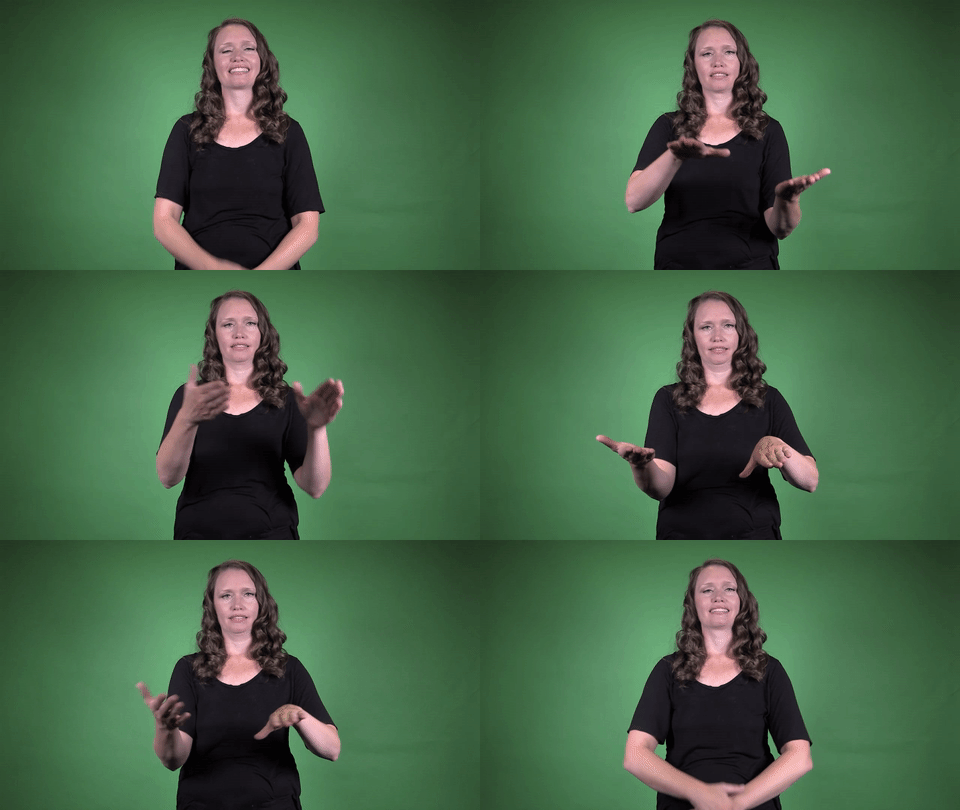
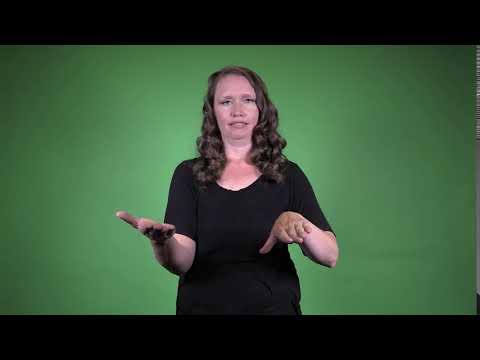
Definition: No longer alive.
Sign for DEAD in ASL

Practice Activities:
Practice the sign for DEAD in ASL by first using it in isolation. Stand in front of a mirror and repeat the sign slowly, focusing on handshape, palm orientation, and movement. Switch between a live hand and a dead one to emphasize the contrast and become more fluent in movement.
Next, try using the sign for DEAD in ASL in short phrases like “The battery is dead,” “My pet is dead,” or “That plant is dead.” Vary your facial expressions depending on the emotional weight of the sentence. For example, signing about a dead battery should have a different facial affect than signing about a deceased family member. Facial grammar is very important in ASL, especially when dealing with emotional content.
Use flashcards with different nouns such as dog, phone, tree, and bird. Randomly pick a card and build a sentence using the sign for DEAD in ASL. For example, if the card says “bird,” you can sign “The bird is dead.” Make sure you adjust your non-manual signals depending on whether you are informing, asking, or expressing surprise.
Practice storytelling by creating a short narrative involving a character who discovers that something is dead. For example, imagine a child whose fish dies and explain how the family reacts. Include full sentences and use signs like SAD, CRY, and REMEMBER to help contextualize the sign for DEAD in ASL.
In partner activities, take turns describing different scenarios in which something or someone is dead. The listener has to guess what died based on context. This helps deepen understanding of vocabulary and sentence structure in context with the sign for DEAD in ASL.
Cultural Context:
The sign for DEAD in ASL carries more than just literal meaning. In Deaf culture, signs connected to life and death can convey emotional depth, storytelling tones, or cultural beliefs depending on the context.
When using the sign for DEAD in ASL, it’s essential to recognize the cultural nuances. In some settings, it might be used in a serious and empathetic way, especially when discussing a person’s passing. In other cases, particularly in humor or storytelling, the same sign might be delivered with an exaggerated facial expression or body language.
Facial expressions play a key role in the clarity of signing. The way the sign for DEAD in ASL is expressed can change the entire mood of the conversation. A somber, respectful face lets the viewer know it’s a serious subject. On the other hand, expressive or exaggerated features can show sarcasm, surprise, or dramatics.
In Deaf folklore and visual storytelling, the sign for DEAD in ASL might be used to describe characters, themes, or mythical concepts. Deaf performance artists also incorporate this sign into plays, poems, or storytelling that explores themes like loss, transformation, or justice.
It’s important to understand that the sign for DEAD in ASL, like many ASL signs, is not just a direct translation of the English word. Instead, it’s part of a broader visual language that connects deeply with life experiences, emotions, and cultural frameworks.
You might also see the sign for DEAD in ASL show up in casual conversations, but how it’s used always depends on facial grammar. This aspect of ASL gives the language a rich, three-dimensional quality that sets it apart from written or spoken English.
Another cultural layer to the sign for DEAD in ASL is its use in educational or advocacy settings. In health discussions or workshops about end-of-life planning, Deaf educators rely on this sign to explain legal and medical terms to Deaf audiences.
In some Deaf communities, expressing grief or remembrance might include the sign for DEAD in ASL as part of a respectful tribute. At funerals or memorials, people in the Deaf community often rely on ASL storytelling, where this sign plays a role in sharing memories or processing loss.
Technology and media have also influenced how the sign for DEAD in ASL is shared and taught. ASL content creators may design videos or social posts explaining when and how to use the sign appropriately. This helps expand cultural understanding within and outside the Deaf community.
Learning the sign for DEAD in ASL isn’t just about hand
Extended Definition:
The sign for dead in ASL is a commonly used concept in American Sign Language and is often taught in beginner and intermediate ASL classes. This sign is important for describing death, both literally and figuratively, in conversations. It can be used to discuss topics ranging from death and dying to describing expired items or even dramatic expressions like “I’m dead tired.”
To make the sign for dead in ASL, you use both hands. One palm faces up and the other palm faces down. Then, you flip them both—so the one that was up goes down and the one that was down goes up. This swap motion represents the transition from life to death and carries a powerful symbolic meaning in the Deaf community. ️
Facial expressions carry a lot of weight in ASL, and when signing a concept like dead, your facial expression should match the seriousness or emotion of the context. If you are talking about someone who has passed away, your expression may be solemn or respectful. If you’re using the sign in a humorous or exaggerated way, like “I’m dead from laughing,” then your facial expressions should reflect that tone.
In American Sign Language, the sign for dead is also used in narratives and storytelling to describe characters who have died or events related to death. ASL storytelling relies heavily on visual and emotional expression, making this sign a key component in many creative performances.
It’s important to note that the sign for dead in ASL may vary slightly depending on regional dialects or personal signing style. However, the handshape and flipping motion usually remain consistent. Always be open to learning slight variations from Deaf signers and native users of ASL.
Using the sign for dead in polite conversation requires awareness of cultural norms within the Deaf community. Discussions about death can be sensitive, so it’s essential to approach them with care and respect when communicating in ASL. This sign is not just a vocabulary word—it carries weight and emotion.
In some casual or slang contexts, the sign for dead in ASL can take on a humorous or exaggerated meaning. For example, someone might use it when they’re extremely tired or overwhelmed, saying something like “I’m dead from all this studying.” Context helps interpret the meaning, and your facial expression can clarify whether you’re being literal or figurative.
Kids learning ASL as a second language may encounter the sign for dead during lessons on opposites, such as alive vs. dead. Educators often introduce this vocabulary along with visuals to help
Synonyms: deceased, lifeless, expired, perished, departed
Educational resources: Find related learning materials in our course bank!
Want more? Check out some of our popular learning activities on the homepage!
Need to look up a sign? Use our highly rated dictionary: https://aslinteractive.com/best-asl-dictionary/
Follow us on tiktok: https://www.tiktok.com/@aslinteractive. More social media links at the bottom of this page!
Long-tail Keywords: what is the ASL sign for dead, how to sign dead in American Sign Language, what does the dead sign look like in ASL
Categories:
tags: Emotions, Halloween, Life Milestones, Negation, Language Learning
Parameters
*Handshape*:
The handshape used in the sign for DEAD in ASL involves both hands in a flat “B” shape. One palm faces up, while the other palm starts facing down. The dominant hand then flips over to replace the position of the non-dominant hand, which simultaneously moves out of the way. This creates a visual representation of transformation or passing, central to the sign for DEAD in ASL. This handshape helps clearly convey the concept when signing DEAD in ASL.
*Palm Orientation*:
The palm orientation for the sign for DEAD in ASL starts with one hand facing up and the other hand facing down, both held flat. As the movement is made, the hands flip—so the palm that was facing down now faces up, and vice versa. This visual shift helps convey the concept of life switching to death. The sign for DEAD in ASL uses this clear contrast to emphasize the change in state. ️
*Location*:
The sign for DEAD in ASL is primarily located at chest level, slightly in front of the body. The dominant hand starts palm up, and the non-dominant hand starts palm down. The hands then rotate to switch positions — the dominant hand ends palm down and the non-dominant palm up — in a flat, smooth motion.
This movement happens close to the mid-torso area without touching the body. Proper positioning and proximity are essential for clearly conveying the sign for DEAD in ASL.
*Movement*:
The sign for DEAD in ASL involves a flipping motion between both hands. Begin with one palm facing up and the other hand facing down, held at chest level. Move both hands horizontally toward each other, then flip them so the hand that was palm up ends palm down and vice versa.
This movement symbolizes the concept of change or transformation, which is central to the sign for DEAD in ASL. Keep the motion smooth but deliberate, and maintain a neutral facial expression to match the somber context.
*Non-Manual Signals*:
When performing the sign for DEAD in ASL, the facial expression should appear neutral or solemn, helping convey the seriousness or finality of death. Avoid smiling or showing heightened emotion unless context demands an emotional reaction, such as shock or grief.
Your eyes may slightly squint or fixate to show gravity, and your head can tilt subtly depending on emotional context. These non-manual signals ensure that the sign for DEAD in ASL matches the intended tone.
*Prosody, Dominant/Non-Dominant Hand*:
The sign for DEAD in ASL uses both hands in a palm-up to palm-down motion. The dominant hand begins palm-up while the non-dominant hand starts palm-down. They rotate simultaneously in opposite directions, like a flipping motion, with both hands ending in the reverse positions.
This sign is typically performed in front of the torso area. The movement is fluid and deliberate, reflecting the seriousness of the concept. When expressing the sign for DEAD in ASL, facial expressions are often somber to reinforce the meaning. ️
Tips for Beginners:
When learning the sign for DEAD in ASL, it’s important to pay attention to your hand orientation and movement. The dominant hand starts with the palm facing up, and the non-dominant hand has the palm facing down. Then the hands flip, like turning over a page—your dominant hand ends palm down, and your non-dominant hand ends palm up. Think of it as a visual metaphor for life’s transition from one state to another.
Beginners often struggle with the fluidity of the movement. Be sure to avoid stiff or jerky motions. A smooth, controlled flip conveys the sign more clearly and accurately. Practice in front of a mirror to watch your hand positions and ensure the movement is clean and symmetrical.
Facial expressions are crucial when signing concepts like death or dying. A neutral or somber expression helps match the emotional tone of the sign for DEAD in ASL. Overusing exaggerated facial expressions can make the message confusing or even humorous when it’s not appropriate.
Avoid turning your wrists instead of flipping the entire hands. Beginners sometimes make this mistake, resulting in a sign that looks off or unclear. Keep your hands flat and relaxed as you rotate both palms in a coordinated motion. This will improve clarity for anyone watching your signs.
It’s also helpful to practice the sign for DEAD in ASL in context. Use it in sentences or pair it with signs like “person,” “gone,” or “passed away” to gain a deeper understanding of usage. Repetition is key—daily short sessions will help with muscle memory and fluency.
Finally, watch native and fluent signers as often as possible. Observation will help you pick up nuances in hand shape and movement that photos or written descriptions can’t fully teach.
Connections to Other topics:
The sign for DEAD in ASL connects closely to themes of life, health, and time. It is conceptually linked to signs such as ALIVE, GONE, DIE, and FINISH. These connections help convey subtle emotional or circumstantial context, such as contrasting someone being ALIVE versus DEAD, or showing the end of a condition or relationship using FINISH.
In narrative ASL, the sign for DEAD is often used with facial expressions and body shifts to clarify emotional tone. Whether referring to literal death or used metaphorically, such as “DEAD tired” or “that joke is DEAD,” it adapts depending on expression and context. The use of this flexibility helps learners grasp how meaning in ASL shifts based on social and emotional connotation.
The sign for DEAD in ASL is frequently seen in compound constructions. For example, DEAD BODY uses the sign for DEAD followed by BODY to specify a physical corpse, while DEAD-END combines a directional gesture to show a literal or metaphorical barrier. In idiomatic expressions, you might see phrases like DEAD SILENT or DEAD LAST, where signs for silence or last are enhanced by the DEAD sign to show extreme states.
This sign also appears in legal or medical discussions, such as when discussing someone’s DEATH CERTIFICATE or the announcement that a patient is declared DEAD. In these scenarios, DEAD is typically placed with signs related to official documents or diagnoses such as PAPER, WRITE, or DOCTOR, showing how complex concepts form collectively through sequencing.
Understanding the sign for DEAD in ASL also enriches comprehension of cultural expressions in the Deaf community. Stories, poems, and jokes may reference DEATH where the sign supports the emotional undertone, making it critical for fluency and narrative expression. Since timing and context are everything in ASL, mastering signs like the sign for DEAD in ASL enhances both linguistic skill and cultural literacy.
Summary:
The sign for DEAD in ASL is a powerful visual representation of a profound concept. This sign often sparks an emotional reaction and carries deep semantic weight across many conversations. The sign is made with two flat hands, one palm up and the other palm down, flipping simultaneously—almost representing the transition or passage.
From a gestural perspective, the sign reflects a shift from life to non-life. The flipping motion is symbolic of one state transforming into another, echoing natural metaphors for death. It’s an elegant yet simple illustration of a life change.
In storytelling and poetry within the Deaf community, the sign for DEAD in ASL adds dramatic weight. Because it involves the whole hands and a real-time spatial shift, it effectively emphasizes finality and transformation, especially in visual narratives. This adds depth when discussing loss, passing, or memory.
The semantic field of the sign for DEAD in ASL includes not only literal death but metaphorical uses. It can describe exhaustion (“I’m dead tired”), disappearances, or sensations of being emotionally numb. Its flexibility shows how ASL captures layers of meaning.
ASL grammar allows the sign for DEAD to appear in varied positions within a sentence, depending on emphasis and topic-comment structures. It can be preceded or followed by facial expressions that convey sadness, shock, or humor, enhancing how it’s interpreted.
Facial grammar plays an essential role when signing DEAD. A neutral or solemn expression typically matches the sign’s usage when referring to an actual death. Lively or exaggerated facial expressions may indicate sarcasm or figurative usage, like “dead funny” or “dead serious.”
The sign shares visual similarities with other concepts involving reversal or change. It contrasts with BORN or ALIVE, both of which indicate presence or vitality. The juxtaposition of these signs in sentences or narrative anchoring adds poetic dimension.
Deaf culture regards the topic of death with the same complexity as any other cultural group. The sign for DEAD in ASL may be accompanied by respectful gestures or pauses when used in memorial contexts. Its visual intensity aligns with the cultural norm of expressing truthfully and clearly.
When teaching beginners, the sign for DEAD in ASL is typically introduced after basic vocabulary since its usage often involves mature topics. However, it’s also fundamentally important for discussing both real-life events and fictional scenarios.
Applied linguistics identifies the sign for DEAD as an example of metaphorical extension in sign language. What starts as a literal meaning can quickly broaden based on context and inflection. ASL shows how spatial and visual modifications enhance vocabulary scope.
In terms of classifiers, DEAD often doesn’t use a specific classifier, but it might appear along with other signs that contextualize the death. For example, if someone “died in a car crash,” the sign for DEAD would follow the vehicle classifier with appropriate facial expression.
Children of Deaf adults (CODAs) often learn to interpret signs like DEAD through context and emotion. Because the sign visually portrays change, even young signers intuitively understand its core meaning. Still, adult signers elaborate on nuance through cultural cues.
The sign’s symmetry and mirrored motion are linguistically interesting. Both hands flip in opposition, switching roles. This movement contrasts many ASL signs that rely on dominant hand emphasis, making DEAD a rare example of balanced bilateral motion.
From a phonological standpoint, the flattening of the hands and the flip gesture form the sign’s primary parameters. The palm orientation, movement, and location between chest and waist make it distinct and hard to confuse with similar signs.
When interpreting for funerals or memorials, the sign for DEAD in ASL must be exhibited with fluidity and care. Interpreters are prone to include a pause or lessen the motion speed to align with tone. Cultural sensitivity underscores how it is presented.
There are variations of the sign for DEAD in ASL across regional dialects. Some communities use a single-hand motion, or modify it slightly for fluency. These shifts depend on context, speed of discussion, or stylistic flair in casual versus formal settings.
In narratives, signers sometimes enhance the DEAD sign with follow-up illustrations. For example, showing the cause of death, or life before death. ASL allows these layered additions, which broaden storytelling and emotional resonance.
The sign often appears in idioms and puns within the Deaf community. In performance art, signing DEAD with exaggeration can create dramatic or comedic effects. This duality reveals the sign’s interpretive range depending on how it’s delivered.
Popular media in ASL, such as vlogs or series, often employ the sign for DEAD when recounting shocking news or surprise. Emojis or dramatic thumbnails might accompany it, bridging signed language with digital expression vocabularies. ⚰️
Differences in register affect how the sign appears. In a casual chat, DEAD may be signed quickly with mild expression. In contrast, formal talks involve steady pacing and appropriate somber nonmanual markers.
There’s a fascinating intersection between DE
Want more? Check out some of our popular learning activities!
ASL Interactive Resources
ASLInteractive YouTube Channel
Follow us on tiktok: @aslinteractive.com
Follow us on Instagram: aslinteractive
Facebook page: aslinteractive
Facebook group: aslinteractive
LInkedIn: ASL Interactive LLC
Twitter: @ASL_interactive
*Some information on this page is AI-generated. AI can make mistakes. Please check the information.


Responses