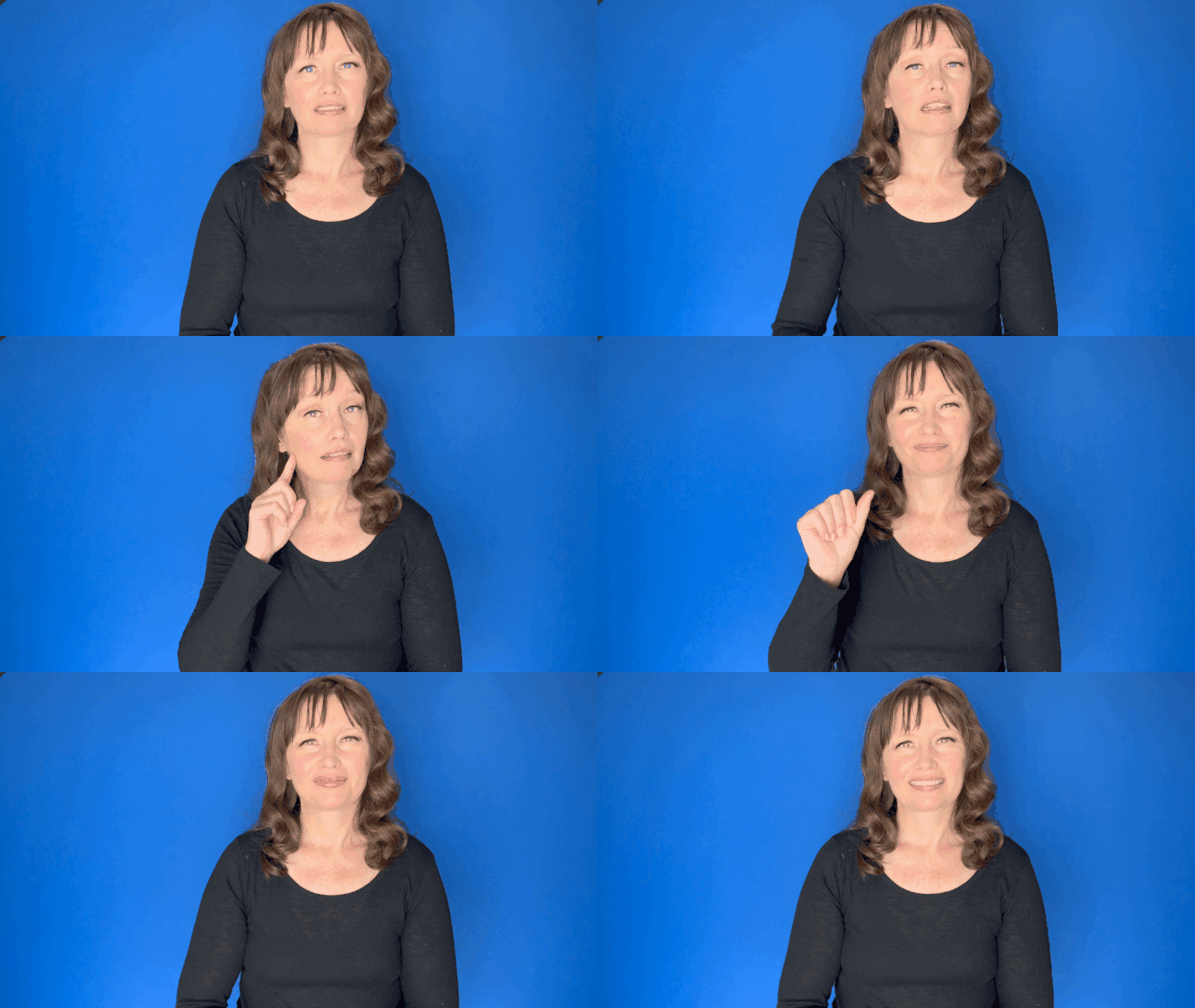
Definition: Having a disability and being deaf.
Sign for DEAF DISABLED in ASL

Practice Activities:
Begin by practicing the sign for DEAF DISABLED in ASL separately. Focus on facial expressions and clear hand movements. Practice each part of the sign slowly in front of a mirror to ensure proper placement and orientation. Repeat the sign several times in isolation to gain muscle memory.
After building confidence with the individual sign, begin using it in short phrases. Try signing sentences like: I am DEAF DISABLED, or My friend is DEAF DISABLED. Vary these sentences with different pronouns and time markers, such as He was DEAF DISABLED or They will become DEAF DISABLED. This will help integrate the sign naturally with different sentence structures.
Create flashcards that include different identity categories and include the sign for DEAF DISABLED in ASL. Show a card with a person’s name or context, then sign an identity sentence. For example, show a card labeled “Alex – cannot hear or walk,” and sign Alex is DEAF DISABLED. Practice this with a partner or in front of a camera to review your clarity.
Engage in storytelling activities by describing a day in the life of someone who is DEAF DISABLED. Include daily tasks like waking up, going to school or work, and interacting with others. This will help reinforce how to use the sign in continuous, contextual signing.
Do role-play exercises where you introduce yourself or others and mention their identity using the sign for DEAF DISABLED in ASL. One person can act as an interviewer or healthcare worker asking questions, while the other responds entirely in ASL.
To wrap up your practice session, hold a 5-minute conversation using signs that often appear together with the sign for DEAF DISABLED in ASL, such as help, support, access, and communicate. Practice signing these with a partner to simulate real-world communication.
Cultural Context:
In American Sign Language, the sign for DEAF DISABLED carries deep cultural significance and reflects the unique experiences of individuals who identify with both the Deaf and disabled communities. This sign not only conveys information but also honors lived experiences shaped by language, identity, and accessibility.
When using the sign for DEAF DISABLED in ASL, it’s essential to recognize that it merges identities shaped by societal structures and personal experiences. ASL does more than communicate words—it conveys identities, values, and community pride. For people who are both Deaf and disabled, this sign captures a complex intersection of two rich cultures.
Within the Deaf community, many embrace their deafness as a cultural and linguistic identity rather than a medical limitation. This perspective is critical when using the sign for DEAF DISABLED in ASL, as it centers cultural belonging rather than deficit. The combination of these identities highlights resilience and community strength.
The sign for DEAF DISABLED in ASL varies slightly based on context and region, but it is always grounded in respect for how individuals define themselves. Some people prefer identifying as DeafDisabled, merging the two words to reflect a unified identity, while others may name both identities separately. ASL users often adjust their signs to align with these personal preferences.
Understanding the cultural context of the sign for DEAF DISABLED in ASL means appreciating how language and identity intersect. ASL is a visual and spatial language, where meaning is communicated not only through handshapes but also through facial expressions and body movements. Signing DEAF DISABLED with care ensures that messages are respectful and inclusive.
Language access is critical for members of both the Deaf and disabled communities. Often, DeafDisabled individuals face barriers in healthcare, education, and employment due to overlapping systems of inaccessibility. The sign for DEAF DISABLED in ASL is therefore more than a label—it opens dialogue and advocacy around inclusion and equity.
It’s important to be sensitive to how individuals want to be identified. Some may embrace the term DEAF DISABLED, while others may choose alternative phrasing depending on their experience. In ASL conversations, asking and respecting each person’s self-identification is part of culturally competent communication.
The use of the sign for DEAF DISABLED in ASL also challenges stereotypes. It promotes visibility and pride in identities that are often marginalized. ASL, as an expression of culture and community, becomes a tool for empowerment when used to affirm complex identities like being both Deaf and disabled.
In educational and advocacy settings, the sign
Extended Definition:
The sign for deaf disabled in ASL is used to describe someone who is both deaf and has another disability. This can include physical, cognitive, or developmental disabilities. Understanding the appropriate ASL sign helps provide respectful and accurate representation within the Deaf and disabled communities.
In American Sign Language, concepts like deaf and disabled are often combined to represent the whole identity of a person. The sign for deaf disabled in ASL usually involves signing DEAF followed by a sign that denotes DISABLED. Often, the sign for DISABLED is formed using the initialized handshape for the letter D in combination with body or context-specific indicators.
When using the sign for deaf disabled in ASL, it’s important to consider the context and how the individual identifies. Some community members may prefer different variations, depending on the nature of their other disability. ASL is a living language and reflects the preferences and identities of its users.
The sign for DEAF typically involves touching the index finger from the ear to the mouth, showing the connection to the Deaf identity. To indicate DISABLED, signers may use a D-handshape and a quick movement in front of the body or combine other culturally accepted signs that specify a type of disability. When combined, the sign for deaf disabled in ASL conveys respect for both the Deaf identity and the additional disability.
Using the correct sign for deaf disabled in ASL is an important part of inclusive communication. It acknowledges both aspects of a person’s experience in a visual and respectful way. ASL users and learners should take care to learn appropriate combinations and stay updated on culturally respectful signs.
The DeafDisabled identity has a rich history and is shaped by unique experiences. This identity covers people who are part of both the Deaf world and the broader disability community. When communicating in ASL, it’s valuable to be aware of these identities to foster understanding and representation.
Wanting to discuss accessibility or identity in ASL often involves the use of the sign for deaf disabled in ASL. You might see this sign in educational settings, healthcare environments, and community advocacy spaces. Knowing how to use this sign properly can help you engage more meaningfully with diverse individuals.
In some cases, users may also fingerspell the word DISABLED after signing DEAF. This may depend on regional variations or the specific communication preference of a person. No matter the version, clear intention and cultural sensitivity are essential when using the sign for deaf disabled in ASL.
As more people aim to make communication accessible, learning signs like deaf disabled
Synonyms: Deaf with disabilities, Deaf person with a disability, disabled Deaf individual, Deaf and disabled, Deaf person with additional needs
Educational resources: Find related learning materials in our course bank!
Want more? Check out some of our popular learning activities on the homepage!
Need to look up a sign? Use our highly rated dictionary: https://aslinteractive.com/best-asl-dictionary/
Follow us on tiktok: https://www.tiktok.com/@aslinteractive. More social media links at the bottom of this page!
Long-tail Keywords: what is the sign for deaf disabled in ASL, how to sign deaf disabled in ASL, ASL sign for deaf disabled
Categories:
tags: Deaf culture and disability, American Sign Language for disabled, signing Deaf disabled phrases, ASL signs for Deaf and disabled, intersection of Deafness and disability in ASL
Parameters
*Handshape*:
The handshape in the sign for DEAF DISABLED in ASL uses two distinct forms. First, the index finger is extended while other fingers stay tucked in, creating the “1” handshape. This is commonly used to touch the cheek and then the chin in the deaf sign.
For disabled, the sign incorporates the D and A handshapes from the manual alphabet. Each letter is fingerspelled clearly to represent the concept. The sign for DEAF DISABLED in ASL combines clarity and precision through its use of structured handshapes. ♂️
*Palm Orientation*:
For the sign for DEAF DISABLED in ASL, the palm orientation for “deaf” typically begins with the index finger touching the ear and then moves to touch the mouth. During this movement, the palm is oriented sideways, facing neither completely in nor down—usually in a neutral plane ✋.
For “disabled,” the sign often involves forming the letter “D” and “A” handshapes. When using initialized versions, both palms generally face outward or slightly downward, depending on which regional variation is used. The palm orientation supports the clarity of the sign for DEAF DISABLED in ASL.
*Location*:
The sign for DEAF DISABLED in ASL is typically produced in two parts, beginning at the side of the face and transitioning to around the center of the torso. The DEAF sign is located between the cheek near the mouth and the ear, mirroring spoken communication areas. Then, for the DISABLED component, the movement shifts slightly forward to the chest area.
When signing DEAF DISABLED in ASL, maintain a comfortable distance from the face and torso to keep the movement fluid. This location helps distinguish each concept clearly, allowing the sign for DEAF DISABLED in ASL to convey both ideas accurately in one smooth transition.
*Movement*:
The sign for DEAF DISABLED in ASL combines two separate signs. First, for “deaf,” use the dominant index finger to touch the corner of the mouth, then move it to touch near the ear, showing a connection between hearing and speech.
Next, for “disabled,” use the dominant hand to form the letter “D” and the non-dominant hand to form the letter “A.” Tap the fingertips of both hands together once to represent the concept. Together, the sign for DEAF DISABLED in ASL illustrates both concepts clearly and fluidly. ♂️♿
*Non-Manual Signals*:
When using the sign for DEAF DISABLED in ASL, maintain a respectful and empathetic facial expression. Keep the eyes focused and neutral, showing awareness and attentiveness. Avoid exaggerated or overly emotional expressions, as they can alter the intent of the sign.
The sign for DEAF DISABLED in ASL may involve reference to both the identity of being deaf and the condition of being disabled, so a composed and understanding demeanor supports clear communication . This encourages inclusive interaction and ensures the meaning stays respectful and accurate.
*Prosody, Dominant/Non-Dominant Hand*:
The sign for DEAF DISABLED in ASL uses the dominant hand to first sign DEAF by touching the index finger from near the ear to the corner of the mouth. Then, for DISABLED, the signer uses both hands to fingerspell the abbreviation “D-S”, with the dominant hand initiating each letter.
The non-dominant hand stays relatively neutral during DEAF but shifts to support during the fingerspelling for DISABLED. The sign for DEAF DISABLED in ASL may vary slightly by region but generally maintains this structure.
Tips for Beginners:
When you’re learning the sign for DEAF DISABLED in ASL, it’s important to practice each component accurately. This sign typically combines two concepts: DEAF and DISABLED. DEAF is signed by touching your index finger from near your mouth and then to near your ear. For DISABLED, use the ASL initialized handshape of the letter D and gently tap it on your chest or the upper arm, or mimic the general sign commonly used for referring to disability. Because each part has a unique handshape and placement, it’s useful to master them individually before combining them.
Some beginners tend to rush through the sign or merge movements too quickly, which can make it difficult to understand. Take your time to separate DEAF and DISABLED with a brief pause or a controlled movement. Ensuring clear transitions between the signs not only helps with clarity but also improves your fluency over time. Don’t forget to use facial expressions appropriately—they are an essential part of ASL grammar and help communicate the context clearly. Sometimes learners forget that just doing the signs without expression can come across as robotic.
Repetition and muscle memory will be useful when practicing the sign for DEAF DISABLED in ASL. Use a mirror to watch your hand movements and facial expressions, and compare them with clips or videos of fluent ASL signers. It’s also helpful to record yourself so you can spot mistakes and track your progress over time.
Lastly, be sensitive to context when using the sign for DEAF DISABLED in ASL. These are identity and ability-related signs, and they should be used respectfully. If you’re unsure whether a combined sign or separate terms are more appropriate, ask a Deaf person or language expert for guidance. Engaging with native signers will always take your learning to the next level. ✅
Connections to Other topics:
The sign for DEAF DISABLED in ASL brings together two important identity markers in the Deaf and disability communities. This compound sign connects to broader topics like intersectionality and identity in ASL discourse. It highlights how ASL reflects not just language but culture, particularly when referring to overlapping experiences within marginalized groups.
This sign is often used in self-identification, advocacy, and educational contexts, tying into discussions around accessibility and inclusive communication. It can appear in phrases and compound constructions such as COMMUNITY DEAF DISABLED or RIGHTS DEAF DISABLED, showing how it’s contextually expanded to talk about inclusion, policy, or access. These combinations offer learners insight into the way ASL efficiently conveys complex social realities.
Comparatively, other identity-based compound signs like DEAFBLIND or DEAF LGBTQ show similar structural integration and follow shared principles of describing nuanced experiences. These signs often blend two concepts to form a coherent expression, promoting a fuller understanding of a person’s lived experience. The sign for DEAF DISABLED in ASL functions similarly, reinforcing the distinct identities that coexist within the deaf and disabled spectrum.
In terms of grammatical behavior, this sign can be used as a noun or adjective depending on sentence structure. It connects closely with classifiers when describing individuals or situations, and is also often paired with facial expressions to convey respect, pride, or sometimes discrimination depending on the conversation. The visibility of this sign in activism and community-building discussions makes it a powerful educational tool.
Understanding the sign for DEAF DISABLED in ASL helps learners navigate discussions surrounding diversity within the Deaf community. It also parallels signs that address social justice, such as EQUAL, SUPPORT, or ADVOCATE. These connections provide meaningful linguistic tools for learners to engage in rich conversations around access and identity ♀️♿.
Summary:
The sign for DEAF DISABLED in ASL typically combines two distinct concepts into one fluid representation that respects both identity and accommodation. To sign it, a person may sign DEAF first by touching the index finger from the mouth to the ear or from the ear to the mouth, depending on regional or personal preference. Then, DISABLED is expressed by forming the letters “D” and “A” in ASL and tapping them in succession, often near the front of the torso.
In some cases, DISABLED is also fingerspelled fully depending on the context or preference for clarity. This is especially common in formal or medical settings, or when the signer is seeking to include people more familiar with English-based sign systems. The combination may vary regarding which comes first; however, most Deaf signers prioritize the DEAF identity first.
The sign for DEAF DISABLED in ASL is not only linguistic but deeply cultural. It represents a specific intersection of identities: being d/Deaf and having a disability, thus connecting two communities with unique and overlapping histories. The sign respects both the linguistic minority status of Deaf individuals and the broader disability community’s struggle for inclusion.
Culturally, the sign recognizes the importance of identity-first language. While the hearing world may use person-first constructions like “person with a disability,” Deaf culture often leans toward identity-first, emphasizing DEAF as a core aspect of identity. Thus, the sign for DEAF DISABLED in ASL tells a story beyond labels — it encapsulates pride, community, and a nuanced understanding of ability.
Grammatically, the structure of the sign aligns with ASL syntax where descriptors or attributes often follow the core subject. In this case, DEAF is frequently prioritized, placing the individual’s linguistic and cultural identity before the added descriptor of DISABLED. This grammatical ordering reinforces cultural values and priorities within the Deaf community.
From a linguistic standpoint, both DEAF and DISABLED are signed clearly, without blending. Each part of the sign has its own location, handshape, and movement, indicating that both identities stand on their own while relating to one another. The careful transition between the two signs shows respect for the distinct yet intertwined aspects of the signer’s identity.
The sign for DEAF DISABLED in ASL also interacts with related signs like HARD-OF-HEARING, BLIND, and MEDICAL. These signs share overlapping handshapes or conceptual domains, which suggest a visual semantic network within ASL. Signers often use facial expressions to enhance meaning and indicate personal connection or formality.
Facial expressions play a critical role when signing DEAF DISABLED in ASL. A neutral face may be used in a factual setting, while an affirming smile or assertive expression can express pride or urgency. These non-manual signals provide context and reinforce the nuanced meaning of the phrase.
Linguistically, ASL uses space and movement to distinguish compound identities. The use of DEAF DISABLED incorporates two distinct concepts but preserves their integrity within the visual-spatial grammar. This avoids ambiguity and ensures clarity in communication.
The sign for DEAF DISABLED in ASL also reflects the community’s ongoing dialogue around self-identification. Some may prefer different terms or modifiers, like DEAF PLUS or DEAFBLIND, depending on their personal experiences and how they relate to the Deaf and disability communities. This reflects ASL’s adaptability and respect for diversity.
In applied linguistics, the sign for DEAF DISABLED in ASL shows how sign languages negotiate socio-cultural identities. Labeling is not merely descriptive but a critical act of self-representation, influenced by history, advocacy, and education. The way a person signs this term can reveal attitude, alignment with certain values, or levels of comfort.
The intersection of Deaf pride and disability identity is often debated, particularly within culturally Deaf spaces. The signing of DEAF DISABLED in ASL can therefore be deeply personal. It may reflect solidarity with the disability rights movement or emphasize that deafness itself is not a disability from a cultural-linguistic perspective.
Understanding the sign for DEAF DISABLED in ASL requires sensitivity to both cultural views and individual preferences. For example, some Deaf individuals may not identify as disabled unless referencing a coexisting condition like mobility or cognitive differences. Thus, clarity and consent are key when using or teaching this sign.
For educators and interpreters, conveying the sign for DEAF DISABLED in ASL requires not only technical fluency but cultural competence. The interpreter must accurately present what the signer intends, which may involve choosing between signs, fingerspelling, or explanation. This underscores interpretation as an act of cultural mediation.
When teaching this sign in classrooms or educational material, it is helpful to include conversations about identity, intersectionality, and the evolving nature of signs. The language must accommodate diverse perspectives while remaining respectful and inclusive. The sign for DEAF DISABLED in ASL is an ideal starting point for such discussions.
Emoji use in digital
Want more? Check out some of our popular learning activities!
ASL Interactive Resources
ASLInteractive YouTube Channel
Follow us on tiktok: @aslinteractive.com
Follow us on Instagram: aslinteractive
Facebook page: aslinteractive
Facebook group: aslinteractive
LInkedIn: ASL Interactive LLC
Twitter: @ASL_interactive
*Some information on this page is AI-generated. AI can make mistakes. Please check the information.


Responses