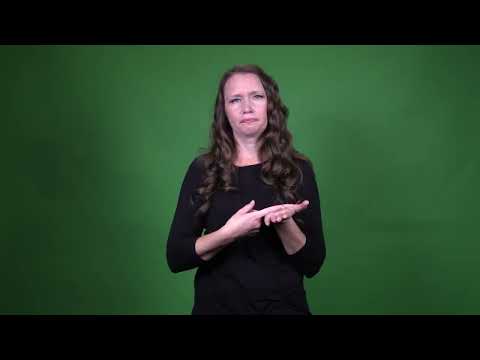
Sign for DISCUSSING in ASL | ASL Dictionary

Definition: Engaging in discussion.

Sign for DISCUSSING in ASL

YouTube player

Practice Activities:

Begin by practicing the sign for DISCUSSING in ASL in front of a mirror. Use your dominant index finger to tap the non-dominant open palm two or three times, mimicking the motion of exchanging ideas or points. Repeat this movement slowly and deliberately, paying close attention to handshape, placement, and movement.

Once you’re comfortable, try using the sign in isolated sentences. Say a simple sentence like “We are discussing the trip” or “They are discussing the plan” in ASL using correct facial expressions. Switch out different subjects and topics to expand your vocabulary and fluency. Practice these sentences multiple times to develop confidence.

Create a short dialogue using the sign for DISCUSSING in ASL. Imagine a situation where two friends are planning a surprise party and must discuss details such as the venue, guest list, and date. Sign your part while imagining or writing out your partner’s responses, then reverse roles if working with someone else.

Use storytelling prompts to expand your expressive skills. Tell a story about a school debate or a team meeting at work using signs that include the concept of discussing. For example, tell about a time you had to discuss a problem and how it got resolved. Incorporate facial expressions to show emotions tied to the conversation.

Practice with a partner by taking turns signing ideas and then signing responses using the sign for DISCUSSING in ASL. Try topics like weekend plans, favorite foods, or school projects. This will help you learn how to transition in and out of the sign naturally during a conversation.

To build quick recognition, do a recall drill by watching a partner sign different actions and identifying when the sign for DISCUSSING in ASL appears. This helps with comprehension and recall speed in conversations. Try signing while watching yourself in a video call or camera to analyze and self-correct.

Cultural Context:

In the Deaf community, the sign for discussing in ASL plays an important role in communication, often reflecting the cultural value placed on clarity, openness, and shared understanding. When Deaf individuals engage in conversations, they rely heavily on visual cues, facial expressions, and body language to support the message. The sign for discussing in ASL captures this dynamic and expressive way of exchanging ideas.

The sign for discussing in ASL is commonly used in educational, social, and professional settings where ideas need to be shared and explored. In Deaf culture, direct communication is essential, and the act of discussing is seen as a way to maintain strong relationships and community connections. It’s not just about talking—it’s about listening, exchanging viewpoints, and reaching a shared understanding.

During group meetings or classroom discussions, the sign for discussing in ASL becomes a visual invitation for everyone to take part. This reflects the inclusive values of Deaf culture, where everyone’s input is valued, regardless of status or background. Whether at Deaf clubs, advocacy groups, or within families, discussing various topics allows for a collective voice to emerge.

When using the sign for discussing in ASL, eye contact plays a big role. In ASL culture, maintaining visual attention is a sign of respect and active engagement. This is especially important in discussions, where seeing facial expressions and subtle hand movements helps clarify meaning and intention.

ASL is a visual language, and every sign, including the sign for discussing in ASL, is deeply tied to the cultural norms of the community. The sign encourages open communication while respecting each person’s right to express their thoughts. In this way, the act of having a discussion becomes more than just an exchange of words—it becomes a shared experience based on mutual respect.

In Deaf education, the sign for discussing in ASL is often one of the first concepts introduced when students begin working on group projects or open forums. Teachers encourage students to use the sign as a signal for turn-taking and active participation. This helps build communication skills while supporting core values of collaboration and respect.

The sign for discussing in ASL is also commonly seen during Deaf advocacy work, where communities come together to talk about accessibility, rights, and representation. These discussions often lead to important changes and increased awareness. The sign itself reflects the action of sharing opinions in a productive and respectful dialogue.

Social media and online platforms have brought new ways for Deaf individuals to engage in conversations, and the sign for discussing in ASL is easily adapted to virtual settings. Whether participating

Extended Definition:

The sign for discussing in ASL is commonly used when talking about ideas, sharing thoughts, having a conversation, or engaging in more formal dialogue. It can appear in a wide range of contexts, from casual chats to classroom debates or professional meetings.

In American Sign Language, the sign for discussing typically involves both index fingers pointing toward each other in a circular motion, representing an exchange of ideas. This movement visually conveys the back-and-forth nature of a conversation or discussion. Like many signs in ASL, facial expressions and body language also play an important role in emphasizing the intensity or tone of the discussion.

The meaning conveyed by the sign for discussing in ASL depends on the context and can include anything from collaborative brainstorming to a serious debate. Understanding the surrounding signs and expressions will give more clarity on whether the discussion is relaxed, heated, or informative.

When learning or teaching the sign for discussing in ASL, it’s helpful to include real-life examples. Role-playing classroom conversations, group discussions at dinner, or meetings at the workplace can help reinforce understanding. Students often connect better with the word when it’s shown in use alongside other conversational signs like talk, explain, or argue.

This sign is closely related to other communication-related verbs in ASL, but each one has subtle differences in motion or handshape. The sign for discussing should not be confused with the signs for talking or chatting, even though they may seem similar. Practicing each sign independently helps to maintain clarity and precision in communication.

In the ASL community, the sign for discussing is frequently seen in educational settings. Teachers may use it when encouraging students to share opinions or solve problems together. Interpreters also use it during panels, lectures, or workshops where the act of discussion is central to the topic.

A valuable tip for ASL learners is to watch how native signers use the sign for discussing in ASL in different contexts. This helps in learning the nuances, such as speed, repetition, or additional signs that may accompany it for emphasis. Videos and live interaction with Deaf signers offer a richer understanding of how the sign functions in real conversations.

ASL is a visual language, and the sign for discussing captures the essence of exchanging information. It’s a key concept in both social and academic communication, making it a foundational vocabulary word. Mastering it allows for deeper participation in different types of conversations.

Whether you’re planning a group project, hosting a team meeting, or engaging in a family talk, the sign for discussing in ASL is

Synonyms: talking over, conversing about, debating, going over, reviewing

Educational resources: Find related learning materials in our course bank!

Want more? Check out some of our popular learning activities on the homepage!

Need to look up a sign? Use our highly rated dictionary: https://aslinteractive.com/best-asl-dictionary/

Follow us on tiktok: https://www.tiktok.com/@aslinteractive. More social media links at the bottom of this page!

Long-tail Keywords: what is the sign for discussing in ASL, how do you sign discussing in ASL, ASL sign for discussing

Categories:

tags: discussion, communication, conversation, activities, verbs

Parameters

*Handshape*:

The handshape used in the sign for DISCUSSING in ASL involves both hands. The dominant hand forms the 1-handshape with the index finger extended, while the non-dominant hand holds a flat, open B-handshape. The index finger of the dominant hand taps the palm or fingers of the non-dominant hand in a deliberate motion.

This interaction symbolizes the act of exchanging ideas or engaging in communication. The sign for DISCUSSING in ASL reflects back-and-forth sharing, commonly representing conversations or group discussions. ️

*Palm Orientation*:

For the sign for DISCUSSING in ASL, both hands form the index finger handshape. The dominant hand points toward the non-dominant hand with the palm facing slightly inward or downward, depending on the signer’s perspective. The non-dominant hand typically remains stationary, palm facing in or slightly sideways.

During the sign for DISCUSSING in ASL, the dominant index finger taps the palm or index-side area of the non-dominant hand in a repeating motion, symbolizing the exchange of ideas. The palm orientation remains steady, emphasizing two-way communication.

*Location*:

The sign for discussing in ASL takes place in the neutral space in front of the body, slightly away from the torso. The location is generally around chest to upper abdomen height, allowing comfortable movement of both hands during the interaction.

Using this frontal signing space provides visibility and clarity when performing the sign for discussing in ASL. Keeping the hands within this neutral zone ensures fluid transitions and natural expression in conversation.

*Movement*:

The sign for DISCUSSING in ASL involves using both hands with index fingers extended. The dominant hand taps the non-dominant palm several times in a deliberate motion, as if pinpointing or emphasizing key points in a conversation. ️

This movement mimics the back-and-forth nature of a discussion, reinforcing the idea of sharing and exchanging thoughts. The sign for DISCUSSING in ASL is typically done at chest level and performed firmly but not overly forceful.

*Non-Manual Signals*:

When using the sign for DISCUSSING in ASL, the signer often uses focused eye gaze, directed at the person or area of discussion, to emphasize engagement. Slight forward head tilt and raised eyebrows may accompany the sign, especially when introducing or emphasizing a topic. These non-manual signals help convey that the signer is presenting information or participating in an exchange.

The sign for DISCUSSING in ASL can also involve a thoughtful facial expression, with pursed lips or a slightly open mouth, showing contemplation or explanation. This adds context and clarity to the conversation, supporting the intent behind the sign. ️

*Prosody, Dominant/Non-Dominant Hand*:

The sign for DISCUSSING in ASL typically uses the dominant hand in an upright 1-handshape, tapping repeatedly on the non-dominant flat palm facing sideways. The motion is small and deliberate, resembling the concept of exchanging ideas or addressing a topic.

While executing the sign for DISCUSSING in ASL, both hands remain in front of the torso at chest level. The interaction between the hands suggests communication or deliberation, reinforcing the concept of discussion.

Tips for Beginners:

When learning the sign for DISCUSSING in ASL, it’s important to focus on precision and clarity. This sign typically involves the dominant hand in the form of an index finger tapping repeatedly on the open palm of the non-dominant hand. Make sure the movement is deliberate rather than rushed. Rushed movements can make it unclear and may be misinterpreted as a different concept.

Practice maintaining consistent hand shapes and direction when performing the sign for DISCUSSING in ASL. Beginners often either don’t tap the dominant finger clearly or make the taps too soft to be noticed. This can cause confusion in conversation, especially during fast-paced dialogues. Use clear, firm movements to show intention.

Facial expressions play an important role when signing. Most conversations involving discussing a topic will naturally carry facial cues like curiosity, seriousness, or enthusiasm. Align your expression with the context of the discussion to enhance meaning. This helps make your communication more fluent and expressive.

One common mistake is using the sign for TALK or DEBATE instead of the correct sign for DISCUSSING in ASL. While they may appear similar, each sign conveys a different shade of meaning. DISCUSSING usually implies a calm exchange of ideas rather than an argument or general chatting. Be mindful of this distinction when choosing your sign.

To gain fluency, watch native signers use the sign in context, such as in Deaf community videos or ASL storytelling channels on YouTube. Mimic their pacing and expression. Repetition and watching signing in context can greatly improve how natural your own signing becomes.

Practice in front of a mirror or with a peer for feedback. By being aware of small details like palm orientation and speed, you’ll improve accuracy. The sign for DISCUSSING in ASL becomes much easier with consistent practice and by understanding its conversational usage.

Connections to Other topics:

The sign for DISCUSSING in ASL connects closely with other signs involving communication, such as TALK, CHAT, DEBATE, and SHARE. It embodies the interactive nature of exchange, often involving a back-and-forth motion that can also be found in compound signs like BRAINSTORM or INTERVIEW. Because of its association with verbal and idea-based interaction, it is frequently paired with facial expressions that indicate intensity, curiosity, or disagreement.

Learners often encounter the sign for DISCUSSING in ASL in academic or formal contexts, where it’s commonly combined with content-related signs like IDEAS, TOPIC, or PROPOSAL. For instance, in a classroom setting one might sign DISCUSSING IDEAS or DISCUSSING A PLAN, using these signs in sequence with natural pauses and directional markers. This facilitates an understanding of discourse structures in ASL, which differ syntactically from English.

A useful connection is how this sign functions with directional movement depending on who is doing the discussing. When referring to two or more people discussing, the sign might shift between locations in space that represent those individuals. This aspect introduces learners to indexing and spatial referencing—key components of ASL grammar.

In terms of derived use, the sign for DISCUSSING in ASL often appears in storytelling or dialogue-rich narratives. It’s a common choice when midsigner needs to show dialogue between characters, differentiating perspectives by body shift and altered motion of the sign. This broadens its application beyond just its English equivalent and makes it a versatile tool in expressive signing.

The sign can also be linked to nonverbal cues and classifiers when used in situations involving deep or heated conversation. These contexts allow signers to demonstrate tone visually, enhancing the emotional weight of the sign for DISCUSSING in ASL and reinforcing its role in conveying meaningful interaction.

Summary:

The sign for DISCUSSING in ASL centers around the act of communicating ideas between two or more individuals, often in an intellectual or reflective context. This sign typically involves one dominant hand in the index-finger shape tapping the palm of the non-dominant hand a couple of times, mimicking the exchange or placement of conversational points.

This motion serves as a metaphor for putting ideas on the table, similar to how topics are shared in a meeting or deliberation. The movement is outward from the signer’s body, indicating the externalized nature of discussion, rather than internal contemplation.

An important aspect of the sign for DISCUSSING in ASL is its rooted connection to formal or semi-structured communication. It doesn’t usually denote casual chatter like the signs for “talk” or “chat,” and instead suggests thoughtfulness and intent.

In ASL grammar, this sign functions as a verb and may also appear in sentence constructions indicating reciprocal action. The concept of mutual exchange is embedded deeply in both the meaning and the physical execution of the sign.

When integrated into a sentence, context becomes key to determine whether the sign is being used in an academic, professional, or personal setting. Classifiers and role-shifting often accompany it to show who is involved in the discussion, reinforcing ASL’s visual and spatial richness.

The sign shares close kinship with the sign for “argument” or “debate,” but with notable differences in facial expression and intensity. While arguing involves sharper, sometimes aggressive motions with marked facial tension, discussing leans into calm, open facial grammar, showing a willingness to share.

Culturally, the sign for DISCUSSING in ASL aligns with the Deaf community’s strong emphasis on face-to-face interaction and visual communication. In educational and community settings, open discussions are vital for shared decision-making and consensus, and this sign captures that process.

The shared visual space in ASL allows for discussions to be illustrated more fully than in many spoken languages. You can physically represent who is involved, where they are situated, and the direction of thoughts through hand movements, gaze, and indexing.

In dialogues about education or accessibility, the sign for DISCUSSING in ASL becomes essential. It allows for clear delineation between types of communication such as lecturing versus collaboration, which is crucial within Deaf pedagogy and group decision-making approaches.

The sign holds linguistic interest due to its metaphorical handshape—index as a symbol of a point or idea, and the palm as a surface for that idea to land. This abstraction of gesture reflects cognitive mapping in language use, where concrete movements symbolize abstract thoughts.

Applied linguistics recognizes the sign for DISCUSSING in ASL as a pivotal verb for interactive narrative and academic contexts. It allows for reflection on conversation structures and the pragmatics of shared viewpoints, particularly in settings where turn-taking and idea contribution must be visually managed.

In storytelling or formal presentations, the sign is often preceded by eye gaze and brief role shifts to establish individuals in the conversation or group. This enhances comprehension and frames the discussion as a layered exchange, involving multiple parties and perspectives.

The morphology of the sign is relatively fixed, though some regional variations exist in intensity or repetition. These nuances may reflect cultural differences in how physical space or conversational hierarchy is conceived in different ASL-dominant communities.

From a sociolinguistic standpoint, the sign for DISCUSSING in ASL may also represent social rituals like community meetings or family agreements. These social forms are upheld by Deaf cultural norms that highly value consensus through visual feedback and group inclusion.

When teaching ASL as a second language, instructors often highlight this sign to help learners distinguish between different kinds of communication verbs. Understanding DISCUSSING versus arguing or chatting reflects syntactic awareness and higher-order thinking in sign acquisition.

In terms of sign modification, DISCUSSING can be spatially adapted to indicate multiple parties exchanging ideas. Moving the sign between different spatial locations can indicate different members contributing viewpoints across the group dynamic.

Interpreter training programs often stress the importance of accurate rendering for the sign for DISCUSSING in ASL, especially when working in professional or legal settings. It’s essential not to conflate DISCUSSING with closely-related verbal forms that carry different registers or implications.

Psycholinguistically, what makes this sign effective is its motion representation of cognitive load — the index finger tapping a surface mimics the act of placing thoughts or considerations. This points to how embodiment in ASL contributes to comprehension and expressive depth.

In Deaf literature and poetry, the sign for DISCUSSING can be used both literally and symbolically. It often embodies community dialogue, a constant motif in expressions of collective Deaf experience and survival.

The frequency of the sign in academic discourse and policy meetings within the Deaf community also reflects its ideological significance. It supports the community’s preference for inclusion, democratic decision-making, and open dialogue.

Unlike spoken English, which may rely on tonal shifts to infer intention, the sign for DISCUSSING in ASL is

Want more? Check out some of our popular learning activities!

ASL Interactive Resources

ASLInteractive YouTube Channel

Follow us on tiktok: @aslinteractive.com

Follow us on Instagram: aslinteractive

Facebook page: aslinteractive

Facebook group: aslinteractive

LInkedIn: ASL Interactive LLC

Twitter: @ASL_interactive

*Some information on this page is AI-generated. AI can make mistakes. Please check the information.


Responses