Sign for DOCTORS OFFICE 1 in ASL | ‍⚕️ ASL Dictionary

Definition: A doctor’s office 1.

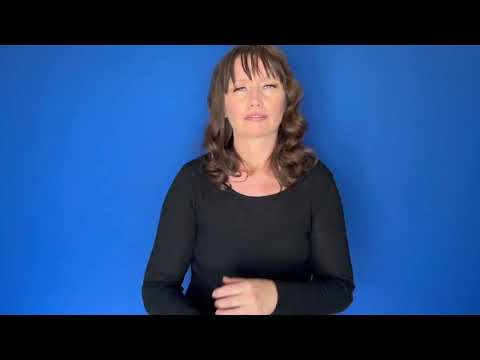
Sign for DOCTORS OFFICE 1 in ASL

YouTube player

Practice Activities:

To practice the sign for DOCTORS OFFICE 1 in ASL, begin by signing it in isolation multiple times in front of a mirror. Focus on the clarity of the movement from the sign for DOCTOR, where the dominant hand taps the non-dominant wrist (as if taking a pulse), followed by OFFICE, where both hands create a box-like space in the air. Repeat the full sign until the transition between the two becomes smooth and natural.

Next, practice using the sign for DOCTORS OFFICE 1 in ASL within simple sentences, such as “I go to the doctor’s office every year” or “The doctor’s office is closed today.” Sign each sentence slowly at first, then increase your pace as your confidence builds. Try signing these in ASL syntax, such as “YEARLY I GO DOCTOR OFFICE” to reflect accurate grammar.

Pair up with a practice partner to create role-play scenarios. One partner can pretend to be a receptionist asking, “Why are you here today?” while the other responds using vocabulary like SICK, CHECK-UP, or EMERGENCY along with the sign for DOCTORS OFFICE 1 in ASL. This helps reinforce both vocabulary and natural conversation flow.

Use storytelling prompts that involve a visit to the doctor’s office. You could tell a story about feeling sick, making an appointment, or receiving good news from the doctor. Incorporating the sign for DOCTORS OFFICE 1 in ASL into these narratives helps build expressive fluency.

You can also label places around your house with index cards for immersion. Label a part of your room as the doctor’s office to act out daily conversations involving health. Encourage describing location, reason for the visit, and how you feel using expressive facial grammar and relevant signs. Use emojis like or to add fun to your practice sessions.

Cultural Context:

In the Deaf community, accessing medical care comes with unique communication challenges. Knowing the sign for DOCTORS OFFICE 1 in ASL removes one of those barriers, enabling clearer interactions when discussing appointments, health concerns, or directions.

The sign for DOCTORS OFFICE 1 in ASL is commonly used in everyday conversations between Deaf individuals and within interpreting environments. Whether visiting a general practitioner, a pediatrician, or a specialist, understanding this sign supports autonomy and boosts confidence during medical visits.

This sign also helps in educational and interpreting settings, where interpreting for medical appointments is a common assignment. Students learning American Sign Language often practice vocabulary like the sign for DOCTORS OFFICE 1 in ASL because it is frequently needed in real-life situations.

Within Deaf culture, preparing in advance for a doctor’s visit can include making sure an interpreter is requested and reviewing commonly used medical signs. The sign for DOCTORS OFFICE 1 in ASL becomes an essential part of that preparation. It reinforces bodily autonomy and reduces reliance on non-verbal guessing or awkward finger spelling during crucial conversations.

In families with Deaf members, especially children or elderly relatives, the ability to sign concepts like doctor’s office is a key element of support. The sign for DOCTORS OFFICE 1 in ASL helps bridge gaps between hearing caregivers and their Deaf loved ones, ensuring important health information is clearly exchanged.

Organizations serving the Deaf community often include the sign for DOCTORS OFFICE 1 in ASL in health literacy workshops. It’s considered a foundational vocabulary word when teaching about navigating the healthcare system. This is especially true for those who are newly Deaf or learning ASL later in life.

For Deaf professionals working in healthcare, mastering the sign for DOCTORS OFFICE 1 in ASL is part of establishing effective, compassionate communication with Deaf patients. It helps set the tone for welcoming spaces and understanding health concerns without confusion or delay.

Community centers and ASL classes frequently teach the sign for DOCTORS OFFICE 1 in ASL as part of units on health and wellness. It often appears early in ASL curriculum because of its relevance during emergencies, routine checkups, and specialist visits. Knowing it prepares signers to discuss where they are going and why.

Even social media platforms and video blogs about Deaf experiences in healthcare highlight the need for consistent vocabulary. People often teach or search for the sign for DOCTORS OFFICE 1 in ASL when sharing personal stories about navigating access to care.

Access to accurate ASL translation for

Extended Definition:

The sign for doctors office 1 in ASL is a combination of common medical and location-based signs. It typically starts with the sign for doctor, which involves tapping the dominant hand in a flat “B” shape on the wrist of the non-dominant hand, representing where one might take a pulse. This is followed by the sign for office, formed by shaping both hands into the letter “O” and showing the sides of the walls, like outlining the four walls of a room.

The sign for doctors office 1 in ASL can vary slightly depending on the signer’s region or preferred style. Some people may sign “doctor” followed by the general concept of “clinic” or use spatial referencing to indicate a specific location. It’s important to observe local context and how people in your signing community understand or use the sign.

When used in a sentence, the sign for doctors office 1 in ASL allows you to communicate clearly that you are going to or are already at a place where you receive medical care. This phrase is commonly used when describing appointments, health needs, or discussing someone’s whereabouts. For instance, you might say, “I go doctors office” using appropriate grammar for ASL.

Understanding how to sign doctors office 1 in ASL is essential for anyone in a medical setting or someone communicating about health topics. Interpreters, healthcare workers, patients, and students all benefit from knowing how to sign this term accurately. It shows cultural awareness and respect for accessibility in health conversations.

This sign also emphasizes the importance of visual language when expressing critical information. Signing doctors office 1 in ASL allows for immediate and clear communication in situations that may be urgent or sensitive. It reinforces how ASL adapts abstract concepts like professional spaces into meaningful visual signs.

The sign blends two separate ideas—doctor and office—into one visual conversation. Learning compound signs like this helps build fluency and deeper understanding of how American Sign Language functions. Each time you use the sign for doctors office 1 in ASL, you’re improving your ability to describe places and professions.

It’s also helpful to practice variations and be open to feedback from native ASL users. The way one person signs doctors office 1 in ASL may differ from how another does, but as long as the concept is clearly conveyed, communication remains effective. Flexibility in signing style is a natural part of ASL usage.

Kids and adults learning the sign for doctors office 1 in ASL often involve role-playing

Synonyms: medical clinic, health clinic, physician’s office, medical practice, healthcare office

Educational resources: Find related learning materials in our course bank!

Want more? Check out some of our popular learning activities on the homepage!

Need to look up a sign? Use our highly rated dictionary: https://aslinteractive.com/best-asl-dictionary/

Follow us on tiktok: https://www.tiktok.com/@aslinteractive. More social media links at the bottom of this page!

Long-tail Keywords: what is the sign for doctor’s office in ASL, how do you sign doctor’s office in ASL, ASL sign for doctor’s office

Categories:

tags: doctors office in ASL, how to sign doctors office in ASL, ASL sign for doctors office, American Sign Language doctors office, doctors office sign language translation

Tips for Beginners:

When learning the sign for DOCTORS OFFICE 1 in ASL, it helps to break it into two parts: the sign for DOCTOR and the sign for OFFICE. Start by mastering each component individually. The sign for DOCTOR typically involves tapping the fingertips of one hand (flat handshape) on the wrist area of the other hand, indicating where a doctor checks your pulse.

OFFICE is signed by forming both hands into the letter “O” handshape and bringing them together side by side in front of you, then moving them apart to form an imaginary doorframe. This sign visually represents a space or room. Once you are comfortable with each part, combine them smoothly—sign DOCTOR first, followed by OFFICE, with a slight pause in between for clarity.

Practice the sign for DOCTORS OFFICE 1 in ASL in front of a mirror to ensure you’re spatially accurate and using the correct handshapes. Facial expressions help provide visual context—it’s not just about the hands. Keep your movements controlled and avoid over-extending your arms, which can make the sign harder to read.

A common mistake is confusing the sign for DOCTOR with the sign for HOSPITAL. Pay close attention to where the hand taps and the shape it makes. Also, when signing OFFICE, be careful not to close the “O” handshapes too tightly, or you’ll lose clarity in your movement, which affects the sign.

Don’t rush it. Signing too quickly can make the sign for DOCTORS OFFICE 1 in ASL difficult for others to understand. Slowing down helps reinforce muscle memory and improves your confidence in using the sign in everyday settings . Repetition is key, and watching fluent signers or using video resources can support your practice.

Connections to Other topics:

The sign for DOCTORS OFFICE 1 in ASL connects closely to two core concepts: DOCTOR and OFFICE. These individual signs come together to form a compound sign that conveys a specific location in a medical context. Understanding how these separate signs function independently helps learners deconstruct and then reconstruct more complex location-based terms in ASL.

The sign for DOCTOR usually includes a gesture tapping the dominant hand to the wrist (mimicking checking a pulse), which connects to many other health-related signs such as NURSE, HOSPITAL, or CLINIC. The OFFICE sign typically uses classifiers for space or structure and is often seen in signs like POST OFFICE or POLICE OFFICE. By combining DOCTOR and OFFICE, we can see how ASL handles compound nouns by sequencing meaningful base concepts.

This compound structure is also helpful when building similar signs like VETERINARIAN OFFICE or DENTIST OFFICE. The pattern remains the same: identify the profession or service and then attach the location indicator. By applying this framework, learners can build their ASL vocabulary wider around professional settings and community services.

The sign for DOCTORS OFFICE 1 in ASL also ties into topics like spatial referencing and eye gaze. When describing a visit or an event at the doctor’s office, signers may set the location in signing space, allowing for rich narrative structure. They can use role shifting to portray conversations between patient and doctor, deepening both vocabulary and grammar skills.

Additionally, being familiar with the sign for DOCTORS OFFICE 1 in ASL helps in understanding medical appointment contexts, insurance discussions, and emergency situations. It opens the door to more advanced phrases like WAITING ROOM, MEDICAL RECORDS, or CHECK-UP, each carrying a clear connection to healthcare communication in ASL.

Summary:

The sign for DOCTORS OFFICE 1 in ASL combines two core concepts: “doctor” and “office.” The sign for “doctor” typically involves placing the dominant hand in a “bent B” handshape and tapping it on the wrist of the non-dominant hand, which is in a flat “B” handshape—this mimics checking a pulse, symbolizing medical care. The sign for “office” is usually executed with both hands in “O” handshapes moving apart parallel to each other, indicating the concept of an enclosed space.

Together, the sign for DOCTORS OFFICE 1 in ASL visually conveys the idea of a medical professional’s fixed workspace. The combination of signs not only represents the words’ meanings but also reinforces situational context, helping distinguish this setting from a hospital, clinic, or other similar places. This visual context provides clarity during ASL interaction, helping shape accurate interpretation in conversations.

The sign for DOCTORS OFFICE 1 in ASL can change slightly depending on regional differences or context. Some signers incorporate a slight angular motion or initialize the term based on localized Deaf community norms. For example, the term “doctor” may sometimes include the “D” handshape tapped on the wrist area, though this is more common in initialized signs and less favored in more conceptually accurate ASL.

In grammar, this sign functions as a noun phrase, and it fits into ASL sentence structure through topic-comment format. For instance, one might sign “DOCTORS OFFICE, GO I” to say “I am going to the doctor’s office.” The syntax emphasizes spatial and visual relationships, often accompanied by directional verbs to show motion or location.

The spatial orientation of the sign is particularly important. When indicating location or future action, the sign for DOCTORS OFFICE 1 in ASL may be placed in a specific direction within the signing space. This allows enrichment of meaning through spatial grammar rather than relying on prepositions or auxiliary verbs.

Culturally, the sign for DOCTORS OFFICE 1 in ASL reflects the Deaf community’s emphasis on direct, conceptually accurate representation. Medical settings have strong cultural associations for many Deaf individuals due to historical challenges in healthcare access and communication barriers. Signing DOCTORS OFFICE might evoke personal experiences related to interpreter services or advocacy issues in health contexts.

The depiction of the “doctor” portion using the tapping motion draws historical relevance from the early use of pulse checking as an iconic gesture. This element makes the sign more intuitive and grounded in real-world experience. Signs that are rooted in embodied experiences are particularly easy to remember and recognize.

DOCTORS OFFICE 1 also shares relationships with other signs in the healthcare lexical family. Related signs include HOSPITAL, CLINIC, and NURSE. These signs share semantic fields, but differ in handshape, location and movement. Such distinctions help reduce ambiguity and are critical in medical-related conversations.

For example, HOSPITAL includes an “H” hand drawing a cross on the non-dominant upper arm whereas NURSE often uses an “N” hand tapping the wrist. This layered approach to medical vocabulary points to ASL’s internal logic and categorization system. ASL learners benefit from recognizing these semantic groupings.

From a linguistic standpoint, the sign for DOCTORS OFFICE 1 in ASL reflects roots in classifier use and spatial mapping. Although classifiers are not used inside the base sign, they can extend meaning in conversation. For example, a classifier can show room layout, furniture, or patient positioning.

Applied linguistics as applied to health care in ASL settings focuses partly on interpreter training and accuracy in conceptual equivalence. Accurate conveyance of constructs like DOCTORS OFFICE is essential in medical interpreting. Misinterpretation can result in serious misunderstandings or a lack of informed consent.

Interpretation of DOCTORS OFFICE 1 in ASL requires more than knowing individual signs; it demands knowledge of collocations and natural flow. ASL emphasizes holistic storytelling even in medical narratives. Users often intersperse signs such as APPOINTMENT, INSURANCE, or WAIT to expand the meaning.

The semantic load placed on the sign for DOCTORS OFFICE 1 in ASL includes both institutional reference and personal experience. For Deaf patients, that space may symbolize communication struggles or trust in interpreters. Therefore, the sign carries affective weight, not just functional meaning.

Broader themes emerge when examining access, equity, and self-advocacy in relation to DOCTORS OFFICE 1 in ASL. Knowledge of the sign empowers members of the Deaf community to express healthcare-related harms or assert patient rights. It allows smoother intake processes and better communication with frontline staff.

Nonmanual markers (NMMs) are usually neutral when producing DOCTORS OFFICE 1, but may shift based on grammatical intention. Raised brows might signify a “wh”-type question, like “WHERE DOCTORS OFFICE

Want more? Check out some of our popular learning activities!

ASL Interactive Resources

ASLInteractive YouTube Channel

Follow us on tiktok: @aslinteractive.com

Follow us on Instagram: aslinteractive

Facebook page: aslinteractive

Facebook group: aslinteractive

LInkedIn: ASL Interactive LLC

Twitter: @ASL_interactive

*Some information on this page is AI-generated. AI can make mistakes. Please check the information.


Responses