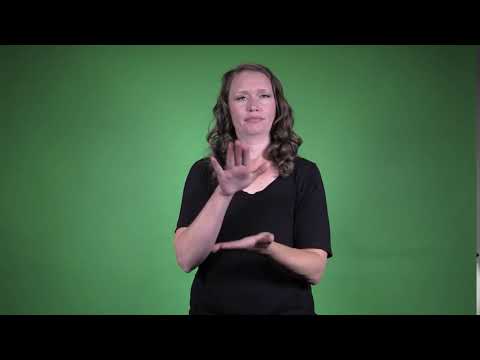
Definition: A school for children.
Sign for ELEMENTARY SCHOOL in ASL
Practice Activities:
To practice the sign for ELEMENTARY SCHOOL in ASL, begin by isolating each part of the compound sign. First, master the sign for ELEMENTARY by using your dominant hand in an “E” handshape, moving it in small circles under your non-dominant hand, which is flat and palm-down. Then, sign SCHOOL with both flat hands clapping together, palms facing. Practice each sign separately several times, focusing on smooth movement and proper handshapes.
Once the individual signs are comfortable, combine ELEMENTARY and SCHOOL to form the full sign. Repeat the compound sign in front of a mirror to monitor clarity and smooth transitions. Try signing it at a slow pace, then gradually increase your speed while maintaining accuracy.
Create simple example sentences using the sign for ELEMENTARY SCHOOL in ASL, like “I go to ELEMENTARY SCHOOL,” or “My sister loves ELEMENTARY SCHOOL.” Sign these phrases in front of a peer or instructor and ask for feedback. Role-play simple conversations such as introductions or school routines where the phrase might come up naturally. This helps reinforce the sign in real-world contexts.
Pair with a partner and play a question game using common school-related questions, like “What is your favorite part of ELEMENTARY SCHOOL?” or “Which ELEMENTARY SCHOOL did you attend?” Practice responding using full sentences in ASL to continue integrating the sign fluently into conversation.
Storytelling is also a valuable way to reinforce the sign for ELEMENTARY SCHOOL in ASL. Create a short narrative about a memory or first day at elementary school and include relevant signs like TEACHER, CLASSROOM, FRIEND, or LUNCH. Share your story with a group or record yourself to self-assess accuracy, facial expressions, and overall clarity.
Daily repetition and integrating meaningful context will greatly support fluency with this sign.
Cultural Context:
In American Sign Language, understanding the sign for elementary school in ASL provides valuable insight into Deaf culture and how educational settings are represented. This sign is commonly used among Deaf students, families, and educators when referring to the foundational years of a child’s education. It’s essential for promoting communication about school milestones, achievements, and routines.
The sign for elementary school in ASL is deeply tied to Deaf history and access to education. Many Deaf individuals attend specialized elementary schools, where they are introduced to ASL as a primary language of learning. These schools often offer a rich cultural setting where children can develop language, identity, and community.
Elementary school is a significant phase in a child’s life, and discussing it within the Deaf community involves the use of culturally appropriate terms and expressions. The sign for elementary school in ASL is often one of the first school-related signs that Deaf children and hearing family members learn. Using the proper sign helps support language development and parental involvement in education.
In many Deaf households, talking about going to school each day involves using the sign for elementary school in ASL. Whether packing backpacks, discussing homework, or sharing stories about teachers and classmates, this sign becomes a key part of daily life. It helps foster independence and gives children the language to describe their experiences.
Deaf culture places a strong emphasis on visual learning and hands-on interaction, especially at the elementary school stage. The sign for elementary school in ASL represents more than just a classroom—it’s a gateway to a bilingual and bicultural learning environment. Young Deaf children in these schools gain early exposure to ASL while also developing their English literacy.
Using the correct sign for elementary school in ASL allows children to share about school in a way that’s meaningful and culturally resonant. This sign supports conversations around field trips, friends, and favorite subjects, helping to build self-confidence and social awareness. It’s also widely used in storytelling and educational media within Deaf communities.
Educators and interpreters use the sign for elementary school in ASL during classroom introductions, parent-teacher meetings, and school events. It ensures that all parties are included in the educational conversation, reinforcing inclusive access to information. It also plays a role in early childhood education materials such as ASL picture books and curriculum guides.
For many hearing individuals learning ASL, the sign for elementary school in ASL is a foundational part of school-related vocabulary. It supports inclusive communication between Deaf and hearing peers, particularly in mainstream education settings. Learning this sign promotes awareness and respect
Extended Definition:
The sign for elementary school in ASL combines two separate signs to create a clear and common concept. First, you sign “elementary,” then follow it with the sign for “school.” This phrase is frequently used in everyday ASL communication by teachers, parents, and students.
To sign “elementary,” you typically use a handshape that mimics the letter “E,” rotating it slightly under a flat, non-dominant hand. This movement signifies the idea of something basic or introductory, linking it to early education levels. The sign is often used in combination with other educational signs to specify grade levels.
The sign for “school” is made by clapping your hands together flatly, like closing a book or bringing ideas together. When combined with the sign for “elementary,” the complete phrase becomes the sign for elementary school in ASL. This two-part construction helps differentiate it from other types of schools, like high school or college.
The sign for elementary school in ASL is important for anyone working or communicating within educational settings. Whether you’re interpreting in classrooms, describing your child’s grade level, or discussing a school project, this sign comes up often. Knowing it helps improve fluency and supports better understanding between ASL users.
Children learning ASL, as well as adults interacting with the Deaf community, often encounter the sign for elementary school in ASL early in their vocabulary development. It’s also used in media, Deaf education resources, and family conversations when referring to young students. Because it combines two familiar signs, it’s also a great example of ASL’s efficiency and clarity.
Many schools that use ASL as part of their communication system rely on consistent use of the sign for elementary school in ASL throughout the institution. It’s not just for academic conversations—it helps when giving directions, introducing oneself, or explaining where someone works or studies. This makes it a core sign you’ll want to know and use accurately.
Facial expressions and body posture play a role in reinforcing this sign, as they do in all ASL communication. When referring to a specific elementary school by name, signers might mix the general sign with fingerspelling or a known sign name. This adds specificity while still using the basic sign for elementary school in ASL.
Practice is key in mastering this sign. Watching how fluent signers use it in conversation or educational videos will help you better understand its rhythm and flow. Repetition and context will make it second nature, especially when you’re regularly using AS
Synonyms: primary school, grade school, grammar school, lower school, junior school
Educational resources: Find related learning materials in our course bank!
Want more? Check out some of our popular learning activities on the homepage!
Need to look up a sign? Use our highly rated dictionary: https://aslinteractive.com/best-asl-dictionary/
Follow us on tiktok: https://www.tiktok.com/@aslinteractive. More social media links at the bottom of this page!
Long-tail Keywords: what is the sign for elementary school in ASL, how do you sign elementary school in American sign language, ASL sign for elementary school
Categories:
tags: Schools, Education, Facilities and other locations/needs, Children, Learning
Parameters
*Handshape*:
The handshape for the sign for ELEMENTARY SCHOOL in ASL uses the letter “E” handshape for “elementary” and the letter “S” handshape for “school.” The “E” handshape is formed by curling the fingers down to touch the thumb while the thumb rests across the curled fingers.
To complete the sign for ELEMENTARY SCHOOL in ASL, the dominant “E” hand moves in small circles underneath the non-dominant flat “S” hand representing “school.” The transition between these handshapes helps convey the concept clearly and accurately in signed communication.
*Palm Orientation*:
For the sign for ELEMENTARY SCHOOL in ASL, the palm orientation for the dominant hand, which forms the letter “E,” is typically facing downward while it makes a small circular motion above the non-dominant flat hand. The non-dominant hand stays steady, palm down, representing the base or “school.”
This palm positioning is essential in properly conveying the concept in the sign for ELEMENTARY SCHOOL in ASL, combining both elements smoothly to clearly communicate “elementary” and “school” together.
*Location*:
The location for the sign for ELEMENTARY SCHOOL in ASL involves two separate positions on the body. First, the dominant hand fingerspells “E” in a small circular motion under the non-dominant hand, which is held palm-down near chest level. Then, for “school,” both hands clap together lightly at chest height, palms flat and facing each other.
In the sign for ELEMENTARY SCHOOL in ASL, the fingerspelling occurs slightly below the non-dominant hand to indicate the educational level. The finishing sign for “school” is centered in front of the body, keeping the motion compact and clear .
*Movement*:
The sign for ELEMENTARY SCHOOL in ASL involves a two-part movement. First, the dominant hand forms an “E” handshape and circles under the non-dominant flat hand once or twice, mimicking the idea of something basic or foundational. Then, to show “school,” both hands come together in flat “B” handshapes, clapping twice palm-to-palm in front of the body.
This combined movement clearly represents the sign for ELEMENTARY SCHOOL in ASL. The circular motion under the hand highlights the elementary concept, while the clapping motion signifies the school environment. Use a relaxed, smooth motion throughout for clarity and fluency.
*Non-Manual Signals*:
When performing the sign for ELEMENTARY SCHOOL in ASL, the facial expression remains generally neutral, often with slight attentiveness or engagement. Since it involves fingerspelling the letter “E” in a circular motion followed by the sign for school, clarity and precision in facial expression help reinforce understanding.
Non-manual signals should include maintaining eye contact and a composed expression to support the educational context. The sign for ELEMENTARY SCHOOL in ASL benefits from these subtle cues to convey the setting clearly.
*Prosody, Dominant/Non-Dominant Hand*:
The sign for ELEMENTARY SCHOOL in ASL combines the sign for “elementary” with “school.” For “elementary,” the dominant hand forms an E handshape and circles under the non-dominant palm, which is held steady and flat. Then both hands clap together twice, representing the sign for “school.”
This sign clearly conveys the concept of the sign for ELEMENTARY SCHOOL in ASL through movement and repetition. The dominant hand leads the motion, emphasizing the “elementary” aspect before transitioning to “school.”
Tips for Beginners:
When learning the sign for ELEMENTARY SCHOOL in ASL, it’s important to split the concept into two parts: ELEMENTARY and SCHOOL. ELEMENTARY is usually represented by a flat, dominant hand (E handshape) circling under your non-dominant flat hand—this circular motion happens under the palm. Then, SCHOOL follows by clapping both flat hands together, palm to palm, with the dominant hand tapping the non-dominant hand once or twice. Work on getting each part clear before combining them smoothly.
Beginners can benefit from slowing the motion down and ensuring each part of the sign is executed fully. Don’t rush through the circling motion under the hand—this is where clarity can get lost. It helps to practice the circle in front of a mirror, watching the distance between your hands and checking the consistency of the motion. Use your facial expression to match the context, which adds clarity to what you’re communicating.
One common mistake when practicing the sign for ELEMENTARY SCHOOL in ASL is using the wrong handshape for ELEMENTARY or making a motion that’s too fast or too wide. Stay relaxed and keep the circular movement small and controlled. For the SCHOOL part, be careful not to slap the hands too hard or too softly—just a gentle, clear tap gets the point across. Timing and rhythm help make the two signs flow together naturally.
Consistency is key! Aim to sign the ELEMENTARY portion at the same height and speed each time. If you’re signing to someone in a different state or region, be aware that some may fingerspell ELEMENTARY instead, especially in formal or educational contexts. Practicing daily with a peer or recording yourself can help build muscle memory and confidence using the sign for ELEMENTARY SCHOOL in ASL.
sign for elementary school in asl, elementary school sign language, how to sign elementary school in asl, learn elementary school in asl, asl sign for elementary school
Connections to Other topics:
The sign for ELEMENTARY SCHOOL in ASL connects with broader topics like educational levels and structured environments. It combines the initialized “E” handshape in a circular motion, symbolizing “elementary,” followed by the standard sign for “school,” which involves clapping the flat palms together twice. This compound construction illustrates how ASL signs can layer concepts to express more complex ideas efficiently.
This sign shares structural similarity with other compound educational terms such as MIDDLE SCHOOL and HIGH SCHOOL. In each, the first part indicates the specific level of education, while the second part, SCHOOL, provides the general category. Understanding this pattern helps learners expand their vocabulary related to academic settings with clarity and cohesion.
The sign for ELEMENTARY SCHOOL in ASL is also a clear example of how initialized signs are used within educational terminology. “E” for elementary is consistent with the use of an “M” for middle and an “H” for high in their respective terms. This demonstrates ASL’s strategic use of fingerspelled initials to establish distinct concepts while maintaining a shared structural base.
In context, a student might use the sign for ELEMENTARY SCHOOL in ASL when describing their academic background or talking about teaching younger children. It can also appear in educational storytelling, lesson planning, or discussions of school systems within Deaf culture. The combination makes it highly practical in both conversational and academic scenarios.
Beyond academic settings, the concept of “elementary” can extend metaphorically in ASL, such as in describing basic or foundational skills in other topics. Thus, mastering the sign for ELEMENTARY SCHOOL in ASL can help link conversations about the basics of learning in general. This reinforces its relevance as learners progress from foundational vocabulary to more advanced concepts. ✨
Summary:
The sign for ELEMENTARY SCHOOL in ASL is composed of two parts. First, the sign for ELEMENTARY is made by forming the dominant hand into the letter “E” handshape and wiggling it side to side under the non-dominant hand held flat, palm down. This is immediately followed by the sign for SCHOOL, which involves both flat hands clapping once or twice, symbolizing the action of clapping or papers being passed.
This compound sign is semantically rich, combining a conceptual representation of learning at the elementary level with the general educational institution. The sign for ELEMENTARY can sometimes be fingerspelled, especially in specific contexts such as when naming a particular school, but the standard version uses the visual “E” motion under the base hand. The variation in expression provides flexibility for signers depending on familiarity or emphasis needed.
In terms of grammar, the sign for ELEMENTARY SCHOOL in ASL is a noun phrase and typically acts as the subject or object in a sentence. Its placement may come before the verb when emphasizing location or time. For example, a signer might initiate a sentence with this sign to establish context such as location or past experience.
The cultural significance of the sign for ELEMENTARY SCHOOL in ASL is deeply tied to Deaf education and access. Many Deaf children begin their early education at residential schools for the Deaf or mainstream programs with interpreters or Deaf educators. Because of the challenges in early language acquisition for Deaf children, the sign evokes a critical formative stage.
From a linguistic standpoint, the sign uses both initialization and iconic movement. The “E” handshape stands for Elementary, which is an initializer common in ASL for certain categories like school levels. Although ASL generally resists overuse of initialization, for school levels like ELEMENTARY, it has been standardized through long use and Deaf community acceptance.
The SCHOOL component is a widespread nominal sign in ASL, rooted in the manual representation of physical doors or paper being brought together. It is visually iconic and one of the earliest signs learned in early Deaf education. Its pairing with the ELEMENTARY sign provides both age-specific and institution-specific information, efficiently collapsing multiple concepts into one fluid motion.
Syntactically, signs like this that combine initialized classifiers or handshapes with functional or institutional signs are common. These meet the need for clarity in noun incorporation and educational vocabulary. It enhances speed in communication and establishes intersections between ASL structure and pedagogical themes.
In educational contexts, especially bilingual-bicultural programs, the sign for ELEMENTARY SCHOOL in ASL is significant in curriculum development. Teachers and ASL performers or storytellers might use the sign to give context in stories, social narratives, or biographical retellings. It anchors place and developmental stages for Deaf children watching.
The visuality of the sign plays a role in mnemonic retention. The motion of the “E” under the palm may evoke the idea of built structure or emergence. It visually represents not only the lexical form but also metaphorically frames the concept of foundational learning.
The broader applicability of the sign reaches into intersectionality where modes of education vary. For Deaf children in mainstream schools where ASL may not be the primary language used, this sign symbolizes an ideal or aspiration for inclusive access from the very beginning of academic development. Among native signers or CODAs (Children of Deaf Adults), this sign may carry emotional or familial connotations, especially if schooling history is part of intergenerational storytelling.
The evolution of the sign over time reflects ASL’s adaptive nature. Earlier generations might have used more frequent fingerspelling or relied on different locational classifiers. However, the contemporary standard version with the “E” hand has consolidated due to visual economy and efficiency.
When analyzing this sign in applied linguistics, especially in the realm of L2 acquisition for ASL learners, it demonstrates a layered sequence. It integrates shape, motion, and context-driven meaning. Beginners often struggle with compound institutional signs, so this one is often taught with visual aids and narrative-based examples.
Moreover, the sign for ELEMENTARY SCHOOL in ASL demonstrates how compound signs can carry dense semantic content. It showcases economy in grammar and cultural specificity in function. This makes it an ideal example in ASL classes to show students how layered meaning can emerge from basic handshapes.
In community use, the sign often appears in school assemblies, educational signage, and children’s literature presented in ASL. The sign also appears in translations of visual poetry or children’s books, where the narrative includes young learners or early academic settings. It captures not just place but the feeling of youth, start, and community.
For Deaf educators and interpreters, accurate depiction of the sign for ELEMENTARY SCHOOL in ASL ensures conceptual precision. Misuse or omission of the “E” component can lead to confusion with other school levels such as MIDDLE SCHOOL or HIGH SCHOOL. Precision in the handshape and movement is critical for effective communication.
In sociolinguistic settings, this sign also
Want more? Check out some of our popular learning activities!
ASL Interactive Resources
ASLInteractive YouTube Channel
Follow us on tiktok: @aslinteractive.com
Follow us on Instagram: aslinteractive
Facebook page: aslinteractive
Facebook group: aslinteractive
LInkedIn: ASL Interactive LLC
Twitter: @ASL_interactive
*Some information on this page is AI-generated. AI can make mistakes. Please check the information.


Responses