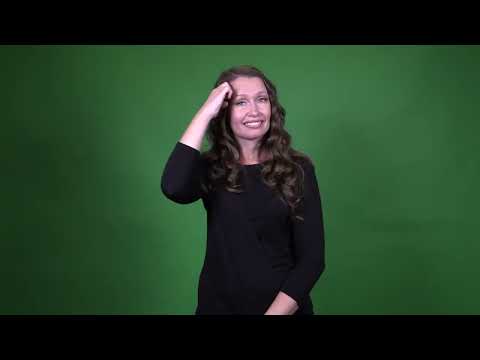
Definition: A continent in the Northern Hemisphere.
Sign for EUROPE in ASL
Practice Activities:
To begin practicing the sign for EUROPE in ASL, try isolating the movement and handshape. Use a circular motion with the “E” handshape near the center of your forehead. Repeat this several times while watching yourself in the mirror to ensure clarity and correct form.
Next, practice signing EUROPE in simple phrases. For example, try saying “I want to travel to EUROPE” or “My friend lives in EUROPE.” This helps reinforce the sign in visual context and improves your fluency when combining signs smoothly.
Create a list of European countries and practice fingerspelling each one after signing EUROPE. For instance, sign EUROPE followed by fingerspelling “SPAIN” or “FRANCE.” This helps you mentally connect the concept of the continent to specific locations, making the sign more meaningful in use.
A fun activity is to describe your dream trip using the sign for EUROPE in ASL. Think about places you’d like to visit, things you’d see, and foods you might try. Incorporate EUROPE several times as a category sign, encouraging repeated exposure through storytelling.
For partner practice, one person can name a country using fingerspelling, and the other responds by signing EUROPE and giving a basic fact or related sign. For example, fingerspell “ITALY,” and the partner responds with “EUROPE, PASTA.” This builds conversational relevance and enhances memory.
To enhance understanding, watch videos of native signers using the sign for EUROPE in ASL in news clips or travel discussions. Try to identify when and how they use the sign and compare their fluidity to your own version. Imitating natural use will build confidence and carryover to real communication.
Finally, use flashcardsâone side showing landmarks or flags, the other side prompting you to sign EUROPE appropriately. This links visual cues with the sign and supports vocabulary retention.
Cultural Context:
The sign for EUROPE in ASL is more than a simple geographic reference. It reflects cultural awareness, international engagement, and an understanding of how Deaf communities connect across borders. Using the sign for EUROPE in ASL can be a gateway to conversations about travel, language, and identity within the global Deaf community .
Deaf culture places a strong emphasis on inclusion and shared experience. When someone uses the sign for EUROPE in ASL, it often communicates not just a place, but also a connection to the history, politics, and diversity of the continent. ASL users may discuss European Deaf events, such as the European Deaf Sports Organization or the European Union of the Deaf, using this sign naturally in conversation.
Because American Sign Language is mostly used in the United States and parts of Canada, the sign for EUROPE in ASL plays a vital role when users are talking about international topics. Signers may use it during discussions about global travel plans, study abroad opportunities, or even conversations with Deaf Europeans visiting North America âď¸. It allows the community to stay informed and connected across continents.
The sign for EUROPE in ASL becomes highly relevant in academic discussions, especially in Deaf studies and cultural studies courses. Students learning ASL often explore signs like this to understand how Deaf communities worldwide interact and share values. Including the sign for EUROPE in ASL in vocabulary strengthens the ability to engage in meaningful dialogue on current events and global affairs.
In Deaf events like international conferences and online webinars, the sign for EUROPE in ASL helps bridge cross-cultural communication. It enables ASL speakers to reference European sign languages and the rich cultural heritages they come from. This sign is a touchpoint for international cooperation among Deaf people, educators, interpreters, and advocates.
The sign for EUROPE in ASL also becomes a tool in discussions about systemic accessibility differences around the world. ASL users may compare how Europe provides services and rights for its Deaf population versus what is available in America. This sign holds power in such dialogues and advocacy efforts .
Deaf travelers often use the sign for EUROPE in ASL when sharing stories online or while planning trips with other Deaf people. Itâs frequently seen in vlogs, social media posts, and community forums as Deaf influencers describe their European adventures. This makes the sign easy to recognize across different platforms of Deaf representation.
In interpreting settings, the sign for EUROPE in ASL is especially important when discussing news stories, documentaries,
Extended Definition:
The sign for EUROPE in ASL is visually descriptive and rooted in cultural and linguistic context. In American Sign Language, concepts related to geography, like countries and continents, often have signs that are symbolic or iconic, making them easier to remember and use in conversation. The sign for EUROPE in ASL reflects elements associated with the continent and is typically performed near the head to convey its location and identity.
To make the sign for EUROPE in ASL, the dominant hand forms the letter “E” and circles near the forehead area. This movement is usually small and steady. The sign can vary slightly depending on the signerâs region or background, but the general gesture remains recognizable as referring to the continent of Europe.
This sign is frequently used in conversations that involve travel, geography, history, or current events. You might see it when someone is discussing European countries, heritage, or cultural topics. Using the appropriate sign for EUROPE in ASL helps maintain clarity and ensures effective communication between Deaf and hearing individuals.
In ASL, continental signs like the sign for EUROPE are used in both formal and informal settings. For example, you may see it used in classrooms, travel videos, or conversations about world news. The context in which the sign appears helps reinforce its meaning and connects it to broader discussions about global issues.
Understanding how to sign EUROPE in ASL is also useful for interpreters and educators. When teaching geography in ASL, knowing the correct signs for places like Europe creates a more engaging and accessible learning environment. It also helps learners build their vocabulary and understand how different signs relate to global concepts.
The sign for EUROPE in ASL is part of a larger system of geographic signs, which also includes signs for other continents, countries, and cities. Learning these signs allows signers to expand their narrative and connect with people on international topics. Incorporating the sign accurately supports social interaction and cultural literacy in ASL communities.
Remember that although the sign is standardized, some minor variations may occur. These can depend on personal experiences or regional slang. When unsure, it’s best to rely on commonly accepted signs and observe native users to ensure your signing is consistent with standard ASL usage.
The sign for EUROPE in ASL is not only functional, but it also carries cultural significance. By using this sign, you show awareness of different parts of the world and foster connection through visual language. It’s a small but powerful element of American Sign Language that supports storytelling, learning, and global awareness
Synonyms: Europe, European continent, Continent of Europe, EU, European region
Educational resources: Find related learning materials in our course bank!
Want more? Check out some of our popular learning activities on the homepage!
Need to look up a sign? Use our highly rated dictionary: https://aslinteractive.com/best-asl-dictionary/
Follow us on tiktok: https://www.tiktok.com/@aslinteractive. More social media links at the bottom of this page!
Long-tail Keywords: What is the sign for Europe in ASL, How do you sign Europe in American Sign Language, Learn the ASL sign for Europe
Categories:
tags: Europe in American Sign Language, ASL signs for Europe, how to sign Europe in ASL, learning Europe in ASL, ASL dictionary Europe
Parameters
*Handshape*:
The handshape for the sign for EUROPE in ASL uses the “E” handshape, where the fingers are bent at the middle knuckles and the thumb is tucked under. This “E” handshape represents the initial letter of the word and moves in a small circular motion in front of the side of the head.
To produce the sign for EUROPE in ASL, maintain a steady “E” handshape throughout the motion. The small circular movement helps identify the region in context and differentiates it from other place name signs in ASL.
*Palm Orientation*:
The palm orientation for the sign for EUROPE in ASL starts with a relaxed “E” handshape, where the fingertips face the side of the head. The palm generally faces inward or slightly downward as the hand makes small circular movements near the side of the forehead, indicating the region.
When using the sign for EUROPE in ASL, itâs important to maintain the curved fingers of the “E” consistently while your palm orientation stays mostly inward. This helps to clearly distinguish it from other similar signs.
*Location*:
The sign for EUROPE in ASL is made in the neutral space, slightly in front of the face and upper chest area. The handshape begins in front of the side of the head and moves in a small circular motion.
This placement allows for clear visibility and easy articulation. The face remains unobstructed so facial expressions can accompany the sign for EUROPE in ASL to convey nuance or emphasis.
*Movement*:
To perform the sign for EUROPE in ASL, form an âEâ handshape with your dominant hand. Position it near the side of your forehead, palm facing in, and make a small circular motion outward from the head, as if tracing a circle beside your temple. This movement is done in a clockwise direction for right-handed signers.
The sign for EUROPE in ASL suggests the idea of the region or continent circling near the mind, symbolizing thought, history, or culture. Keep the motion smooth and controlled to maintain clarity. âď¸
*Non-Manual Signals*:
When performing the sign for EUROPE in ASL, the facial expression should remain neutral or friendly, depending on the context. Slight eyebrow raise can be used if the sign is part of a question or clarifying where someone is from. Maintain good eye contact to emphasize engagement.
The non-manual markers help convey location or geographic context in the sign for EUROPE in ASL. A slight head tilt or nod can enhance clarity when distinguishing it from other regional signs.
*Prosody, Dominant/Non-Dominant Hand*:
The sign for EUROPE in ASL uses the dominant hand in the “E” handshape and moves in a small circle near the temple or upper side of the head. The non-dominant hand is not used in this sign. This movement represents a general reference to the European continent.
To perform the sign for EUROPE in ASL, the dominant hand stays active while the facial expression remains neutral or slightly inquisitive, matching the context of conversation. The sign for EUROPE in ASL is typically used in geographic or cultural discussions. ď¸
Tips for Beginners:
When learning the sign for EUROPE in ASL, itâs helpful to focus on handshape and movement right from the start. The sign typically uses the dominant hand in an “E” handshape (fingers curved into the palm), making a small circular motion near the side of your forehead. Think of this as referencing the general area of the continent on a globe or map.
To master the sign for EUROPE in ASL, pay attention to the size and direction of the motion. Beginners often over-exaggerate the circle, making the sign look sloppy or confusing. Keep the circular movement small and controlled. Practice in front of a mirror to ensure the placement is consistent.
Facial expression adds clarity and context, even for geographic locations like Europe. Maintain a neutral but engaged facial expressionâavoid looking down or disengaged, as that can reduce the overall clarity of your signing. This small detail can make a big impact, especially in conversations.
Avoid common pitfalls, like using the wrong handshape or placing the sign too far from the side of the head. Incorrect placement can change the meaning or confuse your signing partner. Repeated practice with native signers or videos from credible ASL sources will reinforce muscle memory and improve your accuracy over time.
Fingerspelled alternatives should be reserved for brand names or company titles that include “Europe,” but for geographic reference, always use the proper sign. If you forget the exact sign for EUROPE in ASL, itâs better to fingerspell it rather than guess and risk miscommunication.
Lastly, review related signs like “Germany,” “France,” and “Spain” to build a stronger regional vocabulary. This will help you incorporate the sign for EUROPE in ASL more naturally into broader conversations. Practice consistently and youâll improve â¨
Connections to Other topics:
The sign for EUROPE in ASL connects closely to geography-related signs and regional identifiers. Itâs often grouped with other continent signs like ASIA, AFRICA, and AUSTRALIA, which are commonly seen in discussions around travel, culture, and politics. These signs help frame conversations about global perspectives, international relationships, and identity in a visual language context.
Learning the sign for EUROPE in ASL also supports vocabulary growth in topics like world history and world cultures. It pairs naturally in ASL conversation when discussing countries within Europeâsigns like FRANCE, SPAIN, GERMANY, and ITALY follow shortly after when giving specifics. This layered knowledge helps users shift smoothly from a general signing topic to more specific subjects.
In compound or descriptive signs, the sign for EUROPE in ASL appears in structured expressions such as EUROPE-TRIP, STUDY-EUROPE, or EUROPE-POLITICS. These examples show how the base sign becomes a building block in more advanced or topic-based communication. This approach supports deeper fluency by illustrating how abstract conceptsâlike travel or educationâcan connect to geographic identities.
The sign for EUROPE in ASL is also useful in sociolinguistic discussions such as identifying nationalities or cultural background in personal narratives. A signer might introduce themselves and say their family is from EUROPE to indicate ancestry or migration. It supports storytelling, biographical dialogue, and cultural identifiers in the Deaf community.
This sign further connects to political and economic vocabulary such as EUROPEAN UNION, EURO-CURRENCY, or EUROPEAN HISTORY. Though some terms are fingerspelled, integrating the sign for EUROPE alongside them gives context and visual structuring to more complex ideas. This pairing of signs and fingerspelled words enhances clarity and understanding in advanced ASL use. â
Summary:
The sign for EUROPE in ASL is made by forming the dominant hand into the letter “E” handshape. Then, move the “E” in a small circular motion in front of the forehead, typically going clockwise. This movement simulates a general grouping or unification, which aligns with the cultural and geopolitical union that is Europe.
The circular motion in the sign for EUROPE in ASL visually connects to the concept of unity and integration. This represents how European countries are often seen collectively, both politically and culturally. The motion also captures the idea of diversity coexisting under a common identity.
Culturally, Europe holds historical significance to American and global Deaf communities. Many early influences on ASL grammar and signs came from European educators, especially from French Sign Language (LSF). Consequently, the sign for EUROPE in ASL carries underlying cultural weight regarding Deaf education history.
Grammatically, the sign for EUROPE in ASL functions as a proper noun and can appear in sentence structures where place names typically reside. It works in statements, rhetorical questions, or comparative clauses. Placement in ASL syntax can follow typical Subject-Verb-Object order or topic-comment structure.
Linguistically, the handshape being the letter “E” utilizes initialized signs, where the English letter helps identify the sign’s referent. Initialized signs are common in ASL geography terminology: such as “E” for EUROPE, “A” for Africa, and “S” for South America. This kind of modification from base signs demonstrates how ASL integrates English references within its visual-gestural form.
Although some purists criticize initialized signs as overly influenced by English, they serve a practical function within educational and international contexts. The sign for EUROPE in ASL exemplifies this tensionâefficient recognition versus possible Anglicization of ASL. Still, it remains a highly recognizable and iconic sign.
When comparing the sign for EUROPE in ASL to other continental signs, similar patterns emerge. Most continent names use an internal-letter handshape, and the motion around the head or body can symbolize the globe or regional awareness. This consistency aids in teaching and learning geographic vocabularies.
The circular motion next to the head in the sign for EUROPE in ASL may also symbolize the idea of thinking or abstract comprehension. ASL often uses space around the head to represent cognitive and perceptual expressions. This reflects Europe’s historic reputation as a center of philosophy, education, and arts.
From a sociolinguistic standpoint, the sign for EUROPE in ASL shows how Deaf Americans conceptualize non-local regions. Even if a person has never traveled to Europe, this sign enables discussion and connection. It builds bridges during intercultural conversations and academic study.
The sign also plays a vital role in interpreting settings, such as during discussions of global news, politics, immigration, or international history. An interpreter using the sign for EUROPE in ASL must ensure clarity and precision, especially since signs for place names often look visually similar. Proper facial expressions further enhance the context.
In educational settings, the sign for EUROPE in ASL often comes up in geography or world history classrooms, especially within Deaf bilingual programs. Teachers may use it alongside images of the European continent to support spatial and visual connections. Interactive learning with maps and the sign fosters deeper engagement.
ASL classifiers are not typically used in the standard sign for EUROPE, but can accompany it when elaborating on stories or situations involving the region. For example, discussing travel across Europe may incorporate classifier handshapes to show paths or country boundaries. Classifier narratives enrich spatial storytelling.
The sign is generally consistent across different dialects of ASL, though some regional variations may alter the size or direction of the circular movement. Slighty different lexical items might exist in Black ASL or Old ASL, but the initialized “E” remains dominant. Standardization helps maintain common understanding.
The evolution of the sign for EUROPE in ASL showcases the language’s adaptability. In earlier years, fingerspelling “Europe” may have been more common before the current sign stabilized. As global awareness deepened, signs for continents grew more prevalent in conversational usage.
The keyword phrase sign for EUROPE in ASL often interrelates with other geopolitical signs like countries within EuropeâFrance, Germany, or Italy. Each of those nations also has unique signs, some initialized with their first letter, while others are based on cultural imagery. These country-specific signs form semantic networks within ASL glossaries.
ASL literature and poetry sometimes reference Europe metaphorically, using the sign to invoke identity, immigration, or colonialism themes. The sign adds geographic specificity when Deaf poets and storytellers reference global struggles or diasporas. Rich visual elements embed within these performances.
When teaching new learners, the sign for EUROPE in ASL is typically introduced within larger thematic units like travel, geography, or international events. It helps illustrate how ASL can address global subjects,
Want more? Check out some of our popular learning activities!
ASL Interactive Resources
ASLInteractive YouTube Channel
Follow us on tiktok: @aslinteractive.com
Follow us on Instagram: aslinteractive
Facebook page: aslinteractive
Facebook group: aslinteractive
LInkedIn: ASL Interactive LLC
Twitter: @ASL_interactive
*Some information on this page is AI-generated. AI can make mistakes. Please check the information.


Responses