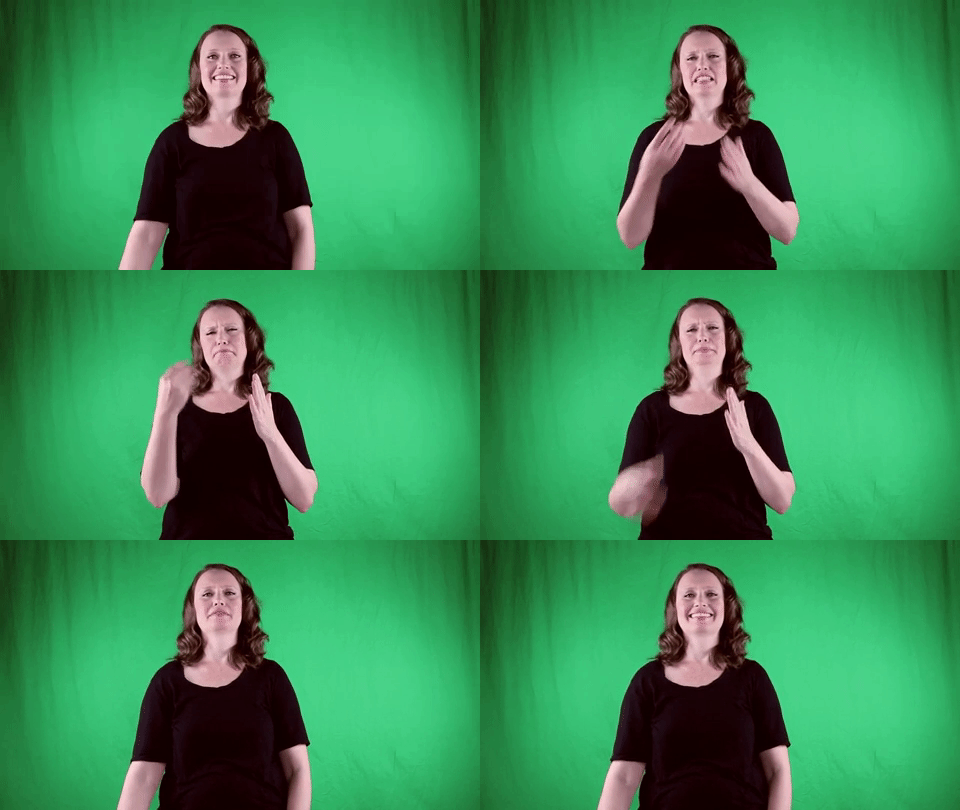
Definition: Costing a lot of money.
Sign for EXPENSIVE in ASL
Practice Activities:
To master the sign for EXPENSIVE in ASL, start by practicing it in isolation. Stand in front of a mirror and repeat the sign multiple times, making sure your facial expression reflects the concept of something costing a lot. Emphasize your non-manual signals like widened eyes or a slightly shocked expression to enhance the meaning.
Next, create a list of common expensive items and sign them along with the sign for EXPENSIVE in ASL. Some examples might include house, car, phone, vacation, or computer. Practice combining the items with sentences like “CAR EXPENSIVE” and focus on clear transitions between signs.
Try creating contrasting sentences like “BOOK CHEAP, LAPTOP EXPENSIVE.” These comparisons help you understand the sign’s function in a wider context and improve grammar flow. Record yourself or work with a partner to give and receive feedback on clarity and expressive detail.
Use a storytelling prompt to incorporate the sign for EXPENSIVE in ASL naturally. For example, narrate a short story about shopping for a gift and discovering the item is too expensive. Include descriptive signs and emotions to bring the story to life.
Play a partner game where one person lists items while the second signs whether the item is cheap or expensive. This encourages real-time decision making and context-based responses. Use emojis like or during the game for a fun, visual reinforcement.
Practice fingerspelling specific brands or stores followed by the sign for EXPENSIVE in ASL. This is especially useful for developing fluency in mixed fingerspelled and lexical sign usage.
Finally, incorporate the sign into daily ASL journaling. Each day, describe something you saw or wanted and note if it was expensive or not. Consistent, varied use will help solidify your mastery of the sign for EXPENSIVE in ASL.
Cultural Context:
In American Sign Language, the sign for expensive in ASL reflects more than just a high price tag. Like in spoken language, this sign can carry cultural weight depending on tone, facial expression, and context. When used in casual conversation, the sign for expensive in ASL may be emphasized with raised eyebrows or exaggerated motion to show surprise or even frustration at high costs.
The Deaf community often uses visual and spatial elements to enrich meaning, and the sign for expensive in ASL is no exception. This sign typically begins with a flat hand and ends with the hand flicking away, symbolizing the loss or removal of money. The motion itself adds to the sign’s emotional tone, often paired with a facial expression that reinforces value or disbelief.
In daily conversation, the sign for expensive in ASL can apply to anything from groceries to technology to housing. Cultural context matters — in some discussions, saying something is expensive might not be a complaint, but a reflection of quality or luxury. In others, it could highlight unfair pricing or economic challenges.
The sign for expensive in ASL also appears in educational and advocacy settings where economic access and fairness are topics. Members of the Deaf community may use it when discussing the high cost of hearing aids, education, or healthcare. In these cases, the sign often carries a deeper message about equity and systemic barriers.
Parents, teachers, and interpreters often emphasize the sign for expensive in ASL to help children understand financial literacy. Through context-rich stories and real-life scenarios, kids learn not just the sign itself, but also how it’s used to describe the world around them. Storytelling and role-play allow them to grasp the concept of value and financial responsibility culturally and linguistically.
TikTok and social media platforms have also contributed to the spread and interpretation of the sign for expensive in ASL among younger users. These platforms show different versions of the sign influenced by regional accents, speed, and personal flair. This adds a layer of individuality and cultural relevance to the way the Deaf community expresses financial concepts.
Deaf artists and performers may use the sign for expensive in ASL in poetry or dramatic storytelling. When signed with intense emotion, it can represent not just money but the sacrifices or costs involved in life decisions. This expressive use showcases the visual depth of ASL and how it connects with culture through motion and emotion.
Workshops and social meetups often explore signs like expensive because they relate to real-world issues. Whether shopping, budgeting, or advocating for fair wages,
Extended Definition:
The sign for expensive in ASL conveys the idea of high cost or something that requires a lot of money. It’s a common sign used in everyday conversations about prices, value, or affordability. Whether you’re shopping or discussing budgets, this sign is useful and frequently seen.
To make the sign for expensive in ASL, start with your non-dominant hand flat, palm-up, to represent a base or platform. With your dominant hand in a flat-O shape, tap the fingertips to the palm of the non-dominant hand. Then, flick the dominant hand upward and outward, opening into a spread hand to show that the item is not just costly, but very expensive .
This movement visually represents something being taken away or requiring a great amount of resources. The quick flick suggests the sudden realization or surprise related to the high cost. It’s a very expressive sign that helps emphasize emotion, such as shock or frustration over a price.
Facial expressions play a key role in making the sign for expensive in ASL clear and effective. Raising your eyebrows, widening your eyes, or puffing your cheeks are all ways to show surprise or disbelief. This emotional layer adds meaning and helps the conversation flow more naturally.
The concept of expensive isn’t just about money. In ASL, this sign can also be used metaphorically. People might use it to describe something costly in terms of time, energy, or effort. For example, talking about a job that consumes your entire weekend could include this sign.
It’s important to avoid confusing the sign for expensive in ASL with other related signs like money, buy, or cost. Each of these has distinct handshapes and movements. The flicking motion upward is what typically marks it as expensive rather than just a general discussion about value or currency.
Many signers will modify this sign depending on the context. If something is very expensive, some might exaggerate the outward flick or pair the sign with a dramatic facial expression . Context, inflection, and facial grammar all help communicate just how expensive something is.
In storytelling, jokes, or casual conversations, the sign for expensive in ASL often adds color and personality. It’s commonly seen in vlogs, financial discussions, or videos comparing products for the Deaf community. Knowing how to sign expensive can make these interactions more dynamic and relatable.
If you’re practicing ASL or expanding your vocabulary, the sign for expensive is essential. Use it in role plays at a restaurant, during shopping sk
Synonyms: costly, pricey, high-priced, steep, exorbitant
Educational resources: Find related learning materials in our course bank!
Want more? Check out some of our popular learning activities on the homepage!
Need to look up a sign? Use our highly rated dictionary: https://aslinteractive.com/best-asl-dictionary/
Follow us on tiktok: https://www.tiktok.com/@aslinteractive. More social media links at the bottom of this page!
Long-tail Keywords: what is the sign for expensive in ASL, how do you sign expensive in American Sign Language, sign for expensive in ASL
Categories:
tags: Expensive in American Sign Language, how to sign expensive in ASL, ASL sign for expensive, learn expensive in ASL, expensive ASL meaning
Parameters
*Handshape*:
The sign for expensive in ASL begins with a flat, open dominant hand in the shape of a “5” resting on the palm of the non-dominant hand, which is also open and facing upward. The dominant hand then moves upward and transitions into an “S” handshape, as if flicking something away.
This use of the shifting handshape conveys a visual metaphor of value being lifted or something costly being discarded. The transformation from a flat to an “S” handshape is key to the meaning in the sign for expensive in ASL.
*Palm Orientation*:
For the sign for expensive in ASL, the palm orientation begins with the non-dominant hand held flat, fingers extended, palm facing up as if offering something. The dominant hand starts in a flattened-O handshape, palm down, placed on the non-dominant hand, then moves upward and opens into a five-hand, flicking away from the palm. This upward flick symbolizes the sudden increase in value or cost, which is key to the sign for expensive in ASL.
*Location*:
The sign for expensive in ASL is typically produced in the neutral space just above waist level and in front of the torso. The base hand, palm up, remains steady while the dominant hand begins by resting its fingertips on the palm before flicking upward and off, as if indicating something being thrown away.
This location allows the sign for expensive in ASL to be clearly visible and easy to distinguish from similar signs. The motion and placement emphasize the concept of value or cost being lifted or removed.
*Movement*:
The sign for expensive in ASL starts with your non-dominant hand held out flat, palm facing up, like you’re holding something. Your dominant hand makes a flattened “O” shape and rests on the palm of the non-dominant hand.
Then, the dominant hand flicks upward and slightly forward, opening as it moves away, like you’re tossing money or showing something is costly. This movement emphasizes the idea of price going up or something being of high value. The sign for expensive in ASL uses quick, single motion to convey the concept vividly.
*Non-Manual Signals*:
When performing the sign for expensive in ASL, the facial expression should reflect surprise, shock, or even disbelief, often by raising the eyebrows and widening the eyes slightly . The mouth may form a small “O” shape or purse slightly to reinforce the idea of high cost or unexpected price.
These non-manual signals add emotional context to the sign for expensive in ASL, helping to emphasize the idea that the item being described has a notably high value or price. Facial expression is key to communicating the seriousness or exaggeration behind the cost.
*Prosody, Dominant/Non-Dominant Hand*:
The sign for expensive in ASL uses both hands. The non-dominant hand is palm-up and flat, acting like a platform. The dominant hand starts as a flat O handshape and touches the palm of the non-dominant hand, then opens quickly while moving upward and slightly forward, as if flicking something away. This portrays the idea of something being costly or dismissed due to high price.
The dominant hand performs the action with clear motion, while the non-dominant hand remains stationary. The sign for expensive in ASL reflects the abrupt, expressive motion that adds to the concept of high value or rejection due to cost. Maintain a firm but fluid movement for clarity and meaning.
Tips for Beginners:
The sign for EXPENSIVE in ASL involves a combination of two movements. Start with the flat non-dominant hand palm-up as if it’s holding something of value. Place your dominant hand, shaped like a flattened “O” or a squished C-hand, on the palm of the non-dominant hand. Then lift the dominant hand upward and outward as it opens and flicks away, showing that the item is worth a lot or too much. Think of it like you’re throwing away something that costs too much money.
When learning the sign for EXPENSIVE in ASL, pay close attention to how the movement matches the meaning. Your expression should look slightly exaggerated or express a feeling of surprise or unwillingness, as if the price is more than expected. Facial expressions in ASL play a major role in making your message clearer, especially with adjectives and value-related signs.
Beginner signers often confuse the sign for EXPENSIVE in ASL with the sign for PAY or GIVE. Be sure to remember the flicking-away motion is crucial—just a simple lift of the hand won’t convey the same meaning. Practice the sign in front of a mirror to check whether your movement is clean and directed outward.
Timing and fluidity are important. The movement should have a crisp release, emphasizing that something is too costly. If you pause too long or don’t flick the hand decisively, it may look like a different sign or even fingerspelling. Think of the item being valuable yet slipping from your hand due to its price.
Practice this sign with related vocabulary like MONEY, CHEAP, and COST to build your context. Using the sign for EXPENSIVE in ASL in phrases will help you retain its meaning and improve your conversational skills.
Connections to Other topics:
The sign for EXPENSIVE in ASL is closely connected to the concept of VALUE. Many learners notice that this sign builds off the sign for PRICE or COST by adding a dropping motion to suggest that something is too much or excessive. In this way, it mirrors how modifiers work in spoken English, adjusting meaning to reflect financial worth or affordability.
This sign also links to the ASL sign for CHEAP, as a natural opposite. Understanding both signs helps language learners identify antonyms in ASL and develop richer expressive skills. These signs use similar handshapes and positions but differ in motion and intensity, demonstrating how non-manual markers and sign movement impact meaning.
The sign for EXPENSIVE can be part of compound expressions such as PAY-EXPENSIVE, meaning to spend a lot, or HOUSE-EXPENSIVE, which might indicate high property costs . These compounded expressions allow more specific communication, especially in conversations about budgeting, shopping, or real estate.
ASL learners often find that the sign for EXPENSIVE in ASL helps them better understand how emphasis and facial expressions function in the language. A slight exaggeration of the wrist flick or an intense “puffed cheeks” facial expression can emphasize just how expensive an item is. This demonstrates ASL’s richness in visual nuance.
There’s also a conceptual connection to the sign for RICH, where both signs deal with the notion of money but from different angles. Whereas EXPENSIVE describes an item’s cost, RICH refers to abundance of wealth. These differences help learners appreciate precision in signing and avoid confusion during interpretation .
Understanding the sign for EXPENSIVE in ASL enhances your ability to communicate on topics like finances, shopping, and cost comparison. It also introduces students to sign modification and contextual use, deepening fluency across related vocabulary and thematic areas.
Summary:
The sign for EXPENSIVE in ASL is rich with visual meaning and practical application. It begins with the sign for MONEY, which uses the dominant hand in a flattened “O” shape tapped against the open palm of the non-dominant hand. This sets the foundation for a word that relates to cost, value, and economic consideration.
After establishing MONEY, the sign transitions into a quick upward flick of the flattened “O” hand—as if the object is being discarded or tossed away. This flick metaphorically suggests that something costs so much, it slips or flies right out of your possession. The movement effectively shows that the item is out of reach due to high cost.
The sign for EXPENSIVE in ASL is iconic and metaphorical, leverageing visual storytelling. It’s more than a literal reference—it implies a barrier to ownership, reminding the viewer that cost limits access. In this way, the sign captures a cultural and emotional response to price.
This sign is directional and expressive. The way the flick is performed—sharp, slow, soft, or exaggerated—can change the tone dramatically. For instance, a fast, upward flick may indicate shock at the price, while a slower motion may suggest disappointment or resignation.
Grammatically, the sign for EXPENSIVE in ASL functions like an adjective. It’s used to modify nouns and often appears before or after the item it describes for emphasis. For example, one might sign “CAR EXPENSIVE” or “EXPENSIVE CAR,” depending on the narrative flow and the signing style.
ASL does not use auxiliary verbs or articles like English does. Therefore, signs like EXPENSIVE carry more of the expressive and grammatical load. Facial expressions often accompany this sign, showing surprise or exasperation, enhancing the message.
Culturally, the idea of something being expensive resonates differently within the Deaf community. Discussion of cost often intersects with broader conversations around accessibility and economic disparity. The sign for EXPENSIVE in ASL may reflect not just monetary cost, but also the social cost or effort required to obtain something.
For example, access to interpreting services, hearing aids, or medical equipment often ties into conversations about affordability. Thus, the sign for EXPENSIVE in ASL might come up in dialogues that go beyond monetary transactions. It becomes layered with cultural meaning.
In some versions, particularly regional dialects, the final flick is done with a more expressive flair. These differences can reflect varying signing traditions, much like spoken accents. Understanding these subtleties enriches comprehension and communication.
Linguistically, the sign offers insights into ASL morphology and syntax. While rooted in a noun (MONEY), the transformation into a descriptive sign through movement and spatial expression is a classic morphological shift. It demonstrates how ASL uses visual-gestural cues to modify lexical bases efficiently.
ASL is a highly contextual language, and the sign for EXPENSIVE is no exception. It’s modified not just by handshape and motion but by your body, facial expressions, and even eye gaze. These multimodal aspects enhance the vividness and nuance of communication.
In storytelling or expressive signing, exaggerations of this sign may be used for humor or sarcasm. This is particularly common in ASL storytelling performances, where signs are dramatized to communicate character emotions or extreme circumstances.
The concept of value and worth is central to the sign for EXPENSIVE in ASL. It links semantically with signs like CHEAP, WORTH, VALUE, and COST. Users often juxtapose these signs in conversation to make comparisons or understand trade-offs.
For example, one might sign “THIS CHEAP, THAT EXPENSIVE,” using space in front of them to differentiate between two items. ASL allows physical space to function like grammatical case markers in other languages. This spatial grammar empowers vivid, direct comparisons.
From a sociolinguistic lens, the ways that different communities use and understand the sign for EXPENSIVE in ASL can vary. For instance, younger Deaf individuals might use abbreviated or hybridized forms influenced by Signed English or contact signing.
This evolution reflects the organic development of language across generations. However, core elements like the MONEY base sign and upward flick remain widely understood. This linguistic stability supports clear cross-group communication.
The sign intersects with economic education and financial literacy efforts in the Deaf community. Understanding cost, budgeting, and value often involve the regular use of EXPENSIVE in signed discourse. Deaf educators frequently incorporate the sign in early financial vocabulary lessons.
It also appears in job and workplace settings, especially in discussions involving pricing, purchasing, or budgeting. In professional contexts, the precision and timing of the sign must align with technical topics being discussed. That makes fluency and control over such signs essential.
The visual metaphor inherent in the sign also makes it particularly memorable for new learners. Language learners often find this sign helpful in remembering larger ASL grammar rules such as movement modification and semantic classifiers.
Additionally, the sign for EXPENSIVE in
Want more? Check out some of our popular learning activities!
ASL Interactive Resources
ASLInteractive YouTube Channel
Follow us on tiktok: @aslinteractive.com
Follow us on Instagram: aslinteractive
Facebook page: aslinteractive
Facebook group: aslinteractive
LInkedIn: ASL Interactive LLC
Twitter: @ASL_interactive
*Some information on this page is AI-generated. AI can make mistakes. Please check the information.


Responses