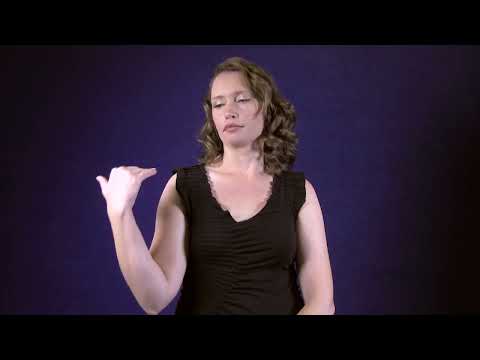
Definition: Responsibility for an accident or misfortune.
Sign for FAULT in ASL
Practice Activities:
To begin practicing the sign for FAULT in ASL, start by isolating the sign. Stand in front of a mirror and repeat the sign slowly five to ten times. Pay attention to the palm orientation, handshape, and movement to ensure accuracy. Record yourself and compare it with an ASL dictionary or video to check your form.
Once comfortable with the isolated sign, try incorporating it into simple phrases. Use sentences such as “It’s not my fault,” “Whose fault is it?” and “That was his fault.” Say each sentence out loud while signing to reinforce the meaning and context. Practice switching pronouns in these phrases to include you, me, him, and her.
Try storytelling prompts that help you incorporate the sign for FAULT in ASL creatively. For example, tell a short story about someone breaking a window and arguing about whose fault it was. Include facial expressions to emphasize emotion such as surprise, guilt, or frustration. This helps build expressive fluency with the sign and makes meaning clearer to others.
Partner activities can be especially helpful for practicing this concept. With a partner, play a game where one person acts out a small scenario, and the other uses signs to describe what happened and who was at fault. Then reverse roles. This builds understanding of narrative flow and real-time ASL usage.
Use picture prompts or short written scenarios to decide who is at fault in each situation. Review these together in a group or class and discuss your answers using signed explanations. This strengthens both receptive and expressive skills.
Lastly, challenge yourself with receptive exercises. Watch several short ASL videos where the sign for FAULT in ASL is used and write down when and how it appears. Repeat the signs you see and mimic the fluency and emotion shown in context.
Cultural Context:
In American Sign Language (ASL), the sign for FAULT carries more meaning than just a simple translation. Understanding the cultural context behind the sign for FAULT in ASL helps deeper communication between Deaf and hearing communities. In ASL, signs often reflect more than literal meanings—they encompass emotion, accountability, and social relationships.
The sign for FAULT in ASL is often used in conversations involving discussion of blame or responsibility. Within Deaf culture, taking responsibility or pointing out a mistake is approached carefully to maintain respect and clear communication. Like many emotions and concepts in ASL, the facial expression and tone play an important role when signing FAULT.
When learning how to use the sign for FAULT in ASL, it’s important to pay attention to context. ASL is a visual language, and expressions such as frustration, surprise, anger, or regret may be shown through body language and facial cues. The same sign can convey different meanings based on the intensity of these non-manual markers.
In educational settings within the Deaf community, misunderstandings are often addressed directly but politely. Understanding the sign for FAULT in ASL allows students and teachers to navigate mistakes or misunderstandings using culturally appropriate communication. This sign supports accountable learning environments where clarification is encouraged rather than avoided.
The sign for FAULT in ASL may also appear in storytelling and narratives, especially when characters are at odds or when a story involves cause-and-effect themes. Deaf performers might emphasize certain aspects of the sign to underline blame, conflict, or reconciliation, giving the concept stronger emotional weight.
In casual conversation, the sign for FAULT in ASL might be used playfully among friends or family. Deaf culture values direct yet respectful communication, and the sign can be softened with humor or affection depending on the relationship between signers. The way the sign is delivered changes the impact of the message.
English speakers may rely heavily on tone of voice to express apology or blame, but in ASL, the sign for FAULT carries nuances through visual and emotional cues. Cultural fluency includes understanding when and how to use the sign appropriately to match social norms and expectations.
Within the workplace or professional settings in the Deaf community, the sign for FAULT in ASL is often used in troubleshooting or problem-solving settings. When a strategy fails or equipment malfunctions, this sign smoothly fits into conversations around what went wrong, without becoming personal. This practical use highlights the efficiency built into ASL communication.
Mastering the sign for FAULT in ASL
Extended Definition:
The sign for FAULT in ASL typically involves movement that conveys the idea of blame, error, or responsibility. It can also relate to concepts like making a mistake or being at fault in a situation. American Sign Language uses dynamic hand motions and facial expressions to give deeper meaning to signed words, so context matters when using the sign for FAULT in ASL.
To make the sign for FAULT in ASL, one hand may tap or move toward the chest or another surface to symbolize error or blame. Your facial expression can enhance the message, showing disappointment, confusion, or emphasis depending on the context. It’s not just about the hand shape—your eyes and face convey just as much meaning.
This sign is often used in conversations involving responsibility. Whether you’re admitting a mistake or pointing out someone else’s fault, signing clearly helps maintain clarity and respect. The sign for FAULT in ASL works well in both casual and formal settings, making it a useful addition for daily communication.
Deaf culture emphasizes effective expression and understanding, so lessons on blame, errors, or misunderstandings often start with learning how to use the sign for FAULT in ASL properly. Practice and real interaction will help you master the nuances of this sign. Watching native or fluent signers can provide even more insight into how this sign is used naturally.
Some variations may exist depending on region or age group, but the basic motion remains widely understood. Like many signs, the meaning can shift slightly depending on the facial expression used. A neutral face may indicate a general error, while an exaggerated grimace might point to a more serious situation.
Storytelling, discussions, and classroom interactions in ASL often include this sign when analyzing scenarios or identifying issues in a narrative. The sign for FAULT in ASL can take on a literal or abstract meaning, from pointing out someone’s mistake to expressing personal guilt or regret.
In online ASL learning platforms, video demonstrations of the sign for FAULT in ASL can help learners improve accuracy. Watching the hand shape, speed, and facial expression ensures correct usage. Repeated practice is key to building comfort with the sign and using it confidently.
Teachers often introduce this sign early in beginner ASL courses because it allows for more expressive dialogue right away. You can say much more than just yes or no by adding signs like FAULT to your vocabulary. It’s also valuable when conveying ideas like fairness, judgment, or assigning responsibility during conversation.
Parents and caregivers who use ASL with children find this
Synonyms: mistake, flaw, defect, error, shortcoming
Educational resources: Find related learning materials in our course bank!
Want more? Check out some of our popular learning activities on the homepage!
Need to look up a sign? Use our highly rated dictionary: https://aslinteractive.com/best-asl-dictionary/
Follow us on tiktok: https://www.tiktok.com/@aslinteractive. More social media links at the bottom of this page!
Long-tail Keywords: what is the sign for fault in asl, how do you sign fault in asl, asl sign for fault
Categories:
tags: Fault in American Sign Language, ASL sign for fault, how to sign fault in ASL, fault ASL meaning, fault sign language explanation
Parameters
*Handshape*:
The handshape used in the sign for FAULT in ASL typically involves the dominant hand in the number 1 handshape, with the index finger extended and the remaining fingers curled into the palm. This handshape is commonly used in directional signs to indicate responsibility or blame.
In the sign for FAULT in ASL, the 1 handshape taps or brushes against the chest area, emphasizing personal involvement or error. The simplicity of the handshape helps clarify the meaning in conversational context.
*Palm Orientation*:
The palm orientation for the sign for FAULT in ASL typically involves the dominant hand in an open or slightly curved shape with the palm facing down or slightly inward toward the body. The hand moves in a short tapping or brushing motion against the chest, indicating something attributed to oneself, like blame or error.
In the sign for FAULT in ASL, palm direction plays a key role in conveying meaning. The inward-facing palm emphasizes the idea of responsibility or blame being directed toward the subject.
*Location*:
The location for the sign for FAULT in ASL is typically near the chest or shoulder area. The dominant hand usually moves from the area outward, indicating the direction of blame or responsibility depending on context.
This placement aligns with many ASL signs that reference internal emotions or personal responsibility. When using the sign for FAULT in ASL, facial expressions are also key to matching the sentiment or blame being conveyed.
*Movement*:
To perform the sign for fault in ASL, extend your dominant hand in an open “B” handshape and gently tap it against the chest area of the non-dominant side. The movement is short, deliberate, and typically repeated once or twice to emphasize the concept.
The motion communicates that the responsibility or blame lies with the person being indicated. The sign for fault in ASL often appears in conversations around mistakes, blame, or accountability.
*Non-Manual Signals*:
When using the sign for fault in ASL, the facial expression should show mild blame or irritation, often with raised eyebrows and a slightly pursed mouth. Depending on context, a head shake or a slight tilt of the head forward can indicate disapproval or frustration.
The non-manual signals help emphasize the emotional tone of the sign for fault in ASL, especially in situations involving blame, responsibility, or pointing out a mistake . Maintaining eye contact reinforces the accusatory or corrective tone.
*Prosody, Dominant/Non-Dominant Hand*:
The sign for FAULT in ASL uses the dominant hand in a “1” handshape, which taps the chest of the non-dominant side of the upper torso. The motion is deliberate and slightly firm, expressing blame or responsibility. The non-dominant hand remains neutral and inactive.
When performing the sign for FAULT in ASL, maintain a neutral facial expression unless expressing a particular emotion like accusation or guilt. Prosodically, the movement may be emphasized with a head nod or slight lean forward, especially when making a strong point or during expressive storytelling.
Tips for Beginners:
When learning the sign for FAULT in ASL, it’s important to focus on precise hand placement and deliberate movement. This sign typically involves the dominant hand in the “F” handshape tapping the chest area of the non-dominant side. Make sure the fingers are properly formed in the “F” handshape—thumb and index touching and other fingers upright—not too loose or tight.
Beginners often rush or exaggerate the tapping motion, which can make the sign unclear or lead to confusion with similar signs. Keep the movement controlled and single-tap unless used in a more expressive or figurative context. The position on the chest should be consistent—neither too high nor too far off to the side.
Facial expression adds clarity to the sign for FAULT in ASL. Use appropriate non-manual signals like a slight frown or concerned look to imply blame or responsibility. This is especially important in conversations where tone or context helps define meaning.
Practice the sign in front of a mirror to check handshape, movement, and expressions. Repetition will help you build confidence and muscle memory, but make sure you’re using correct form from the start. Consider recording yourself or practicing with a fluent signer for feedback.
Another common issue is confusing the sign for FAULT in ASL with similar signs like “blame” or “accuse.” These have subtle differences in handshape, movement, or location. Watching native signers on video or using ASL dictionaries can help reinforce the distinctions.
Lastly, don’t get discouraged if your sign doesn’t come out perfect right away. Everyone learns at their own pace . Use the sign in context during casual conversations or structured practice to increase comfort and fluency. With time, the sign for FAULT in ASL will feel more natural and expressive.
Connections to Other topics:
The sign for FAULT in ASL is often linked to concepts of blame, responsibility, and error. It shares similarities with the signs for BLAME and MISTAKE, both in meaning and motion. Understanding these related concepts helps learners grasp subtle differences in context and tone, which can be essential in nuanced conversations about accountability or error.
In ASL, concepts like FAULT, BLAME, and GUILT are often contextually driven. The sign for FAULT can appear in discussions of personal responsibility, such as in statements like “It’s not my fault” or “Whose fault is it?” These expressions commonly combine facial expressions and body shifts to add emotional weight, which is a fundamental aspect of ASL’s grammar.
Learners often encounter the sign for FAULT in ASL when studying legal or moral vocabulary. It’s similar to the sign for BLAME, which can be used in legal terminology such as assigning guilt or identifying wrongdoing. The gesture may also appear in phrases conveying moral or ethical judgment, connecting it to other abstract concepts like JUSTICE or FAIRNESS.
This sign also appears in idiomatic ASL expressions. For example, in a compound-like form, signing FAULT alongside NOT can emphasize denial of blame, which helps in constructing oppositional or contrastive statements. Combining it with signs like YOUR or MINE adds personal subjectivity, building more complex sentence structures.
There’s an educational tie-in with conflict resolution vocabulary, making the sign for FAULT in ASL useful in academic and counseling settings. It helps express accountability and promotes clear communication during disagreements or problem-solving discussions. This makes it a valuable part of social-emotional vocabulary in both formal and informal ASL usage.
Lastly, a deeper understanding of the sign for FAULT in ASL supports fluency when interpreting interpersonal dynamics. It enhances one’s ability to communicate empathy or assertiveness depending on context, helping learners become more expressive and effective signers in real-life interactions.
Summary:
The sign for FAULT in ASL generally involves a dominant hand in a bent 1-handshape (index finger extended and slightly curved), tapping against the chest or side of the body, depending on the variation or intended nuance. This motion resembles placing blame or identifying where an error lies. It’s a highly context-dependent sign, and different settings might lend subtle shifts in expression or intensity.
In Deaf culture, the sign for FAULT in ASL plays an important role in communication involving responsibility, discussion of mistakes, or assigning blame. Like in spoken English, the concept of fault can originate from internal emotions or external actions, and the sign reflects this duality through body placement and expression. The facial expression often carries much of the meaning, underscoring the gravity or levity of the statement.
The placement of the sign closer to oneself can indicate accepting blame, while directing it toward another person can imply accusation. Modifiers in body posture and facial cues can soften or intensify this meaning. This reflects the nuanced approach American Sign Language takes toward emotional and social dimensions of language.
Grammatically, the sign for FAULT in ASL functions with great flexibility. It can act as a noun or a verb, depending on the syntax of the ASL sentence. For example, one might sign it as part of a sentence like “your fault” or “I take fault,” using role shifting and directionality to clarify who is involved.
The sign bears connection to related concepts such as “blame,” “guilt,” and “mistake.” Each of these signs has its own form, but they often appear in discussions that mirror the communication context of fault. The sign for “guilt” might involve a more emotive facial expression, while “blame” typically gestures more outwardly, with directional force.
Linguistically, the sign for FAULT in ASL fits within the broader morphological systems of the language, where modification of location, speed, and facial expression affect meaning. This is a testament to the rich inflectional capacity of ASL. Morphological variation allows the same basic sign to transform across contexts.
Applied linguistics finds interest in how the sign for FAULT in ASL underscores the visual-gestural modalities unique to signed languages. The role of spatial orientation and subtle cues like head tilt or eye direction significantly shape understanding. These layered communicative tools enable ASL users to convey emotional states without added vocabulary.
Topics of accountability and responsibility frequently emerge in Deaf discourse, and the sign for FAULT in ASL is essential to those conversations. When discussing family dynamics, workplace errors, or social justice situations, the sign helps determine where responsibility lies. It enables transparent, nuanced conversation without the ambiguity of unmodulated facial expressions or non-manual signals.
Cross-linguistic comparisons show that signed languages globally have different representations for fault and blame. ASL’s execution of the sign emphasizes the embodiment of emotion, highlighting how users incorporate their torso, facial features, and space in constructing meaning. This provides researchers with insights into how emotion is scaffolded in manual languages.
Cultural context deepens our understanding of how the sign for FAULT in ASL is integrated across Deaf experiences. In American Deaf communities, recognizing and communicating issues of fault is tied to values of clarity, directness, and shared understanding. This is not just a lexical sign but a socio-cultural signifier.
The facial grammar that accompanies the sign is key. Raised eyebrows might question fault, while furrowed brows may demonstrate certainty or condemnation. The speaker’s affect wraps around the lexical sign and completes the semantic package, making emotion and intention inseparable from grammar.
The sign for FAULT in ASL also interacts with spatial referencing. By directing the sign toward a person or location in one’s signing space, the user establishes who holds fault. This spatial logic is one of ASL’s defining syntactic mechanisms.
In conflict resolution settings, the sign becomes important in assigning accountability without inflaming tensions. The subtleties in sign intensity, such as a light tap versus a sharp jab, help mediate the emotional tone. This makes the sign both powerful and adaptable to sensitive interactions.
Classroom use of the sign for FAULT in ASL is common in lessons involving behavior, missteps in assignment submission, or interpersonal disputes. It allows educators to efficiently address consequences while maintaining rapport with students. Peer-to-peer resolutions among Deaf youth often involve this sign in a respectful and direct manner.
Variation exists depending on regional dialects and individual language backgrounds. Some ASL signers may incorporate more exaggerated movements, especially in storytelling settings. Others use a more condensed form, especially when integrated into rapid or informal conversations.
Interpreters must be sensitive to the sign for FAULT in ASL due to its emotional resonance. Accurately conveying tone and authorial stance from spoken English into ASL or vice versa relies heavily on emotive accuracy. Misrepresentation of this sign can change the social dynamics of the exchange.
In
Want more? Check out some of our popular learning activities!
ASL Interactive Resources
ASLInteractive YouTube Channel
Follow us on tiktok: @aslinteractive.com
Follow us on Instagram: aslinteractive
Facebook page: aslinteractive
Facebook group: aslinteractive
LInkedIn: ASL Interactive LLC
Twitter: @ASL_interactive
*Some information on this page is AI-generated. AI can make mistakes. Please check the information.


Responses