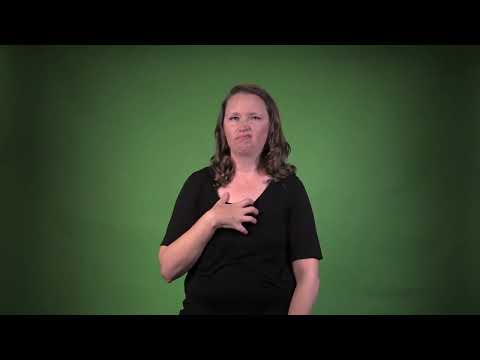
Definition: Feeling deceived or tricked.
Sign for FEELING FOOLED (GROSS) in ASL
Practice Activities:
To build fluency with the sign for FEELING FOOLED (GROSS) in ASL, start by practicing the sign in isolation during mirror drills. Focus on your facial expression—this sign often includes disgust or realization, so your expression should match the feeling of being grossed out or deceived. Do slow repetitions at first, then increase speed and fluidity as you gain confidence.
Use flashcards with different scenarios involving deception or misleading situations. For each card, produce a sentence using the sign for FEELING FOOLED (GROSS) in ASL. For example, sign: “My friend said the cake was chocolate, but it was liver! I felt fooled—gross!” This helps learners blend emotion, context, and sentence structure naturally.
Practice using the sign in storytelling prompts. Tell a short story about a time you were tricked, like tasting something weird or falling for a prank. As you tell the story in ASL, integrate the sign appropriately to show your emotional reaction. Try to add variety in facial expressions and body shifts to enhance the narrative.
In a partner activity, take turns acting out short skits where one person fools the other in a harmless way—then use the sign for FEELING FOOLED (GROSS) in ASL in response. Include role-play situations like eating something that looks sweet but isn’t, or finding out a surprise ends up being gross. These activities reinforce the cultural and emotional nuance behind the sign.
Wrap up with a journaling activity. Create three ASL video logs about times you felt grossed out from being tricked. Watch them back to self-assess your use of the sign and your facial grammar. This reflection helps internalize the expressive power of the sign for FEELING FOOLED (GROSS) in ASL.
Cultural Context:
In American Sign Language, the sign for FEELING FOOLED (GROSS) in ASL reflects more than just a simple disgust reaction. It ties into the culture of expression and emotional honesty found within the Deaf community. Emotions are not hidden or toned down; they are visually and physically expressed in ways that tell others exactly how someone feels.
The sign for FEELING FOOLED (GROSS) in ASL often includes exaggerated facial expressions and specific handshapes to match the intensity of the emotion. In this case, the sign combines the feeling of being deceived with a strong reaction of disgust . It is useful in a variety of situations from describing practical jokes that went too far to reacting to shocking or shameful behavior.
The Deaf community places strong value on being direct and clear in communication. The sign for FEELING FOOLED (GROSS) in ASL supports that cultural need for clarity by making an emotional statement highly visible. Instead of just saying something was unpleasant, the person signs it with a full-body reaction that makes the meaning unmistakable.
Authenticity is a key part of Deaf culture, and the sign for FEELING FOOLED (GROSS) in ASL reinforces that. It allows users to fully express betrayal, embarrassment, or shock in a humorous or dramatic fashion. Whether used in storytelling, conversations, or in educational settings, this sign serves as a quick way to reveal emotional reactions.
Because ASL is a visual language, signs tied to feelings often are tied to the face and body. The sign for FEELING FOOLED (GROSS) in ASL usually includes a scrunched face or possibly a hand movement that mimics revulsion . This kind of sign also connects to culturally shared experiences in the Deaf community, where group storytelling and shared emotions help build social bonds.
Signers may use the sign for FEELING FOOLED (GROSS) in ASL when talking about being tricked or misled, especially in humorous or regrettable situations. It’s common in jokes, in skits at Deaf events, or during personal stories where someone feels taken advantage of by a person, advertisement, or situation. The motion and facial grammar are just as important as the hand motion to show the true depth of the reaction.
The use of the sign for FEELING FOOLED (GROSS) in ASL also reflects how emotions are not just internal
Extended Definition:
The sign for FEELING FOOLED (GROSS) in ASL is used to express strong emotional reactions such as being tricked, deceived, or experiencing something unexpectedly disgusting or cringe-worthy. It’s commonly used in conversations when someone wants to share that they feel embarrassed, fooled, or mentally uncomfortable due to an unpleasant experience or unexpected trick.
In American Sign Language, emotional expressions are deeply linked with facial expressions and body language. When using the sign for FEELING FOOLED (GROSS) in ASL, it’s crucial to include the correct facial expression—usually one of disgust or shock. This adds emotional depth and helps clearly convey the sign’s full meaning.
This sign is typically used in social contexts where someone wants to describe a prank gone wrong, feeling duped, or reacting to a gross or embarrassing moment. For example, if someone bites into food expecting one flavor and gets another, they might use the sign for FEELING FOOLED (GROSS) in ASL to describe the deception and the unpleasant surprise. It adds humor and relatability to the story, making it a favorite among fluent signers and learners alike.
It’s helpful to know that this sign falls under a broader category of signs related to emotions and reactions. In ASL, there are many ways to communicate feelings, especially unpleasant ones. The sign for FEELING FOOLED (GROSS) in ASL sits in that space where emotion and reaction meet, often with a touch of sarcasm or comic disbelief.
Some signers may modify this sign slightly depending on the intensity of the situation. While the core motion and handshape stay the same, variations might occur in the speed or dramatic flair added to the move. Context is everything in ASL, and the expression on the face often carries just as much meaning as the hands.
Learning the sign for FEELING FOOLED (GROSS) in ASL adds richness to your expressive vocabulary. It enables you to tell vivid stories, share emotional reactions, and connect more deeply in ASL conversations. The ability to sign emotions accurately is essential for both fluent signers and beginners hoping to understand Deaf culture on a deeper level.
This sign can also be helpful in educational settings where emotion vocabulary is being taught. In ASL classrooms, using the sign for FEELING FOOLED (GROSS) in ASL allows for group interaction, role-playing, and immersive storytelling. Teachers often encourage learners to practice it with facial
Synonyms: Deceived, Tricked, Duped, Misled, Swindled
Educational resources: Find related learning materials in our course bank!
Want more? Check out some of our popular learning activities on the homepage!
Need to look up a sign? Use our highly rated dictionary: https://aslinteractive.com/best-asl-dictionary/
Follow us on tiktok: https://www.tiktok.com/@aslinteractive. More social media links at the bottom of this page!
Long-tail Keywords: what is the sign for feeling fooled gross in asl, how do you sign feeling fooled gross in asl, asl sign for feeling fooled gross
Categories:
tags: feeling fooled in ASL, gross in American Sign Language, how to sign feeling fooled, feeling gross ASL sign, ASL dictionary emotions
Parameters
*Handshape*:
The handshape for the sign for FEELING FOOLED (GROSS) in ASL typically involves an open “5” hand. The fingers are spread apart with the palm facing inward, brushing down the center of the chest in a light, circular or downward sweeping motion.
This handshape helps convey the uncomfortable, deceived, or disgusted emotion that aligns with the meaning behind the sign for FEELING FOOLED (GROSS) in ASL. Maintain a slight facial grimace or expression of annoyance to enhance clarity.
*Palm Orientation*:
For the sign for FEELING FOOLED (GROSS) in ASL, the palm orientation begins with the dominant hand in a “5” handshape, starting near the center of the chest. The palm faces inward toward the body as it moves in a small upward motion, brushing lightly up the chest to convey an emotional reaction.
This palm-inward positioning helps express the internal discomfort or unsettling vibe that comes with the feeling. The sign for FEELING FOOLED (GROSS) in ASL uses this orientation to emphasize emotional impact and personal response.
*Location*:
The sign for feeling fooled (gross) in ASL is typically located in the area near the face or upper chest, depending on individual expression. Most commonly, the dominant hand moves over the chest or near the mouth area to portray a reaction of disgust or emotional discomfort.
For the sign for feeling fooled (gross) in ASL, facial expressions play a crucial role, often featuring a scrunched face or grimace . These expressions help emphasize the “grossed out” or deceived feeling that the sign conveys.
*Movement*:
To produce the sign for feeling fooled (gross) in ASL, begin with an open “5” hand facing inward at the chest, fingertips grazing lightly against the center. Then, slide the hand slightly downward in a short, quick motion, as if indicating a strange or uncomfortable internal sensation .
This motion conveys the queasy or uneasy emotion behind the sign for feeling fooled (gross) in ASL. Facial expression plays an important role—use a grimace or squint to emphasize the disgust or sense of trickery.
*Non-Manual Signals*:
The non-manual signals for the sign for FEELING FOOLED (GROSS) in ASL include a scrunched nose, raised upper lip, and a slight head recoil to express disgust or confusion . Eyes might squint slightly while the mouth forms a grimace, emphasizing the emotional reaction associated with being fooled or tricked.
These facial expressions strongly convey the unpleasant or surprising emotions tied to the sign for FEELING FOOLED (GROSS) in ASL. Such clear visual cues help reinforce the overall meaning and tone of the sign.
*Prosody, Dominant/Non-Dominant Hand*:
The sign for feeling fooled (gross) in ASL typically uses the dominant hand in a loose claw or bent-5 handshape, brushing up the center of the chest in a downward arc, resembling the sign for “feel” but with exaggerated disgust or revulsion. The non-dominant hand is not involved. This expressive motion helps communicate the emotion tied to the sign for feeling fooled (gross) in ASL clearly and effectively.
The facial expression plays an essential role, often mirroring a grimace or a look of disgust. This adds emotional context to the sign for feeling fooled (gross) in ASL, making the message more vivid in ASL conversations.
Tips for Beginners:
When learning the sign for FEELING FOOLED (GROSS) in ASL, it’s key to understand that this phrase is often expressed using facial expressions in combination with meaningful gestures. ASL relies heavily on non-manual markers, so make sure you’re practicing expressive facial reactions that convey disgust or surprise to reinforce the emotion. The movement for this sign usually mimics a reaction of being tricked or disgusted, so don’t be shy—exaggerate your reactions for clarity.
To successfully communicate the sign for FEELING FOOLED (GROSS) in ASL, practice using both your hands and face together. It’s not just about the handshape; your eyebrows, mouth movement, and body posture matter, too. Common beginner mistakes include showing too little or overly dramatic expression, either of which can confuse the meaning. Aim for balance and observe native signers for natural rhythm and tone.
Another tip is to practice in front of a mirror to check your consistency. Record yourself to review your sign accuracy and facial matching. Mimic situations where the feeling might occur—like hearing a ridiculous story—and act out the reaction in ASL to build fluency. If you’re not sure how your signing looks, ask for feedback from an experienced signer or instructor.
Many learners struggle with blending emotional signs like this one smoothly into conversation. One way to improve is to learn similar emotion-based signs and practice transitioning between them. For example, contrast the sign for FEELING FOOLED (GROSS) in ASL with signs like DISGUSTED or CONFUSED—this will help sharpen your awareness of subtle differences.
Finally, remember that slang-based or emotional expressions in ASL may vary by region or community. Be open to learning multiple ways to express the sign for FEELING FOOLED (GROSS) in ASL and never hesitate to ask questions when unsure.
Connections to Other topics:
The sign for FEELING FOOLED (GROSS) in ASL connects closely with emotions and facial expressions in American Sign Language. ASL is deeply reliant on non-manual markers, and in this case, the facial expression of disgust or frustration adds depth to the conveyed emotion. This sign sits at the intersection of feelings and evaluations, where a person indicates not just being tricked but also feeling repulsed or deceived.
This sign is related to other negative emotion signs like DISGUST, REGRET, and CONFUSION. They share similar non-manual elements such as squinting eyes or scrunched facial features. However, the sign for FEELING FOOLED (GROSS) in ASL incorporates motion and handshape that suggest emotional reaction to being manipulated, adding an extra layer of meaning.
In conversational ASL, this sign may be used with other signs like EMBARRASSED or SHOCKED to build up complex narratives around betrayal, tricks, or mistakes. For instance, someone might sign FOOL, then FEELING FOOLED (GROSS), followed by WHY, leading into a story explaining how they were duped. That sequence blends signs into a descriptive, expressive explanation.
There are also connections to idiomatic expressions in ASL, such as “pull the wool over eyes” or “taken for a ride.” These phrases can be adapted in ASL with the sign for FEELING FOOLED (GROSS) in ASL as the central theme, illustrating emotional response paired with visual storytelling. The richness of handshape and movement allows for expressive flair that strengthens narrative clarity.
The sign can further relate to signs like FAKE, LIE, or TRICK, creating a vocabulary cluster around deception. When learners grasp these connections, they can communicate nuanced emotions more effectively. Understanding how each contributes to emotional tone makes the sign for FEELING FOOLED (GROSS) in ASL vital for both casual and storytelling contexts in everyday ASL usage.
Summary:
The sign for FEELING FOOLED (GROSS) in ASL carries strong emotional and situational weight. It’s used in contexts where someone experiences deception that leaves a lasting, unsettling feeling, much like emotional discomfort or a reaction to betrayal.
This sign is rich in visual metaphor. Often, the dominant hand uses a wriggling movement near the face, mimicking the reaction of someone feeling mentally tricked and emotionally slimy. Facial expressions are key—express a grimace or disgusted look.
In ASL, facial expression and body movement are an integral part of meaning. The sign for FEELING FOOLED (GROSS) in ASL heavily relies on non-manual signals. A strong shift in body posture, as if recoiling, makes the sentiment clearer.
Different from just feeling sad or angry, this sign transmits the psychological messiness that comes with being taken advantage of. It’s not just annoyance—it’s a mix of self-directed frustration and dismay toward others.
The sign can be compared to a combination of signs like GROSS, DECEIVED, and FOOLISH, blended into one communicative gesture. There’s often a kinesthetic overlap with signs that indicate internal reaction to external manipulation.
In a cultural context, the sign for FEELING FOOLED (GROSS) in ASL is highly contextual and emotional. It’s used in narratives where storytellers express hindsight after realizing they were misled.
The emotion behind the sign often indicates someone feeling naive or gullible. The sign carries more than just a description of events—it encapsulates introspective emotion and often embarrassment.
Grammatically, this sign is often paired with temporal indicators such as “PAST” or “RECENT,” indicating when the feeling took place. In conversational ASL, it may follow a cause-effect structure, showing what led to the grim realization.
Many fluent signers modify the base sign depending on the intensity. A slow, dragged movement with an exaggerated grimace adds depth, communicating deeper levels of emotional revulsion.
The sign pairs naturally with facial expressions that show nausea, making the emotion visceral. Minor modifications to mouth movements, like tightening or curling the lips, subtly alter degrees of emotional texture.
In terms of sociolinguistics, the sign is often age-related. Older signers may use more established, nuanced versions, while younger signers might borrow from internet culture or invent newer expressions of similar meaning.
Regional variations may exist, especially when distinguishing signs for GROSS in the physical versus emotional sense. In some lexicons, GROSS might overlap with terms like EW or DISGUSTING used for physical sensation, but FEELING FOOLED adds the mental-emotional layer.
Applied linguistics studies have shown that expressive signs like this are processed similarly to idioms in spoken languages. They go beyond literal gestures and derive meaning from narrative and shared experience.
In storytelling, this sign is especially effective. When a Deaf person tells a story involving betrayal or disappointment, this sign emphasizes the punchline or emotional climax.
Non-manual markers elevate the meaning beyond English gloss. Signers might raise eyebrows lightly before the sign, as if building anticipation, then scrunch the face on delivery for emotional impact.
The emotional range this sign covers includes self-blame, shock, and a lingering sense of mental discomfort. It’s an excellent example of affective encoding in visual language.
When teaching this concept to ASL students, instructors often focus on teaching the emotion with the sign, not just hand positions. Drills include mimicking facial expressions and noting the body’s intuitive responses.
The sign for FEELING FOOLED (GROSS) in ASL is not just lexical; it is experiential. It embodies a sensation many can relate to, steeped in emotional complexity and shared narratives in the Deaf community.
Figurative usage is common. For instance, someone might use this sign sarcastically when recounting a prank, exaggerating the disgusted expression for comedic or dramatic effect.
This sign is rarely used in isolation. It is almost always delivered within a larger context, such as a sentence or story explaining the incident that led to this emotional state.
Emotion signs in ASL, especially negative ones like this, are often connected to culturally shared experiences. Many Deaf individuals encounter barriers or miscommunications, and this sign can be a powerful reflection of that lived history.
In Deaf theatre or storytelling, this sign adds dramatic richness. A single exaggerated rendition can communicate pages of unspoken narrative.
Linguistically, the sign fits into the affective domain of ASL classifiers. It’s not a designated classifier but behaves in a way that includes elements of descriptive emotional funneling.
The physical configuration of the hand often mimics emotional displacement—like trying to push the feeling away. This aligns with cognitive theories of metaphor in gesture-based language.
Emotion signs like this often appear at the end of narratives to summarize feelings. It gives the signer closure and helps the audience grasp the emotional moral
Want more? Check out some of our popular learning activities!
ASL Interactive Resources
ASLInteractive YouTube Channel
Follow us on tiktok: @aslinteractive.com
Follow us on Instagram: aslinteractive
Facebook page: aslinteractive
Facebook group: aslinteractive
LInkedIn: ASL Interactive LLC
Twitter: @ASL_interactive
*Some information on this page is AI-generated. AI can make mistakes. Please check the information.


Responses