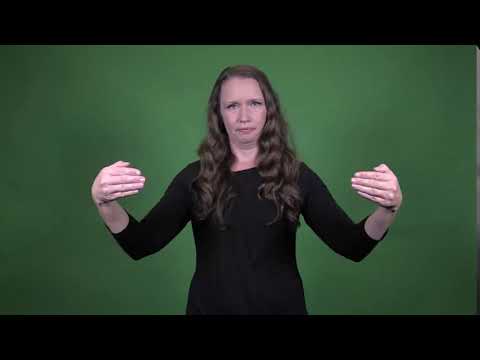
Sign for FENCE in ASL | ASL Dictionary

Definition: A barrier, railing, or other upright structure.

Sign for FENCE in ASL

YouTube player

Practice Activities:

To practice the sign for FENCE in ASL, start by working on the sign in isolation. Stand in front of a mirror and repeat the sign multiple times, watching to ensure correct handshape and movement. Practice at different speeds while maintaining accuracy in the transition of the hands to resemble the structure of a fence.

Use flashcards or images of different types of fences and sign what you see. Challenge yourself by describing fences you see on your walk, in your neighborhood, or while browsing photos online. Try combining the sign for FENCE in ASL with descriptive signs, like colors, materials (wood, metal), or adjectives like tall, short, or broken.

Create simple sentences like “The house has a white FENCE” or “I built a FENCE in the backyard.” Sign each sentence slowly, focusing on clarity, and then build up speed as you become more confident. Make up short dialogues or one-sided narratives involving fences, such as explaining to a friend how you repaired your fence or why your dog can’t jump over it.

Storytelling is another fun way to use the sign for FENCE in ASL. Try telling a story about a garden with a fence around it, or a mischievous pet who keeps trying to escape through a fence. Focus on including spatial referencing and classifiers to show the size and location of the fence.

Practice with a partner by taking turns signing descriptive sentences or asking each other questions like “What color is your fence?” or “Do you have a fence at home?” Provide each other with feedback on clarity and expression, and try to add non-manual markers for emphasis. Regular use in natural contexts will help reinforce the sign and improve fluency.

Cultural Context:

In American Sign Language, the sign for fence carries meaning beyond its literal visual representation. Fences are a common element in many societies, and they often symbolize boundaries—both physical and metaphorical. In Deaf culture, understanding the sign for fence in ASL involves more than just learning hand movements; it also means considering the context in which it appears during conversation.

When signing fence in ASL, Deaf signers may use it to represent not only physical fencing around a property but also to refer to emotional or social limitations. Discussions about personal space, privacy, or community boundaries may all include the sign for fence in ASL. Because of the visual nature of ASL, this concept becomes vivid and easily understood in contextual narratives.

The use of the sign for fence in ASL also shows how Deaf people share life experiences that often mirror broader cultural situations. Stories about neighbors, property rights, or even personal anecdotes can include this sign to express setting, conflict, or ownership. It is a concept that often comes up in storytelling and visual descriptions, key parts of Deaf cultural life.

Like many other signs, the sign for fence in ASL can shift slightly depending on regional use or community preference. In some areas, you might see a sign that emphasizes the idea of a physical barrier, while in other communities within the Deaf world, the sign for fence in ASL might focus more on spacing or division. This flexibility showcases the dynamic nature of ASL and its deep connection to lived experience.

In visual storytelling, which is a cornerstone of Deaf communication, fences represent more than boundaries—they can signify barriers to communication or represent social divides. When someone uses the sign for fence in ASL while discussing communication challenges, it reinforces the metaphor of exclusion or separation, themes that have meaning in both Deaf and hearing communities.

The sign for fence in ASL also plays a role in creative expressions, including Deaf poetry and ASL storytelling competitions. These performances often use visual metaphors, and the fence can represent anything from structural limitations to freedom, depending on the handshape, movement, and expression used. This kind of interpretive use is celebrated and understood within the Deaf community.

In everyday conversation, the sign for fence in ASL may come up when talking about construction, gardening, or home improvement projects. It might also appear when describing where an event took place, particularly if a fence was a noteworthy part of the environment. This everyday usage reinforces cultural familiarity with the symbol and the real-world relevance of fences in both Deaf

Extended Definition:

The sign for fence in ASL is a visual representation that mimics the structure and form of a physical fence. It uses hand movements and positioning to convey the barriers or boundaries typically associated with a fence. This sign is often used in both literal and metaphorical contexts when describing fences in American Sign Language.

To create the sign for fence in ASL, both hands usually represent the vertical or horizontal slats commonly found in picket, chain-link, or wooden fences. The hands may move in front of the body to show a flat or upright line, indicating the spatial orientation of a fence. The exact motion might vary depending on regional usage or specific context.

In ASL, spatial visualization plays a major role, and the sign for fence incorporates this by mapping imaginary lines or surfaces in the signing space. This allows the signer to demonstrate the general size and layout of the fence being discussed. The visual nature of the sign helps convey whether the fence is tall, low, long, or short.

The sign for fence in ASL is useful in everyday conversations that involve property lines, gardens, yards, livestock enclosures, and even security boundaries. When someone is telling a story or giving directions, including this sign gives the listener a clearer mental image of the surroundings. It adds depth to the narrative and enhances comprehension.

Teachers and parents often use the sign for fence in ASL when educating children about safe spaces and boundaries. For instance, a parent might sign it while explaining where a child can or can’t go during outdoor play. This helps young ASL users better understand the concept of safety and contained areas.

In more abstract or idiomatic contexts, the sign for fence may also represent emotional or social barriers. A signer might use it to express keeping someone out, feeling blocked, or setting personal limits. By modifying facial expressions and movement, the signer can shift the tone from literal to metaphorical meaning.

You might also see the sign for fence in ASL demonstrated in discussions about home improvement or construction. Whether you’re talking about building a new fence or repairing an old one, adding this sign to the sentence gives clarity. It also supports better communication with contractors or neighbors.

Videos and visual guides are extremely helpful ways to learn the correct handshape and movement for the sign for fence in ASL. Watching native signers demonstrate it in context can make it easier to remember and perform accurately. Practicing in front of a mirror is another useful method to build confidence and precision.

Because the sign for fence in AS

Synonyms: barrier, enclosure, wall, hedge, railing

Educational resources: Find related learning materials in our course bank!

Want more? Check out some of our popular learning activities on the homepage!

Need to look up a sign? Use our highly rated dictionary: https://aslinteractive.com/best-asl-dictionary/

Follow us on tiktok: https://www.tiktok.com/@aslinteractive. More social media links at the bottom of this page!

Long-tail Keywords: what is the sign for fence in ASL, how do you sign fence in ASL, ASL sign for fence

Categories:

tags: Fence in American Sign Language, ASL sign for fence, how to sign fence in ASL, learn ASL fence sign, fence gesture in sign language

Parameters

*Handshape*:

The handshape for the sign for FENCE in ASL uses flat hands, typically the B-handshape, with fingers extended and held together. Both hands face outward, palms facing down or forward depending on the variation, mimicking the look of fence slats.

To express the sign for FENCE in ASL, the hands move alternately or simultaneously across the body in a horizontal path, illustrating the structure of a fence. This visual representation enhances the concept of physical separation or enclosure .

*Palm Orientation*:

For the sign for FENCE in ASL, both hands are typically held in front of the body with palms facing downward or slightly outward. The fingers are spread and the hands move side to side in a stepping motion, resembling the spacing of fence posts.

The palm orientation remains generally downward, mimicking the structure and layout of a fence. This orientation supports the visual metaphor, making the sign for FENCE in ASL visually intuitive.

*Location*:

The sign for FENCE in ASL is typically made in the neutral space in front of the body, around chest to shoulder height. Hands are positioned forward, comfortably away from the torso, allowing the movement to be clearly visible.

This location ensures the sign for FENCE in ASL is easy to read and naturally placed within the common signing space. Maintaining this spot helps with clarity, especially when distinguishing it from other similar signs.

*Movement*:

To show the sign for fence in ASL, both hands are held in front of the body, palms facing each other, fingers spread and slightly curved. The hands move outward horizontally in opposite directions as if outlining the structure and span of a fence.

This outward movement may be repeated once or twice to emphasize the sign. The sign for fence in ASL uses spacing and direction to mimic slats or barriers commonly seen in fences.

*Non-Manual Signals*:

When using the sign for FENCE in ASL, the facial expression should reflect a neutral or slightly descriptive tone, depending on the context. If describing a large or secure fence, raise your eyebrows slightly and squint subtly to indicate size or detail.

Mouth movements may include mouthing “fence” softly, especially when emphasizing the type or function. The non-manual signals help emphasize the spatial or boundary-related aspect of the sign for FENCE in ASL .

*Prosody, Dominant/Non-Dominant Hand*:

The sign for FENCE in ASL uses both hands to represent the slats or vertical bars of a fence. The dominant and non-dominant hands are open with fingers spread, palms facing in, and moved in alternating downward motions to mimic the vertical structure of a fence.

This sign visually conveys the idea of division or barrier, which is central to the sign for FENCE in ASL. The movement is usually done at chest level and emphasizes the spacing and repeated elements typical of a fence.

Tips for Beginners:

When learning the sign for FENCE in ASL, it’s important to focus on handshape accuracy and spatial movement. This sign typically uses flat hands that mimic the visual structure of fence panels or pickets. To execute it clearly, place your open hands side by side with fingertips pointing upward, then shift your dominant hand to the side in a short repeated motion, showing the layout or spacing of the fence segments.

One helpful tip is to keep your hand movements evenly spaced and consistent. This will help create a clear and recognizable depiction of fence divisions as you sign. Beginners often rush through the motion or let their hands drift out of alignment, which can result in a less accurate representation. Practice in front of a mirror to fine-tune the symmetry of your movements.

The sign for FENCE in ASL visually reflects the concept it represents, making it a great vocabulary word to reinforce the value of classifiers and visual-spatial grammar in ASL. Familiarizing yourself with how objects and structures are depicted in space can deepen your understanding and fluency. For this sign, envision what a fence looks like, then try to represent it with your hands — think of vertical posts arranged in a row.

A common mistake is turning the hands too flat against the body or losing verticality, which can confuse the meaning. Keep your hands upright and the movement smooth and rhythmic. Don’t exaggerate; subtle, purposeful movement will read most clearly.

For retention, try using the sign for FENCE in ASL during conversations about property lines, yard work, or when describing locations. Associating the sign with real-life scenarios will make it more meaningful and easier to remember. Practicing within context adds clarity and enhances your overall expressive skills.

Connections to Other topics:

The sign for FENCE in ASL connects closely with visual-spatial concepts and classifiers, particularly the use of handshapes that form barriers or outlines. This sign often uses flat B-hands moving outward to mimic the visual shape or structural layout of a fence, making it part of a broader family of signs that depict shapes, boundaries, or spatial dividers. This spatial orientation links it to classifier usage when describing property lines or enclosed areas.

The sign for FENCE in ASL can also be thematically related to signs like WALL, GATE, YARD, and HOUSE. When describing a scene around a home or building, these signs often appear together in a natural sequence, making them crucial for storytelling or situational conversations. For example, one might sign HOUSE + YARD + FENCE to depict a backyard surrounded by fencing, using sign order and space to depict an actual layout.

Compound or descriptive uses of the sign for FENCE in ASL may involve adding adjectives or modifying space. You might describe a TALL FENCE or a BROKEN FENCE by using spatial negotiation with classifiers or by incorporating gestures that mimic damage or dimensions. This demonstrates how signers personalize basic signs to fit varied real-world contexts, especially in visual narratives.

The sign for FENCE in ASL also relates to metaphoric uses, similar to how English uses “fence” to imply barriers or divisions. Signers might use it symbolically to convey emotional or interpersonal boundaries, depending on context and accompanying facial expressions. This deepens the learner’s understanding of how signs extend beyond literal meanings.

In discussions about land, access, and property rights, the sign for FENCE in ASL becomes relevant as part of legal or civic vocabulary. It might appear with signs like PROPERTY, TRESPASS, or NEIGHBOR, helping to communicate laws or neighborhood disputes. Understanding these connections supports fluency in civic discourse and real-life applications.

Overall, the sign for FENCE in ASL acts as a bridge between physical structure and abstract ideas, helping learners navigate both everyday descriptions and deeper symbolic communication .

Summary:

The sign for FENCE in ASL typically utilizes a movement that mimics the structure or layout of a fence. One version begins with both hands held vertically, palms facing each other, and then moved from one side to the other as if outlining slats or posts. Another version uses flat, open hands that move horizontally, implying a continuous fence line.

The visual translation is tied directly to the concept of barriers or enclosures. This allows the sign to remain iconic and easily understood within its specific semantic field. Its formation reflects the physical attributes of what a fence symbolizes in the real world.

Culturally, the concept of a fence can symbolize both protection and division. In Deaf culture, this metaphor extends into discussions of accessibility, inclusion, and boundaries, both physical and communicative. The sign for FENCE in ASL gives users a way to express ideas about separation and personal space.

Grammatically, the sign for FENCE in ASL functions primarily as a noun. It is used to describe physical boundaries or partitions of land, property, or conceptual divisions. It can also be accompanied by descriptive adjectives or classifiers to indicate fence material or height.

When storytelling in ASL, this sign may appear in narratives describing outdoor settings or conflicts over territory. Signing it within a three-dimensional signing space allows rich spatial mapping of fictional or real boundary lines. This gives depth to the storytelling and mirrors the physical function of a fence.

In terms of classifiers, FENCE can work with classifiers representing structure, distance, or layout. For example, the classifier for a long object or structure can show the extent of a fence. This adds specificity to how the concept unfolds in signed space.

The sign for FENCE in ASL intersects with signs like WALL, GATE, PROPERTY, and BARRIER. These related signs help create a network of spatial and conceptual meaning around confinement and ownership. FENCE plays a role in linking these ideas together visually.

In discussions of land, the sign is essential for indicating boundaries and establishing property limits. This becomes important in interpreting official or legal discourse into ASL. Particularly in legal contexts, clear depiction of boundaries is vital, and the sign for FENCE in ASL anchors much of that dialogue.

In American Deaf culture, the image of a fence has figurative implications. It can relate to barriers in communication or societal limitations faced by Deaf individuals. When used figuratively in ASL, facial expressions and timing emphasize this deeper meaning.

Linguistically, the sign for FENCE in ASL embodies a mix of iconicity and spatial grammar. It is iconic because it mirrors the form and function of a fence. Spatially, it can use directionality and hand shape variation to convey different types or layouts of fences.

Applied linguistics recognizes this sign’s versatility in teaching settings. It provides a clear example of how visual form contributes to linguistic function. In Deaf education, teaching descriptions of setting often includes signs like FENCE to enrich environmental vocabulary.

Some regional variation may exist in the sign for FENCE in ASL. While largely standardized, you may notice minor differences in hand orientation among communities. This regional diversity reflects the dynamic nature of ASL as a living language.

The sign can also be used metaphorically to talk about emotional boundaries. For example, placing a “fence” between oneself and others can indicate emotional guarding. In these cases, expression and context empower the sign with layered meaning.

The sign for FENCE in ASL is visually intuitive and easy to remember because of its gestural tie-in to physical reality. Visual memory plays an essential role in sign language attribution. This makes signs like FENCE helpful for new learners developing vocabulary.

FINGER-SPELLING the word “fence” can sometimes appear in academic or literary contexts. However, in everyday use, the standard sign is strongly preferred due to its efficiency and visual clarity. The use of the sign rather than fingerspelling maintains fluidity in signed conversations.

Thematic connections between FENCE and topics like migration, division, or domestic safety arise often in social justice conversations. In these instances, the ASL sign brings visual impact to stories about inclusion and exclusion. Facial expression in ASL heightens the emotional nuance alongside the sign.

LEXICALIZATION does not significantly affect the sign for FENCE in ASL because it is not derived from fingerspelling. Instead, it’s wholly a representational sign. That makes it more iconic and accessible than signs built from lexicalized finger forms.

Children learning ASL acquire visual-spatial location descriptors early, and the use of signs like FENCE builds essential knowledge around space. Teachers use it to demonstrate how classified space in ASL is structured. This solidifies abstract understanding through concrete visual language.

The physicality of the sign invites rich use in visual poetry and Deaf theater. Fence gestures can represent limits, emotional constraint, or transition between states. In performance, signs like FENCE become metaphors that visually shape themes of containment or liberation.

ASL poetry incorporates

Want more? Check out some of our popular learning activities!

ASL Interactive Resources

ASLInteractive YouTube Channel

Follow us on tiktok: @aslinteractive.com

Follow us on Instagram: aslinteractive

Facebook page: aslinteractive

Facebook group: aslinteractive

LInkedIn: ASL Interactive LLC

Twitter: @ASL_interactive

*Some information on this page is AI-generated. AI can make mistakes. Please check the information.


Responses