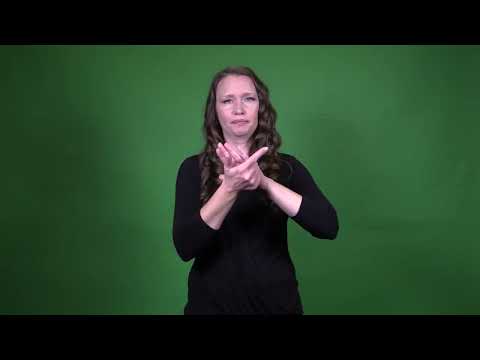
Definition: To prohibit something 2.
Sign for FORBID 2 in ASL
Practice Activities:
Start by practicing the sign for forbid 2 in ASL in isolation. Stand in front of a mirror and repeat the sign multiple times, paying attention to your handshape, palm orientation, and facial expression. This variation typically includes a firm motion with non-manual markers indicating disapproval or restriction, so be sure your expression matches the meaning.
Use flashcards to help reinforce the concept. Write down scenarios where something is forbidden and then sign them using the sign for forbid 2 in ASL. For example, sign phrases like “no phones,” “you can’t go,” or “forbidden entry,” exaggerating the appropriate facial expressions and contextual signs.
Put the sign in context by creating example sentences. Try signing “My parents forbid me to stay out late,” or “The teacher forbid talking during class.” Record yourself signing and then watch the video to check your accuracy and expression. Adjust as necessary and practice again.
Use storytelling to enhance fluency. Create a short story about a time when a rule was enforced or you were told not to do something. Include the sign for forbid 2 in ASL during key moments in the story to naturally reinforce its use and meaning. Focus on making the story interesting so your practice becomes more memorable.
Work with a partner to take turns giving each other “rules” using the sign for forbid 2 in ASL. For example, one person could sign “You are forbidden to eat candy” and the other responds with a reaction. This encourages real-time use of the sign while practicing comprehension.
Add a game element by creating a list of activities and having someone indicate whether they are allowed or forbidden using only ASL. Use the sign for forbid 2 in ASL during the “not allowed” responses and see who can guess the restrictions fastest.
Cultural Context:
In American Sign Language (ASL), the sign for FORBID 2 carries significant cultural and contextual meaning depending on its usage. The concept of forbidding something in Deaf culture is deeply tied to respect, boundaries, and interpersonal dynamics. Understanding how the sign for FORBID 2 in ASL is used in conversation helps learners appreciate the nuance of communication beyond the handshape and movement.
The sign for FORBID 2 in ASL may differ slightly from other signs like STOP or BLOCK, though they may appear similar to beginners. Each one is used depending on the intention of the message. When using the sign for FORBID 2 in ASL, the facial expressions and intensity of movement can add layers of meaning, making it clear how strong the command or restriction is meant to be.
Parents, teachers, and peers in the Deaf community use the sign for FORBID 2 in ASL to express authority or to set clear boundaries in a respectful manner. This is especially important in group settings like schools or family gatherings. Children learn early that certain signs, including this one, are associated with discipline and structure.
The cultural context of the sign for FORBID 2 in ASL reflects the values of mutual respect and communication. Rather than raising voices or relying solely on written rules, Deaf individuals often use signs paired with expressive nonmanual markers to indicate seriousness. Proper use of the sign shows not just language fluency but also an understanding of cultural norms.
This sign is often seen in public or shared environments where rules need to be clearly communicated. Situations like “No entry,” “Do not touch,” or “Forbidden” are communicated visually using signs such as the sign for FORBID 2 in ASL. In this way, ASL serves as a powerful tool for immediate and respectful rule enforcement.
Facial expression plays a vital role when using the sign for FORBID 2 in ASL. A furrowed brow or firm head shake can change the tone from a gentle warning to a strict prohibition. These cues are essential for conveying urgency or importance.
Context is key when interpreting the sign for FORBID 2 in ASL. It may be used lightly among peers to tease or jokingly limit behavior, or more sternly in formal settings. Being fluent in ASL includes knowing these differences and responding appropriately.
The sign for FORBID 2 in ASL offers insight into how rules and expectations are communicated visually in the Deaf community.
Extended Definition:
The sign for FORBID 2 in ASL is one of the nuanced variations used in American Sign Language to express the idea of prohibition or restriction. While similar in concept to other versions, this specific sign carries a unique handshape and motion pattern, typically used in more formal or intense situations.
In the sign for FORBID 2 in ASL, the signer’s dominant hand moves in a commanding gesture, usually incorporating a clear facial expression to emphasize the seriousness of the prohibition. Facial grammar plays a crucial role here, as the meaning can shift depending on the intensity conveyed through the signer’s face and body language.
This second variation is especially useful when you want to express a strong or official command against an action. It can be used in conversations where someone is emphasizing that an action is completely not allowed, such as forbidding a child from touching something dangerous or indicating that a rule must not be broken. Use of the sign for FORBID 2 in ASL often appears in instructional contexts, rules discussions, or situations involving authority.
Understanding when and how to use each version of FORBID in ASL can help signers communicate more effectively. The sign for FORBID 2 in ASL may differ slightly across regions or among native signers, but it is generally recognized and clearly understood in most ASL communities. Its clear motion helps separate it from less strict variations.
When practicing the sign for FORBID 2 in ASL, it’s important to focus on the angle and precision of the hand movement. Along with that, incorporating the right facial expression—usually a firm or serious look—will help reinforce the message. Without the correct expression, the meaning may not come across correctly to fluent ASL users.
This variation is often seen in educational ASL materials and classroom environments where boundaries are being defined. Teachers may use it when explaining what behaviors are not acceptable. Parents also use this sign often when communicating rules and boundaries with their deaf or hard-of-hearing children.
In narrative ASL, the sign for FORBID 2 in ASL may also be used to describe a time when someone was not allowed to do something. For example, telling a story about a strict household or discussing a situation involving denied permission. The storytelling context adds emotional depth and illustrates how this version compares with other variations.
Common phrases that include the sign for FORBID 2 in ASL might include “You’re forbidden to go there,” “This is not allowed,” or “
Synonyms: prohibit, ban, disallow, restrict, block
Educational resources: Find related learning materials in our course bank!
Want more? Check out some of our popular learning activities on the homepage!
Need to look up a sign? Use our highly rated dictionary: https://aslinteractive.com/best-asl-dictionary/
Follow us on tiktok: https://www.tiktok.com/@aslinteractive. More social media links at the bottom of this page!
Long-tail Keywords: what is the sign for forbid in ASL, how do you sign forbid in ASL, ASL sign for forbid
Categories:
tags: Forbid 2 in ASL, American Sign Language Forbid 2, how to sign Forbid 2 in ASL, Forbid 2 ASL meaning, ASL dictionary Forbid 2
Parameters
*Handshape*:
The handshape for the sign for FORBID 2 in ASL typically uses an open flat hand, similar to a “B” handshape, with fingers extended and together, thumb extended to the side. The palm faces forward as the hand moves downward in a blocking or stopping gesture. This reinforces the strong negative connotation in the sign for FORBID 2 in ASL .
This specific handshape conveys authority, rejection, or restriction, aligning with the meaning of the sign for FORBID 2 in ASL. The motion and open palm help give a visual cue that something is not allowed or must be stopped.
*Palm Orientation*:
The palm orientation for the sign for FORBID 2 in ASL faces downward with the dominant hand. The hand often takes on a flat “B” shape and moves in a short, sharp downward motion, resembling a block or prohibition gesture.
In the sign for FORBID 2 in ASL, the palm must remain steady and downward-facing to emphasize restriction or denial. This palm orientation reinforces the meaning and ensures clarity during communication.
*Location*:
The sign for FORBID 2 in ASL is typically produced in front of the face, specifically near the lower part of the face or around the mouth and chin area. This placement helps convey the idea of restriction or prohibition clearly through facial expressions that match the intensity of the message.
When signing the sign for FORBID 2 in ASL, it’s important to keep the hand within a comfortable signing space close to the lower half of the face. The location plays a crucial role in showing rejection or denial, anchoring the meaning visually in ASL conversations.
*Movement*:
The sign for FORBID 2 in ASL begins with the dominant hand in an open flat “B” shape, palm facing down. The hand moves forcefully downward and slightly forward, mimicking a blocking or stopping motion. This gesture can be accompanied by a firm facial expression to emphasize the seriousness of the meaning ⚠️.
In the sign for FORBID 2 in ASL, the motion may have a quick, abrupt quality to reinforce the idea of denial or restriction. It’s a direct refusal, often used in contexts where rules or limits are clearly being set .
*Non-Manual Signals*:
When performing the sign for FORBID 2 in ASL, your facial expression plays a crucial role in conveying the seriousness and intensity of the message. Maintain a firm, disapproving expression with the eyebrows furrowed and lips pursed or slightly tensed .
Use direct eye contact and a slight head shake to reinforce the prohibitive nature of the sign for FORBID 2 in ASL. This combination clearly emphasizes refusal or denial.
*Prosody, Dominant/Non-Dominant Hand*:
The sign for FORBID 2 in ASL uses the dominant hand in a flat “B” shape, palm facing downward, acting as a barrier or restriction. The non-dominant hand stays stationary or relaxed at the side or center of the signing space while the dominant hand moves sharply to indicate prohibition.
This version of the sign for FORBID 2 in ASL emphasizes a strong, assertive motion with a facial expression of disapproval . The movement and positioning reflect a clear sense of denial or refusal.
Tips for Beginners:
When learning the sign for FORBID 2 in ASL, it’s important to first understand that facial expression plays a big role in conveying the intensity of the message. Make sure your expression matches the meaning—stern, serious, or firm—depending on the context. The handshape and motion must be executed clearly and confidently to prevent confusion with similar signs.
Practice the motion slowly at first; this version might involve a flat “B” hand coming down in a slicing or pressing motion in front of your non-dominant open hand. Double-check that you’re using the correct hand positioning and orientation, as improper angles can change the meaning of the sign. Repetition in front of a mirror can help ensure your hand and body alignment are consistent every time.
One common pitfall with the sign for FORBID 2 in ASL is making the motion too soft or hesitating during execution. This can make the sign appear uncertain or even turn it into a different sign altogether. To avoid this, keep your movement controlled but firm and deliberate, and be sure the direction and placement are consistent.
If you’re unsure about whether you’re signing the version correctly, consult reliable video resources or ask a fluent signer for feedback. Use two-handed coordination drills if the sign requires synchronized movement of both hands. Coordination is key, particularly when multiple handshapes or planes are involved.
Recording yourself can be an invaluable tool. Seeing yourself perform the sign for FORBID 2 in ASL gives you a better sense of whether your timing, orientation, and facial expressions are accurate. This also helps catch nuances you may miss while practicing in real time.
Lastly, don’t forget that the sign exists in context—so practice using it in complete sentences. This will help reinforce its meaning and deepen your fluency. The more you integrate the sign for FORBID 2 in ASL into conversations, the more natural it will become.
Connections to Other topics:
The sign for FORBID 2 in ASL connects closely with concepts like restriction, prohibition, and authority. This sign is often used in formal contexts or when emphasizing the enforceability of a rule or command. It shares a thematic relationship with signs like NOT-ALLOW, BAN, and REFUSE, all conveying varying degrees of denial or restriction, though each carries a unique tone.
This sign may appear in compound expressions where rules or boundaries are being discussed. For example, in school settings, you might combine it with signs like SCHOOL or RULE to indicate that a certain behavior is forbidden on campus. This makes the sign for FORBID 2 in ASL essential when articulating structured environments like classrooms, workplaces, or legal settings.
Its relation to authority is a strong connector to other ASL signs involving policies or consequences. Signs such as POLICE, LAW, and PUNISH are often used alongside the sign for FORBID 2 in ASL when explaining societal rules or disciplinary actions. This sign can also support storytelling about morality or lessons, especially in narratives that involve disobedience or wrongdoing.
Situational use also includes parenting or interactions with children. Parents might use the sign for FORBID 2 in ASL to set boundaries around safety or behavior, reinforcing visual communication in the home. It can be partnered with gestures or expressions for effect, which is a hallmark of ASL’s rich non-manual signals.
The sign also functions well in debates or advocacy, especially when describing laws or movements that restrict rights. Paired with signs like RIGHTS, DENY, or PROTECT, it adds emotional and political nuance. Thus, the sign for FORBID 2 in ASL is not limited to practical prohibitions but extends into expressive, persuasive, and cultural ASL discourse.
Summary:
The sign for FORBID 2 in ASL uses clear visual grammar to express a strong prohibition or restriction. This version of the sign differs slightly from the common form and introduces a sharper, more deliberate movement to convey heightened seriousness or rejection.
In this variation, the dominant hand starts in a flat-B handshape, palm facing outward. The hand is brought up near the mouth region, and then sharply pushed forward and slightly downward, as though blocking or rejecting something from entering.
Facial expression plays a critical role in the sign for FORBID 2 in ASL. The signer typically displays a stern, firm face, often with slightly squinted eyes or a frown, to underscore the intensity of the prohibition.
This version is commonly used in contexts that deal with formal rules or emphatic warnings. Settings such as legal regulations, institutional rules, or strong parental commands are frequent domains where the sign is appropriate.
Grammatically, the sign for FORBID 2 in ASL functions as a verb and occasionally as an imperative. It is often used at the beginning or end of a sentence for emphasis, depending on the flow and focus of the signer’s intention.
The sign is related to other ASL verbs like PREVENT, BLOCK, and PROHIBIT. Although these signs overlap in meaning, FORBID 2 signifies an explicit and authoritative rule that goes beyond suggestion or deterrence.
Linguistically, FORBID 2 showcases ASL’s rich use of space and intensity. The sharp decline of the hand movement reinforces the meaning of denial or restriction, showing how ASL uses kinaesthetic language features alongside manual signs.
Applied linguistics highlights how ASL signers adjust gestures for different registers or contexts. For example, the FORBID 2 sign may be made more stylized or exaggerated when speaking with children or in a classroom.
Culturally, the sign embodies community attitudes about boundaries, authority, and rules. It’s commonly used in discussions around societal expectations and personal behavior within the Deaf community.
In storytelling and performance art, signs like FORBID 2 are often dramatized to emphasize conflict or to denote characters with rigid or authoritarian roles. The sign fits well in narratives exploring discipline or moral codes.
The sign also plays a role in education-related contexts. Teachers in Deaf classrooms may use FORBID 2 when establishing behavioral boundaries or articulating classroom rules.
In interpreting scenarios, accurately conveying the intensity of the sign for FORBID 2 in ASL is essential. Interpreters must read not just the handshape and movement, but also the tone and emotion behind the sign.
Technological tools like ASL learning apps and video dictionaries now include subtle variations like FORBID 2 to help learners distinguish between register and usage. This ensures that learners grasp nuance and not just basic vocabulary.
In sociolinguistics, the sign reflects how Deaf individuals navigate authority and control in public and private life. Its usage can also mirror how different regions or age groups express prohibition.
Some regions may have slightly different versions of the FORBID 2 sign, depending on local norms or evolving sign innovations. Language variation is a natural part of ASL, reflective of its living and dynamic nature.
The importance of this sign goes beyond language. It expresses values, consequences, and sometimes emotional triggers tied to discipline or past experiences within the Deaf community.
ASL poetry may also use signs like FORBID 2 metaphorically. A poet may employ it not just to show bodily rejection but to indicate emotional denial or broken trust.
Similarly, in visual vernacular performances, FORBID 2 can become symbolic. A single gesture can represent societal repression, systemic barriers, or internal conflict with powerful depth and clarity.
Teaching the sign for FORBID 2 in ASL involves emphasizing not just form, but context. Students must learn when to use this more serious version versus a softer expression of disapproval.
For beginners, mastering the facial expressions paired with the sign can be challenging. Facial grammar is as integral as handshape in conveying modality in ASL—especially signs involving emotion or authority.
In Deaf history, refusal and resistance can be empowering. FORBID 2 can symbolize resistance to oppression or exclusion, particularly in narratives around Deaf education and equal access rights.
The sign can also intersect with religious or philosophical contexts. It may be used to denote moral prohibitions, societal taboos, or teachings in religious instruction delivered in ASL.
Gesture studies reveal how FORBID 2 is part of a broader class of rejection signs. It shares similarities with universal gestures of pushing away, amplifying the idea of bodily metaphor in signing.
Children acquiring ASL as a first language often experiment with signs like FORBID 2 during boundary-testing phases. Their use may be imitative at first, then evolve into contextually appropriate expression.
Pragmatically, FORBID 2 can indicate power dynamics. Who gets to say what’s forbidden shows relationships within
Want more? Check out some of our popular learning activities!
ASL Interactive Resources
ASLInteractive YouTube Channel
Follow us on tiktok: @aslinteractive.com
Follow us on Instagram: aslinteractive
Facebook page: aslinteractive
Facebook group: aslinteractive
LInkedIn: ASL Interactive LLC
Twitter: @ASL_interactive
*Some information on this page is AI-generated. AI can make mistakes. Please check the information.
Responses