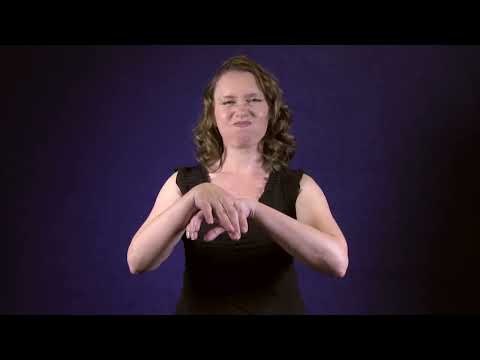
Definition: Physical power or strength.
Sign for FORCE in ASL
Practice Activities:
To practice the sign for FORCE in ASL, begin by signing it in front of a mirror. Pay close attention to your handshape, movement, and facial expressions. Repeat the sign slowly and then increase your speed. Try alternating your dominant and non-dominant hands to solidify muscle memory, especially if the sign involves directional motion.
Next, use the sign for FORCE in ASL in short phrases. For example, try signing “They forced me,” “The wind is strong,” or “She used force.” Record yourself and watch your signing to check for clarity and fluency. These short phrases help develop the ability to use the sign in real-life conversations.
Create a list of related vocabulary to expand your skills. Include signs like STRONG, PUSH, POWER, and CONTROL. Use these signs in contrast with the sign for FORCE in ASL to discuss intensity and strength. For example, act out different scenarios using varying degrees of pressure like someone gently persuading versus using a strong force.
Set up partner activities where you and a fellow learner act out mini-dialogues. One person uses FORCE as part of a sentence, and the other responds accordingly. You can role-play situations such as sports, disagreements, or weather descriptions like a storm forcing a tree to bend. These interactive sessions are excellent for developing context-based understanding.
Try incorporating the sign for FORCE in ASL into storytelling. Invent a short narrative where a character displays physical or emotional force, like a superhero pushing against a wall or someone being forced to make a choice. Using the sign in storytelling helps reinforce both expressive and receptive skills.
Finally, engage in receptive practice by watching videos or signing with others and identifying the sign for FORCE when it appears. This allows you to see it in natural conversation and strengthens your ability to understand it quickly.
Cultural Context:
In American Sign Language, the sign for FORCE in ASL carries more than just a literal meaning. It conveys intensity, strength, and the exertion of power, all within the cultural nuances of the Deaf community. This sign is often used in contexts where someone wants to express the action of compelling someone or something strongly.
The Deaf community values clear and expressive communication, and the sign for FORCE in ASL reflects that commitment. Whether it’s used to talk about physical force, emotional pressure, or societal influences, the sign must match the emotion and intention behind it. Facial expressions play a vital role in conveying the exact meaning of the sign, especially in more aggressive or assertive contexts.
Understanding the cultural context of the sign for FORCE in ASL helps avoid misunderstandings. In ASL, signs are not just translations of English words; they carry their own grammar and context. This sign is frequently used in storytelling, describing conflicts, or highlighting events where strong control or momentum is involved.
ASL users may use the sign for FORCE in ASL differently depending on the situation. For example, in educational settings, it might be used to describe the scientific concept of force in physics. In social or political discussions, it can refer to influence or coercion, often indicated with a more intense facial expression.
In Deaf culture, directness is common, and the sign for FORCE in ASL helps reflect strong opinions or passionate sentiments effectively. It’s a powerful visual that, when performed with the correct expression and context, clearly delivers the speaker’s message. The physicality of the sign mirrors the concept it represents, adding to its cultural impact.
The sign is also shaped by ASL’s visual-spatial nature. Learners need to understand that it’s not only about hand movements but also body language and eye gaze. The dynamics behind using the sign for FORCE in ASL are rooted in conveying clear, vivid meaning that matches the situation.
Media from Deaf creators often use this sign when discussing topics of resistance, empowerment, or structural inequalities. Its use demonstrates how ASL adapts to new contexts while staying rooted in its cultural traditions. The sign for FORCE in ASL can symbolize both struggle and strength, depending on the signer’s intent.
When interpreting or translating, it’s essential to consider how the sign for FORCE in ASL aligns with both the source and target languages. Nuance is key, and the cultural awareness behind the sign ensures effective communication between Deaf and hearing communities. ASL interpreters pay special attention to intensity and
Extended Definition:
The sign for FORCE in ASL can be expressed in several ways depending on the context of the sentence. American Sign Language uses both facial expression and body movement to show how intense or forceful an action or situation is. Understanding the correct sign for FORCE in ASL starts by identifying whether you’re describing physical force, emotional pressure, or influence.
To show physical force, the sign typically mimics the motion of applying pressure or strength onto an object or individual. One common version involves a dominant hand pushing downward onto the non-dominant hand, symbolizing pressure being exerted. The facial expression is key here, often showing tension or strain to communicate that strong effort is being used.
When FORCE refers to influence or power over a situation or person, the sign can shift to something more abstract. In these cases, the sign may include directional movement from the body to the person or object being influenced. This shows that force is not just physical but also about taking control or compelling someone to action.
Context matters a lot in American Sign Language, and that’s especially true with the sign for FORCE in ASL. For example, using force in a legal or military setting would be signed differently than force used in casual conversation. Some signs in ASL change slightly based on regional usage, and FORCE is a good example where multiple accepted forms exist.
The concept of coercion or being forced also uses a variation of this sign. In those situations, the signer often includes a more aggressive or exaggerated motion. Facial expressions help to amplify the urgency or seriousness of the situation being described.
In ASL storytelling or narratives, the sign for FORCE in ASL becomes even more dynamic. Signers often incorporate the environment around them, pointing toward specific places or people when describing actions involving force. This makes the story more vivid and helps clarify who is applying force and who is receiving it.
When used metaphorically, like in phrases such as “a force of nature” or “a driving force in the community,” ASL expands the sign further. While the hand movements remain similar, additional context or classifiers may be added. These signs are creative and may vary from one signer to another, but they still make sense within the fluid structure of ASL.
Students learning ASL should practice different versions of the sign for FORCE in ASL with facial expressions and real-life scenarios. Watching native or fluent ASL users on video can help reinforce the importance of incorporating body language. It’s also helpful to interact with others in the Deaf community to
Synonyms: power, strength, might, energy, pressure
Educational resources: Find related learning materials in our course bank!
Want more? Check out some of our popular learning activities on the homepage!
Need to look up a sign? Use our highly rated dictionary: https://aslinteractive.com/best-asl-dictionary/
Follow us on tiktok: https://www.tiktok.com/@aslinteractive. More social media links at the bottom of this page!
Long-tail Keywords: what is the sign for force in ASL, how do you sign force in ASL, ASL sign for force
Categories:
tags: Force in American Sign Language, ASL sign for force, how to sign force in ASL, force sign meaning in ASL, learn ASL force sign
Parameters
*Handshape*:
The sign for FORCE in ASL typically starts with a dominant hand in an “S” handshape, symbolizing power or strength. The non-dominant hand is often held in a flat or “B” handshape, representing an object being acted upon.
In the sign for FORCE in ASL, the dominant “S” hand moves toward or strikes the open palm of the non-dominant hand, mimicking a forceful action. This visual effectively conveys the concept of applying pressure or strength to move or change something.
*Palm Orientation*:
The palm orientation for the sign for FORCE in ASL typically involves the dominant hand in an open or slightly curved shape, facing downward or slightly angled toward the non-dominant side. The non-dominant hand is in a stationary position, palm facing inward or upward, acting as a base.
During the sign for FORCE in ASL, the dominant hand makes a forceful motion onto or against the non-dominant hand, reflecting the idea of pressure or compulsion . The direction and palm orientation may slightly vary depending on the specific context.
*Location*:
The sign for FORCE in ASL is typically produced in the neutral space in front of the torso, extending slightly away from the body. Both hands are usually held at chest level, allowing for a clear and controlled movement that visually represents the concept of pressure or strong influence.
This central position ensures the sign for FORCE in ASL is easily seen and understood by the viewer. The neutral zone helps focus attention on the dynamic motion and directionality of the sign.
*Movement*:
The sign for FORCE in ASL involves the dominant hand in an open claw shape moving forward with a brief, strong push against the back of the non-dominant hand, which remains stationary in a flat hand shape. The dominant hand touches or presses the non-dominant hand, emphasizing a sense of pressure or impact.
The movement conveys intensity and effort, with a quick, deliberate thrust. This motion in the sign for FORCE in ASL visually represents the concept of applying power or compulsion .
*Non-Manual Signals*:
When using the sign for FORCE in ASL, the facial expression should show intensity or a sense of power. Eyebrows are often furrowed, and the mouth may be slightly tight or show effort, reflecting the strength or compulsion behind the action.
The sign for FORCE in ASL typically involves strong body language paired with assertive eye gaze. A slight lean forward can emphasize the pressure or influence being exerted in the concept of force .
*Prosody, Dominant/Non-Dominant Hand*:
The dominant hand is in an “S” handshape, positioned near the shoulder. The non-dominant hand is open and steady, palm facing sideways or slightly upward in front of the body. The dominant hand moves forcefully toward the non-dominant hand, making contact and showing strength or pressure.
The sign for force in ASL uses firm movement and body emphasis to communicate intensity. Facial expressions add to the impact, reinforcing the meaning behind the sign for force in ASL.
Tips for Beginners:
When learning the sign for FORCE in ASL, it’s essential to focus on incorporating both the correct handshape and appropriate facial expressions. This is a concept-driven sign, and intensity can be expressed with body posture and facial cues. Make sure your hand movement is firm and deliberate to reflect the meaning behind the sign.
One helpful tip is to practice the sign in front of a mirror. This allows you to see if your movement appears strong and intentional, rather than soft or hesitant. Remember that ASL is not just about hand motions—your body and face work together to convey the sign’s meaning, especially for concepts like force that imply power or intensity .
Many beginners forget to control the angle and pressure of their movements, which can lead to miscommunication. For the sign for FORCE in ASL, ensure your dominant hand pushes in a clear downward or forward motion—depending on the variation you’re learning. Keep your non-dominant hand steady if it’s used in the version you’re practicing, acting as the resistive base.
Repetition is key. Try using the sign in short phrases such as “by force” or “forced entry” to become familiar with different contexts. This will help you prepare for natural conversations and reinforce how to use the sign correctly in sentences. Watching native ASL users sign these phrases is a great way to absorb variation and nuance.
It’s also helpful to pair the sign with real-life scenarios . For example, practice describing situations where strength or coercion was involved. This makes learning meaningful and boosts retention.
Lastly, when in doubt, ask for feedback. Joining a Deaf social group or working with an ASL instructor can refine your execution. The more you use the sign for FORCE in ASL in authentic contexts, the more confident and accurate you’ll become.
Connections to Other topics:
The sign for FORCE in ASL connects closely with concepts of physical pressure, behavioral influence, and power. It often relates to directional influences and can be visually associated with actions like pushing, dragging, or applying pressure. This sign can be synonymous with other signs that express control, strength, or coercion depending on the context and accompanying signs.
In compound signs, the sign for FORCE in ASL is commonly used in phrases like “enforce,” “reinforce,” or “forceful.” For “enforce,” the sign for LAW is often added, showing that some rule or regulation is being compelled. Similarly, pairing it with the sign for IDEA or STRATEGY can show mental or emotional pressure rather than physical compulsion.
There is also a conceptual overlap between the sign for FORCE in ASL and signs like POWER, IMPACT, or PRESSURE. These signs reflect the broader semantic field in which FORCE exists—each dealing with the exertion of energy or influence over something. For example, IMPACT might be used in discussions of effects or consequences, where FORCE shows the cause or action behind the result.
In conversational ASL, FORCE is often understood in terms of its subtle meanings, such as in social influence. When paired with signs such as PEER or GROUP, it can convey peer pressure or societal force. This shows that ASL users often use the FORCE sign in layered or nuanced ways, adapted to the social or emotional context.
The sign for FORCE in ASL also appears when explaining scientific or motion-related concepts, such as gravity or Newton’s laws of motion. In educational settings, it connects with signs like SCIENCE, MOVEMENT, and ENERGY, helping students discuss physical phenomena in ASL. These interdisciplinary uses enrich the learner’s understanding and expand vocabulary application.
Summary:
The sign for FORCE in ASL is dynamic and impactful. It’s typically executed using a dominant bent handshape, striking or pushing against a non-dominant stationary hand. The motion represents the act of exertion or application of pressure, conveying physical or metaphorical enforcement.
The intensity of movement can vary depending on the context. A harder, quicker motion implies stronger force, while a gentler push may suggest influence or subtle pressure. This adaptability makes the sign versatile across narrative settings.
Grammatically, the sign for FORCE in ASL can function as both a noun and a verb. In sentence structure, it aligns contextually with what or who is exerting or receiving a force. ASL syntax allows the sign to be placed flexibly, depending on the emphasis intended.
Conceptually, the term “force” carries both physical and metaphorical weight. Just as in English, the application of the sign can refer to physical power, like a forceful push, or abstract ideas like emotional pressure or political influence. The sign captures these layers of meaning visually.
In discussions of coercion, persuasion, or pressure, the movement and facial expressions help emphasize the message. Eye gaze, head tilt, and mouth morphemes support whether the force is benevolent or aggressive, soft or sudden. Facial grammar plays a key role.
When referencing institutions—like law enforcement or military—context is vital. The sign for FORCE in ASL might be paired with signs like POLICE, MILITARY, or GOVERNMENT to clarify that you mean an organized entity rather than a physical action. Classifier constructions can add more depth.
There are subtle variations in regional dialects within the Deaf community for this sign, though the primary movement structure remains consistent. Force as a concept can also be shown through classifiers, especially when emphasizing the effect on other objects or people. Classifiers make spatial relationships clear.
The sign for FORCE in ASL is often related to other power-centric signs such as CONTROL, PRESSURE, or POWER. These signs may be used interchangeably in some expressive contexts but vary slightly in meaning based on visual-spatial parameters. The distinctions enhance ASL expressiveness.
In applied linguistics, FORCE reflects the interplay between form and meaning in ASL. How the hands move and interact visually conveys the semantics in a way spoken language does not. It offers insight into how ASL uses physical space to represent abstract ideas.
The sign can also intersect with emotional or psychological concepts. For example, signs involving influence, manipulation, or stress often incorporate components of the force sign or mimic pressure-based visuals. FORCE becomes metaphorical, not just mechanical.
In storytelling and performance in Deaf culture, the sign for FORCE in ASL may be exaggerated for dramatic effect. For instance, in theatrical ASL poetry or narratives, signers often use FORCE to evoke tension or resistance—both physical and emotional. Dynamic signing heightens the engagement.
Forces in nature, like wind or gravity, are also represented using this sign along with descriptive classifiers. FORCE might be the foundation, but the rest of the scene is constructed using movement and space to show how a force affects its surroundings. This immersive quality gives ASL its richness.
ASL learners often misunderstand the difference between FORCE and PUSH. While related, PUSH is more literal and often depicted with hands extended forward in a direct motion. FORCE has a broader semantic range and can lean metaphorical, requiring facial grammar and context for clarity.
When discussing social justice or advocacy, the sign for FORCE in ASL can take on added significance. It can refer to systemic force or pressure applied to communities, making it a key term in cultural discourse. Activists might combine it with signs like SYSTEM, CHANGE, or RESISTANCE.
The cultural importance of understanding FORCE in ASL lies in its nuanced application. Incorrect use can alter meanings, leading to misunderstandings. For example, overemphasizing the sign might make a statement seem authoritarian rather than assertive.
Deaf scholars and sign linguists study how signs like FORCE evolve over time. Shifts in how the sign is used or modified within different communities reflects social changes and communicative needs. ASL’s fluidity allows such adaptation over generations.
Facial expression and body posture intensify the message when signing FORCE. Leaning forward or tensing the shoulders hints at strength or aggression, whereas a calm face and smooth movement could indicate gentle insistence. These physical cues layer additional meaning.
Children learning the sign for FORCE in ASL often mimic physical actions like pushing or pulling to comprehend it. Educators use visual metaphors and roleplay to embed the concept early, building language that connects physical experience with abstract understanding.
Interpretation professionals must be careful when translating FORCE from spoken English to ASL. Not all usages have a direct one-to-one sign, so interpreters rely on context to choose between FORCE, PRESSURE, POWER, or alternative classifiers. Accuracy in meaning is critical.
In scientific discussions, such as physics or engineering,
Want more? Check out some of our popular learning activities!
ASL Interactive Resources
ASLInteractive YouTube Channel
Follow us on tiktok: @aslinteractive.com
Follow us on Instagram: aslinteractive
Facebook page: aslinteractive
Facebook group: aslinteractive
LInkedIn: ASL Interactive LLC
Twitter: @ASL_interactive
*Some information on this page is AI-generated. AI can make mistakes. Please check the information.


Responses