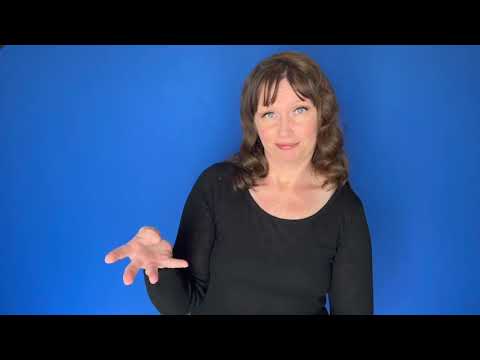
Definition: Four of them.
Sign for FOUR OF THEM in ASL
Practice Activities:
To build fluency with the sign for FOUR OF THEM in ASL, start by practicing the sign in isolation in front of a mirror. Repeat the movement and handshape slowly and clearly, focusing on directionality and hand orientation. Make sure your hand moves away from the body in a way that indicates a specific group of four people or objects.
Next, create short sentences using the sign for FOUR OF THEM in ASL. For example: “I gave candy to four of them,” or “Four of them went to the store.” Mix up your practice by changing the verb or noun in each sentence while keeping the structure the same. This helps reinforce directional signs and sentence construction.
Act out mini skits where you give or show something to four people. You can use props like small toys or colored blocks to visualize the interaction. Point to different areas in space where “them” might be located—front, left, behind you—and use the sign directionally to reflect real-life positioning.
Work with a partner and use flashcards with prompts such as “books – you gave,” or “apples – teacher.” Respond by incorporating the sign for FOUR OF THEM in ASL appropriately. Switch roles frequently to reinforce expressive and receptive skills.
Create a short story that involves giving, showing, or telling something to four individuals. You might say: “Yesterday, I baked cookies. I gave four of them to my cousins.” Practice signing this story, focusing on fluid transitions and consistent use of classifiers when needed.
Use emojis or drawings to visually track who “them” refers to, then incorporate the sign directionally. Doing this helps reinforce both the concept and grammar rules unique to ASL, which are essential when using the sign for FOUR OF THEM in ASL naturally in conversation.
Cultural Context:
In American Sign Language (ASL), conveying numbers with people or objects often involves more than just counting. The sign for FOUR OF THEM in ASL is a classifier structure used frequently in conversations to indicate both quantity and relationship in space. It’s not just about the number four—it reflects a deeper cultural and visual-spatial aspect of ASL.
When you use the sign for FOUR OF THEM in ASL, you’re tapping into a rich component of ASL grammar. The language relies on classifiers and directional movement to represent people and their positions or actions. This particular sign is used when referring to a specific group of four entities, whether they’re people, animals, or things.
deaf culture values clarity and visual efficiency, and this shows in the sign for FOUR OF THEM in ASL. Rather than repeating the concept of “four” and labeling each item, the sign allows you to indicate all four in a single, smooth motion. This reinforces how ASL prioritizes visual communication, saving time while maintaining meaning.
The sign for FOUR OF THEM in ASL can vary slightly depending on context and regional dialects, but the intention remains the same. ASL users often use this sign in storytelling, casual conversations, and classroom settings. It’s common in narratives when describing scenes involving multiple characters or items.
Knowing how to use the sign for FOUR OF THEM in ASL enhances more than just vocabulary—it deepens understanding of the language’s structure. ASL is not just a collection of signs; it’s a distinct language with its own syntax and grammar. Expressing quantity this way demonstrates how ASL uses space and orientation to layer meaning.
In ASL communities, mastering classifier constructions like the sign for FOUR OF THEM in ASL helps signers engage more fully. It shows fluency in depicting groups accurately and naturally. Whether you’re a student, interpreter, or casual learner, understanding these group signs adds a lot to your expressiveness.
The use of grouping classifiers is a key way that ASL reflects group dynamics visually. The sign for FOUR OF THEM in ASL doesn’t just count—it places and connects the four items in a mental map that the signer and viewer can easily visualize. This makes communication clear and fluid in any situation.
In teaching environments, explaining the sign for FOUR OF THEM in ASL offers a chance to show how ASL uses its spatial grammar to impart meaning efficiently. It’s a useful example to demonstrate how ASL differs from English and emphasizes spatial reasoning. For young learners and students of
Extended Definition:
The sign for FOUR OF THEM in ASL is a directional pronoun combined with a numerical handshape that conveys both quantity and spatial agreement. This structure allows signers to refer to four specific people, objects, or entities that have already been identified in the conversation. The sign is built off of the handshape for the number four, but it includes movement that indicates its referential nature.
To sign FOUR OF THEM in ASL, begin with the number four handshape—palm facing outward. Then move your hand in a slight arc or directional path toward a location that represents the group of four being talked about. This directional movement is essential and shows to whom or what the signer is referring.
American Sign Language frequently uses spatial referencing to build more complex ideas from simple signs. In this case, the number four combines with a pointing or movement aspect to indicate specific people or things that have been previously set up in the signing space. The hand moves away from the signer toward the space where the individuals or items were identified.
Because ASL is a visual language, the direction of this movement plays a crucial role in clarifying meaning. The sign for FOUR OF THEM in ASL shows how numbers can be adapted to convey relationships rather than just quantities. It’s not just a number; it becomes a dynamic part of the sentence.
This sign is most commonly used when you’ve already set up the location or identity of the “them” in the signing space. For example, if you pointed to four different people earlier in your conversation and assigned them a space, you then use FOUR OF THEM to refer back to those exact individuals. It’s a great example of how ASL builds on previous information to maintain clarity and visual storytelling.
It’s important to note facial expressions and eye gaze can further support the meaning of FOUR OF THEM in ASL. Eye gaze may follow the direction the hand moves, reinforcing the reference point in space. Subtle cues like this are essential in ASL grammar and are used to make your message more precise.
The sign for FOUR OF THEM in ASL may also differ slightly depending on regional variations or personal signing styles. However, the combination of movement and numerical handshape remains the consistent core of the sign. Practice is key, especially with fingerspelling and directional phrase signs like this one.
For learners of American Sign Language, understanding how to use directional signs effectively, including the sign for FOUR OF THEM in ASL, can significantly improve your fluency. It’s not
Synonyms: Four together, Four people, Group of four, All four, Set of four
Educational resources: Find related learning materials in our course bank!
Want more? Check out some of our popular learning activities on the homepage!
Need to look up a sign? Use our highly rated dictionary: https://aslinteractive.com/best-asl-dictionary/
Follow us on tiktok: https://www.tiktok.com/@aslinteractive. More social media links at the bottom of this page!
Long-tail Keywords: what is the sign for four of them in ASL, how do you sign four of them in ASL, four of them in American Sign Language
Categories:
tags: Four of Them in ASL, ASL number four signs, how to sign Four of Them, ASL pronouns with numbers, American Sign Language Four of Them
Parameters
*Handshape*:
The handshape used in the sign for FOUR OF THEM in ASL begins with the non-dominant hand in a flat, open position, palm facing up to represent a general space or surface. The dominant hand starts in the number four handshape—fingers extended and separated, with the thumb tucked in.
As the motion progresses, the dominant hand moves directionally away from the non-dominant hand, maintaining the four handshape throughout. This directional movement is key in the sign for FOUR OF THEM in ASL ️ and helps indicate a plural concept referencing four specific individuals or items.
*Palm Orientation*:
The palm orientation in the sign for FOUR OF THEM in ASL begins with the dominant hand forming the number 4 handshape, palm facing upward or slightly outward, depending on placement and directionality. The hand then moves in a small arc or semi-circle away from the reference point or signer, maintaining the upward-facing palm.
This palm positioning helps indicate a specific number of people or items connected to a spatial point. In the sign for FOUR OF THEM in ASL, accurate palm orientation is essential for clarity and to distinguish it from similar directional number signs.
*Location*:
The sign for FOUR OF THEM in ASL is typically produced in the neutral space in front of the signer’s body, slightly below shoulder level. The dominant hand forms the number four handshape and moves in a shallow arc or forward motion, depending on context, toward an imagined group.
This location helps convey a clear reference for plural individuals. Spatial referencing is key in the sign for FOUR OF THEM in ASL, ensuring the sign matches the number and direction of people being referred to.
*Movement*:
Start with the dominant hand in the number four handshape (palm facing out) near the body. Then move the hand away from the body in a short arc, ending with the palm facing the direction of the group being referred to. This movement suggests that there are four specific items or people being indicated.
The sign for four of them in ASL combines number and directionality. The hand may slightly arc or turn toward the place you’re referencing, depending on where “them” is located in space. This directional movement helps clarify the subject visually .
*Non-Manual Signals*:
When using the sign for FOUR OF THEM in ASL, the facial expression should show slight focus or emphasis by keeping the eyebrows neutral or slightly raised. This reflects specificity in quantity and location.
The signer should maintain relaxed cheeks and natural eye gaze toward the referent space to match the directional movement of the sign. Non-manual signals help clarify that the signer is referencing four distinct individuals or objects.
*Prosody, Dominant/Non-Dominant Hand*:
The sign for FOUR OF THEM in ASL uses the dominant hand formed in the number 4 handshape. The palm faces outward initially, then arcs outward and away from the body in a small circular motion, indicating distribution to four entities. The non-dominant hand is not used. Facial expressions and mouthing may reinforce quantity or specificity.
This sign for FOUR OF THEM in ASL is directional and spatial, depending on where the entities are located. Adjusting the arc or direction of the dominant hand can indicate different placements of the four individuals.
Tips for Beginners:
The sign for FOUR OF THEM in ASL is a directional pronoun and number combination that expresses that four items or people are being referenced in a spatially specific way. For beginners, it’s important to understand that this sign is built off the number 4 handshape. You start with the palm facing upward or outward, and then slightly move your hand in the direction of the people or things being referenced. This directional motion should be subtle but clear.
Practice isolating the sign for FOUR OF THEM in ASL by first mastering the number FOUR. Make sure your handshape shows the correct fingers—index, middle, ring, and pinky extended, with the thumb tucked in. Inconsistent finger placement or an unclear palm orientation can lead to confusion, especially when paired with directionality.
Avoid simply signing the number four and assuming it’s understood as “of them.” The movement toward a location or in a smooth arc conveys the referencing aspect. Beginners commonly forget to use eye gaze or body orientation to indicate spatial agreement. This supplemental information helps ensure your meaning is understood correctly.
Another tip when using the sign for FOUR OF THEM in ASL is to practice in mirror exercises. This helps you improve accuracy in both handshape and motion. Signing in front of a camera or doing repetition drills can help solidify muscle memory of the motion.
In conversation, make sure you’ve previously established who or what “them” refers to. This keeps the use of the sign contextual and meaningful. If your audience isn’t sure what you’re referencing, the sign loses clarity. Keeping movements fluid and not rushed ensures that your sign remains understandable.
Lastly, be patient with directional signs. They add complexity but are very expressive in ASL. With consistent practice, the sign for FOUR OF THEM in ASL can become a natural part of your vocabulary.
four of them asl sign, how to sign four of them in asl, directional pronoun four of them in asl, asl beginner tips four of them, learn sign for four of them in asl, easy way to sign four of them asl, mastering four of them in american sign language
Connections to Other topics:
The sign for FOUR OF THEM in ASL shares structural and conceptual similarities with signs that involve quantities and pronouns. It builds from the basic sign for FOUR, which uses the non-dominant hand in a flat orientation, and modifies it to incorporate directional movement. This demonstrates how spatial referencing is used in ASL to clarify number and the referents involved.
This concept ties in closely with other signs such as THREE OF US, TWO OF YOU, or ALL OF THEM, which use modified number signs with directional movement to indicate the grouping and perspective. The flexibility of showing pronouns and numbers together is one of ASL’s most efficient ways to convey meaning concisely. Repetition or sweeping arcs may be used to show emphasis or to refer to groups in different physical locations.
The sign for FOUR OF THEM in ASL also connects to classifiers in that it can appear in contexts where people or objects are described in number. For example, when describing four people walking in a line or four objects being grouped together, combining this with classifiers like CL:1 (for individuals) emphasizes both quantity and spatial arrangement.
In ASL storytelling or narratives, number incorporation as seen in the sign for FOUR OF THEM adds fluidity and detail. It’s often used when explaining sequences, like four students going somewhere or recalling four individuals involved in an event. The sign naturally integrates with verb agreement, pointing toward where each “them” is in space.
This sign is also helpful when discussing groups within discourse, such as when signing about family members, classmates, or coworkers. Awareness of plural pronoun structures and spatial indexing enhances understanding. Using the sign for FOUR OF THEM in ASL effectively requires skill in localization and representing abstract or unseen groups clearly in space.
Summary:
The sign for FOUR OF THEM in ASL involves a nuanced use of classifiers and directional verbs. It combines number incorporation, indexing skills, and spatial placement to communicate clearly and efficiently. This construction serves an important role in American Sign Language when referring to a specific group of four entities.
To produce the sign for FOUR OF THEM in ASL, begin with the number four handshape, palm facing upward. This handshape is formed by extending the four fingers of one hand while holding the thumb in. The movement involves a deliberate directional motion away from the signer toward an established referent or neutral space.
This sign is usually directional, meaning it will be aimed toward a location that has already been associated with the group you are referring to. The use of spatial referencing allows the signer to clearly identify that the four individuals or objects are part of a previously distinguished group. This connection is fundamental in ASL’s visual grammar.
An essential component of the sign for FOUR OF THEM in ASL is the blending of numeral incorporation with the pronominal reference. Unlike English, which often relies on fixed word order, ASL allows more flexibility by visually grounding its subjects and objects. This enables viewers to understand relationships via space and classifiers.
In the sign for FOUR OF THEM in ASL, the signer spatially or contextually anchors the referents before describing what they did or what’s happening to them. For example, establishing “four children over there” could be followed by a sign movement indicating a verb like GIVE or LOOK, all directed toward those four. The plural aspect is embodied visually, not by an added “s.”
Grammatically, ASL handles subject and object referencing differently than English. The use of specific location markers and number-indexed directional signs like the sign for FOUR OF THEM in ASL reduces ambiguity. It ensures the message reaches clarity through visual structure rather than sentence syntax.
This concept integrates deictic referencing, which is central to ASL. Deictic terms are used to point to someone or something, often through signing space or eye gaze. The sign for FOUR OF THEM in ASL effectively becomes a form of deictic numeral pronoun, uniquely tailored to visual language users.
Comparing this with related signs like ONE OF THEM or ALL OF THEM reveals how ASL modifies the same basic movement with different numeral handshapes. It illustrates how expressive and efficient the language is, reducing the need for stacking descriptions. The transition between different pronunciations is smooth and rooted in consistent patterns.
The sign for FOUR OF THEM in ASL also engages the concept of cognitive linguistics, especially in how humans categorize and group plural references. It is a visual shorthand that aligns closely with cognitive schemas and language economy. When conveying this information, facial expressions also help indicate the context, emotion, or specificity of the number referenced.
Directionality plays an important grammatical role here. Using correct palm orientation and clear spatial directions can emphasize whether the ‘four’ are part of a group being discussed or separated individuals in different locations. This layering deepens the efficiency of ASL.
Cultural understanding in using the sign for FOUR OF THEM in ASL matters. ASL owners often teach this sign contextually rather than in isolation because it draws upon spatial logic and prior information in discourse. Learners benefit from seeing the sign applied in real conversations.
This sign is significant in storytelling, narratives, or classroom settings. When a signer narrates an event involving multiple characters, such as “four students walked in,” the sign for FOUR OF THEM in ASL can initiate a subject reference for ongoing storytelling. Directionality is maintained across the narrative to track those characters.
In family settings or within the Deaf community, this sign functions with familiarity and immediacy. For example, “I baked cookies for four of them” would be signed by tagging the number and direction quickly. Native users internalize this spatial-referencing as a natural form of mapping communication.
There’s no single way to express quantities in ASL, but the sign for FOUR OF THEM in ASL blends numeral signs with personal indexation. It’s less a fixed sign and more a construct within visual grammar. While the number four is static, the direction and reference enhance its contextual accuracy.
Linguists interest themselves in how ASL builds meaning from the convergence of space, movement, and non-manual signals. The sign for FOUR OF THEM in ASL exemplifies the language’s reliance on complex yet natural forms of embodiment and movement. The sign activates both handshape and spatial logic in tandem.
Applied linguistics also finds this sign useful in comparative studies on quantity representation across languages. Most spoken languages use inflectional morphology, while ASL typically uses spatial variation and movement. This makes ASL particularly engaging for those interested in motion-based semiotics.
Teachers often use drills involving the sign for FOUR OF THEM in ASL to encourage spatial awareness. Learners benefit from differentiating between FOUR PEOPLE OVER THERE and FOUR OF THEM WANT ICE CREAM. Stripping
Want more? Check out some of our popular learning activities!
ASL Interactive Resources
ASLInteractive YouTube Channel
Follow us on tiktok: @aslinteractive.com
Follow us on Instagram: aslinteractive
Facebook page: aslinteractive
Facebook group: aslinteractive
LInkedIn: ASL Interactive LLC
Twitter: @ASL_interactive
*Some information on this page is AI-generated. AI can make mistakes. Please check the information.


Responses