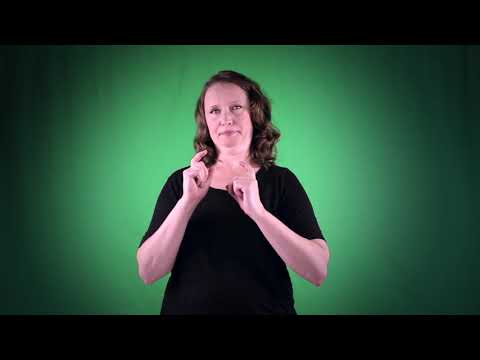
Definition: To bestow something upon me.
Sign for GIVE-TO-ME in ASL
Practice Activities:
To begin practicing the sign for GIVE-TO-ME in ASL, start by forming the flat O handshape with one or both hands, then move it toward your torso in a short, deliberate motion. Practice this motion slowly and clearly in front of a mirror. Say the English equivalent in your head as you sign to internalize the meaning.
Drill the sign in isolation by doing rapid repetitions while keeping the handshape and motion consistent. Switch between GIVE-TO-YOU and GIVE-TO-ME to become comfortable with directionality. The directional nature of this sign is essential, so try pointing the sign toward different people or objects around you.
Use simple sentences to put the sign in context. Say phrases like GIVE-TO-ME the book, GIVE-TO-ME your phone, or GIVE-TO-ME help. Rehearse signing one sentence and then changing the subject or object to test flexibility. Use toys or objects during practice to mimic real interactions .
Create mini-dialogues with a partner. One person can ask for something using the sign for GIVE-TO-ME in ASL, while the other signs a response, such as refusal or agreement, enhancing expressive and receptive skills. Rotate roles to build versatility with the sign.
Develop a short storytelling prompt, such as a birthday scene where someone is given presents. Use the sign for GIVE-TO-ME in ASL to represent different gifts or interactions. Include expressive facial grammar to match the context—excitement, surprise, or gratitude .
Record yourself signing the phrase GIVE-TO-ME in various emotional tones and watch the playback to self-assess clarity and accuracy. This helps integrate the sign smoothly into conversational flow. Try practicing while walking or in group settings to simulate real-life use.
Challenge yourself by translating short English passages, especially those involving actions of giving or receiving, and substitute appropriate ASL signs like GIVE-TO-ME with proper direction and emotion.
Cultural Context:
In American Sign Language, the sign for GIVE-TO-ME in ASL carries more than a literal meaning. It reflects cultural norms about requests, politeness, and nonverbal communication. Understanding how this sign is used in social contexts can help learners avoid miscommunication.
The sign for GIVE-TO-ME in ASL is deeply tied to the directionality of the gesture. ASL is a visually rich language, and many signs, including GIVE-TO-ME, involve movement toward the signer to indicate the request is directed at themselves. Unlike spoken English, which may rely on tone or emphasis for nuance, ASL relies heavily on facial expressions and spatial relationships.
In Deaf culture, directness is highly valued. The sign for GIVE-TO-ME in ASL may seem blunt to hearing people from spoken-English cultures, but it is a culturally appropriate and respectful way to request something. When paired with appropriate facial expressions and body language, it conveys politeness without the need for extra words.
Using the sign for GIVE-TO-ME in ASL in the wrong context—such as during formal presentations or with unfamiliar people—can be considered too casual. In these situations, more complex constructions or added signs may be used to show deference. Just as spoken languages adjust registers for different social settings, ASL has its own ways of showing formality and respect.
In family settings or among close friends, the use of GIVE-TO-ME in ASL is quite common and natural. Children often learn this sign early as it reflects basic needs and wants. It’s frequently paired with expressions of urgency or excitement, emphasizing the immediacy of the request.
Facial expressions play a significant role in the cultural correctness of using GIVE-TO-ME in ASL. A neutral or friendly face keeps the sign polite, while a demanding look can make it appear rude. This is a key part of Deaf etiquette and a good example of how meaning in ASL is not just manual but visual in many dimensions.
Another cultural note about the sign for GIVE-TO-ME in ASL is its flexibility in conversation. It can be used to playfully tease someone, especially among Deaf friends. This light-hearted use is a reflection of the tight-knit, expressive, and interactive nature of the Deaf community.
It’s also important to understand how GIVE-TO-ME in ASL can differ based on grammatical structure. In casual conversations, native signers might use it as part of larger expressions to
Extended Definition:
The sign for GIVE-TO-ME in ASL is a directional verb that expresses the action of giving an object to the signer. In American Sign Language, directional verbs like GIVE change based on who is giving and who is receiving. This allows for more fluid, expressive communication and helps clarify subjects and objects without needing extra signs.
To form the basic sign for GIVE-TO-ME in ASL, start by imagining holding a small object in one or both hands. You curve your hand into a flat “O” shape and then move the hand from another person’s space toward your body. This motion shows the object being given to you, and the sign naturally adapts depending on context.
GIVE-TO-ME in ASL can be modified to indicate singular or plural objects and even different directions for multiple people. For instance, if two people are giving something to you, the sign might be repeated or widened slightly to represent both givers. ASL is a visual language, so spatial awareness and movement play a huge part in conveying accurate grammar.
This sign is incredibly useful in daily interactions. Children and adults alike use it frequently in educational environments, family settings, and casual conversation. The sign for GIVE-TO-ME in ASL is an excellent example of how ASL verbs function differently from English verbs.
When learning the sign for GIVE-TO-ME in ASL, it’s important to understand its context. If you’re asking a friend to hand you a book or snack, this sign is instantly understood. Combine it with facial expressions for added clarity—like raised eyebrows for a question or a head nod to show affirmation.
This sign also appears often in ASL storytelling and role play. ASL users rely on body positioning, facial grammar, and movement direction to indicate who is giving and who is receiving. The GIVE-TO-ME sign is ideal for teaching those principles, especially when explaining ownership, requests, or commands.
In signed conversations, this verb works hand-in-hand with other directional verbs that share similar structure, like SHOW-ME, TELL-ME, or SEND-ME. This helps build a larger vocabulary based on similar movements. Once you’re comfortable with the GIVE-TO-ME sign in ASL, you’ll find it easier to learn related signs.
An interesting aspect of the sign is its flexibility in both formal and informal settings. In professional interpreter scenarios or in casual conversations at home, the same motion applies but adjusts in tone and speed. Understanding context helps you
Synonyms: hand over, pass to me, give here, bring to me, let me have
Educational resources: Find related learning materials in our course bank!
Want more? Check out some of our popular learning activities on the homepage!
Need to look up a sign? Use our highly rated dictionary: https://aslinteractive.com/best-asl-dictionary/
Follow us on tiktok: https://www.tiktok.com/@aslinteractive. More social media links at the bottom of this page!
Long-tail Keywords: what is the sign for give to me in ASL, how do you sign give to me in ASL, give to me sign language explanation
Categories:
tags: give to me in American Sign Language, how to sign give to me in ASL, ASL dictionary give to me, give to me ASL sign explanation, learn ASL give to me
Parameters
*Handshape*:
The handshape for the sign for GIVE-TO-ME in ASL uses a modified flat “O” handshape . The fingers and thumb come together to form a rounded shape, representing the action of giving. This handshape is positioned palm up when indicating the item is being given to the signer.
To produce the sign for GIVE-TO-ME in ASL, the hand moves inward toward the body, signaling that something is being transferred to the signer. This directional movement is an essential part of the sign and matches the intended recipient.
*Palm Orientation*:
The palm orientation for the sign for GIVE-TO-ME in ASL begins with one or both hands in a flat “O” handshape, palm facing up and slightly away from the body. As the movement occurs, the hand(s) shift toward the center of the chest while turning palm-up, indicating the action of receiving.
This fluid motion emphasizes the directional nature of the sign for GIVE-TO-ME in ASL , where palm orientation changes dynamically to reflect who is giving and who is receiving. The shift of palm direction plays a key role in the accurate expression of the concept.
*Location*:
The sign for GIVE-TO-ME in ASL is produced in the neutral signing space just in front of the torso. The motion typically starts slightly away from the signer’s body and moves inward toward the chest or stomach area, indicating the directional aspect of the sign.
When performing the sign for GIVE-TO-ME in ASL, the palm of the hand faces upward and fingers are slightly curved, mimicking the shape of handing something over to oneself. The location is important in conveying who the action is directed toward.
*Movement*:
The sign for GIVE-TO-ME in ASL involves starting with one or both hands in a modified flat “O” handshape, representing something being held. Begin by placing the hands outward, away from the body and at about chest level.
Then, move the hands in a smooth, controlled arc toward your own chest, as if offering to take something. This directional verb changes depending on the subject and object, but the sign for GIVE-TO-ME in ASL always moves toward the signer ♀️. Facial expression can enhance clarity and intention.
*Non-Manual Signals*:
When using the sign for GIVE-TO-ME in ASL, your facial expression should match the context of the request. A slight head tilt with raised eyebrows can indicate a polite or expectant tone, while pursed lips or a subtle nod forward can emphasize urgency or insistence.
The non-manual signals help clearly convey the intention behind the sign for GIVE-TO-ME in ASL . Adjusting your eye gaze toward the source or person you’re addressing further emphasizes the directionality of the action.
*Prosody, Dominant/Non-Dominant Hand*:
The sign for GIVE-TO-ME in ASL uses the dominant hand in a flat “O” handshape, starting away from the body and moving inward toward the chest. The movement direction is key, indicating the object is being given to the signer.
The non-dominant hand is not active in this sign unless contextually needed for clarification or role-shifting. The sign for GIVE-TO-ME in ASL emphasizes a personal receiving action and is often used in combination with facial expression to show politeness or urgency .
Tips for Beginners:
When learning the sign for GIVE-TO-ME in ASL, be sure to pay attention to the directionality of the movement. This is a directional verb, which means the sign starts away from your body and moves toward yourself to indicate that something is being given to you. Use one or both hands depending on the context, but make sure that the motion clearly ends at your torso or near your chest area.
A common mistake for beginners is forgetting to aim the movement properly. If your hands move in a general or unclear direction, it could change the meaning or confuse your audience. Always imagine handing something toward yourself and keep the sign smooth but deliberate. Practicing in front of a mirror can help you identify and adjust misalignments.
Facial expressions can be just as important as the sign itself. When using the sign for GIVE-TO-ME in ASL in a request, a hopeful or questioning expression supports your intent. If you’re being assertive or demanding, your face should reflect that. Try different expressions along with the sign during practice to see how they affect the tone of your message.
Remember that context often determines how this sign is used. For example, the same directional sign becomes “give-to-you” if the movement starts from you and moves toward another person. This makes it easier to build full sentences once you’re confident with the sign for GIVE-TO-ME in ASL. Practicing various contexts—such as casual a sk or urgent need—adds depth to your signing skills.
Work on fluidity rather than speed. Slower, more accurate signs are easier to understand than fast, sloppy ones. With time and repetition, the sign for GIVE-TO-ME in ASL will become more natural to incorporate into daily conversations.
Connections to Other topics:
The sign for GIVE-TO-ME in ASL is a directional verb, meaning that the movement and orientation of the sign change depending on the subject and the object. This type of verb is central to understanding how ASL expresses grammatical relationships such as subject-object agreement. By changing the direction of this sign, you can modify it to mean “give to you,” “give to her,” or “give to them,” enhancing both expressiveness and clarity.
This sign is directly related to other directional verbs like SHOW, TELL, SEND, and HELP, which also use movement to indicate who is performing the action and who is receiving it. The sign for GIVE-TO-ME in ASL can be combined with facial expressions to show politeness, urgency, or frustration. These non-manual markers play a significant role in conveying the tone of the message, making the sign more nuanced and emotionally expressive.
In conversation, GIVE-TO-ME can be part of compound structures that add specificity, such as GIVE-TO-ME MONEY or GIVE-TO-ME HELP. When used with pronouns and classifiers, the sign becomes even more dynamic, allowing complex thoughts to be visually represented. For instance, combining this verb with a classifier for a book might visually represent “He gave me a book” in a single fluid movement.
Understanding the sign for GIVE-TO-ME in ASL opens the door to mastering many other transferred action verbs. It is often taught early in ASL courses due to its versatility and importance in everyday conversation. Learners who become comfortable with this sign and its variants will find it easier to form natural-sounding sentences and interpret meaning based on context and direction.
The sign frequently appears in story-telling and interpersonal interactions, emphasizing its relevance across different registers of language, from casual to formal. Its spatial and interactive nature helps reinforce ASL’s holistic structure and deepens understanding of visual grammar.
Summary:
The sign for GIVE-TO-ME in ASL is directional and highly context-sensitive. It combines the concept of giving with the inclusion of the signer as the recipient, which is achieved primarily through movement and palm orientation.
To produce the sign for GIVE-TO-ME in ASL, begin with the dominant hand in a flat “O” or “closed pinched” shape, commonly known as a modified “O” handshape. The fingers and thumb come together as if holding a small object.
The movement starts away from the body, then arcs inward toward the chest, emphasizing the act of receiving. The directionality of this movement is key to expressing the idea that the action is directed toward the signer.
This sign is deeply rooted in ASL’s use of space and grammar. Rather than relying on word order alone, ASL uses the physical movement of signs to indicate subject and object relationships.
In the sign for GIVE-TO-ME in ASL, the hand moves from an imagined giver in space toward the receiver—you, the signer. This movement implies both the actor (the giver) and the recipient (the signer), creating a built-in grammatical structure.
Because of its directional nature, GIVE-TO-ME can be adapted easily. With a shift in movement direction, the same base sign can indicate GIVE-TO-YOU or GIVE-TO-THEM by reorienting the arc of motion.
Facial expression reinforces the meaning and tone of the sign. A neutral expression may indicate a simple request, while raised eyebrows, head nods, or urgency in the movement can convey varying degrees of need or insistence.
The sign for GIVE-TO-ME in ASL reflects a broader principle of classifier use and spatial referencing within the language. It is a prime example of how ASL uses verbs not statically but dynamically, in relation to space and the signer’s perspective.
Grammatically, GIVE-TO-ME functions as a directional verb, often categorized as an agreement verb. Agreement verbs in ASL agree with both subject and object by their movement, orientation, and use of signing space.
This allows signers to pack more information into a single movement. It’s a feature of ASL that can seem ambiguous to those trained only in linear languages but is remarkably efficient in face-to-face communication.
The sign for GIVE-TO-ME in ASL can vary slightly in handshape, depending on regional variations or specific context. Some signers use a more open or relaxed handshape, but the movement pattern remains consistent.
This sign also plays a role in everyday interactions, from simple requests between friends to more formal exchanges, such as distributing materials in class or a workplace setting. It’s particularly common in narratives and storytelling.
Through its frequent use and clear visual metaphor, the sign for GIVE-TO-ME in ASL serves as both a linguistic function and a cultural norm of visually indicating relationships. It subtly reinforces the continuous referencing of agency and ownership.
The sign is often accompanied by indexing, where the signer points to the space associated with the giver. Then the handshape moves from that spatial point toward the self, reinforcing the concept visually.
This act of indexing reflects ASL’s deep reliance on spatial grammar. Give-to-me doesn’t just tell you who’s doing what—it shows you, using a three-dimensional canvas of space and movement.
Related signs include GIVE, which is a base sign without the directional modifier. GIVE-TO-ME is a specified form, while GIVE-TO-YOU or GIVE-TO-HIM mirrors this format but with movement toward a different referent.
Another related sign is SEND, which also uses a directionally similar pattern. However, the handshape and intent vary, indicating different types of social or transactional interaction.
The sign for GIVE-TO-ME in ASL also intersects with social behaviors and politeness norms. While there is no exact equivalent to saying “please” built into the sign itself, it’s common to follow or precede this form with a polite facial expression or supplementary sign.
In ASL, tone is largely conveyed through non-manual markers such as facial expressions. A gentle, slow movement toward the self with a smile can show gentle requesting, while a sharp, fast motion may indicate desperation or demand.
This sign can also take on metaphorical or abstract uses in poetry or performance. A speaker may use GIVE-TO-ME in ASL to express emotional requests—asking for understanding, acceptance, or support.
In ASL literature or storytelling, the sign can scale in meaning, depending on context. It represents the adaptability of directional verbs to carry literal, emotional, or symbolic meaning.
The sign’s significance in applied linguistics is also notable. It illustrates the challenges translators face when converting ASL to English, where information contained in one sign might require several words or phrases.
Its function shows how ASL grammar encodes relationships between people without using word order. In spoken languages, the subject typically
Want more? Check out some of our popular learning activities!
ASL Interactive Resources
ASLInteractive YouTube Channel
Follow us on tiktok: @aslinteractive.com
Follow us on Instagram: aslinteractive
Facebook page: aslinteractive
Facebook group: aslinteractive
LInkedIn: ASL Interactive LLC
Twitter: @ASL_interactive
*Some information on this page is AI-generated. AI can make mistakes. Please check the information.


Responses