Sign for GO AHEAD in ASL | ➡️ ASL Dictionary

Definition: To proceed.

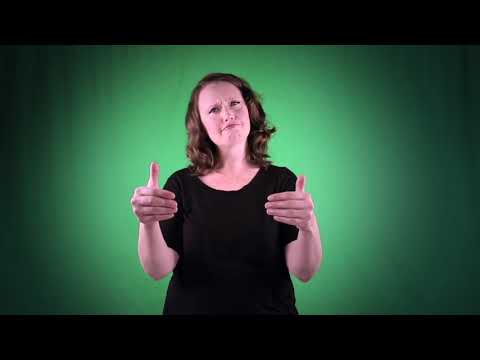
Sign for GO AHEAD in ASL

YouTube player

Practice Activities:

To build confidence with the sign for GO AHEAD in ASL, begin by practicing the sign in isolation in front of a mirror. Make the movement clear and fluid, using an open dominant hand moving forward smoothly from the chest area. Repeat it slowly at first, then build up to a natural pace. Sign and say the word simultaneously if that helps with memorization.

Incorporate the sign for GO AHEAD in ASL into simple phrases such as “you go ahead,” “please go ahead,” or “go ahead and ask.” These phrases can be useful in everyday conversations and help reinforce the sign in practical situations. Try signing them while watching yourself in a mirror or record yourself to analyze fluency and clarity.

Practice with a partner by taking turns giving permission using the sign. For example, one person could role-play as someone hesitant to ask a question, while the other signs “go ahead” as encouragement. Flip roles to ensure understanding from both perspectives. Use facial expressions to match the tone—friendly, assertive, or reassuring, depending on the context.

Create story prompts where the sign is used naturally. A scenario could be two friends deciding whether to enter a room or start a game. Another could involve waiting in line and allowing someone to pass. Retell the story in ASL, making sure to include the sign for GO AHEAD in ASL multiple times.

Use role plays like a manager telling someone to speak, a teacher encouraging a student to continue, or one friend inviting another to try something first. The more you use the sign for GO AHEAD in ASL in actual conversational context, the more it will become second nature. Incorporating expressive non-manual signals like head nods or eye gaze along with the sign will further improve your fluency.

Cultural Context:

In American Sign Language, cultural context is essential when learning the sign for GO AHEAD in ASL. This phrase is used frequently in both casual and formal settings, and knowing how to sign it appropriately can help improve communication with Deaf individuals and within the Deaf community.

The sign for GO AHEAD in ASL is often used to indicate permission, encouragement, or allowing someone to proceed. It’s a versatile phrase that can change slightly depending on the tone, body language, and facial expressions used along with it. Because ASL is a visual language, non-manual markers—such as a nod or raised eyebrows—are just as important as the sign itself.

In Deaf culture, permission and turn-taking are communicated clearly and visually. When someone uses the sign for GO AHEAD in ASL, it works similarly to saying yes, continue, or proceed in spoken English. It can show politeness and consideration in conversation, especially in group discussions or public speaking situations in ASL spaces.

Children are often taught how to understand and use the sign for GO AHEAD in ASL from a young age as part of learning respect and interaction norms. Teachers and interpreters use it to direct attention and give students the go-ahead to answer or move forward in class activities. This reinforces the importance of clear, respectful turn-taking within the classroom or group settings.

When working professionals use the sign for GO AHEAD in ASL, it demonstrates understanding of Deaf workplace etiquette. Whether during meetings, interviews, or collaborative projects, signaling someone to go ahead fosters a smooth communication flow. It removes interruptions and validates the other signer’s participation.

In storytelling, a cherished tradition in Deaf culture, signers may use the sign for GO AHEAD in ASL during audience interaction. It can be a way to cue someone to continue a story or response. The smooth transition of dialogue and attention is key to maintaining engagement and connection in ASL storytelling.

Social situations are another context where the sign for GO AHEAD in ASL is common. Friends may use it to invite each other to speak, move ahead through a doorway, or take turns playing games. It’s a sign of inclusion and respect, signaling that the other person is valued in the interaction.

If you’re learning ASL, mastering cultural uses like the sign for GO AHEAD in ASL helps build fluency and confidence. It reflects not only language skill but also awareness of norms in Deaf communication. The more natural and respectful you are with signs like this, the more

Extended Definition:

The sign for go ahead in ASL is a useful and versatile sign that can be used in various everyday situations. Whether you’re encouraging someone to proceed, giving permission, or signaling approval, this sign adds fluidity and clarity to conversations in American Sign Language.

To make the sign for go ahead in ASL, the dominant hand is placed in front of the body with the palm facing sideways. Then, the hand moves slightly forward in a gentle motion, indicating progression or permission. Facial expressions play an important role, often showing encouragement or approval depending on the context.

This sign is commonly used in casual conversations to signal that someone may proceed with an action. If someone is waiting to speak, you might use the sign for go ahead in ASL to show they can start talking. In group settings, the sign can be used to nonverbally give someone the floor or let them continue an activity.

In more formal interactions, such as meetings or presentations, the sign for go ahead in ASL is still appropriate. It maintains the natural flow of communication without the need to interrupt or speak over others. It’s a polite and inclusive way to guide conversations and make sure everyone feels heard.

You can also use the sign for go ahead in ASL to give permission. For example, if someone asks if they can use a device or enter a room, this sign is a positive, silent response. It can also be paired with other signs or grammatical facial expressions to emphasize feelings or context.

Because ASL is a visual language, non-manual markers such as facial expressions, head nods, and body posture are key when using signs like go ahead. A nod with a smile can make the message clear and friendly. A neutral face might be used in more serious or instructional settings.

Regional differences and variations may affect how the sign for go ahead in ASL is presented. Some signers may use a slightly different movement or incorporate other gestures depending on local usage or personal style. These differences are natural and a normal part of the living language.

Children learning ASL can easily understand and use the sign for go ahead as part of routines or classroom management. Teachers often use it to direct students or indicate who should answer next. It’s also a great sign to teach first-time learners because of its simplicity and real-world application.

In digital communication, like video calls or virtual ASL classes, the sign for go ahead in ASL is a helpful tool to manage turn-taking and reduce confusion. It keeps conversations flowing smoothly

Synonyms: proceed, move forward, continue, carry on, advance

Educational resources: Find related learning materials in our course bank!

Want more? Check out some of our popular learning activities on the homepage!

Need to look up a sign? Use our highly rated dictionary: https://aslinteractive.com/best-asl-dictionary/

Follow us on tiktok: https://www.tiktok.com/@aslinteractive. More social media links at the bottom of this page!

Long-tail Keywords: what is the sign for go ahead in ASL, how do you sign go ahead in ASL, go ahead ASL sign meaning

Categories:

tags: go ahead ASL meaning, go ahead ASL sign, how to sign go ahead in ASL, American Sign Language go ahead, go ahead ASL translation

Parameters

*Handshape*:

The handshape used in the sign for GO AHEAD in ASL typically involves both hands in the “flat B” handshape, where fingers are held together and extended straight, with the thumbs tucked alongside the palm. The palms face sideways with fingers pointing forward.

This flat, straight alignment helps convey the directional movement used in the sign for GO AHEAD in ASL, suggesting motion or permission to move forward. The simple and open handshape aligns with the meaning of progress or encouragement.

*Palm Orientation*:

The palm orientation for the sign for GO AHEAD in ASL involves both hands open and relaxed, with palms facing sideways or slightly forward. Hands are placed near the body and gently move forward in a subtle, pushing-like motion to indicate progression or permission.

This neutral, outward-facing orientation helps emphasize the clear directional movement essential to the sign for GO AHEAD in ASL. It visually represents the concept of moving forward or allowing something to proceed.

*Location*:

The sign for GO AHEAD in ASL is produced at the front of the body, slightly away from the torso, around upper chest to shoulder level. This location supports the clear forward motion that represents the concept of moving forward or granting permission.

Positioning the sign for GO AHEAD in ASL in this central, visible area helps convey its meaning effectively. The forward direction of the hands aligns naturally with the idea of progression or giving the go-ahead.

*Movement*:

To perform the sign for GO AHEAD in ASL, begin with both hands in an open “B” shape, palms facing sideways and held near the side of the body. Move both hands forward simultaneously in a smooth, intentional motion. The move suggests progression or permission to proceed.

The movement in the sign for GO AHEAD in ASL mirrors the concept of moving forward or giving approval. Facial expression should be neutral to positive, enhancing the meaning depending on the context in which the sign is used.

*Non-Manual Signals*:

When using the sign for GO AHEAD in ASL, your facial expression should convey encouragement or affirmation. Slight forward head movement and raised eyebrows help express openness, while a relaxed mouth or slight smile reinforces a positive or approving tone.

The non-manual signals for the sign for GO AHEAD in ASL should match the intention—whether it’s giving permission or encouraging someone to proceed. Keep eye contact to show attentiveness and support .

*Prosody, Dominant/Non-Dominant Hand*:

The sign for GO AHEAD in ASL uses the dominant hand in a flat “B” handshape. The dominant hand moves forward slightly in a smooth motion, starting just behind the non-dominant side and gliding past it. The non-dominant hand stays still or may mirror slightly depending on the regional variation.

Facial expression is important; it typically conveys encouragement or permission. The sign for GO AHEAD in ASL communicates forward movement both literally and metaphorically, often emphasizing progression or invitation ‍♂️➡️.

Tips for Beginners:

When learning the sign for GO AHEAD in ASL, begin by focusing on the correct handshape and movement. This sign uses one hand, typically your dominant hand, in a “flat B” handshape that starts behind the non-dominant side and moves forward in a smooth motion. It’s important that the movement is deliberate yet slight, showing intentionality without being over-exaggerated.

One of the biggest challenges with the sign for GO AHEAD in ASL is maintaining a natural flow. Some beginners tend to overextend their arm or make the motion too choppy. To avoid this, practice the forward motion in front of a mirror to make sure you’re keeping the gesture within the typical signing space, which is roughly from your chin to your belly and a few inches out from your torso.

Facial expression plays a subtle but important role in this sign. Pairing the sign with a mild, encouraging expression helps convey the meaning more clearly, especially when used in encouraging or permissive contexts. Without facial expression, the sign can appear robotic or lose its motivational tone.

Another practical tip is to study various contexts where the sign for GO AHEAD in ASL might be used. This phrase is common in casual conversation, such as allowing someone to speak, giving permission, or encouraging someone to take a turn. Watching native signers on videos or in live practice sessions will help you understand how the sign fits into natural language flow.

A helpful exercise is to contrast this sign with others that use similar handshapes or directional motions, like “move forward” or “proceed,” to ensure you’re not blending concepts. Repeating the sign slowly and gradually increasing speed will build fluency over time. Don’t rush—clear signs are better understood, even if a bit slower.

Connections to Other topics:

The sign for GO AHEAD in ASL is useful in both casual and formal contexts and connects closely to ASL concepts like permission, transition, and direction. It often overlaps conceptually with signs like PROCEED, CONTINUE, or PERMIT depending on the context. Understanding this sign helps learners navigate conversations about approval, timelines, and sequencing events.

This sign is thematically related to the idea of granting consent or transitioning into the next action, similar to signs like START or MOVE-FORWARD. When used with directional verbs, it helps express the flow or continuation of actions, such as in structured narratives or giving instructions. For instance, combining the sign for GO AHEAD with MEETING or CLASS can indicate permission to begin or continue.

Compound meanings can emerge when GO AHEAD is used contextually with facial expressions and additional signs. For example, pairing it with the sign for YOU can suggest “you go ahead” or allow someone preference to act first. A subtle head nod or raised eyebrows can further refine the meaning and add emotion, such as encouragement or irritation.

In conversations involving scheduling or turn-taking, the sign for GO AHEAD in ASL plays an important role. You might see it in conjunction with WAIT, FINISH, or YOUR-TURN, especially in group settings or formal discussions. It emphasizes decision-making and signals readiness or approval, offering nuance in group dynamics.

This sign also relates to broader thematic areas in ASL such as time indicators and transition signals. It helps bridge actions in storytelling or clarify sequence when narrating past events. Like many ASL signs, its flexibility increases with context, making the sign for GO AHEAD in ASL especially valuable for clear and effective communication.

Summary:

The sign for GO AHEAD in ASL captures the meaning of permission, movement forward, or giving the green light. It is often used in casual and formal settings to encourage someone to proceed with an action or decision.

To form the sign, both open B-hands start at the upper chest level and then move forward in a parallel motion, indicating the idea of motion or progression. The hand movement reflects the concept of allowing or initiating something to occur.

Facial expression is a crucial part of the sign’s meaning. A nod or an encouraging look often accompanies the movement, reinforcing affirmation or affirmation through nonmanual signals.

This sign is heavily context-dependent. In some cases, it means to physically move forward, while in others, it signals non-physical permission, like starting a story or offering someone a chance to speak.

The sign for GO AHEAD in ASL is closely related to the sign PERMIT, although PERMIT involves more intent and formality. GO AHEAD often carries a lighter, more conversational tone.

In classroom settings, instructors use this sign frequently to allow students to take a turn, answer a question, or move to the next part of the lesson. It has become a staple in environments emphasizing interactive communication.

Culturally, this sign reflects the ASL community’s value of permission granted through mutual understanding rather than strict authority. It symbolizes respect for conversational order and engagement.

The sign can also act as a conversational regulator. During group dialogues, someone may sign GO AHEAD to manage turn-taking and keep the flow of communication smooth.

In casual conversations, the sign is often abbreviated with quicker hand movements or reduced in size. This reflects natural language economy that arises in fluent sign use.

Linguistically, the sign for GO AHEAD in ASL aligns with the language’s spatial grammar. The forward movement acts as a metaphor for progress, cleverly using space to represent time or approval.

The use of directional movement reflects a key ASL concept: the ability to encode meaning through motion. The transition of hands moving forward physically marks the permission embedded in the sign.

This sign can also be modulated in terms of intensity. A swift hand motion may suggest eagerness or urgency, while a slower movement can show hesitation or a reluctant okay.

Pausing before producing the sign and matching it with a facial expression like raised eyebrows can turn it into a question. This adds a layering effect of checking whether the other person is ready or willing.

The sign for GO AHEAD in ASL may overlap thematically with signs like CONTINUE, START, or PERMIT. These signs often involve forward hand motion or a release movement, linking them conceptually.

In storytelling, this sign is used to transition between narrative events or to cue characters’ next actions. It aids in narrative pacing, a crucial element in expressive ASL storytelling.

Within signed discourse, the sign helps acknowledge a moment of transition. It provides a visual cue for moving on from hesitation, planning, or interruption.

In debates or structured meetings in the Deaf community, the sign is helpful in maintaining equitable turn-taking. It reinforces active listening and supports cooperative communication.

The sign naturally belongs to a broader family of sequencing and permission-approval signs in ASL. This includes GO-AHEAD, MOVE-AHEAD, and ALLOW, each of which varies in degree or tone.

Educational interpreters frequently sign GO AHEAD to translate teacher gestures or spoken prompts like “continue” or “you may begin.” Its flexibility makes it useful across diverse subjects and age groups.

Deaf professionals use this sign in workplaces to signal transition in meetings or presentations. It is versatile, respectful, and future-oriented in communication.

The sign’s underlying theme shows forward momentum, trust, or confidence. Signing GO AHEAD implies belief in someone’s ability to carry out the next step.

Inflection allows subtle control of the message. Repetition, head nods, or elongation can tailor its meaning without changing the sign’s foundation.

This grammatical adaptability makes the sign lively in ASL. Its spatial and temporal qualities help convey a wide array of verbs of intention or encouragement.

Children learning ASL easily pick up the sign due to its iconic movement resembling forward action. It applies well to games, instruction, and early cognitive development in ASL acquisition.

From a sociolinguistic angle, the recurring use of this sign demonstrates empowerment through visibility. Deaf gain—meaning cultural strengths developed in Deaf communities—involves interactive dialogue shaped by signs like GO AHEAD.

The sign for GO AHEAD in ASL also intersects with translation practices. Interpreters often use it to convey English idioms like “be my guest” or “go right ahead,” adapting based on tone and setting.

In multilingual environments, this sign helps manage comprehension across hearing and Deaf differences. It becomes a bridging element, facilitating inclusion and flow in shared communication spaces.

Applied linguistics shows how such signs reveal deeper principles of Deaf culture—collaborative interaction, visual timing, and structured silence

Want more? Check out some of our popular learning activities!

ASL Interactive Resources

ASLInteractive YouTube Channel

Follow us on tiktok: @aslinteractive.com

Follow us on Instagram: aslinteractive

Facebook page: aslinteractive

Facebook group: aslinteractive

LInkedIn: ASL Interactive LLC

Twitter: @ASL_interactive

*Some information on this page is AI-generated. AI can make mistakes. Please check the information.


Responses