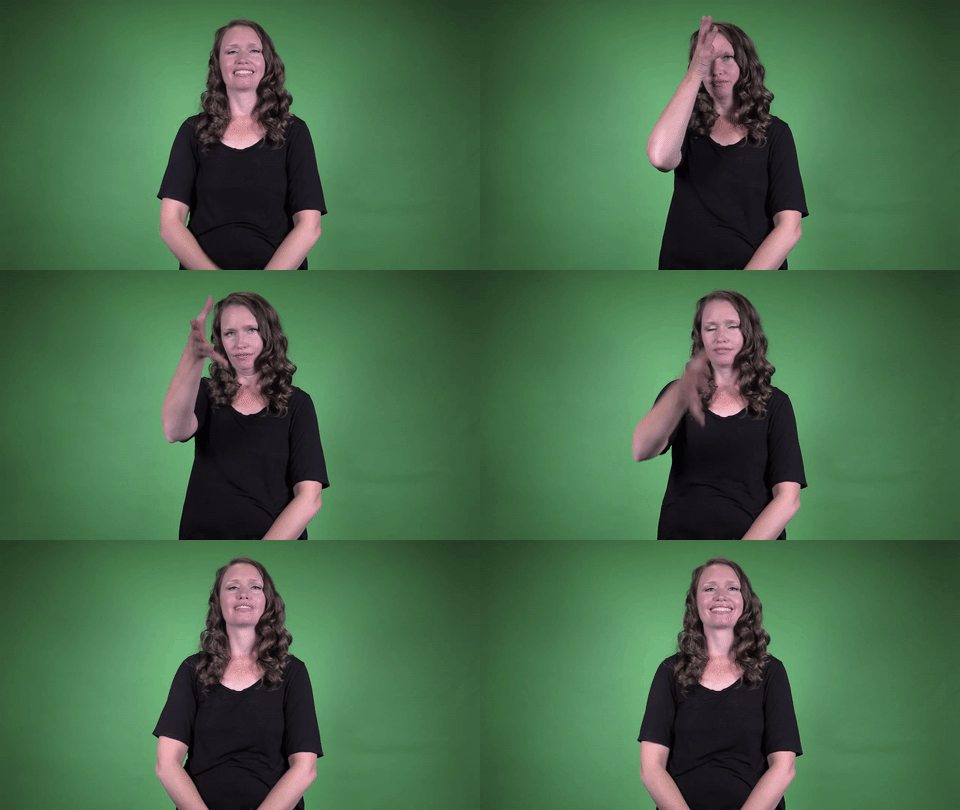
Definition: The father of one’s father or mother.
Sign for GRANDFATHER in ASL
Practice Activities:
Begin practicing the sign for GRANDFATHER in ASL by isolating the sign itself. Stand in front of a mirror and repeat the sign several times, focusing on the correct handshape—a spread ‘5’ hand—starting at the forehead and moving forward in a small outward arc. This helps reinforce muscle memory and makes your signing more fluid over time.
Once you are comfortable signing in isolation, start pairing the sign with other basic family signs like GRANDMOTHER, FATHER, and MOTHER. This will help you better understand the differences in similar signs. Try signing short phrases such as MY GRANDFATHER or YOUR GRANDFATHER IS FUNNY. Repetition of even basic sentence structures will improve fluency.
To use the sign in full sentences, try creating simple statements like MY GRANDFATHER LIKES FISH or GRANDFATHER LIVE CALIFORNIA. Practicing with example sentences allows learners to understand how this sign fits in regular conversations. Recording yourself can be a good way to review and self-assess your signing accuracy.
Partner activities are a great way to build comfort using the sign within dialogue. Practice asking and answering questions such as WHERE YOUR GRANDFATHER? or YOUR GRANDFATHER COOK GOOD? Have your partner respond with full answers to allow both of you a chance to use the sign in context.
Storytelling is another valuable exercise. Create a short visual story about your grandfather or a fictional one. For example, describe a day where GRANDPA and GRANDKIDS go fishing or attend a birthday party. Emphasize expressive movement and facial grammar while frequently using the sign for GRANDFATHER in ASL.
Flashcard drills or games like charades can also keep practice lively while reinforcing recognition and production. Use emojis to add engagement and visual cues in digital versions of these activities. Regular practice using the sign for GRANDFATHER in ASL in these varied contexts will help solidify understanding and confidence.
Cultural Context:
In American Sign Language, the sign for GRANDFATHER in ASL reflects deep respect and family connection. This sign is commonly used in daily conversations within Deaf communities to refer to a beloved family elder.
The sign for GRANDFATHER in ASL carries cultural significance beyond simple identification. Grandfathers often play important roles in family traditions, storytelling, and passing down values from one generation to the next. Using this sign connects the speaker to those ideas of heritage and wisdom.
Facial expressions and non-manual signals are crucial when using the sign for GRANDFATHER in ASL. These elements convey emotion and context, which is essential in ASL communication. Signing with a warm expression can indicate affection and respect for a grandfather figure.
Children often learn the sign for GRANDFATHER in ASL early in their language development. It is typically taught alongside other family signs like grandmother, mother, father, and siblings. These foundational signs are part of everyday vocabulary and help children build a sense of identity and family ties.
In Deaf culture, gathering around elders like a grandfather plays a big part in sharing life experiences. The sign for GRANDFATHER in ASL may be seen often during family storytelling times or community events. These interactions help preserve cultural traditions within the Deaf community.
The placement of the sign for GRANDFATHER in ASL near the forehead reflects male gender as defined in ASL structure. This aligns with the linguistic rules in ASL for signing male family members. The same structure can be seen in signs for father and uncle.
Using the sign for GRANDFATHER in ASL respectfully is important when engaging with Deaf individuals. Elders in the community are often valued for their knowledge and life stories, and the correct use of this sign can demonstrate cultural competence and awareness. Misusing or altering it may cause confusion or seem disrespectful.
When signing stories or sharing narratives in ASL, the sign for GRANDFATHER in ASL helps convey roles and relationships clearly. It adds clarity to who is involved in a story, especially in personal and family experiences. It also deepens emotional connections between the signer and the audience.
ASL has regional differences, and sometimes the sign for GRANDFATHER in ASL may have slight variations. However, the core meaning stays consistent across the country. It’s useful for learners to understand this variability as part of linguistic diversity in ASL.
In school settings or Deaf clubs, children and adults frequently use the sign for GRANDFATHER in ASL in role-play or
Extended Definition:
The sign for grandfather in ASL is a meaningful gesture that reflects familial connection across generations. In American Sign Language, this sign captures the respectful and endearing term we use for a father’s or mother’s father. The sign is a part of the broader use of family-related vocabulary in ASL and is important for expressing relationships clearly in everyday conversations.
To make the sign for grandfather in ASL, place your dominant hand with an open five-hand shape (fingers spread) at the forehead. Then move it outward in a small circular or bouncing motion, just a short distance away from your head. This motion represents the idea of a male elder, connecting to similar signs for father but with a movement that places the sign farther out to convey a generation further back.
The handshape used in the sign for grandfather in ASL is the same as that for father. The difference lies in the location and motion, which help distinguish between the two generations. This distinction is not just visual—it’s crucial for clear communication within conversations involving family members.
One way to remember the sign for grandfather in ASL is to think of the gesture moving away and above the face, symbolizing an older, more distant generation. This conceptual connection makes it easier for learners to associate the movement with the family hierarchy. Similarly, grandmother in ASL has a comparable motion pattern, reinforcing this generational theme across family signs.
In Deaf culture, grandparents often hold important positions of respect and mentorship. Knowing the sign for grandfather in ASL not only helps you describe your family members but also lets you participate more meaningfully in conversations about heritage, storytelling, and life experiences. The sign reinforces values of respect and history within the ASL community .
When learning the sign for grandfather in ASL, pay attention to facial expressions and non-manual signals. ASL relies heavily on body language to enhance clarity and meaning. A warm, affectionate facial expression can complement the sign and communicate your emotional connection.
It’s common to use the sign for grandfather in ASL during introductions, family tree discussions, or storytelling activities. Whether you’re sharing family history or talking about events like Father’s Day or family reunions, this sign helps convey the relationship clearly and respectfully.
Learners often practice the sign for grandfather in ASL along with other family-related signs such as grandmother, father, mother, and siblings. This builds a strong foundation for more advanced conversation and storytelling. Using these signs together helps expand your vocabulary and fluency in discussing personal life and
Synonyms: granddad, grandpa, gramps, grandpapa, pop-pop
Educational resources: Find related learning materials in our course bank!
Want more? Check out some of our popular learning activities on the homepage!
Need to look up a sign? Use our highly rated dictionary: https://aslinteractive.com/best-asl-dictionary/
Follow us on tiktok: https://www.tiktok.com/@aslinteractive. More social media links at the bottom of this page!
Long-tail Keywords: what is the sign for grandfather in ASL, how do you sign grandfather in American Sign Language, ASL sign for grandfather
Categories:
tags: Grandfather sign ASL, how to sign grandfather in ASL, ASL dictionary grandfather, American Sign Language grandfather, grandfather interpretation in ASL
Parameters
*Handshape*:
The handshape for the sign for GRANDFATHER in ASL uses the open “5” hand. All five fingers are extended and slightly spread apart, with the palm facing to the side or slightly forward depending on the signer.
In the sign for GRANDFATHER in ASL, the hand starts at the forehead and moves outward in a small bouncing motion. This open “5” handshape helps distinguish it from similar signs like FATHER.
*Palm Orientation*:
The palm orientation for the sign for GRANDFATHER in ASL begins with an open hand, fingers extended and spread apart, with the palm facing to the side or slightly forward. The hand starts at the forehead and moves outward in a small arc, away from the face.
This outward motion combined with the palm orientation helps differentiate the sign for GRANDFATHER in ASL from similar family-related signs. The palm remains open and generally upright throughout the motion.
*Location*:
The sign for GRANDFATHER in ASL is made at the forehead area. To perform it, the dominant hand is in the “5” handshape, and the thumb touches the forehead before moving outward in a small arc.
This location at the forehead is consistent with many male-related signs in ASL. Using this specific area helps to distinguish the sign for GRANDFATHER in ASL from other family-related signs like GRANDMOTHER, which is signed at the chin.
*Movement*:
The sign for GRANDFATHER in ASL begins with the dominant hand in the “5” handshape, thumb touching the middle of the forehead. The hand then moves outward in two small arches away from the forehead. This arching motion represents generational distance—grandfather versus father—by moving further from the head.
Repeat the movement slightly to emphasize the distinction. Be sure your facial expression is neutral or warm to match the familial context of the sign for GRANDFATHER in ASL .
*Non-Manual Signals*:
When performing the sign for GRANDFATHER in ASL, the expression should reflect warmth or neutrality, depending on the context. Slight eyebrow raise can indicate respect or attentiveness. A subtle head tilt or soft smile might be used to convey fondness, especially when referring to one’s own grandfather.
The sign for GRANDFATHER in ASL often includes a relaxed facial expression to show familiarity or affection. Ensure your upper face remains neutral if the context is formal or informational.
*Prosody, Dominant/Non-Dominant Hand*:
The sign for GRANDFATHER in ASL uses the dominant hand, formed in the “5” handshape, representing an open palm. Starting with the thumb touching the forehead, the hand moves outward in a small arc away from the face, indicating a familial male figure one generation above.
The non-dominant hand is not used in the sign for GRANDFATHER in ASL. This prosodic movement visually distinguishes it from the similar sign for “father,” adding generational context.
Tips for Beginners:
When learning the sign for GRANDFATHER in ASL, start by practicing the correct handshape. Use your dominant hand, forming an open “5” hand, and place the thumb on your forehead. Then move the hand slightly outward in two small arcs. This outward motion signifies a generation forward from FATHER.
Focus on your facial expressions while signing. In ASL, facial grammar is vital for clarity and nuance. A friendly or respectful expression can add meaning to the sign for GRANDFATHER in ASL, helping it more clearly reflect your intent when talking about family members.
A common mistake beginners make is confusing the placement of the hand. If the hand touches the chin instead of the forehead, you could accidentally sign “GRANDMOTHER” instead. Remember, male family signs like FATHER and GRANDFATHER originate from the forehead, while female signs such as MOTHER and GRANDMOTHER begin at the chin.
Hand movement should be fluid and not stiff. Practice the double outward motion to help your sign look natural and confident. Stiff or overly sharp movements can make the sign unclear or appear hesitant. Stand in front of a mirror while practicing the sign for GRANDFATHER in ASL to monitor the path and angle of your movement.
Also, be mindful of your dominant hand and maintain consistency. If you’re right-handed, always use your right hand for this sign, switching to your left only if you’re naturally left-handed. Switching hands randomly can confuse viewers.
Watching fluent signers and native users sign GRANDFATHER in ASL will help you pick up natural cues you might miss from textbooks alone. Try shadowing these signers during video practice . Most importantly, don’t rush—building precision and fluency in fingerspelling and signing takes practice and patience. Keep repeating the sign until it feels automatic and smooth.
Connections to Other topics:
The sign for GRANDFATHER in ASL is directly tied to the broader family-related vocabulary. It uses the same handshape and location as the sign for FATHER, but it moves slightly outward, symbolizing a generational step away. This movement conceptually reflects the idea that grandparents come before parents, offering a visual connection between family generations.
This pattern is mirrored in other family signs, such as GRANDMOTHER, which is an extension of the sign for MOTHER. Learners often find it helpful to group signs like GRANDMOTHER, GRANDCHILD, and GRANDPARENTS with the sign for GRANDFATHER in ASL to reinforce the generational aspect embedded in the signs. These signs often share similar motion or handshapes, making them easier to remember when studied together.
Compound signs also connect with the sign for GRANDFATHER in ASL. For instance, signs like GREAT-GRANDFATHER use repeated motion to extend the generational lineage. The concept of ancestry or family trees may incorporate multiple signs such as GRANDFATHER, FATHER, and MALE in a sequential or descriptive narrative when discussing genealogy in ASL.
Cultural context further deepens understanding. Discussing a GRANDfather in storytelling or cultural narratives often involves signs like RESPECT, WISDOM, or FAMILY, creating compound or supporting sign clusters. In Deaf culture, older generations often hold important knowledge or tradition, so the sign for GRANDFATHER in ASL may appear in narratives where the figure is passing down stories or language.
Additionally, comparing similar signs like UNCLE or FATHER helps learners recognize the distinctions in location and movement that define familial relationships. This reinforces the spatial and iconic principles of ASL that govern much of its vocabulary. By exploring how the sign for GRANDFATHER in ASL integrates into family lexicons and story-driven contexts, learners can gain a richer understanding of both the language and the culture that shapes it.
Summary:
The sign for GRANDFATHER in ASL is closely tied to the sign for FATHER but includes a spatial shift outward. The dominant hand uses the “5” handshape, touching the thumb to the forehead and then moving slightly forward in an arc. This motion indicates a generational distance from the immediate family.
This directional movement from the face outward is part of ASL’s morpho-phonemic structure. It mirrors the sign for GRANDMOTHER, which follows a parallel path from the chin area. Both signs embody familial hierarchy and generational ties in their formation.
The sign draws heavily from iconicity, a common feature in ASL where form visually reflects meaning. In this case, the base sign for FATHER is visually extended to imply “father of the parent.” The movement communicates the generational gap rather than relying on entirely different handshapes.
One of the key linguistic features embedded in the sign for GRANDFATHER in ASL is morphological modification. ASL often modifies root signs to convey related meanings, rather than creating new signs altogether. This morphological economy is efficient and highlights the visual and conceptual nature of the language.
Culturally, the sign signifies deep respect for elders in Deaf culture. Grandparents play a critical role in Deaf history, as stories and values are often passed down visually and intergenerationally. This context enriches the meaning behind the sign and how it’s perceived within the community.
The sign for GRANDFATHER in ASL also has sociolinguistic dimensions. In some regional or cultural groups, variations may exist in the movement or intensity. For example, some may use a double outward motion, while others stick to a single flick forward, depending on context or emotional tone.
Grammatically, the sign functions as a noun and interacts with possessive constructions. For example, signing MY GRANDFATHER involves placing a possessive sign before the main noun sign. The structure is flexible enough to accommodate various sentence patterns and emphasis based on topic-comment grammar typical in ASL.
Children learning ASL often learn the sign for GRANDFATHER early because it’s part of the core family vocabulary. Its similarity to other familial signs helps scaffold language acquisition. The visual pattern between GRANDFATHER, FATHER, and GRANDFATHER aids learners in categorizing relationships.
Phonologically, the sign incorporates a distinct location, movement, and handshape. All three parameters work together within the signed space to communicate meaning. Its consistency across most dialects of ASL makes it a foundational sign in both daily and academic settings.
When produced with facial expressions, the tone or emotional value of the sign for GRANDFATHER in ASL can shift. Warm eyebrows, a slight smile, or sharper motions can all change meaning. This reflects the grammar of facial expressions in ASL, which mirroring tone in spoken languages.
In story-telling contexts, especially within Deaf culture, grandparents are often represented using the sign repeatedly for clarity and emphasis. Signers will locate GRANDFATHER spatially and refer back to him throughout a narrative. This strategy uses referential space to enhance cohesion and clarity.
The sign is also encountered frequently in role-shifting, a technique used in ASL storytelling and dialogue to adopt different characters. Signers performing dialogues involving a grandfather may use differing levels and distinct placements to convey generational contrast. This strategy amplifies character dynamics and generational respect.
The sign for GRANDFATHER in ASL shares etymological roots with other familial signs. Understanding this can help learners and researchers recognize the morphological trends in ASL’s lexicon. For instance, the forehead area is often reserved for male gendered signs, while the chin is used for female ones.
This imposed gender-spatial dichotomy has historical roots in ASL and reflects older societal normativity. While some contemporary signers challenge this binary system, it remains deeply embedded in many conventional signs like GRANDFATHER. The language evolves, but understanding traditional structures provides clarity and cultural literacy.
In multilingual ASL-speaking households, code-blending may occur with spoken English. A sign like GRANDFATHER can be mouthed simultaneously with an English word, enhancing comprehension. This blend of modalities allows a seamless transition between sign and spoken forms, commonly seen in bilingual Deaf families.
The sign for GRANDFATHER in ASL can also take on symbolic meaning beyond the literal. Elders in many Deaf families are treated as guardians of Deaf identity and culture. The sign thus may carry weight in discussions about tradition, wisdom, and generational preservation within the community.
In artistic ASL performances such as poetry or theater, the sign for GRANDFATHER in ASL might be elaborated with sweeping or slow movements to denote reverence. Such uses highlight the adaptability of ASL to aesthetic and emotional expression while still adhering to its visual grammar.
Deaf education often includes family-tree exercises that use signs like GRANDFATHER to teach relational vocabulary and spatial reference. Students place different family members around them in an allocated space to show
Want more? Check out some of our popular learning activities!
ASL Interactive Resources
ASLInteractive YouTube Channel
Follow us on tiktok: @aslinteractive.com
Follow us on Instagram: aslinteractive
Facebook page: aslinteractive
Facebook group: aslinteractive
LInkedIn: ASL Interactive LLC
Twitter: @ASL_interactive
*Some information on this page is AI-generated. AI can make mistakes. Please check the information.


Responses