Definition: A building or room equipped for physical exercise.
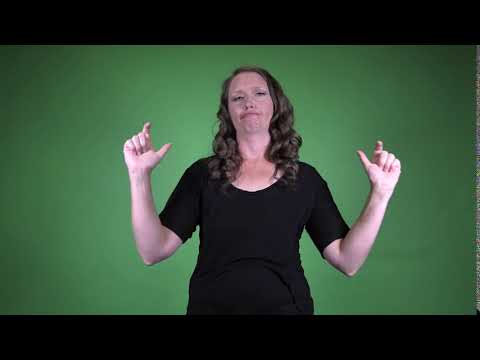
Sign for GYM 1 in ASL
Practice Activities:
To practice the sign for GYM 1 in ASL, start by isolating the motion. Stand in front of a mirror and repeat the sign slowly, focusing on the form and handshape. Pay attention to your elbow movement and make sure your hands mimic the action of lifting weights, which is core to this version.
Use the sign for GYM 1 in ASL in simple sentences such as “I go to the gym daily” or “She likes gym after class.” Practice saying these sentences aloud while signing, then try without vocalizing to reinforce visual memory. Record yourself and compare your sign to a reference video or your teacher’s demonstration.
Write a list of related vocabulary that might be associated with gym, like exercise, run, lift, sweat, and healthy. Practice incorporating the sign for GYM 1 in ASL with these words by forming two or three word phrases like “gym workout” or “after gym.” This builds vocabulary associations and fluency in context.
Create a short story about your weekly routine and integrate the sign for GYM 1 in ASL wherever appropriate. An example might be a Monday-through-Friday schedule that includes work, school, meals, and gym time. Sign the story to a partner or in front of a mirror to increase confidence with longer narratives.
Pair up with a classmate for a role-play activity. One of you is a gym employee and the other is a new member. Use the sign for GYM 1 in ASL while discussing classes, workout times, or gym policies. You can switch roles to expand your conversational practice.
Finally, try a visual scavenger hunt or charades-style game where one player signs “gym” in context and the other has to guess the sentence or activity. Making practice fun and interactive can enhance retention and ease of use.
Cultural Context:
In American Sign Language (ASL), the sign for GYM 1 carries more than just a physical or literal meaning. It reflects cultural values around health, activity, and community within Deaf culture. The sign for GYM 1 in ASL is often used when talking about workouts, fitness classes, or even a daily routine that includes physical activity.
Deaf culture emphasizes visual communication, so the environment of a gym can be both welcoming and challenging. Flashing lights or vibrations might be used in gyms to signal alarms or classes starting. So when someone uses the sign for GYM 1 in ASL, it may also reflect accessibility challenges and creative solutions for deaf and hard-of-hearing individuals.
The sign for GYM 1 in ASL is typically associated with lifting weights or doing strength training exercises. This version of the sign mimics the motion of lifting dumbbells, a familiar gesture in workout culture. It may be modified slightly in casual conversation, depending on the context or regional variations.
Within the Deaf community, group fitness activities can serve as social gatherings. Using the sign for GYM 1 in ASL may also carry conversational value beyond working out. It can imply meeting friends at the gym, joining a fitness class, or committing to healthier habits over time .
Children and teens growing up in Deaf households also learn the sign for GYM 1 in ASL in school contexts. Physical education classes use the term regularly, and it becomes a routine sign during school hours. Understanding this sign supports the integration of Deaf and hard-of-hearing students in physical education activities.
Fitness communities in the Deaf world have grown, especially via social media. Videos using the sign for GYM 1 in ASL are shared to showcase workout progress or describe training programs. These videos help inspire others in the Deaf and signing community to stay motivated and involved in fitness routines.
In tv shows or films featuring Deaf characters, the sign for GYM 1 in ASL may be used to show daily routines or highlight the character’s interests. It adds authenticity to Deaf representation in media. This reinforces how culturally embedded even a simple sign can be.
Deaf athletes also use the sign for GYM 1 in ASL when talking about training sessions or athletic preparation. In the Deaflympics and other sporting events, this sign can be part of discussions between teammates or coaches. It plays a role in teamwork, preparation, and motivation among Deaf sports communities.
Knowing the sign for GYM
Extended Definition:
The sign for gym 1 in ASL is a foundational vocabulary word often used by students, fitness lovers, and professionals. In American Sign Language, this sign is essential when discussing physical activity, workout routines, or school environments that include gym class. Knowing the correct sign helps improve communication in everyday interactions involving fitness or exercise spaces.
To produce the sign for gym 1 in ASL, you typically mimic the action of lifting weights. The motion resembles holding small dumbbells in each hand and curling them up like a bicep workout. This makes sense contextually since working out and lifting weights are common activities associated with a gym.
Understanding the sign for gym 1 in ASL enhances conversations about health, wellness, and daily routines involving the gym. Whether you’re planning a visit to the gym or recounting your day to a friend, using this sign lets the message come across quickly and clearly. It also helps in building fluency in ASL, especially when describing events or schedules.
In school settings, especially among children and teenagers, the gym is an important place. Signing the right term ensures that everyone understands the schedule and expectations. Teachers, interpreters, and students often rely on the sign for gym 1 in ASL to support inclusive and accessible communication.
The sign for gym 1 in ASL works well in various sentences. You might sign it when saying something like, I’m going to the gym after work, or I had gym class today. Because so many people use gyms in different parts of their lives, this sign appears frequently in daily communication across all age groups.
Using the proper sign also helps avoid misunderstandings caused by similar looking signs. ASL includes facial expressions and body movement, adding clarity to what’s being discussed. With gym 1 in particular, using the curling motion strengthens the association with fitness and makes the meaning obvious even without vocal words.
When learning ASL, practicing signs like the one for gym 1 helps reinforce memory and physical muscle awareness. The action-based nature of the sign helps beginners remember it easily. By linking visual and motion cues, the sign becomes second nature over time.
In conversations, this sign fits naturally when talking about healthy habits, regular workouts, or locations. It’s also useful in interpreting services for fitness instructors or personal trainers working with deaf clients. The sign for gym 1 in ASL builds an important bridge in health and lifestyle communication.
Deaf and hard-of-hearing communities frequently use this sign as part of shared experiences. Going
Synonyms: fitness center, health club, training facility, workout center, exercise gym
Educational resources: Find related learning materials in our course bank!
Want more? Check out some of our popular learning activities on the homepage!
Need to look up a sign? Use our highly rated dictionary: https://aslinteractive.com/best-asl-dictionary/
Follow us on tiktok: https://www.tiktok.com/@aslinteractive. More social media links at the bottom of this page!
Long-tail Keywords: What is the sign for gym in ASL, How do you sign gym in ASL, ASL sign for gym
Categories:
tags: fitness signs, exercise vocabulary, ASL places, health and wellness signs, recreational activities in ASL
Parameters
*Handshape*:
The handshape for the sign for GYM 1 in ASL uses both hands in the “S” handshape, resembling gripping a handle. The fists mimic a pulling motion, similar to using gym equipment or lifting weights . This representation connects directly with the idea of exercising or working out.
When signing the sign for GYM 1 in ASL, the hands are positioned shoulder-width apart and perform alternating upward movement near the shoulders. This movement further emphasizes the concept of physical activity or strength training.
*Palm Orientation*:
In the sign for GYM 1 in ASL, the palm orientation is primarily inward. Both hands form the “S” handshape, as if gripping imaginary weights, and move in a small circular motion near the shoulders. The palms face toward the body throughout the motion, mimicking the action of lifting dumbbells .
This inward palm direction helps clearly express the physical action represented in the sign for GYM 1 in ASL, enhancing its visual clarity. Proper palm orientation is key for this fitness-related sign.
*Location*:
The sign for GYM 1 in ASL is produced near the shoulders, generally a few inches out from each side of the upper body. This location helps visually convey the idea of physical exertion or weightlifting, which is central to the concept of a gym.
By placing the motion near the shoulders, the sign mimics lifting heavy objects, making it intuitive and connected to working out. The shoulder area is a natural choice for the sign for GYM 1 in ASL because it captures the movement associated with fitness activities. ️♂️
*Movement*:
To perform the sign for GYM 1 in ASL, form both hands into the S-handshape (fists) and bring them near each shoulder. Then, act as if lifting weights by moving the fists upward in an arc, mimicking a bicep curl. The motion is quick and repeated once or twice to emphasize the action .
The sign for GYM 1 in ASL uses a movement that clearly relates to physical activity or working out. The repeated curling motion helps convey the idea of exercise or bodybuilding.
*Non-Manual Signals*:
When using the sign for GYM 1 in ASL, the facial expression should reflect effort or physical exertion, mimicking the feel of lifting weights ️. Slight mouth movements like puffed cheeks or tight lips enhance the interpretation of working out. Raised eyebrows may also appear if you’re referencing “going to” or asking a question related to the sign for GYM 1 in ASL. Keep your focus and head slightly tilted if emphasizing action.
*Prosody, Dominant/Non-Dominant Hand*:
The sign for GYM 1 in ASL uses both hands, with the dominant hand generally mimicking a lifting motion like handling a weight. The dominant hand forms an “S” handshape and moves upward near the shoulder, like curling a dumbbell, while the non-dominant hand may remain neutral or assist depending on the variation.
This motion mimics the action of exercising, closely related to the meaning in the sign for GYM 1 in ASL ️. The movement is usually repeated to emphasize the concept of working out or going to the gym, giving the sign an athletic, dynamic feel.
Tips for Beginners:
When learning the sign for GYM 1 in ASL, begin by focusing on handshape and motion accuracy. This version typically mimics the motion of lifting weights by forming both hands into fists and mimicking dumbbell curls near the shoulders. Make sure your palms face inward and keep your elbows slightly bent for a natural, fluid motion.
Beginners often struggle with making the movement too stiff or too robotic. Keep the motion relaxed and smooth, as overly exaggerated or tense movements can be distracting or hard to read. When mastering the sign for GYM 1 in ASL, practice in front of a mirror to ensure your hand positioning and facial expressions look natural and clear.
Another key tip is consistency. Because this sign is based on a symbolic or mimetic representation of working out, it’s important that your movements don’t vary too much each time. Random or incomplete gestures may confuse your audience or change the meaning unintentionally. It helps to watch native signers demonstrate the sign for GYM 1 in ASL to match their fluidity and pacing.
Avoid the common beginner error of signing too fast. Speed can make even simple signs hard to understand. Take your time and be deliberate—it’s perfectly okay to be slow as long as you’re accurate. Over time, your speed will increase naturally with repetition and confidence.
Also, remember facial expressions matter, even with concept-based signs like this one. Adding a slight smile or showing enthusiasm helps convey the idea of exercise or activity. Practicing the sign in context, like signing “I go to GYM” or “Do you like GYM?” helps reinforce memory and fluid usage. Watching ASL storytelling videos or conversations where the sign for GYM 1 in ASL appears can boost comprehension and recall. Keep practicing regularly—muscle memory in your hands makes a big difference!
sign for GYM 1 in ASL, gym sign ASL, workout ASL sign, sign for exercise in ASL, fitness ASL sign
Connections to Other topics:
The sign for GYM 1 in ASL connects closely with general physical activity signs and other fitness-related vocabulary. For instance, the movement used in the sign mimics lifting weights or doing bicep curls, which visually ties it to signs such as EXERCISE or LIFT-WEIGHTS. This kind of iconic representation helps learners remember the sign and understand its meaning through clear visual feedback.
This sign also connects with broader themes like HEALTH, STRENGTH, and PHYSICAL-THERAPY. These terms can be combined with the sign for GYM 1 in ASL in sentence structures to describe routines or lifestyle habits. For example, you might sign GYM GO EVERYDAY or GYM WORKOUT HELP ME STRONG, combining multiple concepts to express daily habits or outcomes.
The sign can be a base for deriving or combining into phrases such as GYM MEMBERSHIP or GYM CLOTHES, where GYM is followed by fingerspelling or contextual signs like CLOTHES or CARD. This supports a learner’s ability to build more complex or specific phrases while keeping the core concept intact.
In contextual conversations, the sign for GYM 1 in ASL may also appear in discussions about goals, such as RESOLUTION JANUARY GYM START or GYM QUIT WHY. This makes it a useful sign not only in athletic contexts but in goal-setting, health discussions, or daily routine narratives.
Culturally, the sign fits with other environment-specific signs like SCHOOL, LIBRARY, or PARK. All of these represent places where specific activities occur, helping learners understand how to position signs spatially in discourse to match physical movement and real-world locations ️.
Knowing the sign for GYM 1 in ASL sets a foundational understanding that can be expanded into sports terminology, wellness vocabulary, and daily activity storytelling. It provides a springboard for language functions like describing habits, asking questions, or expressing preference related to lifestyle and physical care .
Summary:
The sign for GYM 1 in ASL uses a classifier-based movement that mimics lifting weights, conveying the idea of working out. This version is iconic, meaning it visually represents the action one might perform in a gym. It’s widely understood and rooted in physical gesture, making it easy to learn and contextualize.
To produce the sign, both hands are typically formed into the letter “S” handshape. The fists start near the shoulders and move upward as if curling dumbbells. This motion may repeat slightly for clarity or to emphasize the activity being referenced.
The sign for GYM 1 in ASL holds strong visibility in Deaf culture, especially within health, fitness, and recreational contexts. Fitness is a valued domain in the Deaf community, and accessible spaces like gyms are essential to promote social interaction and health awareness. As such, the sign not only reflects an action but also a place where community and self-care intersect.
This sign can function both as a noun and verb, depending on context. For example, it can refer to the physical location—gym—or to the act of working out. In ASL sentence structure, facial expression and body movement reinforce which meaning is intended.
In everyday use, signers might accompany the sign for GYM 1 in ASL with time markers or directional verbs. “Every morning I go to GYM” involves a time adverb at the start and directional verbs to sign “go.” These constructions make ASL a flexible language full of visual nuance.
Linguistically, the sign for GYM 1 in ASL exhibits iconicity, a key feature in sign languages where gesture reflects meaning. Iconicity makes early acquisition easier for learners, especially when signs parallel real-world actions. Because gym culture is body-centric, the sign’s visual form fits naturally.
Culturally, going to the gym represents more than just exercise. For many Deaf individuals, it provides a social outlet. Deaf-friendly gyms often foster strong community bonds, with signing staff and visual alerts enhancing safety and inclusion.
Historically, as the Deaf community gained access to more public spaces, signs like the one for GYM 1 in ASL evolved to reflect increased integration. The sign reflects a shift from exclusion to inclusion, underlying themes of visibility and equality in the health and wellness space. Its gestural basis hasn’t deviated much, showing consistency in how physical culture is expressed in ASL.
There are related signs like WORKOUT, MUSCLE, and STRONG, often used in the same context. These signs can be constructed around the central sign for GYM 1 in ASL to create deeper or more complex statements. For example, pairing GYM with STRONG can emphasize goals or outcomes of fitness routines.
ASL learners often find the sign for GYM 1 in ASL intuitive because it mirrors common gym motions. This enhances comprehension and expressiveness. Teachers may use real-life visuals or body language comparisons to solidify the concept for new signers.
Teachers and interpreters may explain the sign in structured curricula under health, recreation, or verbs of motion categories. Such context helps learners place the sign within broader ASL grammar and lexicon. The movement also fits well into classifiers or role-shifting techniques for storytelling.
Applied linguistics studies confirm the cognitive benefits of iconic signs, especially for kinesthetic learners. The sign for GYM 1 in ASL illustrates this, as its meaning is grasped through body movement. This learning style is beneficial in inclusive education models that integrate ASL.
From a translation perspective, interpreters translate spoken references to gym by using the sign for GYM 1 in ASL when appropriate. Simultaneous interpretation in exercise classes relies on consistency of signs like this to maintain flow and clarity. The consistency between spoken phrases and signed equivalents fosters comprehension for Deaf participants.
In conversations, the sign often appears with classifier expansions. One might use body shifts to depict lifting heavier weights or switching machines. This spatial feature of ASL allows GYM 1 in ASL to be expanded creatively.
In Deaf media or social media trends about health, the sign for GYM 1 in ASL may appear alongside signs like HEALTH, ACTIVE, or ENERGY. Posts using this sign often inspire motivation and pride in wellness goals. Emojis like often accompany these signs in online conversations.
In Deaf poetry or narrative, physical spaces like gyms become metaphors for strength or transformation. When incorporated into visual storytelling, the GYM 1 sign supports themes of resilience and effort. Performers often exaggerate or mold the sign to fit poetic rhythms.
Some regional variation exists in how GYM is signed, but GYM 1 remains the most widespread. Comparison with other versions can reflect local preferences or influences from adjacent sign languages. Instructors often teach the dominant form first, followed by regional variants.
Grammatically, GYM 1 does not require a location gesture unless necessary for clarity. The context usually provides enough cues, as AS
Want more? Check out some of our popular learning activities!
ASL Interactive Resources
ASLInteractive YouTube Channel
Follow us on tiktok: @aslinteractive.com
Follow us on Instagram: aslinteractive
Facebook page: aslinteractive
Facebook group: aslinteractive
LInkedIn: ASL Interactive LLC
Twitter: @ASL_interactive
*Some information on this page is AI-generated. AI can make mistakes. Please check the information.
Responses