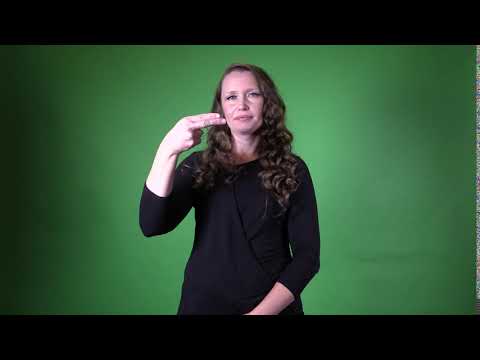
Sign for H in ASL | ASL Dictionary

Definition: The eighth letter of the alphabet.

Sign for H in ASL

YouTube player

Practice Activities:

To practice the sign for H in ASL, start with some mirror exercises. Sit in front of a mirror and create the correct handshape: the index and middle fingers extended together, the remaining fingers folded down, and the palm facing sideways. Hold the hand at shoulder height and check your accuracy and clarity in the reflection. Repeat several times for muscle memory.

Practice the sign for H in ASL by fingerspelling short words that begin with H, like “hat,” “hill,” or “hike.” Focus on transitioning smoothly in and out of the H handshape. Fingerspell these words slowly at first, then gradually increase your speed as you gain confidence. Try saying the word aloud as you spell it to reinforce mental associations.

Use flashcards to quiz yourself with letters, mixing up the alphabet to make sure you can recognize and sign H quickly with no hesitation. Ask a partner or teacher to hold up letter cards randomly and sign them back, paying close attention to handshape clarity when you reach the sign for H in ASL.

Engage in storytelling by creating a short narrative using as many H-initial words as possible. For example, you could tell a simple story about a horse, a hat, and a house. Every time you introduce a new H-word, emphasize the beginning with the sign for H in ASL. This helps build repetition and comfort with the movement.

Play a letter relay game with a partner. Take turns fingerspelling words and racing to identify the starting letter. Whoever signs or identifies the sign for H in ASL the fastest scores a point. These interactive methods reinforce both recognition and production.

Create a mini video of yourself fingerspelling the alphabet, pausing slightly on the sign for H in ASL. Watch your video playback to observe any adjustments needed in hand placement.

Cultural Context:

The sign for H in ASL is more than just a letter of the alphabet. In American Sign Language, the manual alphabet is used in a cultural and communicative context, making each handshape important for spelling out names, places, and unique words without signs.

When learning the sign for H in ASL, it’s essential to understand how commonly fingerspelling is used in Deaf culture. While signed vocabulary handles most communication, the manual alphabet, including the sign for H, is frequently used for proper nouns or technical terms.

In the Deaf community, fingerspelling helps connect names and labels with the wider world, allowing signers to express themselves clearly. Knowing how to fluently fingerspell and recognize the sign for H in ASL opens the door to better communication and more inclusive conversations.

Fingerspelling plays a vital role in education, especially for Deaf children learning English literacy. The sign for H in ASL isn’t just a gesture—it supports bridging the gap between spoken and signed languages. Understanding each letter strengthens language development and reading comprehension.

Whether you’re talking about someone named Hannah, referencing Honolulu, or spelling out historical facts in ASL, the sign for H is an important part of the larger fingerspelling system. Using the sign for H in ASL correctly ensures you’re respecting the structure of ASL and acknowledging the linguistic identity of its users.

Within Deaf culture, clarity and visual precision are key. Signing letters correctly—including the sign for H in ASL—demonstrates fluency and respect for visual communication norms. Incorrect handshapes can be confusing and may disrupt understanding in a fast-paced conversation.

Deaf events, schools, and households often embed fingerspelling in daily interactions. When spelling games or name signs are introduced, the sign for H often appears and becomes familiar to users at every level of fluency. Native and new signers alike practice these fundamental signs as part of cultural immersion.

Learning the sign for H in ASL also connects to storytelling in signed spaces. A storyteller may use fingerspelling to highlight a moment or character name that has cultural or emotional importance. It shows the artistry of signed languages and the fluid blending of ABCs with expressive gesture.

In performance art like Deaf poetry or theatrical signing, fingerspelling adds rhythm and emphasis. The sign for H in ASL may contribute to pacing or visual styling that strengthens the impact. These cultural practices show how even a single letter has value beyond the alphabet.

Finally, mastering the sign for H in

Extended Definition:

The sign for H in ASL is a fundamental part of the American Sign Language alphabet, also known as the manual alphabet. Fingerspelling is essential in ASL for spelling out names, places, or words that don’t have their own distinct sign. Learning how to form the sign for H in ASL helps learners build a strong foundation in communication.

To sign the letter H, you extend your index and middle fingers together while keeping the rest of your fingers tucked into your palm. The hand is held sideways, with the palm facing outward and the extended fingers pointing to the side. This positioning is key to making the sign readable and recognizable.

When practicing the sign for H in ASL, it’s important to pay attention to hand orientation and finger positioning. Even subtle differences in angle or finger separation can change the meaning or make the sign unclear. Precision in fingerspelling helps ensure accurate communication in conversations.

The manual alphabet, including the sign for H in ASL, is often taught early in ASL learning. It’s used not only to spell names but also for signing borrowed words, technical terms, and when clarifying specific spellings. Mastering these signs boosts confidence and improves expressive and receptive skills.

Kids and adults learning ASL benefit from daily practice of the alphabet. Repetition helps with memory retention and fluent fingerspelling. The letter H, like other letters, becomes easier to produce with consistent use and review.

In online ASL classes or tutorials, the sign for H in ASL is demonstrated with clear step-by-step visuals. Many learners find video content helpful for observing the hand shape and motion from different angles. These visual aids reinforce what you’ve read and provide additional context for learning.

Cultural context also plays a role in understanding the importance of accurate fingerspelling. Within Deaf culture, correct signing shows respect and effort to communicate effectively. Using the correct sign for H in ASL is a part of honoring that cultural commitment.

For teachers and interpreters, knowing how to articulate fingerspelled letters like H is essential for their work. Fingerspelling is used frequently in interpretation, requiring accurate and efficient formation of each letter. Knowing how to produce the sign for H in ASL fluently supports professional and educational goals.

In casual signing environments or group learning sessions, games and drills often include speed fingerspelling. These activities help improve recall of the sign for H in ASL and other letters under time pressure. They also make learning more fun and interactive.

Technology has made

Synonyms: Letter H, Alphabet H

Educational resources: Find related learning materials in our course bank!

Want more? Check out some of our popular learning activities on the homepage!

Need to look up a sign? Use our highly rated dictionary: https://aslinteractive.com/best-asl-dictionary/

Follow us on tiktok: https://www.tiktok.com/@aslinteractive. More social media links at the bottom of this page!

Long-tail Keywords: what is the sign for H in ASL, how do you sign H in ASL, ASL sign for the letter H

Categories:

tags: handshape signs, ASL alphabet, fingerspelling in ASL, learning American Sign Language, ASL basics

Parameters

*Handshape*:

The handshape for the sign for H in ASL involves extending the index and middle fingers straight out together while the rest of the fingers are tucked into the palm. The thumb rests lightly along the side of the ring finger, creating a compact and horizontal orientation.

To correctly form the sign for H in ASL, hold your palm sideways with the extended fingers pointing outward. This simple yet specific handshape is often used in fingerspelling and represents the letter H. ️

*Palm Orientation*:

For the sign for H in ASL, the palm orientation is key for proper execution. The hand is held in the horizontal plane with the palm facing sideways, typically toward the non-dominant side. The index and middle fingers are extended together, while the thumb holds the remaining fingers closed.

To ensure clarity in the sign for H in ASL, it’s important the fingers point directly away from the body. Proper palm direction gives the handshape its distinct letter representation.

*Location*:

The sign for H in ASL is produced in a neutral space in front of the body, usually at chest or shoulder height. The dominant hand forms the letter H using the extended index and middle fingers held together horizontally, with the palm facing out or slightly down.

During the sign for H in ASL, the hand is positioned slightly away from the torso to maintain visibility and clarity. This placement ensures the sign is easily recognized and distinct from other finger alphabet signs.

*Movement*:

To show the sign for H in ASL, begin by extending your index and middle fingers together while keeping the rest of your fingers closed into the palm. The palm faces sideways, with the tips of the two extended fingers pointing to the left if you’re right-handed.

There is no movement involved; it’s a static handshape held in place. Because the sign for H in ASL is part of the manual alphabet, it is used primarily for fingerspelling. ️

*Non-Manual Signals*:

When demonstrating the sign for H in ASL, non-manual signals remain neutral, since this letter is part of the ASL fingerspelled alphabet. The facial expression should be relaxed, without additional emotion or grammatical indicators, allowing the focus to stay on the specific handshape.

Because the sign for H in ASL is part of the manual alphabet, your facial posture should be composed and attentive, often used in spelling out words letter by letter. Maintain steady eye contact with your communication partner for clarity .

*Prosody, Dominant/Non-Dominant Hand*:

The sign for H in ASL uses the dominant hand in the handshape of the letter H from the manual alphabet. The index and middle fingers are extended together, palm facing outward, while the rest of the fingers are tucked into the palm.

The non-dominant hand is not used when forming the sign for H in ASL. This sign is held steady in a neutral space in front of the body, typically near shoulder level.

Tips for Beginners:

The sign for H in ASL is part of the manual alphabet and is formed by extending the index and middle fingers together while keeping the thumb tucked in front of the ring and pinky fingers, which are curled against the palm. Your palm should face sideways, not forward, and the hand should be held at a slight angle away from your body. It’s important to maintain the correct handshape and orientation to ensure clarity—slight changes can make it look like another letter, such as U or R.

When learning the sign for H in ASL, beginners should focus on finger positioning. One of the biggest pitfalls is accidentally separating the index and middle fingers, which can confuse the sign with the letter U. Another common issue is the thumb placement—it should lie flat across the curled fingers, not sticking out or hanging loosely.

A helpful tip is to practice the full fingerspelled alphabet regularly, not just isolated letters. Repetition helps muscle memory, and this is especially important with the sign for H in ASL, which requires firmness in the held fingers to avoid sloppiness. Try using a mirror or recording yourself on video to make sure your handshape is accurate.

Fluency comes from consistency, so practice using this letter in fingerspelled words such as HOUSE, HAT, or HELP. Watch ASL videos or follow along with a signing partner to compare handshapes in real time. Don’t be afraid to ask for feedback .

The sign for H in ASL appears simple but requires practice to do it accurately and confidently. Build muscle control gradually by holding the position for a few seconds at a time. Keep hands relaxed overall but precise in finger placement, and take frequent stretching breaks to avoid fatigue while practicing.

Connections to Other topics:

The sign for H in ASL is part of the American manual alphabet, which plays a crucial role in fingerspelling names, places, and other words without an established sign. This one-handed sign uses the dominant hand in an “H” shape, with the index and middle fingers extended and together, pointing to the side. Understanding this sign builds a foundation for both receptive and expressive fingerspelling skills.

The sign for H in ASL connects directly with the process of learning each individual letter as part of the manual alphabet. These foundation signs are essential when introducing new vocabulary, especially when signs are not yet known or do not exist. Mastering fingerspelling through signs like H allows for fluid conversation, especially in educational or professional environments where accuracy is important.

This sign also connects to fingerspelled compound signs and initialized signs. For example, in initialized signs, the handshape from the manual alphabet is used as the base. The sign for “hospital” uses the H handshape as it makes a cross-like motion on the upper arm, reflecting the English translation. Similarly, “high school” is often fingerspelled using H followed by S, showing another practical use of the sign for H in ASL.

In the context of classifier usage and name signs, the mastery of fingerspelled letters like the sign for H in ASL helps develop fluency. Some name signs incorporate the letter H based on the person’s name and a unique identifying feature. This not only bridges personal identity with the language but also ensures consistent use in community settings.

Learning the sign for H in ASL enriches understanding of alphabet-based communication, especially when integrated into signed storytelling, technical terms, and educational practices. Regular exposure and practice with this sign, along with others in the alphabet, enhances clarity and confidence in ASL expression .

Summary:

The sign for H in ASL is an essential component of the manual alphabet, used frequently in fingerspelling. It helps form proper nouns, names, technical terms, and concepts that lack designated signs.

To create the sign for H in ASL, hold the dominant hand in an “H” handshape, which resembles the index and middle fingers extended together horizontally, while the thumb supports underneath. The ring and pinky fingers are tucked down.

This sign is usually held palm facing outward or slightly inward depending on the signer’s preference or regional variation. The fingers should be firm and aligned horizontally, parallel to the floor.

It’s important that the fingers remain close together and not splayed. Accuracy in forming this shape is critical, especially in the context of fingerspelling where clarity affects meaning.

The sign for H in ASL comes into play when identifying words that contain the letter H. This includes common names like Hannah or Hayden and brand names or terminology in fields like science or art.

Culturally, the sign for H in ASL represents more than just a letter. It stands as a piece of the foundation for the linguistic richness of ASL and the Deaf community’s communication.

Within Deaf culture, fingerspelling facilitates access to vocabulary beyond standardized signs. It is a bridge to understanding unfamiliar or evolving language, and the sign for H helps build that bridge.

In context, fingerspelling letters like H is often incorporated smoothly within conversation. ASL users frequently fingerspell entire words and adjust speed based on fluency and the setting.

When considering grammatical use, the sign for H itself isn’t a standalone word but is intrinsic to lexical construction. For ASL grammar, fingerspell usage must align with sentence context and syntax to maintain flow.

Regional accents in signing may affect how stiffly or loosely the H handshape is formed. However, keeping the primary form consistent ensures mutual intelligibility across varied sign language communities.

The sign for H in ASL falls under the broader category of single-handed signs, particularly from the dominant hand. This dominant hand usage carries implications for handedness in acquisition and pedagogy.

In teaching ASL, explicit instruction in the handshape for H and its transition in fingerspelling sequences builds motor coordination and recognition. Educators emphasize repetition to develop signing fluency.

A linguistic view reveals that the formation of the sign for H in ASL draws on parameters like handshape, orientation, location, and movement—though H itself lacks movement, its correct form matters.

From an applied linguistics perspective, comprehending the sign for H in ASL within word constructions supports bilingual ASL-English learners. It aids in spelling equivalences and phonological processing.

The manual alphabet in ASL, including the sign for H, enhances cognitive awareness of symbol systems and contributes to literacy. It allows signers to navigate between visual-manual and written systems with ease.

Developing muscle memory of handshapes like H contributes to fluent signing, supporting expressive and receptive skills. This is especially crucial for words without conventional signs that need fingerspelling.

Children learning ASL often start mastering the sign for H early in their acquisition of the alphabet. Visual and kinetic reinforcement, such as flashcards and tactile models, aid in retention.

The fingerspelling of H is also used when distinguishing similar words or clarifying sound-based distinctions. For example, hotel and hostel may rely heavily on the accurate rendering of the H handshape.

In storytelling within the Deaf community, fingerspelling individual letters like H can contribute to narrative techniques. It may be used dramatically or aesthetically to convey names or suspenseful elements.

Over time, technological impacts such as sign language recognition software study the sign for H in ASL to improve automated understanding. Accurate modeling of such signs helps these tools learn effectively.

Emoji incorporation or digital visuals that represent the sign for H are increasingly popular in educational apps. They help reinforce learning through appealing, intuitive formats ✨.

When studying the sign for H in ASL, it’s helpful to compare it with neighboring letters like G and I. Their proximity in form and the alphabet can cause confusion without careful instruction.

DeafBlind communication often uses tactile fingerspelling, where the sign for H is produced into the listener’s hand. The shape must be formed precisely so that the information is transferred correctly.

In ASL poetry, which may incorporate letters artistically, the sign for H can participate in visual rhymes or patterns. These creative uses expand the functional boundaries of fingerspelling.

Students of interpreting need accurate command of the sign for H in ASL for on-the-fly fingerspelling during live interpretation. Proficiency ensures clear and rapid spelling of proper names or jargon.

In emergency settings, where clarity is vital, being able to fingerspell H precisely reduces the risk of miscommunication. Medical and legal interpreting often rely on such accuracy.

Cross-linguistic studies with other sign languages show similarities and differences in letters like H. For instance, British Sign Language uses a

Want more? Check out some of our popular learning activities!

ASL Interactive Resources

ASLInteractive YouTube Channel

Follow us on tiktok: @aslinteractive.com

Follow us on Instagram: aslinteractive

Facebook page: aslinteractive

Facebook group: aslinteractive

LInkedIn: ASL Interactive LLC

Twitter: @ASL_interactive

*Some information on this page is AI-generated. AI can make mistakes. Please check the information.


Responses