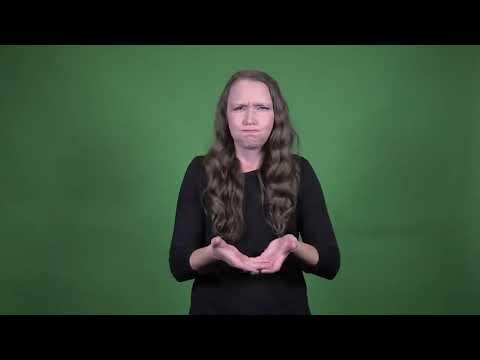
Definition: Of great weight; difficult to lift or move.
Sign for HEAVY in ASL
Practice Activities:
To practice the sign for HEAVY in ASL, begin by isolating the sign and repeating it multiple times in front of a mirror. Focus on your facial expressions and the movement of your shoulders and arms to convey the feeling of weight. You can hold an imaginary object and shift your body as if it’s difficult to lift, reinforcing the sign’s meaning with physicality.
Use the sign for HEAVY in ASL in short phrases like “this box is heavy” or “the bag feels heavy.” Translate these sentences from English into ASL and practice signing them smoothly. Record yourself to check for accuracy in handshape, motion, and non-manual signals like a strained expression or leaning movement.
Create sentences using the sign for HEAVY in ASL with different objects, such as “my backpack is heavy,” “that rock is heavy,” or “the suitcase was heavy yesterday.” Challenge yourself to describe why the object is heavy or how it made you feel. This helps build fluency and adds context to your usage of the sign.
Storytelling can also reinforce learning. Create a simple narrative around carrying a heavy object, such as moving into a new apartment or helping someone carry groceries home. Use expressive body language and clear transitions between signs to enhance storytelling. Practice retelling your story multiple times, either alone or with a partner.
Practice partner activities where you take turns describing items as heavy or light. Play a guessing game where one person acts out lifting an object and the other determines if it is heavy based on the sign. Add gestures and expressions that help reinforce the visual meaning.
Incorporate visual aids like images or objects and describe them using the sign for HEAVY in ASL. This helps create strong associations between the sign, the concept, and real-life objects.
Cultural Context:
In American Sign Language, the sign for HEAVY carries both physical and cultural meaning within Deaf communities. The motion and facial expressions used to show the sign for HEAVY in ASL are essential for clearly conveying the weight or burden of an object or idea. Like many ASL signs, it relies not just on handshape and movement but also on non-manual signals like tilted posture and efforted expressions.
The sign for HEAVY in ASL usually mimics the act of lifting or holding a weighty object. This emphasizes how ASL often uses visual and physical cues to represent concrete experiences. The fluid and descriptive nature of the language allows signers to express varying degrees of heaviness depending on context, such as a heavy box versus a heavy heart.
Understanding the sign for HEAVY in ASL also requires knowledge of the cultural nuances in Deaf communication. In Deaf culture, body language and facial expression are not just grammatical elements but also serve to connect emotion and intention to the meaning of a sign. When someone uses the sign for HEAVY in ASL to describe feelings or personal struggles, it can indicate emotional difficulty or stress beyond physical weight.
ASL is a complete and rich language that goes beyond translating English words into signs. For example, the sign for HEAVY in ASL can take on metaphorical meaning depending on how it is presented. When discussing emotional weight or responsibility, signers may use slower movement and exaggerated facial expressions to deepen understanding among viewers.
The Deaf community values clear and expressive communication, and the sign for HEAVY in ASL reflects this. Visual storytelling is a major part of ASL, and signs often involve full-body expression to give life to messages. When someone uses the sign for HEAVY in ASL in a conversation, they engage their audience through movement and expression that builds context for their message.
Cultural references may also influence how the sign for HEAVY in ASL is used and received. For example, common idioms or ideas about burden and responsibility can be integrated into the act of signing. It’s normal in ASL storytelling to see the sign for HEAVY in ASL used with creative flair, building deeper resonance with an audience familiar with visual metaphors.
ASL learners should pay close attention to how native signers use the sign for HEAVY in ASL during conversations or storytelling. Noticing variations in speed, expression, and intensity will give insight into the richer cultural meanings attached to a
Extended Definition:
The sign for HEAVY in ASL is a visually descriptive sign that uses body language to convey the idea of weight and physical strain. This sign typically involves mimicking the act of lifting something with effort, using both hands and a slight downward motion to show the object’s heaviness. Facial expressions play an important role in this sign, helping to emphasize how heavy the object feels.
When using the sign for HEAVY in ASL, context matters. It may refer to literal weight, such as carrying a heavy box or lifting a heavy bag, or it can describe emotional heaviness, like a serious or intense mood. ASL relies on visual cues, so size and exaggerated movements help clarify meaning.
In casual conversations, the sign for HEAVY in ASL can change slightly depending on what’s being described. For instance, if talking about a very heavy object, you might use more forceful hand motions or show strain on your face. This kind of visual grammar enhances understanding without needing extra words.
This sign is made by holding your hands up, palms facing up as if holding an object, and then moving your hands downward slightly while maintaining a steady, controlled motion. The hands and facial expressions work together to describe how difficult the object would be to lift. It’s a simple movement but highly effective because of ASL’s use of expressive elements.
The sign for HEAVY in ASL can also be used figuratively. You might use it when describing a heavy topic, such as grief, stress, or an important decision. In this case, the motion remains the same, but your facial expression becomes more serious to match the emotional weight.
Children learning ASL are usually introduced to the sign for HEAVY early on because it helps develop an understanding of opposites. HEAVY and LIGHT are often taught together to help improve vocabulary and concept pairing. This is especially helpful in educational contexts where visual contrast enhances comprehension.
In storytelling using ASL, the sign for HEAVY can add drama and depth. It helps to vividly paint a picture, whether through describing a character lugging a heavy suitcase or dealing with a heavy heart. These kinds of visual metaphors are one of ASL’s most powerful features.
When watching someone sign HEAVY, it’s clear how intuitive it is. Even for those new to ASL, the connection between the movement, facial expression, and the meaning of the sign is often immediately understood. This makes it an ideal sign for beginners to learn
Synonyms: dense, weighty, massive, hefty, burdensome
Educational resources: Find related learning materials in our course bank!
Want more? Check out some of our popular learning activities on the homepage!
Need to look up a sign? Use our highly rated dictionary: https://aslinteractive.com/best-asl-dictionary/
Follow us on tiktok: https://www.tiktok.com/@aslinteractive. More social media links at the bottom of this page!
Long-tail Keywords: what is the sign for heavy in ASL, how do you sign heavy in ASL, ASL sign for heavy gesture
Categories:
tags: weight signs, size and measurements, descriptive signs, feeling heavy, ASL adjectives
Parameters
*Handshape*:
The dominant and non-dominant hands use bent open B handshapes, with fingers extended and together, and thumbs extended. Palms face upward as if supporting a weight. In the sign for HEAVY in ASL, both hands are placed in front of the body slightly apart, then move downward slightly as the shoulders and upper body lean back, simulating the effort of holding something weighty.
The handshape is crucial to conveying physical strain or mass, enhancing the meaning in the sign for HEAVY in ASL. The bent fingers help depict an imagined heavy object resting on the palms, adding realism to the sign.
*Palm Orientation*:
For the sign for HEAVY in ASL, the palm orientation starts with both hands open and flat, palms facing upward toward the ceiling. The hands are typically placed in front of the chest or slightly lower. As the sign is produced, the hands move downward slightly as if mimicking lifting or carrying a heavy object. This downward motion emphasizes the weight being conveyed in the sign for HEAVY in ASL.
*Location*:
The sign for heavy in asl is produced in the neutral space in front of the chest. Both hands are palm-up with slightly curved fingers, as if supporting a weight. The hands start at chest level and then move downward slightly, as though mimicking the strain of holding or lifting something heavy.
This central location helps visually express the weight implied in the concept. Signing in this space reinforces the meaning, making it clear and easily understood. The sign for heavy in asl uses body placement to enhance the visual metaphor of heaviness.
*Movement*:
Start with both hands in front of your body, palms facing upward, fingers slightly curved as if holding a large object. Your arms should be bent at the elbows in a relaxed position.
Then, with a forceful motion, lower both hands downward simultaneously a few inches while maintaining the curved handshape. This mimics the action of holding something very heavy. The sign for heavy in ASL uses exaggerated effort in the movement to emphasize weight .
*Non-Manual Signals*:
When producing the sign for heavy in ASL, the facial expression should display effort or strain. Puffing the cheeks slightly or tightening the mouth, combined with a furrowed brow, helps show that an object is difficult to lift or carry.
The body may lean slightly forward as if countering the weight. These non-manual markers enhance the meaning of the sign for heavy in ASL, showing that the object truly feels burdensome. ️♀️
*Prosody, Dominant/Non-Dominant Hand*:
The sign for heavy in ASL uses both hands. The dominant and non-dominant hands are open and flat, palms facing upward as if holding something weighty. Bring the hands up slightly in front of the body, then move them downward with a slight arc, showing the effort of holding something heavy. Facial expression is important—often a strained or weighted expression is used to enhance the meaning.
In the sign for heavy in ASL, both hands work together symmetrically. The motion mimics the sensation of holding or lifting a heavy object, allowing the viewer to feel the concept behind the sign. This simultaneous motion and prosody work together to convey the correct meaning clearly and effectively.
Tips for Beginners:
When learning the sign for HEAVY in ASL, it’s important to focus on the physicality of the movement. This sign relies heavily on body language to communicate the sense of something being difficult to lift or carry. To sign it, use both open, flat hands with palms facing up as if holding a box. Then simulate the weight by lowering your hands slightly while making a strained facial expression. That facial expression is key—it helps to emphasize the heaviness you are trying to portray.
Beginners often forget to include the facial expression, which can make the sign look flat or unclear. Remember that American Sign Language heavily relies on facial cues and body movements in addition to hand signs. Practice in front of a mirror to ensure your facial expression matches the meaning of the sign for HEAVY in ASL. Over time, your use of expressive facial grammar will become second nature, making your signing more fluent and understandable.
Another tip is to pay attention to arm and shoulder engagement. When you lower your hands in the sign, don’t just drop them. Use subtle tension in your arms and shoulders to convey effort. This adds realism and improves the visual impact of the sign for HEAVY in ASL, especially when used in conversation.
Be sure to stay smooth and avoid jerky motions. The movement should be deliberate but not stiff. Jerky or rushed hand movements can confuse the meaning or distract the viewer. Practice slowly and build up your speed with confidence
Finally, observe fluent signers and try to mimic their movements as accurately as possible. The more you see the sign for HEAVY in ASL in real-life context, the better your understanding will be. Consistent practice with feedback is key to mastering nuanced signs like this one.
Connections to Other topics:
The sign for HEAVY in ASL connects closely with other weight-related vocabulary, such as LIGHT (as in not heavy), HEFT, and BURDEN. These concepts often share similar movement patterns or handshape modifications, helping learners recognize categories of related signs. Visual-spatial thinking is key, as the sign for HEAVY conveys weight through downward motion and body posture, often using facial expressions to indicate relative heaviness.
This sign is also useful in compound expressions or descriptive narratives. For example, in a phrase like “HEAVY RAIN,” the sign for HEAVY might be modified with repetition or intensity of movement to emphasize volume. In metaphoric expressions, such as describing emotions, you might sign HEAVY combined with HEART to express feeling emotionally burdened or overwhelmed.
The sign for HEAVY in ASL also ties into contrastive concepts like strong and weak. For instance, one might sign HEAVY then contrast it with LIGHTTHING to describe size or material differences in a pair of objects. It’s a helpful anchor for understanding how physical descriptors in ASL can be adapted to a broad spectrum of meanings, including metaphorical uses.
In discussions around manual classifiers, learning the sign for HEAVY supports understanding of descriptive classifiers (CL:5 or CL:2 bent), where handshapes represent objects being weighed down or pressing heavily on a surface. This opens up storytelling abilities and more expressive signing. When talking about vehicles or large animals, using HEAVY can add vivid imagery by suggesting the weight or impact of that object.
Learners often encounter the sign for HEAVY in ASL while exploring topics such as physics concepts, fitness, food descriptions, and emotional states. This diversity of usage makes it a practical and versatile sign. Mastery of HEAVY provides a base for talks about both tangible and intangible weight across many real-life ASL situations. ️♀️
Summary:
The sign for HEAVY in ASL is iconic in nature, meaning the movement and positioning of the hands conveys the weight of an object. To perform this sign, a signer usually holds both flat hands in front of them, palms facing up, as if holding an invisible load. Then, the hands move downward slightly to indicate the idea of weight or burden.
Physically, the sign mimics the act of holding something dense or difficult to lift. The hands show resistance as they drop, which communicates a sense of sinking under the weight. This tactile, visual expression aligns with how Deaf culture commonly represents descriptive concepts through classifiers and facial expressions.
Facial grammar plays a crucial role in expressing the degree of heaviness. A signer may furrow their brow or tense their face to intensify the meaning and show effort. This sync between handshape, movement, and facial cues creates a holistic representation of the concept.
The sign for HEAVY in ASL calls upon an intuitive experience. Most people understand what it feels like to lift something heavy, and this bodily connection makes the sign more accessible and meaningful. It’s an example of how ASL taps into shared human physical experiences to represent abstract ideas.
The same structure can be modified slightly to communicate “very heavy” or “not that heavy” by adjusting the movement of the hands, the amount of pressure demonstrated, or the facial markers. This flexibility in the sign makes it functionally dynamic and contextually adaptable in conversations.
Grammatically, the sign for HEAVY in ASL can be used as an adjective, often appearing before or after a subject in sentence structure depending on topicalization. For instance, “box heavy” or “heavy box” might both be acceptable depending on emphasis and flow. ASL grammar allows this fluidity, relying heavily on context cues and non-manual signals.
From a linguistic viewpoint, the sign is classificatory and descriptive. It correlates with classifier constructions when describing objects that are specifically heavy based on their shape or size. A person might switch to classifiers after using the basic sign for HEAVY in ASL, deepening the description.
Related signs include LIGHT, which is performed with bouncing hands or a lifting motion and expresses the opposite meaning. Contrastive signs like HEAVY and LIGHT help learners understand conceptual opposites and expand their vocabulary thematically through tactile associations. This thematic connection strengthens retention in second language acquisition.
Another related term is BURDEN, which can be conceptually linked to HEAVY but is often expressed more abstractly. In ASL, BURDEN might involve metaphorical signing, sometimes with emotional context, rather than a literal depiction. These layers of meaning show the richness of ASL and its capacity to convey nuance.
In Deaf culture, the sign for HEAVY in ASL can also be metaphorical. Expressions like “heavy heart” or “heavy news” are conveyed with the same sign but with modifications in facial expression to indicate emotional weight. The sign’s adaptability demonstrates the interplay between physical sensation and emotional experience.
Sometimes, the sign appears in idiomatic phrases or poetic ASL storytelling. A performance may feature the sign in association with struggle, weight, or challenge, often layered metaphorically to discuss life experiences. This multidimensional use reflects the artistry embedded within the language and culture.
The sign for HEAVY in ASL is also frequently used in educational settings to describe objects during hands-on learning. For example, in a science class for Deaf students, discussing mass and weight naturally includes this sign. Its visual clarity supports STEM education language development in ASL users.
Applied linguistics researchers have studied such iconic signs to explore how ASL organizes conceptual domains. The sign for HEAVY in ASL serves as a case study in how embodied cognition plays into semantic construction. This supports wider fields like cognitive linguistics and language behavior theory.
Moreover, the sign offers a point of comparison between signed and spoken languages. In spoken English, the word “heavy” lacks any immediate physical association. But in ASL, the embodied performance of the sign allows the word to carry physical, emotional, and metaphorical connotations more vividly.
Children acquiring ASL as a first language usually learn the sign early because it pertains to everyday objects and emotions. Holding a heavy book, moving a chair, or talking about a difficult experience all involve this concept. As such, it’s a foundation for more complex expressive competency.
In signed narratives, especially when telling a story involving labor or emotions, the sign is integral. A signer might mime being weighed down or carrying something emotionally taxing. The audience immediately understands both the literal and figurative implications, enriching the depicted story.
The rhythm and flow of the sign for HEAVY in ASL integrate into broader sentence structures seamlessly. It maintains the visual rhythm of ASL and can be emphasized through repetition or enhanced gestures when needed. This visual pacing highlights the performative aspect of signed conversation.
In practical use, Deaf professionals may use the sign
Want more? Check out some of our popular learning activities!
ASL Interactive Resources
ASLInteractive YouTube Channel
Follow us on tiktok: @aslinteractive.com
Follow us on Instagram: aslinteractive
Facebook page: aslinteractive
Facebook group: aslinteractive
LInkedIn: ASL Interactive LLC
Twitter: @ASL_interactive
*Some information on this page is AI-generated. AI can make mistakes. Please check the information.


Responses