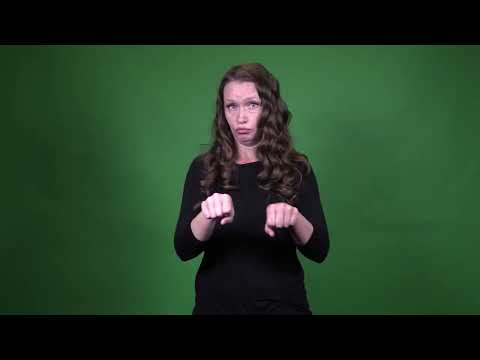
Sign for HORSESHOE in ASL | ASL Dictionary

Definition: A U-shaped metal plate nailed to the bottom of a horse’s hoof.

Sign for HORSESHOE in ASL

YouTube player

Practice Activities:

To build fluency with the sign for HORSESHOE in ASL, begin by practicing the sign in isolation while facing a mirror. Focus on your handshape, movement, and facial expressions. Repetition is key—sign HORSESHOE five to ten times in a row while maintaining clear articulation and form.

Use flashcards with the word and its corresponding sign to test recall. Incorporate category-based games where you name objects associated with horses or sports, then include the sign for HORSESHOE each time it’s mentioned. Practice fingerspelling related terms such as “horse,” “nail,” “metal,” and “good luck” to connect vocabulary contextually.

Try building simple sentences that use the sign for HORSESHOE in ASL. For example: “I found a horseshoe in the barn,” or “My uncle keeps a horseshoe for good luck.” Replay these sentences in front of a peer or ASL tutor for feedback. Record yourself and watch for accuracy, then correct as needed.

As a storytelling activity, create a short narrative about a horse losing its horseshoe during a race. Sign the story using descriptive classifiers, timelines, and spatial referencing. Retell the story several times to gain confidence and fluency while incorporating the sign for HORSESHOE in ASL at relevant points.

Pair up with another learner and create a scavenger hunt in your classroom with ASL clues. The clues should include sentences like “Look behind the horseshoe,” prompting the searcher to recognize and process the sign in context. This helps reinforce dynamic comprehension.

Incorporate the sign into daily routines by labeling objects or showing the sign every time you use a horseshoe magnet or decor item. The more frequently the sign for HORSESHOE in ASL appears in real-life contexts, the more naturally it will become part of your expressive skills.

Cultural Context:

In American Sign Language, the sign for HORSESHOE in ASL is more than just a representation of a physical object. It carries cultural meaning that connects both to Deaf culture and the significance of symbols in everyday life. Understanding the sign for HORSESHOE in ASL requires looking at how Deaf communities contextualize tools, games, and traditions that are visually expressive.

The horseshoe has a long-standing place in American traditions, from being a good luck charm to a competitive game enjoyed at gatherings. When using the sign for HORSESHOE in ASL, many Deaf individuals also draw associations with these cultural meanings. ASL is a visual language, so using signs that reflect the function or shape of an object like a horseshoe helps to make the concept easily understood.

In Deaf culture, handmade signs that reflect the object’s shape or purpose are valued for their clarity. The sign for HORSESHOE in ASL often mimics the curved form of the object or the act of tossing it in a game. This shows how closely ASL connects with real-world experiences by translating physical actions into meaningful visual signs.

The game of horseshoes, for example, is common at community events, inclusive camps, and backyard celebrations. For signing communities, sharing this activity often strengthens social bonds. When talking about these gatherings, the sign for HORSESHOE in ASL becomes part of wider conversations about leisure and togetherness.

Deaf storytellers may even use the sign for HORSESHOE in ASL when recounting stories filled with symbolism, competition, or luck. Because ASL storytelling relies heavily on imagery, using signs that clearly depict the object’s function—like the horseshoe being flung toward a stake—keeps the narrative authentic and engaging. This highlights the value placed on visual accuracy and expressiveness in the culture.

Horseshoes have also been widely recognized as symbols of protection and prosperity. When using the sign for HORSESHOE in ASL, the symbol isn’t just literal—it can carry layered meanings tied to folklore and belief. ASL users may incorporate this sign into poems, visual songs, and community expressions of hope or fortune.

In educational settings, learning contextual signs like the sign for HORSESHOE in ASL can help Deaf students relate academic lessons to their own cultural experiences. Teachers may pair the sign with stories or games to build both language and cultural identity. This enriches vocabulary while reinforcing cultural inclusion.

ASL learners often find signs like the sign

Extended Definition:

The sign for horseshoe in ASL represents both the object itself and its connection to equestrian activities or good luck symbols. To express this concept clearly, American Sign Language users rely on iconic movements and shaped hand configurations to mirror the curved shape of a horseshoe.

In ASL, classifiers and descriptive elements can be used to make the sign for horseshoe easily understood. The hands often mimic the shape of the curved metal piece, arching in a circular motion from top to bottom. Sometimes, the motion may vary depending on the context—if the discussion is about sports, horse equipment, or the symbol of luck.

When signing about objects like a horseshoe in ASL, it’s important to consider the context of the conversation. Whether you’re talking about placing a horseshoe on a horse’s hoof or using a horseshoe as a decorative item for good luck , the sign might be slightly modified by facial expressions or body positioning. This flexibility is what gives ASL its visual richness and clarity.

The sign for horseshoe in ASL may also include fingerspelling the word first, especially when introducing it for the first time or in educational settings. After that, the more iconic or classifier-based version can be introduced for ongoing communication. This practice helps viewers understand the concept behind the sign from the beginning.

Some ASL users pair the horseshoe sign with signs for related words such as horse, racing, blacksmith, or barn equipment to offer deeper context. This is especially useful in settings where someone is explaining the role of a horseshoe or how it’s installed. Adding such connections helps convey meaning clearly without needing extra explanation.

Because the shape of a horseshoe is very recognizable, the visual representation in the sign for horseshoe in ASL can often stand alone once context is established. This makes it easy for signers to slip it into conversations about sports, rural life, superstitions, or even Western-themed events . The visual design of the sign adds a powerful layer of communication that hearing people may not even notice.

Common locations for using the sign include farm-themed educational environments, ASL classes introducing tools and hardware, or informal discussions about lucky charms. In all these cases, it remains a useful vocabulary item for learners and native users alike. The flexibility and visual nature of ASL make visually descriptive signs like the one for horseshoe especially effective.

If you’re describing a game where a horseshoe is tossed toward a target, you might combine the basic sign for

Synonyms: horseshoe, U-shaped metal, hoof protector, shoe for horses, farrier’s shoe

Educational resources: Find related learning materials in our course bank!

Want more? Check out some of our popular learning activities on the homepage!

Need to look up a sign? Use our highly rated dictionary: https://aslinteractive.com/best-asl-dictionary/

Follow us on tiktok: https://www.tiktok.com/@aslinteractive. More social media links at the bottom of this page!

Long-tail Keywords: what is the sign for horseshoe in ASL, how do you sign horseshoe in ASL, ASL sign for horseshoe

Categories:

tags: horseshoe sign in ASL, ASL signs for objects, ASL travel and recreational signs, how to sign horseshoe in ASL, American Sign Language vocabulary for objects

Parameters

*Handshape*:

The sign for HORSESHOE in ASL uses both hands in a curved “C” handshape, mimicking the shape of a horseshoe. Palms face each other with the fingertips pointing upward, and the movement often includes bringing the hands down and around in a U-shaped motion.

This curved “C” handshape helps visually represent the actual form of a horseshoe. The sign for HORSESHOE in ASL is iconic, making it easily understood through its shape-based representation.

*Palm Orientation*:

The palm orientation for the sign for HORSESHOE in ASL generally involves both hands in a curved “C” shape, palms facing each other. The hands are held in front of the body and mimic the shape of a horseshoe, with fingers pointing slightly upward.

To clarify the sign for HORSESHOE in ASL, the palms remain mostly inward, focusing on visually outlining the U-shaped object. This palm orientation helps emphasize the curved form typical of a horseshoe .

*Location*:

The sign for HORSESHOE in ASL is typically made in the neutral space in front of the torso, slightly below chest level. Both hands start near the center of the body and move outward in a curved motion to mimic the shape of a horseshoe.

When performing the sign for HORSESHOE in ASL, keep the movement in front of your body without raising your hands above shoulder height. This location allows for clear visibility of the sign and maintains the horseshoe shape effectively .

*Movement*:

To produce the sign for HORSESHOE in ASL, form both hands into bent “U” handshapes with palms facing each other and tips pointing slightly downward. Starting with hands apart at shoulder width, move them downward and inward in a curved motion to mimic the shape of a horseshoe.

The movement should be smooth and deliberate, ending with fingers pointing at an angle toward the body. The sign for HORSESHOE in ASL visually represents the rounded metallic object placed on a horse’s hoof .

*Non-Manual Signals*:

When performing the sign for HORSESHOE in ASL, the facial expression should reflect mild interest or context-appropriate emotion, such as enthusiasm if discussing a game or object. Keep the eyebrows neutral or slightly raised depending on how the sign is used in a sentence.

Eye gaze should follow the hand movement if you’re mimicking the shape or placing of the horseshoe. Use relaxed cheeks and a focused expression to clearly support the sign for HORSESHOE in ASL .

*Prosody, Dominant/Non-Dominant Hand*:

The sign for HORSESHOE in ASL uses the dominant hand to trace the shape of a horseshoe in the air. The hand is usually in a bent “V” or curved shape, and it moves in a semi-circular motion, mimicking the outline of a horseshoe.

The non-dominant hand typically remains still or may lend subtle support, depending on regional variation. This shape-based sign visually represents the horseshoe object, helping clarify the sign for HORSESHOE in ASL in a clear, iconic way.

Tips for Beginners:

The sign for HORSESHOE in ASL is generally performed by fingerspelling the word H-O-R-S-E-S-H-O-E. Since it’s a compound and specific noun, fingerspelling is the clearest and most recognized way to convey it. Beginners should practice keeping their hand steady, fingers well-articulated, and make sure each letter flows naturally into the next without pausing too long between letters.

Consistency in handshape and orientation during fingerspelling is vital. Many beginners rush through the sign for HORSESHOE in ASL, which can result in incomprehensibility or confusion. Slow down initially to build muscle memory and finger dexterity. Also, keep the signing hand at shoulder height and in line with your dominant side to maintain clarity.

Pay special attention to the transitions between letters S-H and S-H again, as doubling letters in fingerspelling can be tricky. The thumb placement on the “H” and keeping the hand from bouncing or wobbling while repeating letters helps keep the sign legible. If you find it difficult to smoothly sign these letters, try isolating them in drills for added fluency.

Watching native signers spell out the sign for HORSESHOE in ASL can provide a visual benchmark. Use video resources or apps that slow down fingerspelling so you can observe hand positions more accurately. Also, using a mirror can help you self-correct and develop visual feedback for proper form.

Avoid mouthing or speaking the word as you sign it. It’s a common error that undermines clarity in sign language communication. Focus instead on eye contact and clear, confident signing. Whether fingerspelling a specialized object or tool, accuracy matters.

Lastly, keep in mind that fingerspelling is an essential skill across many niche vocabulary terms in ASL. Practicing words like the sign for HORSESHOE in ASL strengthens your overall fluency and builds confidence for real-time conversations.

Connections to Other topics:

The sign for HORSESHOE in ASL connects to broader vocabulary involving tools, sports, and animals, particularly those used in equestrian contexts. It naturally extends from the sign for HORSE, which uses an upright bent “U” handshape near the forehead, suggesting the animal’s ears. From there, spatial or classifier modifications can indicate the object “horseshoe” as something attached to the foot of the horse, using bent handshapes to represent the U-shape of a horseshoe.

This sign also links to sports and games, as horseshoes are used in the classic game where players toss horseshoes toward a stake. In ASL, the concept of the game is often shown by using descriptive classifiers and movement to show the throwing action, which can be combined with the sign for HORSESHOE to make the meaning clear. While there may not be a unique standard lexical sign for “horseshoe game,” signers often combine contextual clues and classifiers for clarity.

The sign for HORSESHOE in ASL is also conceptually related to blacksmithing, farrier work, and farming. These occupational or historical topics provide an opportunity to explore situational vocabulary. You might see compound explanations where signs like METAL, SHOE, or NAIL are incorporated to describe the function of horseshoes in a more technical way, supporting the understanding of the word in educational or historical contexts.

Additionally, the shape of a horseshoe being traditionally associated with good luck connects the sign for HORSESHOE in ASL to expressions of fortune and symbols in ASL. You might see signs like LUCK or SYMBOL used in tandem with HORSESHOE to describe cultural meanings or superstitions. This semantic link enhances the vocabulary depth for storytelling or cultural discussions in ASL.

Summary:

The sign for HORSESHOE in ASL generally involves a visual mimic of the object’s shape, often using both hands to form a curved “U” or semicircular shape. This creates a clear iconic representation, which is an essential feature of many signs in American Sign Language. The hands may curve upward similarly to the actual contour of a horseshoe, making the sign easily understood, even by those new to signing.

Depending on the signer’s regional dialect or specific community conventions, the sign may vary. These variations often maintain the curved handshape as a core part of the sign’s identity. The dominant and non-dominant hands might both be used palm-forward, forming the curve simultaneously, or one hand might trace the shape in the air.

The sign for HORSESHOE in ASL is rooted in visual-spatial representation, reflecting ASL’s unique linguistic nature. The curvature mimics the form of a horseshoe, aligning closely with the principle of iconicity. This kind of sign inherently helps link concepts and vocabulary through visually motivated gestures.

When conveying the sign, contextual information can help differentiate it from other similarly shaped signs. A signer’s body language or accompanying signs, like HORSE, LUCKY, or METAL, can lend more depth or clarify meaning if needed. For example, pairing it with the sign for HORSE may contextualize the term in discussions regarding equestrian activities or farriery.

Given the horseshoe’s symbolic meanings in diverse cultures, including luck, protection, and prosperity, the sign may appear in idiomatic or metaphorical expressions in conversational ASL. In these cases, the sign for HORSESHOE in ASL can be adapted with facial expressions or sentence structure to highlight symbolic intent rather than literal meaning.

The word “horseshoe” in English carries layers of cultural relevance, which means its ASL counterpart can be used across different settings, from casual stories to cultural metaphors. In some families or cultural narratives, signing about a found horseshoe may represent a story of finding good luck or making a significant discovery.

In deaf culture, visual storytelling is a powerful mode of communication, and the sign for HORSESHOE in ASL can contribute to vivid, culturally grounded narratives. Especially in ASL storytelling, where signs embody elements of character, setting, and emotion, a well-performed sign for HORSESHOE in ASL can be rich with implied meaning.

Grammatically, the sign can serve as a noun within a sentence, taking regular positional parameters in ASL syntax. It may also function within classifiers—for example, showing the object being nailed or thrown. These spatial-verbal references are often constructed using indexing and placement in the ASL signing space.

The structure of the sign for HORSESHOE in ASL places it comfortably alongside other signs that emphasize shape and function, such as BRIDGE, ARCH, or UMBRELLA. These signs share linguistic qualities where the shape of a physical object is conveyed through the simultaneous use of hand configuration, motion, and space.

From a linguistic perspective, the sign exemplifies how American Sign Language constructs nouns based on form and practical associations. Because it is visually intuitive, the sign is rarely misunderstood when executed clearly and within context. The shape is universally recognizable, aiding cognitive processing and recall in both fluent and learning ASL users.

Applied linguistics often highlights the role of cognitive iconicity in second-language acquisition, and the sign for HORSESHOE in ASL is a clear example. Learners new to ASL often find signs with obvious ties to visual forms easier to retain and retrieve compared to arbitrary ones. The sign’s clarity supports vocabulary development and reinforces understanding through visual association.

In educational contexts, instructors might pair the sign for HORSESHOE in ASL with real-life imagery or tactile objects. Especially within deaf education, using concrete references helps bridge abstract concepts. This dual exposure strengthens semantic networks in learners using both ASL and English.

ASL poetry and literature have also featured horseshoes symbolically, drawing on both tangible and symbolic meaning. In a visual-spatial language like ASL, such objects take on layered meaning, moving beyond their literal definitions. When incorporated into creative expression, the sign can open tactile and metaphorical associations alike.

Deaf athletes or community members involved in equestrian sports may integrate the sign for HORSESHOE in ASL in unique ways. In such contexts, users may develop derivative or context-specific variations of the sign to reflect team names, competitions, or cultural branding. These customized uses further demonstrate the language’s dynamic adaptability.

In families with multi-generational signers, the sign for HORSESHOE in ASL may be passed down with slight inherited differences in palm orientation or size of the curve. These native variations embed familial identity into language use. Signers often celebrate such diversity, seeing it as a hallmark of generational linguistic richness.

Technological advances in ASL interpretation have made documenting such signs more accessible

Want more? Check out some of our popular learning activities!

ASL Interactive Resources

ASLInteractive YouTube Channel

Follow us on tiktok: @aslinteractive.com

Follow us on Instagram: aslinteractive

Facebook page: aslinteractive

Facebook group: aslinteractive

LInkedIn: ASL Interactive LLC

Twitter: @ASL_interactive

*Some information on this page is AI-generated. AI can make mistakes. Please check the information.


Responses