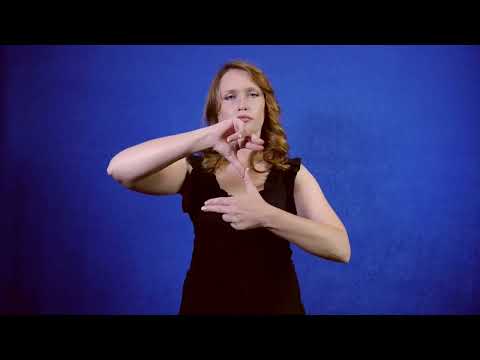
Definition: A storm with a violent wind.
Sign for HURRICANE in ASL
Practice Activities:
Begin by practicing the sign for HURRICANE in ASL in front of a mirror. Focus on maintaining the correct handshape and movement while watching for clarity and fluid motion. Repetition is key, so try doing the sign ten times slowly, then increase speed while staying accurate.
Once comfortable with the isolated sign for HURRICANE in ASL, move on to using it in short phrases. Practice saying things like “big hurricane,” “hurricane warning,” and “hurricane coming soon,” combining signs for size, time, and alerts. Sign each phrase several times, slowly at first and then more naturally.
Apply the sign within full sentences. For example, sign: “Last year, a hurricane hit Florida,” or “The news talked about a hurricane.” Think of places and events related to hurricanes and create sentences around them. Saying the sentence out loud in English before signing can help solidify the meaning.
Create a storytelling prompt involving extreme weather. Describe a scene where a hurricane is approaching a coastal town. Include signs for wind, rain, evacuation, and shelter. Practice telling the story to a partner or record yourself and review your fluency and accuracy.
With a partner, alternate signing different weather conditions using the sign for HURRICANE in ASL when appropriate. One person signs a sentence, and the other reacts or adds detail. For example, “The hurricane destroyed the houses,” and the partner might sign, “People had to leave.” This helps build conversational skills and encourages expressive communication.
Watch weather reports or news clips and try to translate key parts into ASL using relevant signs. Focus on identifying where the sign for HURRICANE in ASL would appear and practice signing those sections. Repetition and context practice will help reinforce memorization and understanding.
Cultural Context:
The sign for HURRICANE in ASL carries both linguistic meaning and cultural importance. American Sign Language often reflects not only the vocabulary but also the lived experiences of the Deaf community. Natural disasters like hurricanes deeply impact people’s lives, and so the sign for HURRICANE in ASL becomes part of important conversations around safety, preparedness, and community support.
In ASL, visual storytelling is key. The sign for HURRICANE in ASL mimics the swirling motion of storm systems, using classifier handshapes that give viewers a vivid mental image. It’s not just a word—it’s a way to convey urgency, intensity, and movement in a way that resonates deeply within visual language norms.
Community members often share weather updates and emergency alerts through sign language videos or interpreting services. Knowing the sign for HURRICANE in ASL enables access to critical safety instructions and news. It ensures Deaf individuals aren’t left out of essential conversations during severe weather situations.
Because storms like hurricanes can cause widespread damage, the ability to sign this concept is essential in educational and emergency response settings. The sign for HURRICANE in ASL is often used in schools, community centers, and public service announcements to inform and protect. Being familiar with it strengthens communication in high-risk situations.
The Deaf community often organizes specific outreach programs during disaster preparedness events. Understanding the sign for HURRICANE in ASL allows for more inclusive services and information distribution. These efforts make sure no one is excluded from safety planning due to a communication barrier.
Children learning ASL are taught key signs for natural events, and the sign for HURRICANE in ASL is typically introduced during weather-related lessons. This early exposure helps Deaf children understand and discuss severe weather from a young age. It also fosters independence by giving them the tools to recognize and respond to weather threats.
Social media also plays a big role in spreading awareness. During hurricane seasons, videos using the sign for HURRICANE in ASL often circulate widely across Deaf and signing communities. These videos help share preparedness plans, evacuation schedules, and shelter locations, all using accessible language.
Cultural sensitivity and access to signed resources become even more crucial during emergency situations. The use of the sign for HURRICANE in ASL helps fill these gaps. It acts as both a visual shorthand and a serious reminder of the need for equal access to public information.
In Deaf culture, visual accessibility is a cornerstone of communication. The presence of signs like
Extended Definition:
The sign for hurricane in ASL represents the intense circular wind patterns and motion associated with real hurricanes. In American Sign Language, this sign uses a combination of handshapes and movement that mirrors the swirling direction of a storm, offering a strong visual connection to its natural form. It’s a powerful gesture and easily recognized in the context of weather discussions.
To produce the sign for hurricane in ASL, you start with both hands in the modified ‘5’ handshape, facing each other, and then rotate them in a circular motion outward. The twisting movement mimics the way hurricanes form and move. This sign is part of a larger group of weather-related signs often used in conversations about storms, climate, and environmental news.
This sign may vary slightly across regions, as often happens in ASL. However, the concept stays consistent: showing motion and force to reflect the natural energy of a hurricane. Because hurricane is a common term in news and weather reporting, knowing the correct ASL form helps improve communication and accessibility for members of the Deaf community.
ASL users typically use facial expressions along with the sign for hurricane in ASL to help show intensity or severity. This adds clarity when describing dangerous storms versus milder weather conditions. These expressions are essential in bringing meaning and emotion to weather-related conversations.
The sign for hurricane in ASL is not limited to use during bad weather. It’s also used in educational settings, weather forecasts interpreted in ASL, science discussions, and emergency communication. Schools and interpreters rely on this ASL sign to explain weather patterns and prepare people for natural disasters—especially during hurricane season.
Like many other weather signs, hurricane in ASL relies on visual storytelling. Signers create a picture with their hands to convey motion, strength, and direction. This visual design plays a crucial role in making ASL an effective and expressive language.
Teachers and interpreters often include the sign for hurricane in ASL when teaching students about natural disasters. It helps create an inclusive learning environment for Deaf and hard-of-hearing students. Animated lessons often pair the hurricane sign with visuals that show real hurricanes on maps or in simulations.
When used in context, such as in a sentence about storm preparation or news alerts, the sign for hurricane in ASL allows Deaf individuals to understand emergency plans and take action quickly. This makes the sign especially important during warnings and evacuations. Clear communication saves lives, and having a consistent sign plays a crucial part in that.
Signing hurricane correctly offers more than just vocabulary—it
Synonyms: cyclone, typhoon, tropical storm, windstorm, tempest
Educational resources: Find related learning materials in our course bank!
Want more? Check out some of our popular learning activities on the homepage!
Need to look up a sign? Use our highly rated dictionary: https://aslinteractive.com/best-asl-dictionary/
Follow us on tiktok: https://www.tiktok.com/@aslinteractive. More social media links at the bottom of this page!
Long-tail Keywords: What is the sign for Hurricane in ASL?, How do you sign Hurricane in ASL?, ASL sign for Hurricane
Categories:
tags: weather signs, natural disaster signs, emergency preparedness signs, environmental ASL vocabulary, severe weather ASL
Parameters
*Handshape*:
The handshape for the sign for HURRICANE in ASL uses both hands in the “R” handshape, with fingers crossed and thumbs tucked in. This specific configuration represents the swirling motion of a storm system. ️
Both “R” handshapes are positioned in front of the body and move in a circular motion around each other, mimicking the spinning nature of a hurricane. The handshape plays a crucial role in accurately conveying the sign for HURRICANE in ASL.
*Palm Orientation*:
The palm orientation for the sign for HURRICANE in ASL involves both hands shaped in the “R” handshape, with palms facing each other. The movement simulates a swirling or circular motion, mimicking the rotation of a storm system ️.
Throughout the sign for HURRICANE in ASL, the palms remain generally inward facing, maintaining a controlled circular motion. This reinforces the rotating, chaotic nature typical of a hurricane, enhancing the visual representation of the concept.
*Location*:
The sign for HURRICANE in ASL is produced in the neutral space in front of the upper torso, typically just in front of the chest or slightly higher. This location allows visibility for the circular hand motion, which mimics the swirling motion of wind similar to an actual hurricane ️.
Since the sign for HURRICANE in ASL uses both hands moving in small circles toward each other, the neutral space offers enough room for this movement. Keeping the motion centralized ensures clarity and allows the viewer to easily follow the action from a comfortable viewing angle.
*Movement*:
The sign for HURRICANE in ASL begins with both hands in the modified “R” handshapes (the middle finger crossed over the index). The hands are held slightly apart near head height. They rotate around each other in small outward circular motions, mimicking the swirling eye of a hurricane ️. The motion shows the chaotic rotation and intensity represented by a real storm system.
In the sign for HURRICANE in ASL, these circular movements often move slightly downward or outward while rotating. This fluid motion helps convey the spiraling winds typical of a hurricane. Facial expressions are also important—use a tense or intense look to add meaning and realism.
*Non-Manual Signals*:
When performing the sign for HURRICANE in ASL, the facial expression should convey seriousness or urgency, ideally with furrowed brows and slightly widened eyes. The severity of the non-manual signals can vary based on the context—use more intensity if describing a strong or destructive hurricane ️.
To clearly express the sign for HURRICANE in ASL, a focused and slightly concerned look enhances the meaning. Your facial expressions reinforce the chaotic and powerful nature typically associated with a hurricane.
*Prosody, Dominant/Non-Dominant Hand*:
The sign for HURRICANE in ASL uses both hands in the “R” handshape from the ASL alphabet. The dominant and non-dominant hands mirror each other. Begin by crossing the wrists in front of the body, with fingers slightly curved. Then rotate the hands in small, circular outward motions to represent the swirling motion of a storm ️.
This motion mimics the rotation of strong winds, adding visual clarity to the sign for HURRICANE in ASL. Maintain a steady, fluid motion, keeping the hands at chest level.
Tips for Beginners:
When learning the sign for HURRICANE in ASL, it’s important to focus on handshape and movement consistency. This sign typically uses the “1” handshape on both hands to represent the swirling motion of storm winds. Begin by holding both index fingers upward, slightly curved, then rotate them around each other in small circular motions, simulating a spiral.
To effectively master the sign for HURRICANE in ASL, make sure your movements are smooth and controlled. Jerky or overly wide circles can confuse the meaning or make the sign look unnatural. Practice in front of a mirror to ensure your hand positioning and motion match the correct visual concept of a hurricane’s rotation. Smooth, steady movement helps convey the force and motion of a hurricane more accurately.
One common pitfall is using uneven or mismatched hand movements. Beginners sometimes move one hand faster or off-center from the other, which disrupts the visual balance of the sign. Stay mindful of your hand synchronization, and aim for coordination between both hands each time you sign.
Facial expressions also play a crucial role in enhancing the message behind the sign for HURRICANE in ASL. Show intensity or concern with your facial expression to help the viewer understand the severity or impact of the storm you’re referring to. Emotion adds depth and clarity to weather-related signs.
For new ASL learners, remember to keep your palm orientation consistent. Both palms should usually face each other as your fingers rotate in a clockwise or counterclockwise direction. Practicing hand orientation separately before full sign execution can help build confidence and muscle memory.
The sign for HURRICANE in ASL can also overlap with other weather-related vocabulary. Watching ASL videos that include weather reports can help reinforce context and variation, aiding in better retention and natural use in conversation.
Connections to Other topics:
The sign for HURRICANE in ASL is related to other weather-related signs such as TORNADO, STORM, and WIND. These connections are important because they often share similar movement parameters or handshape elements, such as a swirling motion to show a powerful atmospheric event. Understanding how these signs interrelate helps learners build a broader vocabulary within the theme of meteorology in ASL.
In compound signs, the sign for HURRICANE in ASL can be used in contexts like EMERGENCY-HURRICANE or HURRICANE-WARNING. These combinations help convey specific situations or alerts during storm season. This contextual use aligns with how ASL expresses temporal and environmental urgency, merging basic signs into meaningful narratives.
The use of directional motion in the sign for HURRICANE in ASL, typically a circular movement of interlocked index fingers or ‘1’ handshapes to represent storm rotation, shares visual storytelling techniques found in other visually descriptive signs. Similar visual grammar appears in signs like TORNADO, which may use similar spiraling motion, helping learners distinguish between different weather types while recognizing shared signing structures.
The sign also connects to emergency preparedness vocabulary, such as EVACUATE, PREPARE, WEATHER-ALERT, and FLOOD. These terms are commonly taught together during discussions of natural disasters, so knowing the sign for HURRICANE in ASL supports clearer communication in community and educational settings. This interconnected vocabulary is useful for interpreting public information and safety briefings.
For students and interpreters, recognizing how the sign for HURRICANE in ASL is positioned within the broader genre of environmental storytelling in ASL enhances fluency. It promotes cultural competency, as the Deaf community often discusses events like hurricanes within shared life experiences. Instructional settings may also use the sign as an example of classifiers and spatial use in depicting storm paths and movements. ️
Summary:
The sign for HURRICANE in ASL draws on visual metaphors that resemble the spiral motion of a storm system. It typically involves both hands in the “R” handshape (the ASL letter R) circling around each other in a small, rapid motion moving outward to represent the cyclonic activity of a hurricane.
This sign beautifully mirrors the motion of a storm cell as shown in weather maps and satellite images. The circular movement and intensity are captured through hand movement, speed, and facial expressions, helping to convey urgency and immensity.
Facial expressions play a key role when signing the sign for HURRICANE in ASL. Eyebrows may raise or the mouth may widen in slight astonishment to match the destructive force of the storm, reinforcing the visual impact and emotional tone behind the event being discussed.
The use of the “R” handshape roots this sign in a semantic connection with the word “rain” or “rotation.” ASL often leverages handshape representations to provide mental associations and easy recall, making this sign both conceptually and mnemonically effective.
Context is vital with the sign for HURRICANE in ASL. When used in a sentence, it may be accompanied by classifiers or directional signs that show the path or damage caused, allowing the signer to paint a complete picture of the storm’s behavior.
Classifiers in ASL can work in tandem with the sign for HURRICANE in ASL, such as to show buildings collapsing, wind gusts moving, or floodwaters rising. These additions enrich the communication, transforming the sign from a simple word to a multidimensional narrative tool.
This sign is generally used as a noun, but it functions contextually to talk about phenomena, emergencies, or weather conditions. Grammar adjustments through topicalization and time indicators can help frame the event within a larger discussion.
The sign for HURRICANE in ASL also connects culturally to shared community experiences. In Deaf communities affected by hurricanes, recounting stories of evacuation, sheltering, and recovery often begins with this visually striking sign, making it a point of entry into dialogue about resilience and survival.
In emergency readiness sessions, the sign for HURRICANE in ASL often becomes standardized language. It is valuable for accessible communication during natural disasters, enabling quicker and clearer understanding among Deaf individuals, first responders, and interpreters.
As climate change intensifies, the use of signs for environmental and weather events grows more common. The sign for HURRICANE in ASL sits within a broader suite of signs used to describe ecological events, strengthening environmental awareness and vocabulary within the Deaf community.
From a linguistic perspective, the circular movement of the hands shows how motion contributes to ASL’s spatial grammar. It demonstrates how verbs and nouns within ASL can be distinguished or emphasized through repetition or motion path.
Phonologically, the sign for HURRICANE in ASL involves movement, handshape, palm orientation (inward facing), and location (in front of the body). Mastery of these elements is critical for clear communication across dialects or regions.
The handshape “R” used in this sign is not accidental. It connects to other weather signs involving air or water movement, allowing for cross-linguistic and morphological analysis of patterns within ASL weather-related lexicon.
The sign for HURRICANE in ASL may also be modified to depict intensity. Larger, faster circles can indicate a category four or five storm, while a slower motion may indicate a tropical storm or downgraded weather system.
Some signers may introduce the topic with the fingerspelled word H-U-R-R-I-C-A-N-E followed by the sign. This is common in formal settings, like education or news interpretation, where clarity and precision override brevity.
The sign for HURRICANE in ASL fits into a large system of natural disaster vocabulary within ASL that includes signs for tornado, flood, earthquake, tsunami, and wildfire. Each sign is distinct but often shares similar anatomical and kinetic elements based on movement and expressive storytelling.
This alignment among signs indicates a body-based logic that ASL users rely on. The physicality helps transform abstract concepts like natural disasters into visible, physically felt experiences.
Historically, ASL has adapted to changing weather patterns and new disaster terms through community-driven language development. The sign for HURRICANE in ASL is part of this adaptive system, showing how sign languages evolve in response to social and environmental needs.
The visual grammar of ASL allows for incredible nuance. When discussing a hurricane’s development, path, and aftermath, the information is often layered with directional movement, descriptive classifiers, and facial grammar, which give depth and emotion to the narrative.
Interpreter practices often place emphasis on matching the signer’s or speaker’s tone. When relaying news about hurricanes, interpreters use the sign for HURRICANE in ASL with appropriate intensity, energy, and visual urgency, adhering to best practices
Want more? Check out some of our popular learning activities!
ASL Interactive Resources
ASLInteractive YouTube Channel
Follow us on tiktok: @aslinteractive.com
Follow us on Instagram: aslinteractive
Facebook page: aslinteractive
Facebook group: aslinteractive
LInkedIn: ASL Interactive LLC
Twitter: @ASL_interactive
*Some information on this page is AI-generated. AI can make mistakes. Please check the information.


Responses