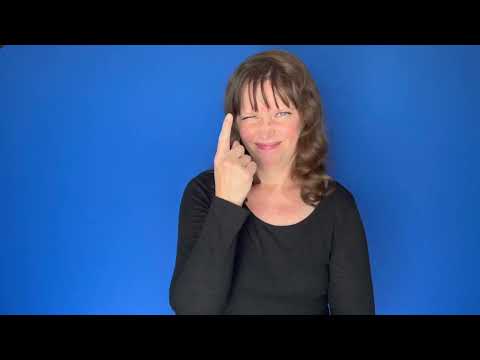
Definition: To not comprehend ASL.
Sign for I DON’T UNDERSTAND ASL in ASL
Practice Activities:
Practice using the sign for I DON’T UNDERSTAND ASL in ASL by starting with the individual components: the sign for “I”, the sign for “don’t”, and the sign for “understand.” Practice each element slowly, then combine them into one fluid expression. Remember to include facial expressions. A furrowed brow or slight head shake helps show that you truly don’t understand.
Use a mirror to check your form and clarity. Sign the phrase while watching yourself, making sure each part is clearly signed and your eyebrows are slightly raised at the right time. Repeat this practice until you feel more confident performing the full sign for I DON’T UNDERSTAND ASL in ASL.
Next, incorporate this phrase into simple sentences. For example, sign: “Sorry, I don’t understand ASL,” or “Can you repeat? I don’t understand ASL.” These short sentences help reinforce fluency in natural communication. Try recording yourself and watching the playback. This allows you to catch any small errors in movement or facial expressions.
Storytelling practice is another great activity. Create a short scenario in your head where someone tries to talk to you in sign and you reply using the sign for I DON’T UNDERSTAND ASL in ASL. You could mime being at a deaf event or meeting a new person. Sign the situation as realistically as possible to give it more context.
Practice with a partner whenever possible. One person can introduce basic signs or sentences, and the other responds using the phrase. Role-playing as a new student or tourist learning ASL adds variety to the activity and keeps engagement high.
Finally, include this phrase in your daily practice routine. Use flashcard apps or hand-written cards with real-world situations where you may not understand something. When you see a relevant scenario, perform the sign to reinforce recall and use of the sign for I DON’T UNDERSTAND ASL in ASL.
Cultural Context:
In Deaf culture, clear communication is a core value, and knowing how to express when you don’t understand something is essential. The sign for I don’t understand ASL in ASL is frequently used in everyday conversations, classrooms, and social situations where clarification is needed.
The sign for I don’t understand ASL in ASL is more than just a gesture—it’s a respectful way to show a willingness to learn and engage in communication. In the Deaf community, it’s not only acceptable but encouraged to ask someone to repeat or clarify if something is unclear.
When someone uses the sign for I don’t understand ASL in ASL, it shows humility and fosters more inclusive interaction. Deaf individuals appreciate when someone takes the time to learn and use culturally appropriate signs to express confusion or seek clarity.
The cultural context behind using the sign for I don’t understand ASL in ASL involves valuing directness and openness. Rather than pretending to follow along, using this sign demonstrates honesty and helps keep the conversation accessible for all parties involved.
Deaf culture prioritizes visual communication, so the sign for I don’t understand ASL in ASL holds deeper meaning than simply expressing confusion. It shows respect for the language, the culture, and the ongoing communication process by actively participating rather than withdrawing.
In many settings, especially educational environments or public spaces with Deaf individuals, the ability to use the sign for I don’t understand ASL in ASL ensures smoother interaction. It gives both Deaf and hearing individuals the tools to navigate misunderstandings collaboratively.
Learning the sign for I don’t understand ASL in ASL also encourages cultural awareness and promotes connection across language barriers. Rather than relying on verbal backup, this sign aligns with ASL norms and strengthens trust among communication partners.
The gesture itself reflects the importance of mutual understanding in ASL dialogue. When used appropriately, the sign for I don’t understand ASL in ASL also encourages natural pauses that allow for clarification and improved interaction without frustration.
In Deaf culture, it’s common practice to confirm understanding or ask for repetition, so using the sign for I don’t understand ASL in ASL prevents miscommunication. It plays a key role in respectful exchanges and shows your engagement with the conversation.
Additionally, using the sign for I don’t understand ASL in ASL can be an invitation for others to slow down or modify their signing for clearer understanding. This adaptability is a cornerstone of inclusive communication in the ASL community.
Whether you’re learning ASL or engaging with Deaf peers, showing that you don’t understand through the correct
Extended Definition:
The sign for I don’t understand ASL in ASL is a commonly used expression, especially among beginners. It’s useful when someone is just starting to learn American Sign Language and needs to clarify communication. Understanding how to express this concept helps conversations flow more smoothly between d/Deaf and hearing individuals.
To form the sign for I don’t understand ASL in ASL, you typically point to yourself with the index finger to indicate “I,” followed by the sign for “understand.” “Understand” is made by flicking the index finger upward near the temple. To make it negative and say “don’t understand,” you simply shake your head and may also make a subtle facial expression like a furrowed brow.
Facial expressions are an important aspect of making the sign for I don’t understand ASL in ASL clear. In ASL, non-manual markers like facial expressions play a crucial role in conveying tone and meaning. A confused or puzzled look reinforces the sign and shows the listener that clarification is needed.
The sign for I don’t understand ASL in ASL is often taught early in ASL courses. It’s among the first expressions that students memorize because it makes learning easier. Saying that you don’t understand allows instructors and peers to pause and re-explain or demonstrate the concept again.
In real-world settings, the sign for I don’t understand ASL in ASL can be used in schools, workplaces, or casual conversations. It’s a respectful way to ask for help or repetition without disrupting the flow of communication. People in the Deaf community appreciate it when others make the effort to sign appropriately, even if they are still learning.
When using the sign for I don’t understand ASL in ASL, it’s helpful to maintain eye contact and keep your facial expressions aligned with your message. A curious or apologetic look can help show that you are sincere. These subtle cues make the sign more effective and natural within an interaction.
ASL is a visual language, and practicing the sign for I don’t understand ASL in ASL in front of a mirror can help learners match hand movements with facial cues. Repetition and real-world practice reinforce usage and increase confidence. The more often the sign is used, the easier it becomes to include it in everyday conversation.
There are slight regional and personal variations in how people sign I don’t understand ASL in ASL, which is common across many ASL expressions. Some people might add gestures or signs for added clarity. It’s always a good idea to learn the standard version
Synonyms: I don’t know ASL, I’m not familiar with ASL, I’m unable to understand ASL, I can’t comprehend ASL, I haven’t learned ASL
Educational resources: Find related learning materials in our course bank!
Want more? Check out some of our popular learning activities on the homepage!
Need to look up a sign? Use our highly rated dictionary: https://aslinteractive.com/best-asl-dictionary/
Follow us on tiktok: https://www.tiktok.com/@aslinteractive. More social media links at the bottom of this page!
Long-tail Keywords: what is the sign for I don’t understand in ASL, how do you sign I don’t understand in American Sign Language, learn to sign I don’t understand in ASL
Categories:
tags: ASL basics, common ASL phrases, understanding ASL, learning American Sign Language, ASL communication tips
Parameters
*Handshape*:
The handshape for the sign for I DON’T UNDERSTAND ASL in ASL uses the dominant hand in the “1” handshape, where the index finger is extended and the other fingers are curled into the palm. The movement begins with the index finger touching the side of the forehead and then flicks upward. This sign captures the essence of the concept by combining facial expression with motion.
To indicate negation in the sign for I DON’T UNDERSTAND ASL in ASL, a head shake is used simultaneously with the hand motion. The handshape remains consistent, and the non-dominant hand is not involved. Facial expression plays a critical role in clarifying the intention of the sign. ️
*Palm Orientation*:
The palm orientation for the sign for I don’t understand ASL in ASL starts with the dominant hand in a flat “B” shape, palm facing outward and slightly upward for the negation portion. As you move into the understand part, the hand transitions to a modified “L” shape near the temple, with the palm generally facing inward toward the signer.
This change in palm orientation helps convey both negation and cognitive comprehension in the sign for I don’t understand ASL in ASL. It’s important to keep the hand steady and the palm directed properly to ensure clarity.
*Location*:
The location for the sign for I don’t understand ASL in ASL begins at the forehead. The sign typically starts with your dominant hand in a 1-handshape touching your temple, representing the concept of understanding. Following this, a quick upward motion is made to indicate the idea of a thought coming to mind—or in this case, the negation of that idea when paired with a head shake.
Because the facial expression plays a crucial role in the sign for I don’t understand ASL in ASL, the non-manual signal such as a furrowed brow or shaking your head from side to side enhances the negation. This sign stays centered in the upper-face region, specifically around the forehead and temple, to match the cognitive concept it conveys.
*Movement*:
To perform the sign for I don’t understand ASL in ASL, begin with your dominant hand in the bent “L” handshape near your forehead. Then quickly flick the index finger straight up while the thumb remains extended, mimicking a lightbulb turning on . This conveys the concept of “understand.”
Immediately after, shake your head side to side for negation and add the sign for “not” by placing the thumb of an “A” handshape under your chin and flicking it forward. This combination completes the sign for I don’t understand ASL in ASL, using facial expressions and precise hand movements to convey the message clearly.
*Non-Manual Signals*:
The non-manual signals for the sign for I don’t understand ASL in ASL include raising your eyebrows when signing “understand” and shaking your head from side to side to indicate the negative “don’t.” A slightly puzzled or confused facial expression also helps convey the overall message clearly.
Use strong eye contact throughout the sign for I don’t understand ASL in ASL to enhance clarity. Your mouth may form the word “don’t” or stay slightly open during the headshake for added emphasis .
*Prosody, Dominant/Non-Dominant Hand*:
The sign for I don’t understand ASL in ASL uses the dominant hand to sign UNDERSTAND by flicking the index finger at the temple, symbolizing a lightbulb switching on. Before that, a headshake and a subtle negation with the dominant hand creates the concept of “don’t.”
The non-dominant hand isn’t used directly but may remain in a relaxed position. Facial expression is crucial—eyebrows down and a shake of the head emphasize the negation. The sign for I don’t understand ASL in ASL relies on both movement and expression to convey meaning.
Tips for Beginners:
When learning the sign for I DON’T UNDERSTAND ASL in ASL, start by practicing the individual components clearly: the sign for “I,” the negation “don’t,” and the concept of “understand.” “I” is usually signed by simply pointing to oneself with the index finger. For “don’t understand,” touch your forehead with your index finger, then flick it upward while shaking your head side to side to indicate negation. Practice them in sequence to ensure a fluid motion and natural facial expressions.
Facial expression matters a lot in the sign for I DON’T UNDERSTAND ASL in ASL. Make sure you show a look of confusion or shake your head slightly when signing “don’t understand.” The non-manual markers, like headshake and eyebrow positioning, play a major role in the sign’s meaning. Without them, your message may not be clearly understood.
Repetition and muscle memory help make the motion automatic. Watch videos of native signers repeatedly and sign along with them. Record yourself and compare your signing to fluent examples to fine-tune your hand shape, motion, and expression. This helps avoid robotic or overly exaggerated movements.
A common beginner mistake when signing the sign for I DON’T UNDERSTAND ASL in ASL is combining the elements too quickly or skipping proper structure. Remember that clarity beats speed. Focus on fluid transitions instead of rushing through. Also, ensure you’re flicking the finger upward from the forehead properly—the direction and starting position give the sign its specific meaning.
Join an ASL practice group or language exchange online or in person. Practicing with others not only reinforces vocabulary like the sign for I DON’T UNDERSTAND ASL in ASL, but also helps you observe variations and receive feedback. Mistakes are part of learning; stay positive, consistent, and patient with yourself .
Connections to Other topics:
The sign for I DON’T UNDERSTAND ASL in ASL connects directly to expressions of comprehension, negation, and self-reference—three foundational categories in American Sign Language. It combines the sign for UNDERSTAND with a head shake or the addition of the sign for NOT or DON’T, which teaches learners how to layer signs for nuanced meaning. This compound structure helps reinforce sentence construction in ASL, particularly for interrogative or declarative phrases involving cognition.
Understanding how to use the sign for I DON’T UNDERSTAND ASL in ASL opens doors to related signs such as I UNDERSTAND, I KNOW, and I FORGET. Each of these involves different handshapes, facial expressions, and grammatical facial markers that signal affirmation or negation. By analyzing how these concepts connect, students can improve fluency by recognizing patterns of thought and negation across topics like memory, understanding, and confusion.
This sign is also useful in social and educational contexts. Students in an ASL classroom or in conversations with Deaf individuals often need quick ways to express confusion or the need for clarification. Pairing the sign for I DON’T UNDERSTAND ASL in ASL with other signs like PLEASE REPEAT, SLOW, or AGAIN forms clear and respectful communication strategies crucial in language learning settings.
It further connects to emotional expression and self-awareness, such as signs related to frustration, confusion, or asking for help. These signs, when combined with I DON’T UNDERSTAND, can more accurately convey a person’s state of mind and encourage empathy in communication. Recognizing these subtle variations ultimately helps learners move past rigid translations and embrace expressive, context-driven communication in ASL.
The structure of the sign for I DON’T UNDERSTAND ASL in ASL also serves as an entry point into understanding broader ASL grammar rules, including the use of topic-comment structures and non-manual signals, which are essential for achieving conversational fluency.
Summary:
The sign for I DON’T UNDERSTAND ASL in ASL uses a combination of facial expressions, movement, and handshape to convey both a negation and a cognitive process. It employs the non-dominant hand for establishing reference and the dominant hand to communicate the concept of understanding.
This sign generally begins with the dominant hand forming the 1-handshape, starting near the temple, then quickly flicking upward to represent the idea of a mental “light turning on.” Facial expressions such as raised eyebrows for a question or a confused expression for negation are critical for accuracy.
To communicate negation as in “I don’t,” the signer often incorporates a head shake. The sign for “understand” is modified subtly with facial grammar and a negative head movement to indicate a lack of comprehension. This makes the sign multi-layered and dependent on face and body in addition to manual movements.
In ASL grammar, negation is expressed through both manual signs and non-manual markers. This means the sign for I DON’T UNDERSTAND ASL in ASL involves coordinated facial features, particularly a furrowed brow, slight lip pressing or mouth movements like “mm-mm,” and a head shake.
ASL does not follow English word order, so the sign for I DON’T UNDERSTAND ASL in ASL is often structured as “I NOT UNDERSTAND” or simply “NOT UNDERSTAND.” The subject “I” is often dropped in casual or fluent conversation as it’s assumed in context, further demonstrating the efficiency and fluidity of ASL syntax.
The sign is also contextually flexible. Depending on intonation and emphasis, it can mean anything from a momentary confusion to a generalized lack of understanding about a subject. This allows for a wide range of emotional nuance depending on the signer’s tone and expression.
This particular phrase is culturally significant, especially for learners and students of American Sign Language. It serves as a key communication tool when trying to clarify or ask for repetition during ASL conversations or instruction.
Using this sign contributes to an enriching and respectful exchange in Deaf culture. It signifies a willingness to engage, admit limitations, and ask for help, which is seen as a respectful and open attitude when learning ASL.
From a linguistic perspective, the sign for I DON’T UNDERSTAND ASL in ASL exemplifies ASL’s use of iconicity and spatial grammar. The “understand” sign is iconic—it visually mimics the idea of a thought or realization sparked within the mind.
This concept of thought emerging is linked to the “aha” moment that understanding represents. When added with negation, it portrays the absence of that spark, telling the viewer that a concept wasn’t grasped.
In applied linguistics, helping second-language learners internalize the phrase I DON’T UNDERSTAND ASL in ASL is vital. It empowers the learner to manage conversations, avoid breakdowns, and signal the desire to comprehend more fully.
Linguistic research often highlights the importance of metacommunicative phrases like this one in language acquisition. Being able to say one doesn’t understand directly impacts language development and cognitive load management in immersive environments.
The sign aligns with broader themes of self-advocacy in education, whether in mainstream or Deaf-centric institutions. Knowing how to express confusion or lack of understanding allows learners to control the pace of their learning.
In bilingual education involving ASL and English, this phrase becomes a bridge between the two languages. It helps students code-switch effectively depending on who they’re communicating with and what modality they’re using.
Teachers and interpreters encourage the use of this sign early in teaching ASL. It enables smoother classroom communication and fosters a supportive atmosphere where questions and clarification are welcomed.
It is closely related to the signs for “confused,” “don’t know,” and “don’t get it,” which also revolve around understanding, perception, and learning. These related signs allow for expansion of vocabulary around comprehension and problem-solving.
In Deaf culture, admitting a lack of understanding is not seen as negative. Instead, it’s viewed as responsible communication, especially when clarity and accuracy are needed in shared visual-spatial discourse.
Technology and media have helped reinforce the sign for I DON’T UNDERSTAND ASL in ASL as more people turn to YouTube, ASL dictionaries, and educational platforms to learn sign language. This phrase is often among the first taught and searched.
Emoji use in digital settings sometimes parallels this sign—particularly the thinking face or confused face . While emojis can’t replace ASL, they sometimes mimic sentiment and can accompany signed or written communication for tone.
The sign also plays a role in cross-cultural communication. Hearing individuals learning ASL may use this phrase during live interactions or interpreting scenarios, helping to maintain fluency and respect in the exchange.
Interpretation services often train interpreters to recognize and respond to signs like this quickly. A request to slow down or explain more clearly follows naturally from its use, ensuring the communication remains accessible and efficient
Want more? Check out some of our popular learning activities!
ASL Interactive Resources
ASLInteractive YouTube Channel
Follow us on tiktok: @aslinteractive.com
Follow us on Instagram: aslinteractive
Facebook page: aslinteractive
Facebook group: aslinteractive
LInkedIn: ASL Interactive LLC
Twitter: @ASL_interactive
*Some information on this page is AI-generated. AI can make mistakes. Please check the information.


Responses