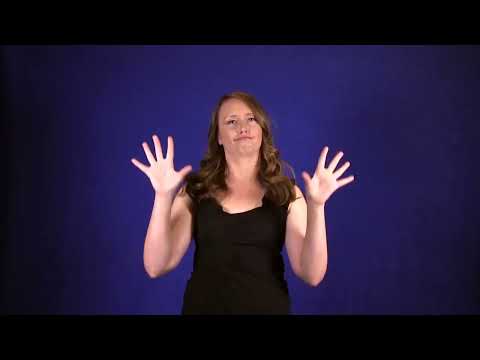
Sign for I FEEL MORE EXPRESSION WOULD MAKE THE STORY MORE CLEAR in ASL | ️ ASL Dictionary

Definition: To believe that using more facial or body expressions would enhance the clarity of a narrative.

Sign for I FEEL MORE EXPRESSION WOULD MAKE THE STORY MORE CLEAR in ASL

YouTube player

Practice Activities:

To practice the sign for I FEEL MORE EXPRESSION WOULD MAKE THE STORY MORE CLEAR in ASL, begin by breaking down the sentence into its individual concepts. First, sign “I feel” using your dominant hand with middle fingers touching the chest in an upward motion. Then practice “more expression” by signing “more” with fingertips tapping together, and show “expression” by using expressive facial grammar and open hands moving outward from the face. Isolate each part and repeat them until transitions between signs become fluid.

Use short ASL phrases, like “I feel happy” or “more expression needed,” to get used to context. Then rehearse by combining the signs into the full concept. Stand in front of a mirror and tell a short story, using your facial expressions to add emotion and emphasize meaning. Try retelling a simple story once plainly, then again with strong facial expression and body movement to see how it changes the impact.

A helpful partner activity is to describe a short event or daily routine while a partner watches. Ask for feedback about whether your expression is clear and if they understood the story better with more emotion. Offer to switch roles. This helps reinforce your understanding of how the sign for I FEEL MORE EXPRESSION WOULD MAKE THE STORY MORE CLEAR in ASL influences communication clarity.

Choose a favorite fairytale or personal narrative and attempt to sign it fully by focusing on how expression changes the meaning. Challenge yourself by signing the story once with minimal expression, and then redo it using full facial expressions and broader gestures. Review video clips of skilled signers using story-style signing, and try mimicking their style to improve your expressive range. Developing these habits will strengthen your ability to use the sign for I FEEL MORE EXPRESSION WOULD MAKE THE STORY MORE CLEAR in ASL in dynamic storytelling contexts.

Cultural Context:

In American Sign Language culture, the sign for I FEEL MORE EXPRESSION WOULD MAKE THE STORY MORE CLEAR in ASL reflects a strong emphasis on visual storytelling. ASL is a visual and spatial language, and expression plays a critical role in how stories and messages are received and understood. This sign shows how important facial expressions, body movements, and signing style are when telling a story clearly.

The phrase I FEEL MORE EXPRESSION WOULD MAKE THE STORY MORE CLEAR in ASL stems from a deep cultural understanding that communication involves the whole body. In Deaf culture, a story is not just about the signs used, but how they are presented. Emotions, tone, and clarity are communicated through nuanced expressions that can’t be captured through words alone.

Using the sign for I FEEL MORE EXPRESSION WOULD MAKE THE STORY MORE CLEAR in ASL also highlights the importance of feedback in communication. In the Deaf community, it’s common to gently encourage a signer to use stronger facial expressions or clearer signing to enhance understanding. This feedback is not negative—it’s an important part of respect and cultural communication norms.

ASL storytelling, especially in visual narratives or personal stories, becomes powerful when expression is present. The use of the sign for I FEEL MORE EXPRESSION WOULD MAKE THE STORY MORE CLEAR in ASL supports the idea that expression adds depth and emotional weight to the story. It elevates a plain sequence of signs into a rich and engaging experience.

In classroom settings and Deaf education, mentors often teach that good storytelling involves much more than matching signs to English words. Learners are encouraged to watch native signers and observe how they use the sign for I FEEL MORE EXPRESSION WOULD MAKE THE STORY MORE CLEAR in ASL to give constructive advice. This cultural aspect helps preserve the richness of ASL and the values of Deaf culture.

Facial expressions are considered part of the grammar of ASL. Without expression, even grammatically perfect signs can seem flat or confusing. That’s why the sign for I FEEL MORE EXPRESSION WOULD MAKE THE STORY MORE CLEAR in ASL is culturally relevant—it reminds us that signing is a complete, immersive practice.

Peer-to-peer communication in the Deaf community often includes reminders to enhance expression when clarity seems missing. That’s where reminders like the sign for I FEEL MORE EXPRESSION WOULD MAKE THE STORY MORE CLEAR in ASL come into play. It’s a way of showing support and improving shared understanding.

When someone uses this phrase, it’s often out of

Extended Definition:

The sign for I feel more expression would make the story more clear in ASL is a layered concept that involves both facial expressions and specific sign choices. Since American Sign Language relies heavily on non-manual markers like facial movements, this phrase emphasizes the importance of expressing emotion to enhance storytelling clarity.

To convey the sign for I feel more expression would make the story more clear in ASL, you typically break down the sentence into key ASL concepts. The phrase can be simplified into signs like I FEEL, MORE EXPRESSION, STORY, and CLEAR or UNDERSTAND. Each of these signs is combined with expressive non-verbal cues to reflect the deeper meaning behind the phrase.

When signing I FEEL, you point to your chest with the middle fingers of both hands in a slight upward motion, showing emotion and internal state. For MORE EXPRESSION, you sign MORE by tapping the fingertips of both flat O hands together and then SHOW-EXPRESSION using an expressive face and open hands moving outward from the face. This invites the concept of emotional intensity and dramatic flair, which is vital in ASL storytelling.

The sign for STORY is often made by forming your hands like you’re tossing memories or book pages from one to another. When you want to indicate that added expression will make the story more clear, use the CLEAR sign, which resembles fingers moving away from each other like a visual reveal. Signers also include a confident facial expression and slight nod to emphasize that clarity comes with expression.

In the context of signing the phrase as one concept, fluidity and meaning are more important than word-for-word translation. ASL grammar structures use topic-comment order, so the signing might begin with STORY, followed by NEED MORE EXPRESSION, then FINISH CLEAR or NOW CLEAR. The emotion shown in the signer’s face will clarify intent and effect.

Facial expressions in this sign are essential because they function as grammatical elements in ASL. Without appropriate expressions, the deeper meaning behind I feel more expression would make the story more clear in ASL might be lost or appear flat. This sentence is a good reminder to ASL learners that signing isn’t just about hand movements—it is a full-body expressive language.

This concept is often used in ASL classes or storytelling workshops to encourage signers to be more animated and emotionally connected to their narratives. Whether telling a personal anecdote or interpreting a story in ASL, understanding the sign for I feel more expression would make the story more clear in ASL helps sign

Synonyms: I think adding more detail would make the story clearer, I believe expressing more will clarify the story, I feel adding further expression will enhance clarity in the story, I think elaborating more will make the story more understandable, I believe more expression will improve the clarity of the story

Educational resources: Find related learning materials in our course bank!

Want more? Check out some of our popular learning activities on the homepage!

Need to look up a sign? Use our highly rated dictionary: https://aslinteractive.com/best-asl-dictionary/

Follow us on tiktok: https://www.tiktok.com/@aslinteractive. More social media links at the bottom of this page!

Long-tail Keywords: What is the sign for I feel more expression would make the story more clear in ASL, How do you sign I feel more expression would make the story more clear in ASL, Learn how to sign I feel more expression would make the story more clear in American Sign Language

Categories:

tags: ASL storytelling tips, ASL expressions, improving clarity in ASL, advanced ASL techniques, ASL storytelling practices

Parameters

*Handshape*:

The handshapes involved in the Sign for I FEEL MORE EXPRESSION WOULD MAKE THE STORY MORE CLEAR in ASL include open B-handshapes placed on the chest to indicate “feel,” transitioning into expressive facial gestures and modified clawed 5-hands to mimic the act of storytelling. The hands move fluidly, enhancing emotional tone.

To convey the idea of more expression, the sign uses both body language and intensified motions with open 5-hand configurations. The Sign for I FEEL MORE EXPRESSION WOULD MAKE THE STORY MORE CLEAR in ASL uses clear mouth morphemes and eye focus to signal increased clarity through storytelling.

*Palm Orientation*:

The palm orientation in the sign for I FEEL MORE EXPRESSION WOULD MAKE THE STORY MORE CLEAR in ASL involves several shifts. For FEEL, the middle finger of the dominant hand touches the chest, palm inward. During MORE, both flat O hands face each other, palms angled slightly inward, tapping gently. When signing EXPRESSION, open hands near the face typically turn outward, indicating emotion.

The STORY sign uses fingertips touching and unfolding outward, with palms facing each other. CLEAR requires two flat hands in front of the face, palms starting together and sweeping apart while facing slightly forward. Each movement in the sign for I FEEL MORE EXPRESSION WOULD MAKE THE STORY MORE CLEAR in ASL includes clear shifts in palm direction to help convey meaning precisely. ✨

*Location*:

The location for the Sign for I FEEL MORE EXPRESSION WOULD MAKE THE STORY MORE CLEAR in ASL primarily takes place in the upper chest and facial region. “FEEL” is produced with the middle finger touching the chest, emphasizing emotion, while “MORE EXPRESSION” involves facial expressions and hand motions near the face to convey emphasis.

The phrases “MAKE THE STORY MORE CLEAR” utilize signs near the chest and move outward to indicate clarity and understanding. Facial expression plays a major role throughout the Sign for I FEEL MORE EXPRESSION WOULD MAKE THE STORY MORE CLEAR in ASL, especially for conveying intensity and meaning.

*Movement*:

To produce the Sign for I FEEL MORE EXPRESSION WOULD MAKE THE STORY MORE CLEAR in ASL, start with the middle finger of your dominant hand sweeping upward on the chest to indicate “feel.” Then sign “more” by bringing fingertips of both flattened O hands together repeatedly. For “expression,” open both hands by the mouth as if projecting feelings outward.

Continue with “story” by alternating open and closed motions of your hands as if unraveling a tale. Then sign “clear” by flicking both flat hands away from the body from a central point outward. This movement sequence effectively conveys the full meaning intended in the Sign for I FEEL MORE EXPRESSION WOULD MAKE THE STORY MORE CLEAR in ASL.

*Non-Manual Signals*:

Raised eyebrows are used when signing rhetorical questions like “why” in this context. Eyes should be expressive, paired with some head tilt to show thoughtful reflection. Slight pursed lips or shifting eye gaze can help convey introspection or a desire for improvement. Use a lightly serious, engaged facial expression to emphasize importance when conveying the sign for I feel more expression would make the story more clear in ASL ✨.

When highlighting “more expression” and “make clearer,” lean forward slightly and raise the brows to show intensity or emphasis. Nod intentionally when concluding the statement to affirm belief in what was just communicated. This enhances the impact of the sign for I feel more expression would make the story more clear in ASL .

*Prosody, Dominant/Non-Dominant Hand*:

The Sign for I feel more expression would make the story more clear in ASL involves the dominant hand doing most of the expressive movements. Typically, the dominant hand performs signs like FEEL, MORE, EXPRESSION, and CLEAR with facial expressions to match the story’s emotion . The non-dominant hand may support by holding neutral signs like STORY or remaining static while the dominant hand emphasizes clarity through motion.

In the Sign for I feel more expression would make the story more clear in ASL, prosody is key. Eyebrows, eye gaze, and mouth morphemes enhance meaning as the dominant hand adds emphasis through space and repeated movements . The rhythm and pace created by the dominant hand help guide the message’s clarity and emotional depth.

Tips for Beginners:

When learning the sign for I FEEL MORE EXPRESSION WOULD MAKE THE STORY MORE CLEAR in ASL, it’s essential to focus on both your facial expressions and body language. ASL is a visual language where meaning is heavily influenced by non-manual signals, especially when discussing topics like storytelling and clarity. Ensure that your eyebrows, eyes, and mouth reflect the intensity of your message as you sign.

Break the sentence into smaller conceptual phrases such as “I feel,” “more expression,” “make story,” and “more clear.” Signing in ASL isn’t always a word-for-word translation—understanding meaning and flow helps greatly. Practice each concept separately before combining them into a full ASL sentence.

Facial grammar plays a major role, especially on the “more expression” and “more clear” concepts. Raise your eyebrows to indicate emphasis, and lean slightly forward when conveying your opinion to emphasize your feeling. This will enhance the storytelling aspect and bring clarity to your message.

One common pitfall is signing too rigidly or mechanically. The sign for I FEEL MORE EXPRESSION WOULD MAKE THE STORY MORE CLEAR in ASL needs fluidity and natural transitions between signs. Avoid pausing too long between words, as this can break the story’s emotional rhythm.

Practice with peers or record yourself to evaluate your expressiveness. Real storytellers in ASL use exaggeration when appropriate, layering emotion over signs. Don’t be afraid to amplify your expressions for clarity and impact.

Fingerspelling parts of the sentence is not required, but remember that the overall goal is clarity through visuals. The sign for I FEEL MORE EXPRESSION WOULD MAKE THE STORY MORE CLEAR in ASL must come across as heartfelt and engaging. Using open, intentional movements rather than small or uncertain ones will elevate the effectiveness of your signing. ✨

Connections to Other topics:

The Sign for I FEEL MORE EXPRESSION WOULD MAKE THE STORY MORE CLEAR in ASL connects deeply to narrative structure and performance in signed languages. ASL storytelling is not only about the signs but also relies heavily on non-manual markers such as facial expressions, body movements, and eye gaze. This sign phrase emphasizes the role of emotion and expression, which are vital in ASL to convey clarity and depth in storytelling.

Expression ties into broader ASL concepts like classifiers, role shifting, and affective signing, which amplify engagement and understanding. When someone uses the Sign for I FEEL MORE EXPRESSION WOULD MAKE THE STORY MORE CLEAR in ASL, they’re not only pointing out a need for stronger signing but suggesting that emotional resonance and emphasis would enhance the delivery. Learning how to implement subtle differences in facial expressions can dramatically shift the meaning of a narrative in ASL.

This sign phrase also overlaps with the use of compound signs such as TELL-STORY (a common combination in narrative ASL) and FEEL-STRONG (indicating powerful emotions). These combinations allow concise yet vivid communication. In practice, using signs like STORY, CLEAR, and EXPRESSION together with appropriate intensity and spatial use reinforces the need for performative storytelling.

Another connection relates to feedback and educational settings where students critique or support one another’s signing to improve clarity. In this context, the Sign for I FEEL MORE EXPRESSION WOULD MAKE THE STORY MORE CLEAR in ASL works as constructive input. It encourages the use of full expressive tools, beyond lexical signs alone.

Learners also explore devices like eye gaze shifting and body leans to indicate viewpoint or character perspective, which ties directly to enhancing expression and clarity in storytelling. So, this sign phrase serves as both commentary and tool, nurturing more vibrant and effective communication in ASL narratives.

Summary:

When communicating in American Sign Language, clarity is paramount. The sign for I FEEL MORE EXPRESSION WOULD MAKE THE STORY MORE CLEAR in ASL embodies this idea by blending emotion, storytelling, and expressive technique.

This phrase is often expressed not through a direct one-to-one word translation but by combining concepts and using classifiers, non-manual signals, and spatial structuring. A signer might begin with the sign for FEEL, made by open 5-handshape brushing up the chest, signaling internal emotion.

MORE EXPRESSION may follow by using the sign MORE—tapping fingertips together—and EXPRESSION, which can be conveyed through animated facial expressions and the use of the sign SHOW or EXPRESS. These concepts are made vivid with strong non-manual signals, emphasizing emotional depth.

The sign for STORY often involves the hands mimicking an opening and closing motion, resembling a tale being told in motions. To convey MAKE THE STORY MORE CLEAR, signers usually indicate CLARIFY, using open 5s moving outward from the body with a slight shaking motion, indicating expanding understanding.

Grammatically, ASL does not follow English Sentence structure. Instead, the message behind the sign for I FEEL MORE EXPRESSION WOULD MAKE THE STORY MORE CLEAR in ASL is expressed visually and spatially, with key anchors established through role shifting and body positioning.

A signer might begin with a facial expression of contemplation, then sign FEEL, showing internal realization. The transition to MORE EXPRESSION includes deliberate exaggeration in facial expressions and eye gaze, which are linguistic tools in ASL.

Non-manual markers (NMMs) play a critical role. Raised eyebrows, head tilts, and intensity in eye contact give the sentence emotional context. They provide cues equivalent to vocal tone in spoken language.

The concept of needing more expression touches deeply on Deaf culture values. Deaf culture celebrates vivid and expressive communication. Storytelling is a prized tradition, reflecting personal identity, struggle, humor, and life experience.

Within this cultural framework, asking for more expression is not a critique but an encouragement. It’s a request to engage more fully, to make the narrative come alive visually for all eyes watching.

The sign for I FEEL MORE EXPRESSION WOULD MAKE THE STORY MORE CLEAR in ASL also connects to linguistics through its embodiment of discourse-level strategies. ASL discourse requires clear topic-comment structures, visual cues, and sometimes mouth morphemes.

Language acquisition research in ASL shows that those who learn from native signers often acquire this level of richness more instinctively. They learn early that emotion and intensity aren’t optional—they’re essential tools.

In a classroom or storytelling setting, a teacher might use this phrase to nudge a student to elevate their presentation. This reflects the emphasis ASL places on communicative competence—not just accuracy, but engagement and clarity.

Interpreters also navigate this concept regularly. Imparting the depth of emotion or expressive detail from spoken narratives into sign requires finesse and a deep understanding of culturally appropriate expression.

In an interpreted setting, failing to include visual affect leads to loss of nuance. Thus, when signing the idea behind the sign for I FEEL MORE EXPRESSION WOULD MAKE THE STORY MORE CLEAR in ASL, an interpreter must enhance their signs with vibrant non-manual features.

This sign isn’t just a comment—it’s a pedagogical tool. It helps learners internalize one of the key tenets of ASL: that expressivity is directly linked to comprehension.

Through gesture, space, and movement, ASL captures subtleties that words sometimes cannot. Asking for more expression is akin to asking for more life in the visual form of the story.

The phrase may connect to related signs like COMMUNICATE, CONNECT, or UNDERSTAND. Each of these carry their own expressions and are often entwined in ongoing, fluid conversations.

In Deaf storytelling communities, such a request points to enhancing ASL storytelling techniques including role-shifting, eye gaze, and spatial referencing. These are foundational tools for building engagement and narrative flow.

Educators in ASL often coach students to push further in expressive delivery. When using the sign for I FEEL MORE EXPRESSION WOULD MAKE THE STORY MORE CLEAR in ASL, they model enhanced facial affect and elaborate handshape transitions.

The essence of this sign aligns with theories in applied linguistics: communication is multimodal. It draws on gesture, facial movement, body language, and rhythm.

The visual-gestural modality of ASL offers an expansive canvas for expression. There’s room to stress emotional nuance through changes in speed, intensity, and pauses.

This phrase can also serve as formative feedback, essential in performance-based contexts like ASL poetry, Deaf theater, or narrative assessments. In these spaces, signers are encouraged to prioritize clarity of plot and emotional resonance.

The sign for I FEEL MORE EXPRESSION WOULD MAKE THE STORY MORE CLEAR in ASL suggests a respectful urge to deepen communication. It’s never

Want more? Check out some of our popular learning activities!

ASL Interactive Resources

ASLInteractive YouTube Channel

Follow us on tiktok: @aslinteractive.com

Follow us on Instagram: aslinteractive

Facebook page: aslinteractive

Facebook group: aslinteractive

LInkedIn: ASL Interactive LLC

Twitter: @ASL_interactive

*Some information on this page is AI-generated. AI can make mistakes. Please check the information.


Responses