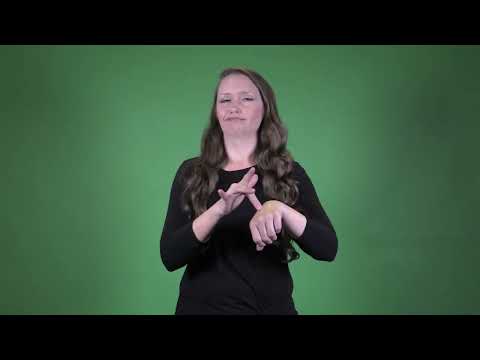
Definition: To complete or perfect something.
Sign for FINISH TOUCH (idiomatic expression) in ASL
Practice Activities:
To gain fluency with the sign for FINISH TOUCH (idiomatic expression) in ASL, begin by practicing the sign in isolation. Stand in front of a mirror and repeat the motion with proper non-manual markers like a small nod or satisfied facial expression that expresses finality or perfection. Practice slowly at first, then increase speed while maintaining clarity.
Incorporate this sign into daily mini-dialogues. One example is: “My art project? FINISH TOUCH, now perfect.” Another could be: “We decorated the cake, added berries—FINISH TOUCH!” These short contexts help reinforce how the idiom is used to show the final, often artistic or identifying, addition to something that’s otherwise complete.
Create storytelling prompts like describing planning a surprise party. Start with cookie-baking, decorating the space, and end your story with the final piece: “She walked in, saw the candles—FINISH TOUCH!” This helps you think narratively and apply the expression naturally. You can record yourself signing or sign in front of a friend to get feedback on flow and expression.
Partner activities can strengthen your use and recognition of the sign for FINISH TOUCH (idiomatic expression) in ASL. One learner describes a project—like building a birdhouse—and the other has to guess what would be the final detail. For instance, the first may say, “We painted it blue, added a perch… what’s next?” The responder signs FINISH TOUCH to complete the thought.
Another fun exercise is to watch crafting or cooking videos with the sound off. As the video nears completion, sign aloud in real time when you think the creator applies the final element. This builds your receptive and expressive skills while providing a visual understanding of the idiom’s context.
Cultural Context:
In American Sign Language (ASL), idiomatic expressions often have unique signs that carry deeper meanings beyond direct translations. The sign for FINISH TOUCH (idiomatic expression) in ASL is used to capture a concept that doesn’t always have a literal counterpart in English. This expression reflects the idea of completing something with flair, skill, or that final perfect detail.
ASL is deeply influenced by Deaf culture and community values. The sign for FINISH TOUCH (idiomatic expression) in ASL reflects a rich tradition of expressive, visual communication. In everyday use, this idiomatic expression is often used to describe a work of art, a project, or even an event that has been completed to perfection.
Like many ASL idiomatic expressions, this sign draws on a strong visual metaphor. The sign for FINISH TOUCH (idiomatic expression) in ASL combines elements that suggest finality and precision. It’s not just about being done; it’s about finishing with excellence. This illustrates how ASL idioms often capture emotions or ideas that English might fail to convey with equal impact.
Deaf culture places importance on clarity and visual cues, and idioms like this one help reflect those values. Using the sign for FINISH TOUCH (idiomatic expression) in ASL allows Deaf signers to express their admiration for mastery, creativity, or finesse. The sign is fluid and expressive, mirroring the beauty of something being perfectly wrapped up.
In classroom settings or storytelling within the Deaf community, this expression might be used to describe a student’s expertly completed assignment or a performer’s final flourish. The sign for FINISH TOUCH (idiomatic expression) in ASL instantly captures that feeling of satisfaction and pride. It communicates not just what was done, but how well it was done.
ASL idioms like this one evolve organically within the community. They tend to be picked up through immersion—seeing them used in conversations, vlogs, performances, or social media. The sign for FINISH TOUCH (idiomatic expression) in ASL may not be found in beginner textbooks but is commonly used among fluent signers.
Fluency in American Sign Language includes understanding these cultural nuances. When learners acquire idioms like the sign for FINISH TOUCH (idiomatic expression) in ASL, they gain access to a deeper layer of cultural meaning. It also allows them to connect more naturally with native signers and participate more fully in Deaf cultural experiences.
Understanding this idiom provides insight into how ASL values
Extended Definition:
The sign for FINISH TOUCH (idiomatic expression) in ASL is used to express the idea of adding a final detail or concluding element that completes or perfects something. It conveys a similar sense to the English idiom “the finishing touch,” often describing the last step that enhances or finalizes a project, event, or appearance.
In American Sign Language, idiomatic expressions like this are not always signed word-for-word in English order. Instead, native signers may rely on facial expressions, context, and specific ASL signs to convey the intended meaning. The sign for FINISH TOUCH (idiomatic expression) in ASL typically features the sign FINISH followed by a descriptive gesture or modified TOUCH sign that illustrates the idea of placing a special or final addition.
The sign FINISH in ASL can be used to indicate something is completed or done. It can function as an aspect marker to show that an action has been concluded. In the context of the sign for FINISH TOUCH (idiomatic expression) in ASL, FINISH is often emphasized to show that the action is complete, and what follows is the final flourish or detail.
For the TOUCH portion, signers might modify the direction, intensity, or placement of the sign to reflect the delicate concept of placing a final piece. Depending on what is being described, the classifier handshapes or directional verbs may also change. ASL allows for flexible, creative expression, especially when conveying idioms that have visual equivalents.
This idiomatic sign is often used in storytelling, presentations, description of projects, or when talking about artistic endeavors. For example, someone describing a painting may use the sign for FINISH TOUCH (idiomatic expression) in ASL to describe the final brush stroke that completed the artwork. Similarly, it can describe the final detail added to a wedding outfit or the flourish at the end of a performance.
Facial expressions and timing are crucial when using this expression. A small nod, a slight smile, or a dramatic flourish can help convey the meaning of an idiom more clearly. Because ASL is a visual language, meaning is not just expressed through hand movements but also through body language and the signer’s intent.
It’s important to remember that idiomatic expressions in ASL often do not have direct one-to-one equivalent translations with English phrases. The sign for FINISH TOUCH (idiomatic expression) in ASL may vary depending on regional sign variations and the age or background of the signer. When learning this
Synonyms: final touch, finishing touch, last detail, polished detail, completion
Educational resources: Find related learning materials in our course bank!
Want more? Check out some of our popular learning activities on the homepage!
Need to look up a sign? Use our highly rated dictionary: https://aslinteractive.com/best-asl-dictionary/
Follow us on tiktok: https://www.tiktok.com/@aslinteractive. More social media links at the bottom of this page!
Long-tail Keywords: what is the sign for IE finish touch in ASL, how do you sign IE finish touch in ASL, IE finish touch ASL sign meaning
Categories:
tags: finish in ASL, touch in ASL, ASL idioms, ASL phrases, ASL finish touch meaning
Parameters
*Handshape*:
The handshape for the sign for FINISH TOUCH (idiomatic expression) in ASL typically begins with the dominant hand using a flat “B” handshape. The fingers are straight and together with the thumb extended, mimicking a patting or tapping motion.
This form gives the expression a sense of finality or completion. The sign for FINISH TOUCH (idiomatic expression) in ASL conveys the feeling of a final, defining effect—like a flourish or last detail added to something complete.
*Palm Orientation*:
The palm orientation for the sign for FINISH TOUCH (idiomatic expression) in ASL typically involves one hand in an open “B” shape with the palm facing upward. The other hand, usually dominant, uses the middle finger to tap or brush lightly on the palm, with the dominant palm facing downward or slightly inward depending on context.
This palm orientation in the sign for FINISH TOUCH (idiomatic expression) in ASL reflects a deliberate and final movement, suggesting nuance or emphasis. The contrast between the upward and downward palm positions highlights the interaction, reinforcing the idiomatic intent.
*Location*:
The location for the sign for FINISH TOUCH (idiomatic expression) in ASL is generally in the neutral space in front of the signer’s body, slightly above waist level. Both hands operate in this space for clarity and visibility.
This placement allows the fine motor movements and expressive gestures to be easily seen by the viewer. The sign for FINISH TOUCH (idiomatic expression) in ASL may also involve a brief touch on the palm or fingertip area, depending on the variation used.
*Movement*:
The movement for the sign for FINISH TOUCH (idiomatic expression) in ASL starts with the dominant hand in a flat open-5 position, palm facing down, hovering slightly above the non-dominant hand, which is held steady in the same open-5 shape, palm up. The dominant hand quickly taps or brushes the fingertips of the non-dominant hand in a light, deliberate motion, symbolizing a final accent or detailed finish.
This movement is quick and purposeful, reflecting the idiomatic sense of putting a final polish or flair on something. The sign for FINISH TOUCH (idiomatic expression) in ASL suggests completeness or putting the final emphasis on a task or creative process.
*Non-Manual Signals*:
The non-manual signals for the sign for FINISH TOUCH (idiomatic expression) in ASL involve a strong facial expression showing satisfaction or emphasis, typically with slightly raised eyebrows and a subtle head nod forward. A relaxed yet confident demeanor supports the idiomatic meaning, indicating something is done impressively or finalized smoothly.
Eye contact is important, often followed by a smirk or light smile, reinforcing the feeling of completion or flair. These non-manual cues help convey the full intent of the sign for FINISH TOUCH (idiomatic expression) in ASL.
*Prosody, Dominant/Non-Dominant Hand*:
The sign for FINISH TOUCH (idiomatic expression) in ASL uses both hands. The dominant hand is in a bent middle finger (also known as the “open 8” handshape), tapping quickly against the back of the non-dominant hand, which is held steady in the same handshape. This movement mimics the sense of making a final impact or completing something precisely.
The prosody of the sign for FINISH TOUCH (idiomatic expression) in ASL incorporates a quick, intentional motion with a clear stop, emphasizing finality. Facial expression plays a key role—often a nod or a raised eyebrow is used to match the idiomatic meaning, implying satisfaction or the idea of the “finishing touch” to something completed.
Tips for Beginners:
When learning the sign for FINISH TOUCH (idiomatic expression) in ASL, remember that this phrase represents a conceptual idea rather than a literal translation. It is often used to express the final, perfecting detail added to something, similar to the English idiom. To convey this, sign FINISH followed by a nuanced motion resembling a delicate or precise action, like touching or adding the last stroke, often represented with a pinch-like or graceful touch near the object being referred to.
A good tip for beginners is to understand when to use this phrase within context. Think about moments when someone puts the completed polish on a task, not just when something ends. Mastering the rhythm and facial expression helps your message land with the same impact as the idiom intends in English.
It’s common to overexaggerate the FINISH part or forget to include the subtler body cues that give this sign its final polish. Make sure the transition from FINISH into the specific gesture for TOUCH flows naturally. Smooth transitions and controlled hand movements will make the sign more understandable.
Use an appropriate facial expression—often one that suggests satisfaction or perfection—to complement the sign for FINISH TOUCH (idiomatic expression) in ASL. Without expressive eyebrows or that finishing flair in your face, the idiomatic meaning might be lost and interpreted too literally.
Practice this expression in context-rich situations, like decorating a cake, presenting a project, or completing art. Think of the finished detail you’re referring to and let your signing reflect that pride and completion. The more you immerse yourself in idiomatic expressions like the sign for FINISH TOUCH (idiomatic expression) in ASL, the more natural your storytelling in sign will become. Keep watching experienced signers and repeat short phrases to improve fluency.
Connections to Other topics:
The sign for FINISH TOUCH (idiomatic expression) in ASL connects closely to expressive, nuanced signing that extends beyond literal meanings. This idiomatic phrase is often used to describe the final perfecting gesture or completion of a task with finesse, much like in English when we say “the finishing touch.” It links well with other signs such as FINISH, DONE, and PERFECT, each of which brings its own subtle context to a conversation involving accomplishment or final effort.
This sign also relates to expressive classifiers in ASL, particularly when describing visual changes or enhancements. For example, when describing decorating a room, a signer may use FINISH and then TOUCH in a stylized way to indicate the final piece, like placing a vase or adjusting lighting. This bridges to storytelling in ASL where visual imagery is crucial, and the sign for FINISH TOUCH (idiomatic expression) in ASL enriches descriptive narrative.
The sign can compound naturally with signs such as WORK, MAKE, or CREATE to describe finishing touches on projects or crafts. For example, MAKE + FINISH TOUCH might describe the last detail in baking a cake, such as sprinkling powdered sugar. This intertwining of ideas helps learners see how ASL layers meaning through sign blending and context, rather than separate vocabulary words.
In dialogues or storytelling, the sign for FINISH TOUCH (idiomatic expression) in ASL is often performed with a stylistic flourish, emphasizing precision and care. It might pair with facial expressions that convey satisfaction, completion, or pride. These non-manual signals are essential to the full interpretation of the idiom, showing how ASL idioms are deeply embodied.
ASL learners benefit from understanding this sign not just as a translation, but as part of a cultural-linguistic system that uses space and movement to mark emphasis and completion. The sign for FINISH TOUCH (idiomatic expression) in ASL is a great example of how applications of abstract or figurative language can be physically represented with clarity and emotion ✨.
Summary:
The sign for FINISH TOUCH (idiomatic expression) in ASL is a rich, expressive construction that illustrates both conceptual layering and non-manual markers. It’s used to indicate that something has been fully experienced, completed deeply, or profoundly impacted someone.
In this idiomatic sense, the word “touch” extends beyond physical contact. Instead, it dives into the sensory and emotional realms, soaked in meaning and experience—touching the heart, the spirit, or the mind.
To produce the sign for FINISH TOUCH (idiomatic expression) in ASL, you typically begin with the signs DONE or FINISH and then move into a gentle, deliberate placement of a dominant hand—often in a modified 8 or bent middle finger—lightly touching the chest or other relevant body space. The movement is smooth, calm, and reflective of an internal realization or transformative experience.
This usage of FINISH combined with the sign for TOUCH is unique because in other contexts, these two signs might not necessarily convey such a deep, idiomatic meaning. ASL users understand from tone, context, and expression that this version communicates more than just “something is over” or “something was contacted.”
Facial expressions are vital when signing this idiom. Users often combine a prolonged eye gaze or soft eyes with a slight head tilt or even a small exhale, which dramatically enhances the interpretive depth behind the sign. These non-manual signals inform the viewer of emotional resonance.
The emotional load behind the sign for FINISH TOUCH (idiomatic expression) in ASL makes it a favored choice in storytelling, poetry, and personal narratives. When someone’s life is changed by an event or idea, this sign encapsulates that entire emotional and psychological shift in just a few graceful gestures.
While English might rely on a full sentence to capture the essence of “it touched me deeply,” ASL can efficiently translate the idea using this concentrated idiom. The economy of expression paired with emotional clarity is part of what makes this idiom so powerful in ASL discourse.
Grammatically, this idiomatic usage doesn’t necessarily follow English word order. You may see this sign combined with context-setting classifiers or directional verbs that refine who or what is affected. The sign often follows that main clause or anecdotal detail that precedes it.
Touch in ASL usually implies physical interaction, but this idiomatic transformation conveys something less tangible and more spirited—another example of how ASL uniquely intersects linguistic structure with emotion. It’s a living, breathing illustration of embodied cognition in linguistic expression.
The sign for FINISH TOUCH (idiomatic expression) in ASL can sometimes be accompanied by the sign HEART or FEEL for additional depth, although this is stylistic rather than necessary. Some signers may elect to build around this sign for poetic emphasis.
When used in school or academic environments, educators often teach this idiom within broader lessons on metaphor and cultural interpretation in ASL. Its layered meaning provides a strong entry point for discussing how different languages express intangible feelings.
This idiom is especially relevant within Deaf culture because of its capacity to express vulnerability and transformation—values central to the shared experience of Deaf identity and resilience. The collective emotional lexicon of ASL leans heavily on such effective yet graceful signs.
The combination of FINISH and TOUCH brings together two distinct semantic notions—completion and sensory engagement—and turns them into something conceptual. The convergence reminds us how signs can act as vehicles for metaphors.
Historical usage of the sign for FINISH TOUCH (idiomatic expression) in ASL can be traced back in Deaf-ASL storytelling traditions, where it appears frequently in final narrative beats. Whether a story ends with happiness, loss, or epiphany, this sign wraps emotion with elegance.
In terms of linguistic typology, this idiomatic use highlights ASL’s polysynthetic tendencies, where compound ideas are merged organically. It also shows how pervasive idiomatic gesture is in natural sign language discourse—not merely ornamental but necessary for full expression.
The idiom is accessible to Deaf and hearing ASL users alike, though Deaf L1 users often employ more subtle variations in tempo and modality. They may delay the touch or let it resonate longer, much like a performer holding a final note in a dramatic musical.
In applied linguistics, instructors often highlight this sign to demonstrate how signs evolve to acquire idiomatic meaning. It serves as an exceptional anchor for discussions around semantic drift, metaphor, and the embodiment theory of meaning.
This idiom also appears in translations of literary works into ASL, especially in themes involving internal change. For example, in translated ASL versions of poetry, it marks the shift in a character’s internal state in a way a verbal language might not.
Variations exist depending on the region or age group. Older signers might use slightly different pacing, while younger signers may adapt the sign for digital or social contexts. However, the core meaning remains widely understood.
When examining the sign for FINISH TOUCH (idiomatic
Want more? Check out some of our popular learning activities!
ASL Interactive Resources
ASLInteractive YouTube Channel
Follow us on tiktok: @aslinteractive.com
Follow us on Instagram: aslinteractive
Facebook page: aslinteractive
Facebook group: aslinteractive
LInkedIn: ASL Interactive LLC
Twitter: @ASL_interactive
*Some information on this page is AI-generated. AI can make mistakes. Please check the information.


Responses