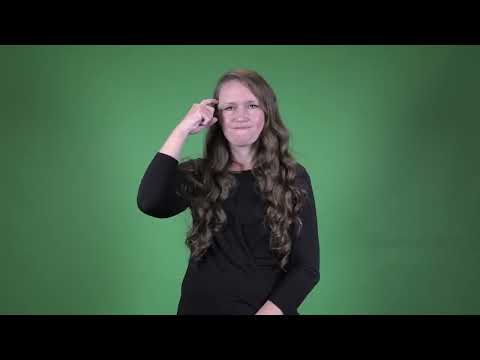
Definition: Idiomatic expression meaning scarred for life
Sign for SCRATCH FOREHEAD (idiomatic expression) in ASL
Practice Activities:
Start by practicing the sign for SCRATCH FOREHEAD (idiomatic expression) in ASL in isolation. Use a mirror to check your facial expression, handshape, and movement. Repeat the sign slowly at first, then increase your speed while maintaining accuracy.
Next, incorporate the sign into simple sentences. For example: I saw that and had to scratch forehead. Or: When she told me that story, I just scratched forehead. These idiomatic expressions help build context and reinforce how the meaning shifts from literal to figurative.
Use role-play to make the sign for SCRATCH FOREHEAD (idiomatic expression) in ASL more natural. Team up with a peer, and take turns sharing surprising or ironic situations while using the sign. React to your partner’s statements using the idiomatic expression to show amusement or disbelief.
Try creating a short ASL story or anecdote that includes an unexpected twist. Use the sign for SCRATCH FOREHEAD (idiomatic expression) in ASL as your reaction moment. This helps associate the sign with an emotional beat or punchline in a narrative.
Watch ASL videos or vlogs and identify moments where an idiomatic expression like this would be appropriate. Pause and insert the sign yourself, practicing expressive timing and matching it to the tone of the content.
Create a reaction wall with flashcards showing strange or silly scenarios like: someone pouring cereal into a shoe or a dog answering the phone. Respond to each by signing the idiom, reinforcing muscle memory and situational awareness.
Record yourself using the sign and watch it back. Focus on whether the movement looks natural and whether your expression supports the idiom. Practicing expressive signing is key to mastering the sign for SCRATCH FOREHEAD (idiomatic expression) in ASL.
Cultural Context:
The sign for scratch forehead (idiomatic expression) in ASL carries a cultural meaning that goes beyond its literal interpretation. In American Sign Language, idioms and culturally specific expressions often involve gestures that may seem unusual to non-signers but have deep-rooted connections in Deaf culture. This particular sign is one such example, where a simple action conveys more than its surface appearance.
When people use the sign for scratch forehead (idiomatic expression) in ASL, they are not usually talking about a physical itch. Instead, the sign is used to express confusion, hesitation, or trying to come up with an idea. The gesture mimics someone scratching their forehead in thought, making it a visual metaphor that works well in signed communication.
Deaf culture embraces expressive facial and body language as part of the overall message. With the sign for scratch forehead (idiomatic expression) in ASL, the non-manual markers are just as important as the hand movement. A puzzled look or raised eyebrows often accompanies the sign, signaling the signer is unsure or pondering something.
This idiomatic expression does not have an exact English equivalent but can be compared to saying “I’m thinking hard” or “I’m not sure.” The sign is a great example of how ASL uses visual cues and body language to express complex thoughts in simple, relatable ways. The sign for scratch forehead (idiomatic expression) in ASL shows how physical movements are tied to abstract ideas in a natural and visual manner.
Within Deaf communities, context is key when using idiomatic expressions. The sign for scratch forehead (idiomatic expression) in ASL might appear in casual conversations when someone is trying to remember something or solve a problem. It captures a moment of mental activity that can be instantly recognized by fluent signers.
Understanding the sign for scratch forehead (idiomatic expression) in ASL helps learners appreciate the depth of the language. Idiomatic signs like this one offer a glimpse into cultural nuances that are not always taught in formal ASL classes. They reflect shared experiences and common expressions that develop organically within the community.
When used correctly, the sign for scratch forehead (idiomatic expression) in ASL adds authenticity and fluency to signed conversations. It helps signers connect with the Deaf world on a deeper level by learning how expressions and behaviors become part of communication. Humor, uncertainty, and curiosity can all be shared using this gesture when placed in the right context.
Watching fluent signers use the sign for scratch forehead (idiomatic expression
Extended Definition:
The sign for scratch forehead (idiomatic expression) in ASL refers to more than the literal action of scratching one’s forehead. This idiom carries cultural and conversational weight in American Sign Language, often used to indicate suspicion, hesitation, or someone trying to think hard about something. It can also suggest disbelief or trying to figure out what is going on in a puzzling situation.
In conversation, the sign for scratch forehead (idiomatic expression) in ASL is a nonmanual marker that combines a physical gesture with a facial expression. The fingers lightly scratch the forehead, typically using the index and middle fingers. At the same time, a furrowed brow or a thoughtful look helps convey the message clearly in context.
This sign is not about having an itch. Instead, it emphasizes a mental or emotional reaction. For example, if a deaf person sees something suspicious or confusing, they might use the sign for scratch forehead (idiomatic expression) in ASL to show they are mentally processing or expressing doubt. It acts like a visual way of saying, I’m not quite buying that, or What’s going on here?
Context is crucial in ASL, and idiomatic expressions like this one are great examples. ASL is rich with signs that rely heavily on cultural knowledge and facial grammar. When using the sign for scratch forehead (idiomatic expression) in ASL, what matters is not just the hand movement but also the tone of the eyes, mouth, and eyebrows.
This idiom is commonly seen in storytelling or casual dialogues in the Deaf community. It adds an expressive element to ASL communication, allowing for more nuanced meanings. Non-signers might misunderstand the gesture as literal, but native signers recognize the idiomatic use instantly.
The use of space and facial expressions in ASL turns phrases like the sign for scratch forehead (idiomatic expression) in ASL into powerful tools. It mirrors how spoken languages use idioms, sarcasm, or irony. ASL relies on the whole body to communicate, and idioms like these prove just how dynamic and rich the language is.
Teachable moments, discussions, and curiosity often arise when this idiom is used in educational or conversational settings. Fluent signers teach others how this sign functions beyond the literal. It becomes a fun and practical demonstration of how ASL expresses internal thought processes visually.
Linguists and interpreters often study idioms like this to better understand ASL’s depth and complexity. The sign for scratch forehead (idi
Synonyms: scratch head, rub forehead, touch forehead, graze forehead, tap forehead
Educational resources: Find related learning materials in our course bank!
Want more? Check out some of our popular learning activities on the homepage!
Need to look up a sign? Use our highly rated dictionary: https://aslinteractive.com/best-asl-dictionary/
Follow us on tiktok: https://www.tiktok.com/@aslinteractive. More social media links at the bottom of this page!
Long-tail Keywords: what is the sign for scratch forehead in ASL, how do you sign scratch forehead in ASL, ASL sign for scratch forehead
Categories:
tags: forehead signs, ASL idioms, ASL gestures, American Sign Language basics, ASL for beginners
Parameters
*Handshape*:
The handshape for the sign for SCRATCH FOREHEAD (idiomatic expression) in ASL uses a modified bent V handshape. Both the index and middle fingers are slightly curled, mimicking a scratching motion. The hand approaches the forehead with a quick, light movement representing the idiomatic expression rather than an actual scratch.
This common classifier bending mimics a gesture tied to curiosity or confusion. The sign for SCRATCH FOREHEAD (idiomatic expression) in ASL is expressive and typically includes a puzzled facial expression to match the meaning behind the idiom.
*Palm Orientation*:
For the sign for SCRATCH FOREHEAD (idiomatic expression) in ASL, the palm orientation typically faces inward, with the fingertips pointing toward the forehead. The dominant hand, often shaped in a loose claw or bent-five handshape, moves in a small, scratching motion at the forehead area.
This palm orientation mimics a natural scratching gesture and reinforces the idiomatic meaning behind the sign for SCRATCH FOREHEAD (idiomatic expression) in ASL . The inward-facing palm also supports the visual clarity and intent of the idiom in casual or expressive conversations.
*Location*:
The sign for SCRATCH FOREHEAD (idiomatic expression) in ASL takes place at the upper part of the face, specifically on the forehead. The dominant hand, commonly in a bent or clawed shape, lightly taps or scrapes the forehead in a scratching motion.
This gesture is done near the front hairline, using small, quick movements to mimic the act of scratching. The sign for SCRATCH FOREHEAD (idiomatic expression) in ASL is typically performed one-handed and kept close to the body to maintain clarity and express the idiomatic meaning clearly.
*Movement*:
The sign for SCRATCH FOREHEAD (idiomatic expression) in ASL uses the dominant hand shaped like a bent index finger or a clawed hand. Move it in a gentle scratching motion across the forehead, typically on the side, mimicking the natural gesture of confusion or puzzlement.
This expression is commonly used when someone is thinking hard or perplexed. The sign for SCRATCH FOREHEAD (idiomatic expression) in ASL often includes a slight facial expression of confusion or questioning, enhancing the idiomatic meaning.
*Non-Manual Signals*:
The non-manual signals for the sign for SCRATCH FOREHEAD (idiomatic expression) in ASL include a puzzled or confused facial expression , with slightly furrowed eyebrows and a questioning mouth posture, often one corner of the mouth slightly pulled down. This expression enhances the sarcastic or ironic tone typically conveyed with this idiom.
When using the sign for SCRATCH FOREHEAD (idiomatic expression) in ASL, the signer might tilt their head slightly or raise an eyebrow to emphasize skepticism or disbelief. These facial expressions work together with the hand movement to communicate doubt or mock confusion effectively.
*Prosody, Dominant/Non-Dominant Hand*:
The sign for scratch forehead (idiomatic expression) in ASL typically uses the dominant hand in a bent index finger shape, mimicking a scratching motion on the side of the forehead. The hand moves quickly in a small up-and-down motion, showing a gesture of thinking hard, confusion, or being puzzled.
The non-dominant hand is not used in this expression. Facial expression is crucial, often including raised eyebrows or a thoughtful squint to match the idiomatic meaning of the sign for scratch forehead (idiomatic expression) in ASL .
Tips for Beginners:
The sign for SCRATCH FOREHEAD (idiomatic expression) in ASL is not meant to be taken literally. It represents someone appearing confused or puzzled, often scratching their head or forehead in thought. For beginners, it’s essential to internalize the idiomatic nature of this sign—it’s not used when someone has an itch but rather when they’re showing confusion or hesitation.
When practicing the sign for SCRATCH FOREHEAD (idiomatic expression) in ASL, make sure your non-manual signals support the meaning. A furrowed brow, slightly squinted eyes, or a puzzled facial expression will add clarity to the message. Without the right facial expression, this idiomatic sign may be misunderstood as a literal action.
It’s common for beginners to overemphasize the scratching motion. Keep it natural and subtle—just enough to suggest thought, not actual scratching. Be sure that your hand shape and movement look deliberate but not exaggerated. This keeps your signing fluid and authentic.
Another tip is to observe fluent signers using idioms like the sign for SCRATCH FOREHEAD (idiomatic expression) in ASL during conversations. Notice how context and facial expression contribute to meaning. Practice copying these cues in a mirror or with a signing partner to improve your delivery.
Don’t forget that idiomatic signs in ASL often rely heavily on timing and delivery. Adding a slight pause with your facial expression before making the sign could enhance comprehension. This pause gives your conversation partner cues that you’re expressing uncertainty or puzzlement.
Finally, building confidence with signs like the sign for SCRATCH FOREHEAD (idiomatic expression) in ASL requires exposure and experimentation. Use the sign in different scenarios during practice—when you forget something, when you pretend to be confused, or as a humorous pause—to deepen your understanding and control.
Connections to Other topics:
The sign for SCRATCH FOREHEAD (idiomatic expression) in ASL is strongly tied to the broader concept of idiomatic and figurative language in ASL culture. Similar to how spoken English uses gestures and phrases to convey non-literal meanings, ASL incorporates facial expressions and regional idioms to communicate nuanced ideas. This idiomatic sign reflects confusion, curiosity, or mental processing, and is often used in storytelling or in casual conversations to express thinking deeply or being puzzled.
This sign connects with other gestures that use facial areas to represent abstract concepts. For instance, signs for THINK, WONDER, or PUZZLED also revolve around the head and face. Using the forehead or scalp is a common location in ASL for indicating mental processes or emotions. The movement of scratching the forehead adds a layer of visual metaphor, showing internal thought or confusion in a relatable, expressive way.
The sign for SCRATCH FOREHEAD (idiomatic expression) in ASL may derive or influence signs used in combination, such as THINK-WHAT or MAYBE-THINK, when expressing uncertainty. ASL often uses compounding to emphasize or clarify emotion. For instance, pairing this sign with the sign for LOST or MIND-BLANK can enhance the depth of meaning by showing just how confused or overwhelmed someone feels.
Culturally, understanding visual idioms like this encourages greater fluency and sensitivity to Deaf storytelling and humor. These idiomatic signs are often regionally specific or evolve over time, so exposure to native signers is crucial. Being able to recognize when a sign is not literal helps learners comprehend more complex dialogues and narratives in ASL.
The sign for SCRATCH FOREHEAD (idiomatic expression) in ASL is an excellent example of how the language uses visual imagery and relatable actions to convey abstract thinking. Connecting it to facial grammar and storytelling enriches the signer’s communicative skills and fluency in both everyday and artistic expression.
Summary:
The sign for SCRATCH FOREHEAD (idiomatic expression) in ASL is a culturally rich gesture embedded in the nuanced communication styles of Deaf communities. This sign blends physical representation with layered meaning, showcasing ASL’s depth and idiomatic flair.
To produce the sign, the dominant hand—typically the index finger—makes a light scratching motion on or near the forehead. Location plays a vital role here: the forehead symbolizes thought or internal dialogue, which contextualizes the meaning.
The sign is not literal; rather, it carries an idiomatic sense akin to someone being confused, puzzled, or trying to figure something out. In English, this might be parallel to the phrase “scratching one’s head” when facing uncertainty.
The sign for SCRATCH FOREHEAD (idiomatic expression) in ASL roots itself in metaphorical language unique to visual gestural communication. By referencing the head, it visually denotes the source of thought or reasoning, while the scratching reflects a mild agitation or frustrated curiosity.
In practice, this idiom frequently appears in conversational ASL when someone is talking about being perplexed or trying to understand a complicated situation. It’s common in stories, recollections, or reactions to surprising information.
Facial expressions are essential in delivering the full meaning of the sign. A furrowed brow, slightly pursed lips, or tilted head can significantly intensify the message, reinforcing confusion or mental struggle.
The sign integrates seamlessly with non-manual markers that add emotional clarity. Eye squinting or subtle body shifts enhance its expressive range, helping to differentiate between mild confusion and severe puzzlement.
As an idiomatic expression, the sign challenges the idea that ASL is merely manual English. It underscores that ASL carries its own idioms, grammar, and cultural references, separate from spoken languages.
The sign has no one-to-one match with a word in English. Instead, it encapsulates an idea or an emotional state, which aligns with how idioms function across languages.
Grammatically, the sign operates as a predicate or a comment within ASL sentence structure. It can come after setting up the topic or as a reaction embedded within storytelling arcs.
The sign’s visual metaphor aligns with ASL’s use of iconicity—where visual representation mirrors meaning. This contributes to the overall linguistic identity of the language, rooted in spatial and symbolic reasoning.
In linguistic theory, the sign is a compelling example of how idiomatic expressions arise from embodied cognition. Signers conceptualize thought as a physical action, linking gesture with mental processes.
The cultural undertone of the sign reflects the value placed on visual engagement in the Deaf community. Since visual cues are critical, body language converges naturally with metaphorical meaning.
Although the sign refers to the action of scratching the forehead, it should not be mistaken for personal grooming motions. Context and facial expressions disambiguate the intended purpose as an idiom.
The sign for SCRATCH FOREHEAD (idiomatic expression) in ASL encourages deeper learning of ASL idioms. These expressions reveal humor, subtlety, and emotion not always captured in direct translation.
This richness adds to the beauty of signing—showing how emotions and thoughts play out through the body. Identifying and using such signs can significantly enhance fluency and cultural immersion.
Learners often stumble upon this sign in more advanced ASL classes or conversational exposure and are usually fascinated by its non-literal meaning. Its presence supports the idea that understanding ASL requires more than vocabulary—it requires cultural and contextual learning.
In addition to being expressive, the sign fits naturally into storytelling contexts. This makes it a favorite tool for Deaf performers, poets, and educators conveying personal or complex narratives.
It can also function dynamically in classroom settings, giving educators a non-intrusive way to highlight student confusion or to prompt critical thinking. Its practical and pedagogical use reflects the intertwined nature of ASL with lived experiences.
The sign aligns with similar idiomatic signs in ASL that blend physical gestures with mental or emotional processes. Other signs may involve the heart, chest, or stomach to denote emotions or intuition.
There are no exact equivalents for the sign in other signed languages, but similar concepts may exist in their respective idiomatic systems. This emphasizes the diversity of signed languages and the specificity of cultural expressions.
Over time, the sign for SCRATCH FOREHEAD (idiomatic expression) in ASL has become more entrenched in daily signing due mostly to its vivid imagery. It’s a testimony to the evolving nature of idiomatic language use in ASL settings.
Children acquiring ASL natively often pick up this idiom through exposure rather than formal instruction. It becomes part of their intuitive linguistic resources early on.
For second-language learners of ASL, this sign is a small window into how Deaf culture views knowledge, confusion, and communication. It invites reflection on the symbolic dimensions of gesture and facial expression.
Interpreters often navigate this idiom carefully, as rendering it into spoken language requires interpretive choices rather
Want more? Check out some of our popular learning activities!
ASL Interactive Resources
ASLInteractive YouTube Channel
Follow us on tiktok: @aslinteractive.com
Follow us on Instagram: aslinteractive
Facebook page: aslinteractive
Facebook group: aslinteractive
LInkedIn: ASL Interactive LLC
Twitter: @ASL_interactive
*Some information on this page is AI-generated. AI can make mistakes. Please check the information.


Responses