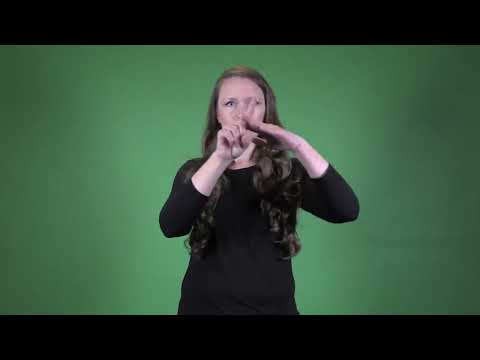
Sign for THINK DISAPPEAR (idiomatic expression) in ASL | ASL Dictionary

Definition: Idiomatic expression meaning to suddenly forget something.

Sign for THINK DISAPPEAR (idiomatic expression) in ASL

YouTube player

Practice Activities:

To practice the sign for THINK DISAPPEAR (idiomatic expression) in ASL, start with isolated repetition. Stand in front of a mirror and repeat the sign multiple times, watching your facial expression and hand movement. Since this expression represents a person’s thought or idea suddenly vanishing, be sure your non-manual markers like widened eyes and abrupt head movement reflect that nuance.

Once you feel comfortable with the sign, incorporate it into simple ASL sentences. For example, practice signing: ME THINK DISAPPEAR DURING TEST or IDEA THINK DISAPPEAR WHEN BOSS ASK QUESTION. Try to match the context of a fleeting thought or mental blankness—the sign is not literal but idiomatic, so express the underlying meaning.

Use storytelling prompts to broaden your application. Create stories about stressful moments, like interviews or exams, where your ideas vanished—use the sign for THINK DISAPPEAR (idiomatic expression) in ASL to emphasize those moments. Example: I STUDY ALL NIGHT, SIT DOWN TEST, THEN THINK DISAPPEAR. Encourage your practice partner to do the same and act out their own stories.

Engage in a role-play activity with a partner. One person plays a teacher or boss asking questions, and the other must respond using the sign to show their mind went blank. Switch roles to reinforce comprehension and expression. Try reacting quickly to questions to authentically replicate the moment when thoughts suddenly disappear.

To further practice, describe different scenarios where a person might have a mental block. Record yourself signing and review to evaluate clarity, facial expressions, and context. This will reinforce your ability to use the sign for THINK DISAPPEAR (idiomatic expression) in ASL accurately and fluently in real-world conversation.

Cultural Context:

In American Sign Language, expressions often reflect a deep level of cultural storytelling, and the sign for THINK DISAPPEAR (idiomatic expression) in ASL is one such sign that captures more than just literal meaning. This phrase models how emotions and thought processes are visually represented in Deaf culture through idiomatic expressions. Idioms in ASL often cannot be translated word-for-word into English because they embody culturally unique ways of thinking.

The sign for THINK DISAPPEAR (idiomatic expression) in ASL conveys the mental state of suddenly forgetting or losing a line of thought. It’s commonly used in conversations when someone abruptly loses track of what they were about to say. This expression mirrors the human experience of a fleeting idea, adding depth to an otherwise simple exchange in ASL.

In Deaf culture, visual communication is not just about conveying information, but also about expressing emotion and intention. The sign for THINK DISAPPEAR (idiomatic expression) in ASL paints a picture of frustration, distraction, or an unexpected mental block. That visual depth connects with other Deaf people on a cultural level, creating shared understanding and empathy.

Facial expressions and body language play a crucial role in this idiomatic expression. The sign for THINK DISAPPEAR (idiomatic expression) in ASL includes not just handshapes, but also eye gaze and facial movement that capture the idea of thoughts slipping away. It reveals how signed languages incorporate physical storytelling to represent experiences that are universally human but culturally reframed in ASL.

This idiom is often used during storytelling, personal anecdotes, or casual dialogue. For example, someone might be mid-sentence and pause, using the sign for THINK DISAPPEAR (idiomatic expression) in ASL to let their audience know that their idea has vanished. This non-verbal cue becomes part of the flow of conversation, showing how dynamic and responsive ASL is in capturing human behavior.

In educational spaces and within interpreters’ work, understanding this idiomatic sign is crucial. If it’s translated too literally into English, the richness of its cultural meaning is lost. The sign for THINK DISAPPEAR (idiomatic expression) in ASL offers insight into both language use and the subtle emotional cues native signers employ during everyday conversation.

Children who grow up in Deaf families often learn this sign from their early language exposure and associate it with emotions like embarrassment or humor. For them, the sign for THINK DISAPPEAR (idiomatic expression) in AS

Extended Definition:

The sign for THINK DISAPPEAR (idiomatic expression) in ASL captures a figurative idea that goes beyond the literal meanings of the words. This idiomatic expression is used to indicate that someone or something has slipped away from memory, focus, or conscious thought. It can also be used to describe a sudden forgetfulness or distraction, where a thought, idea, or concern vanishes unexpectedly.

In American Sign Language, idiomatic expressions like this are rarely translated word-for-word. Instead, the signs chosen represent the concept or feeling behind the phrase. The sign for THINK DISAPPEAR (idiomatic expression) in ASL often combines specific classifiers, facial expressions, and movement to show a thought or focus “leaving” the mind.

To sign this concept, you generally start with the sign for THINK. This is commonly made by pointing to the temple with an index finger. From there, the expression transitions into a gesture that represents disappearance. This might involve flicking the fingers away from the head in a swift motion, visually illustrating a thought vanishing into thin air.

What makes the sign for THINK DISAPPEAR (idiomatic expression) in ASL unique is the way it leverages spatial language and body movement to express meaning. It carries a visual metaphor that’s instantly understood by fluent signers. The combination of signs may vary slightly by region or community, but the concept remains consistent: a sudden lapse in focus or memory.

This idiomatic sign is often used in storytelling, casual conversations, or when conveying an emotional or spontaneous moment. For example, a person might be describing a time when they walked into a room and completely forgot why they were there. In ASL, they would use the sign for THINK DISAPPEAR (idiomatic expression) to express that loss of memory.

Facial expressions play a key role here. A look of confusion, widened eyes, or even a head shake helps reinforce the message. The sign becomes multidimensional, not just using hands but also the face and body to signal an idiomatic meaning. These subtleties help differentiate between literal and figurative interpretations.

The sign for THINK DISAPPEAR (idiomatic expression) in ASL reflects how rich and expressive American Sign Language truly is. ASL doesn’t just use vocabulary — it uses space, motion, and emotion to add depth to communication. Learning idiomatic expressions like this one helps non-native signers build fluency and better understand Deaf culture.

This expression

Synonyms: vanish, fade away, dissolve, evaporate, cease to exist

Educational resources: Find related learning materials in our course bank!

Want more? Check out some of our popular learning activities on the homepage!

Need to look up a sign? Use our highly rated dictionary: https://aslinteractive.com/best-asl-dictionary/

Follow us on tiktok: https://www.tiktok.com/@aslinteractive. More social media links at the bottom of this page!

Long-tail Keywords: what is the sign for IE think disappear in ASL, how do you sign IE think disappear in ASL, IE think disappear ASL sign meaning

Categories:

tags: disappear in ASL, ASL signs for actions, ASL vocabulary for concepts, ASL dictionary verbs, American Sign Language actions

Parameters

*Handshape*:

The handshape for the Sign for THINK DISAPPEAR (idiomatic expression) in ASL begins with an index finger extended from a closed fist, touching the forehead to indicate the concept of “think.” For the “disappear” portion, both hands form flat “O” shapes (as if pinching something small), then the dominant hand pulls away and opens up, suggesting something fading or vanishing ️.

This movement illustrates how a thought vanishes quickly from the mind—perfectly capturing the idiomatic idea behind the Sign for THINK DISAPPEAR (idiomatic expression) in ASL. The shift in handshape and motion conveys spontaneity and forgetfulness effectively in one fluid gesture.

*Palm Orientation*:

The palm orientation for the sign for THINK DISAPPEAR (idiomatic expression) in ASL begins with the dominant hand in a 1-handshape, palm facing inward toward the forehead. This position represents the concept of “thinking.”

As the sign transitions into “disappear,” the hands may shift to a modified 5-handshape or flattened O-handshape, with the movements suggesting something vanishing. The palms typically rotate to face slightly downward or away, showing the thought slipping away . This shift in palm orientation is central to conveying the idiomatic nature of the sign for THINK DISAPPEAR (idiomatic expression) in ASL.

*Location*:

The location for the sign for THINK DISAPPEAR (idiomatic expression) in ASL begins at the forehead, where the tip of the dominant index finger touches the temple, representing the “think” portion. The hand then quickly moves outward and downward, transitioning into the sign for “disappear,” with both hands moving near chest level. This shift in placement emphasizes a sudden mental blank or lapse in memory. ✨

In the sign for THINK DISAPPEAR (idiomatic expression) in ASL, the movement from the forehead toward the chest symbolizes a thought vanishing from the mind. The spatial change between the head and the chest area reflects the fleeting or disappearing nature of a thought in a metaphorical and expressive way.

*Movement*:

The sign for THINK DISAPPEAR (idiomatic expression) in ASL uses a fluid, expressive motion. Begin by tapping the tip of the index finger of the dominant hand to the center of the forehead, as in the sign for THINK . Then quickly flick the hand away from the face, fingers changing from an extended index to an open handshape as the hand moves slightly downward and outward.

This abrupt transformation and movement symbolize a sudden mental blank or fading thought. The idiomatic nature of the sign for THINK DISAPPEAR (idiomatic expression) in ASL conveys that someone abruptly forgot something or had a fleeting thought escape their mind.

*Non-Manual Signals*:

The non-manual signals for the sign for THINK DISAPPEAR (idiomatic expression) in ASL typically include a surprised or confused facial expression, with raised eyebrows and slightly widened eyes. This helps convey the sudden or unexpected nature of the thought vanishing.

A slight forward head movement or quick blink may be used to emphasize how quickly the idea or memory disappeared. These facial cues are essential to fully express the meaning behind the sign for THINK DISAPPEAR (idiomatic expression) in ASL .

*Prosody, Dominant/Non-Dominant Hand*:

The sign for THINK DISAPPEAR (idiomatic expression) in ASL uses the dominant hand to represent a quick, expressive action related to thoughts vanishing. The dominant hand, formed in a 1-handshape, touches the forehead briefly (representing “think”), then quickly flicks away and downward, often using a flat O or closed handshape to suggest “disappear.” The non-dominant hand remains relaxed or may assist in emphasizing the concept with facial expression .

This idiomatic sign is often accompanied by widened eyes or a surprised look to show the sudden disappearance of a thought or idea. In the sign for THINK DISAPPEAR (idiomatic expression) in ASL, prosody plays a critical role—the speed and intensity of the dominant hand movement underscore the abruptness of the disappearing thought.

Tips for Beginners:

When learning the sign for THINK DISAPPEAR (idiomatic expression) in ASL, it’s important to understand that this is a concept rather than a direct translation. The phrase usually illustrates someone mentally checking out, spacing out, or suddenly forgetting everything. To express this idiom clearly, make sure your facial expressions reflect a sense of sudden mental absence or confusion . These expressions are crucial to conveying the abstract meaning behind this phrase.

This sign typically combines the sign for THINK by pointing the index finger to the forehead and an expressive flick or glide away from the head to represent something vanishing or dissipating. One common mistake beginners make is using too stiff or mechanical movement for the “disappear” part. Make it feel natural and flowing — as if you’re physically showing a thought drifting away. A jerky or overly exaggerated motion can come off as unclear or even change the meaning.

Facial grammar is a must. Don’t just make the sign — act it out with your face too! Think about how someone looks when they space out or forget something. Mimic that reaction to enhance the delivery with authenticity. The visual nature of ASL allows for a more creative and animated way to share idiomatic expressions, so don’t be afraid to exaggerate a little.

Practice in front of a mirror or record yourself signing. This can help you see how natural your flow and expression look. Also, watch native signers use the sign for THINK DISAPPEAR (idiomatic expression) in ASL through videos or conversations and mimic their tone and pacing. The more you see it in context, the more instinctively you’ll start to use it. Keep practicing with real-life scenarios to build confidence in using the sign for THINK DISAPPEAR (idiomatic expression) in ASL.

Connections to Other topics:

The sign for THINK DISAPPEAR (idiomatic expression) in ASL connects to a broader category of mental state and emotional expression signs. It offers a unique visual metaphor, often used when referring to someone who is absentminded, forgetful, or emotionally withdrawn. As a compound sign, it draws from THINK and DISAPPEAR, combining them fluidly to show loss or vanishing of presence, a common cognitive or emotional experience.

This expression aligns with other emotion-related and psychological state signs such as FORGET, CONFUSED, or WORRY. All of these signs convey shifts in mental processes or awareness. Like the sign for THINK DISAPPEAR (idiomatic expression) in ASL, these also utilize space, facial expressions, and movement to represent abstract emotional or mental states without requiring English translation.

In richer narrative ASL storytelling, the sign for THINK DISAPPEAR (idiomatic expression) in ASL may be modified to emphasize intensity, such as accompanying it with a dramatic head shake or widened eyes. It can also be compounded further with other signs like GONE-MIND or NOT-THERE, depending on context. This shows ASL’s adaptability in capturing nuanced behaviors or emotions and reinforces the value of role shift and classifiers.

Related idiomatic expressions in ASL include MIND-BLANK and MIND-FLY, which similarly express mental distraction or unawareness. These signs also use localized metaphors that differ from English idioms and highlight ASL’s visual and spatial nature. Understanding the sign for THINK DISAPPEAR (idiomatic expression) in ASL opens the door to recognizing how ASL handles figurative speech with body language and metaphor.

In interpreting or translating, being familiar with signs like THINK DISAPPEAR (idiomatic expression) in ASL ensures more accurate conveyance of mood and message. It reveals how mental states can be seamlessly integrated into ASL grammar and enrich viewing or interacting experience.

Summary:

The sign for THINK DISAPPEAR (idiomatic expression) in ASL captures a vivid, culturally rich metaphor that goes beyond its literal English translation. This sign is commonly used to describe a sudden lack of thought, a mental blank, or the inability to recall something. It is often performed with expressive facial grammar that emphasizes quick mental loss or shock.

In terms of handshape and movement, this idiom usually starts with the index finger of the dominant hand touching the forehead, symbolizing thought. Then the hand abruptly moves away from the forehead, fingers spreading or flicking outward, giving a visual sense of the thought vanishing into thin air. The motion helps represent the sudden disappearance or loss of a traceable idea.

Facial expressions play a critical role in the effectiveness of the sign for THINK DISAPPEAR (idiomatic expression) in ASL. Native signers tend to use raised eyebrows, widened eyes, or even a quick blink followed by a confused look. These facial markers convey the emotional tone, often surprise or frustration, that parallels forgetting something suddenly.

This idiomatic usage is not typically used for major memory loss, but more for day-to-day forgetfulness such as “What was I just about to say?” or “My thought just ran away.” The sign functions more like a depiction of forgetfulness or distraction rather than deep cognitive impairment. This shows how rich and subtle ASL’s visual-spatial logic can be in describing thought-related processes.

The sign for THINK DISAPPEAR (idiomatic expression) in ASL is widely used in casual, spontaneous conversation. It’s a great example of how ASL relies on metaphorical representations of abstract concepts. In this case, thought is treated almost as a physical entity that can vanish or be misplaced.

The grammatical structure of ASL allows for the idiom’s use in different contexts. For instance, one could sign “ME THINK–DISAPPEAR” with an added pause and a head shake to reflect personal frustration. It works well in past-tense retellings or humorous anecdotes when one describes forgetting a punchline or a name.

There’s no exact English equivalent that captures the nuance provided by movement and facial grammar here. English idioms like “It slipped my mind” may serve as an approximate translation, but they lack the same visual impact. The sign for THINK DISAPPEAR (idiomatic expression) in ASL depicts the concept more effectively through kinetic and symbolic space.

The sign also aligns with conceptual blending theories in cognitive linguistics. It merges two individual frames—thought and vanishing—into a single concept. This mental mapping process shows how ASL inherently taps into embodied cognition, allowing abstract ideas to become physical performances.

Another related ASL sign is THINK (a simple touch to the forehead with the index finger), which can be paired with different affective shifts. But when combined with the dispersing motion of DISAPPEAR, the result becomes idiomatic. It illustrates how combinations of basic signs can foster new, context-driven meanings.

Learners of ASL often find the sign for THINK DISAPPEAR (idiomatic expression) in ASL to be fascinating because it breaks away from translation-based learning. It exemplifies how meanings are built through sequences and not isolated signs. This idiom inherently encourages visual thinking and creativity in language acquisition.

In Deaf culture, storytelling includes many mental and emotional shifts, and this idiom is a vital narrative tool. It is often used in humorous contexts, drama retellings, or explaining miscommunications. It adds personality, natural flow, and a layer of relatability to stories.

Sociolinguistically, the sign for THINK DISAPPEAR (idiomatic expression) in ASL often appears more in certain age groups and regional dialects more expressive in storytelling. Younger Deaf users may use it more during performances or public storytelling events known as ASL poetry slams or visually rich dialogues.

From a psycholinguistic angle, mastering this sign involves procedural knowledge, linking motion with metaphor. It reveals how layered fluency in ASL goes beyond vocabulary lists; it includes understanding the “feel” or rhythm of cultural expressions. The thinking process itself is indexed visually.

The sign has also been explored in ASL poetry and vlogs, especially when artists describe creativity slipping away or the moment before inspiration returns. It gives form to internal thought patterns, making them shareable through the language in a performative way. The idiom becomes a lyrical, expressive device.

In comparative analysis, signed languages around the world also use metaphors of vanishing thought. French Sign Language (LSF) and British Sign Language (BSL) feature similar movements with local modifications. This shows a recurring human tendency to visualize mental functions when expressed manually.

In practical, everyday settings, the sign for THINK DISAPPEAR (idiomatic expression) in ASL functions as a conversational break. It can signal “I forgot” more quickly than fingerspelling

Want more? Check out some of our popular learning activities!

ASL Interactive Resources

ASLInteractive YouTube Channel

Follow us on tiktok: @aslinteractive.com

Follow us on Instagram: aslinteractive

Facebook page: aslinteractive

Facebook group: aslinteractive

LInkedIn: ASL Interactive LLC

Twitter: @ASL_interactive

*Some information on this page is AI-generated. AI can make mistakes. Please check the information.


Responses