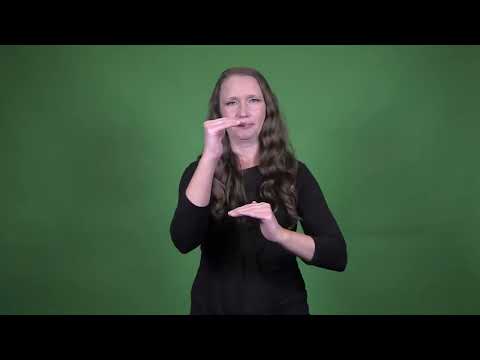
Sign for LIMIT in ASL | ASL Dictionary

Definition: A point or level beyond which something cannot pass.

Sign for LIMIT in ASL

YouTube player

Practice Activities:

Cultural Context:

Practice Activities

Practicing the sign for LIMIT in ASL is essential for mastering both the motion and meaning behind the sign. One of the best ways to start is by using a mirror. Stand in front of the mirror and slowly perform the sign for LIMIT in ASL, paying close attention to your handshape, palm orientation, and facial expressions. This reflection-based practice helps reinforce muscle memory and ensures visual accuracy.

Recording yourself signing is another effective technique. Use your phone or webcam to record multiple repetitions of the sign for LIMIT in ASL. Watch the playback to analyze your form, speed, and fluency. Compare your sign to trusted video dictionaries or native signers to make adjustments.

Contextual practice helps you understand how the sign for LIMIT in ASL functions within full sentences. Try signing phrases like “speed limit,” “limit your options,” or “there is a limit to this.” Inserting the sign into real conversations or mock dialogues strengthens your grasp of both meaning and usage.

For advanced learners, drills involving contrast signs are highly beneficial. Alternate between similar signs such as BOUNDARY, CONTROL, and RESTRICT to internalize subtle differences. Use flashcards, timed drills, or work with a fluent signing partner to simulate real-time signing scenarios.

SEO Cultural Context

Understanding the cultural context of the sign for LIMIT in ASL enhances your overall fluency and respect for Deaf culture. In the Deaf community, signs are more than direct translations; they reflect values, shared experiences, and community norms. The sign for LIMIT in ASL can be used in discussions about personal boundaries, societal rules, or physical limitations, all of which are meaningful in Deaf discourse.

Deaf culture places a strong emphasis on clarity and visual communication. The sign for LIMIT in ASL is often accompanied by expressive non-manual markers such as furrowed brows or a headshake to emphasize restriction or boundaries. Facial grammar plays a crucial role in modifying the meaning of the sign, so learners must pay close attention to these visual cues.

Regional variation may exist in how people sign LIMIT, especially in different parts of the United States. While the core structure of the sign remains relatively consistent, slight changes in movement or handshape could appear depending on local Deaf communities. Always be open to observing and learning from native signers in your area.

The sign for LIMIT in ASL is frequently used in educational and legal contexts. Teachers might use it when discussing classroom rules, while interpreters may use it during legal proceedings to communicate limits or restrictions. In everyday life, the sign helps express emotional, physical, or social boundaries, contributing to respectful and clear communication.

Extended Definition

The sign for LIMIT in ASL typically involves two flat hands, palms facing each other, placed at shoulder level and then brought together to show a stopping or boundary point. The motion resembles setting a boundary or cap on something, which visually conveys the concept of a limit. This visual representation aligns with ASL’s spatial and conceptual grammar.

It’s important not to confuse the sign for LIMIT in ASL with similar signs like STOP, CONTROL, or BOUNDARY. While these signs may appear related, each has a distinct handshape or movement. For example, CONTROL uses a more gripping handshape and downward motion, while STOP features a quick, intersecting motion between two hands.

A common error among learners is using incorrect palm orientation. The palms for the sign for LIMIT in ASL should face each other, not toward the signer or outward. Another mistake is performing the motion too quickly or without intent, which can confuse the meaning or lessen the visual clarity of the sign.

Because ASL is a visual language, the sign for LIMIT in ASL also relies on context and facial expressions. For example, signing LIMIT with a serious facial expression conveys urgency or a strict boundary. Alternatively, a casual expression might indicate a more flexible or informal limit. This adaptability is a hallmark of ASL’s nuanced grammar.

Tips for Beginners

If you’re just beginning to learn the sign for LIMIT in ASL, start with confidence and curiosity. Don’t worry about mastering every detail immediately. Focus first on getting the basic handshape and motion correct. Use slow, deliberate movements to build muscle memory.

One common mistake is neglecting facial expressions. Remember that in ASL, your face plays a vital role in delivering meaning. Practice signing LIMIT while emphasizing your facial grammar—whether it’s seriousness, concern, or emphasis.

Another frequent error is confusing LIMIT with related signs. To avoid this, practice them side by side. Watch trusted ASL resources and mimic the signs with attention to detail. Repetition is key to distinguishing subtle differences and developing fluency.

Use repetition drills and short phrases to make the sign more automatic. For example, sign “time limit,” “limit reached,” or “limit yourself” as part of daily practice. This kind of contextual repetition helps you internalize both the meaning and the physical sign.

Don’t be afraid to sign with others. Whether you’re in an ASL class or practicing online, using the sign for LIMIT in ASL in real conversations accelerates your learning. Mistakes are part of the journey—what matters most is consistent, mindful practice.

Connections to Other Topics

The sign for LIMIT in ASL connects naturally with several other signs, making it a valuable addition to your ASL vocabulary. One related sign is BOUNDARY, which also deals with the idea of limits but often in a more spatial or interpersonal context. Comparing these signs can help you understand different nuances in meaning.

Another connected sign is CONTROL. While CONTROL involves managing or directing, LIMIT often implies a restriction or endpoint. Practicing these signs together can help you articulate complex ideas related to power, authority, and personal agency in ASL.

You’ll also find a link between LIMIT and the sign for RESTRICT. RESTRICT narrows down options or freedoms, which aligns closely with LIMIT. However, RESTRICT often has a more formal or legal tone, while LIMIT can be more conversational.

In terms of grammar, the sign for LIMIT in ASL often appears in conditional or negative statements. For example, “You can go, but there’s a limit” or “No limit here.” Understanding ASL sentence structure helps you use the sign effectively in various contexts.

Thematic connections also exist with signs like RULE, LAW, and PERMISSION. These concepts frequently appear in discussions where LIMIT is relevant. Learning them together builds a broader understanding of how boundaries and regulations are communicated in ASL.

Lengthy Summary

The sign for LIMIT in ASL plays a crucial role in expressing boundaries, restrictions, and maximum allowances in both casual and formal conversations. Its visual structure—flat hands moving toward each other—clearly communicates the concept of a cap or boundary. Learners benefit from practicing the sign through a variety of exercises, including mirror work, video recording, contextual phrases, and contrast drills.

Culturally, the sign for LIMIT in ASL is embedded in the values and communication norms of the Deaf community. It is used in educational, legal, and everyday settings to establish rules and boundaries. Regional variations may exist, but the core meaning remains consistent across different Deaf communities.

A deep understanding of the sign includes recognizing related vocabulary, such as BOUNDARY, CONTROL, and RESTRICT. Learning these signs in tandem helps clarify subtle distinctions and enhances overall fluency. Beginners are encouraged to focus on handshape, palm orientation, and facial expressions, all of which are vital to conveying the correct meaning.

Common mistakes include mixing up similar signs or omitting facial grammar, but these can be overcome with mindful practice and exposure to native signers. The sign for LIMIT in ASL is also closely tied to grammatical structures like conditionals and negatives, which further influences its meaning in conversation.

Incorporating the sign into everyday signing, especially in themed discussions about rules, constraints, or permissions, reinforces learning. Whether you’re navigating a classroom discussion, interpreting legal terms, or setting personal boundaries, the sign for LIMIT in ASL empowers you to communicate clearly and effectively.

Keep practicing with intention and curiosity. The more you use the sign for LIMIT in ASL in diverse contexts, the more natural and expressive it will become. Stay patient, stay observant, and most of all—keep signing!

Extended Definition:

Synonyms: cap, boundary, restriction, maximum, ceiling

Educational resources: Find related learning materials in our course bank!

Want more? Check out some of our popular learning activities on the homepage!

Need to look up a sign? Use our highly rated dictionary: https://aslinteractive.com/best-asl-dictionary/

Follow us on tiktok: https://www.tiktok.com/@aslinteractive. More social media links at the bottom of this page!

Long-tail Keywords: what is the sign for limit in ASL, how do you sign limit in ASL, ASL sign for limit

Categories:

tags: boundary signs, restriction vocabulary, ASL measurements, capacity concepts in ASL, American Sign Language limitations

Tips for Beginners:

Connections to Other topics:

Summary:

Want more? Check out some of our popular learning activities!

ASL Interactive Resources

ASLInteractive YouTube Channel

Follow us on tiktok: @aslinteractive.com

Follow us on Instagram: aslinteractive

Facebook page: aslinteractive

Facebook group: aslinteractive

LInkedIn: ASL Interactive LLC

Twitter: @ASL_interactive

*Some information on this page is AI-generated. AI can make mistakes. Please check the information.


Responses