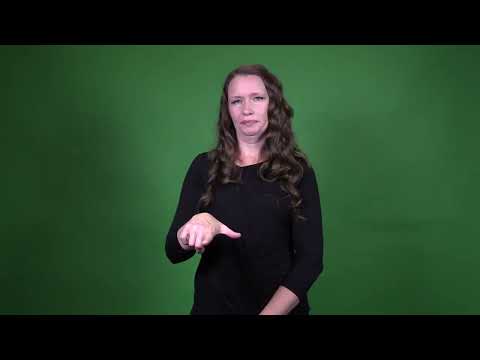
Sign for LOW in ASL | ASL Dictionary

Definition: At a small distance below or less than normal level.

Sign for LOW in ASL

YouTube player

Practice Activities:

Cultural Context:

Practice Activities

Mastering the sign for LOW in ASL takes regular and mindful practice. One effective method is mirror work. Stand in front of a mirror and practice the sign slowly, watching your hand shape and movement. This allows you to self-correct and internalize the correct form of the sign for LOW in ASL.

Another powerful technique is recording yourself. Use your phone or webcam to film short clips where you use the sign for LOW in ASL in a sentence. Play it back and check for consistency in movement and facial expression. Over time, this builds confidence and fluency.

Contextual signing builds real-world application. Practice using the sign in everyday conversations or storytelling. For instance, describe something being low on a shelf, a low score on a test, or a low sound. The more you embed the sign for LOW in ASL into your lived experience, the more naturally it will come to you.

For advanced learners, try receptive drills. Watch videos of fluent signers using the sign for LOW in ASL and practice identifying it in context. Then, replicate their pace, body language, and fluidity. Shadowing exercises like this help improve both expression and perception.

SEO Cultural Context

In Deaf culture, spatial and descriptive signs like the sign for LOW in ASL are essential for clear and vivid communication. This sign lets users describe relative height, emotional states, or levels of intensity. For example, someone might use it to indicate a low battery, low energy, or low expectations in different contexts.

Deaf culture values precision and clarity in visual language. When using the sign for LOW in ASL, your facial expression and body movement should match the concept. If you’re describing a low mood, your facial expression should mirror that emotion. If you’re talking about a low price, a slight smile may accompany the sign.

Regional variation in ASL can affect how the sign for LOW in ASL is executed. In most parts of the U.S., the dominant hand moves downward with the palm facing down, but some regions may vary slightly in speed or facial expression emphasis. Always be open to learning these nuances, especially when traveling or interacting with signers from different areas.

Understanding when and why to use this sign is also culturally critical. It’s commonly used in academic settings, social conversations, and storytelling. Whether you’re describing the tone of someone’s voice or a low ceiling, using the sign for LOW in ASL brings specificity and nuance to your communication.

Extended Definition

The sign for LOW in ASL generally involves holding your dominant hand flat, palm down, and moving it downward in a small arc or a straight line, depending on context. The hand starts at mid-torso level and lowers toward the waist. This illustrates the concept of something being physically or metaphorically low.

This sign is classified as a directional and descriptive sign. It can describe vertical placement (a low shelf), emotional condition (feeling low), or quantity (low number of people). It’s flexible, but context and facial expressions help narrow the meaning.

Learners often confuse the sign for LOW in ASL with similar signs like DOWN or SMALL. While DOWN uses a pointed index finger and a sharper movement, and SMALL uses a two-handed movement to indicate size, LOW involves a broad flat hand and a smooth downward motion. Being aware of these differences helps avoid miscommunication.

Some also mistakenly make the movement too abrupt or too high. The sign for LOW in ASL should look natural and flow with your body. Keep the movement smooth and controlled. Exaggerated signs can change the meaning or confuse the viewer.

Tips for Beginners

If you’re just starting out, learning the sign for LOW in ASL can feel deceptively simple. But like many ASL signs, accuracy and context matter. Keep your palm flat and face it downward. A common mistake is flipping the hand or using a bent wrist, which alters the meaning or makes the sign unclear.

Take your time. Practice slowly and build muscle memory. Try closing your eyes and signing it – then open your eyes and check your form in the mirror. This builds tactile awareness and visual precision.

Don’t forget the role of facial expression. For example, if you’re using the sign for LOW in ASL to describe someone’s mood, your face should reflect sadness or fatigue. If you’re talking about a low price, a neutral or pleased expression might be more appropriate.

Another tip is to use the sign in real conversations, not just isolated drills. Ask a friend to help or join an online ASL group where you can practice the sign for LOW in ASL in dynamic contexts. It’s much easier to remember signs when they’re tied to real communication.

Connections to Other Topics

The sign for LOW in ASL connects naturally with the sign for HIGH. These two signs are often taught together because they represent opposite ends of a spectrum. HIGH uses a similar handshape but moves upward instead of down.

Another related sign is LEVEL. While LOW describes a vertical position, LEVEL can describe something being even or consistent. These two are often used together when describing building structures, sound levels, or skill development.

The sign for SAD also connects conceptually to the sign for LOW in ASL when describing mood or emotion. Both can be used to communicate emotional states and often appear together in narratives or personal sharing.

The sign for SMALL shares spatial similarities but differs significantly in meaning. Learning both helps students understand motion and palm orientation in ASL. It also strengthens vocabulary related to size or degree.

Finally, LOW connects to the sign for BOTTOM. While LOW shows relative placement, BOTTOM specifies the lowest part of something. Both signs help frame spatial relationships and are useful in descriptions.

Lengthy Summary

The sign for LOW in ASL is a foundational visual concept that enhances your ability to describe position, emotion, and quantity with clarity and precision. Whether you’re explaining that the sun is low in the sky or expressing that your energy is low, this sign allows you to communicate nuanced ideas visually and effectively.

Practicing the sign for LOW in ASL involves more than just hand movement. It requires integrating facial expressions, smooth motion, and contextual awareness. Through mirror work, video practice, and real-world use, you can build fluency and confidence in using this sign appropriately.

Understanding the cultural background of the sign for LOW in ASL deepens your respect for the language and its users. Deaf culture places a high value on visual storytelling, and descriptive signs like LOW are central to that tradition. Awareness of regional variation and situational appropriateness also enriches your learning experience.

For beginners, staying patient and mindful is key. Avoid rushing through the motion or ignoring facial expressions. Keep your hand flat, your movements controlled, and always aim for clarity. The more you use the sign in context, the more naturally it will come to you.

Connecting the sign for LOW in ASL to related signs like HIGH, SMALL, BOTTOM, and SAD expands your vocabulary and understanding of ASL’s structure. These links create a more interconnected grasp of the language and help you identify patterns in grammar and usage.

As you continue your ASL journey, make the sign for LOW in ASL a regular part of your practice. Challenge yourself to use it in varied contexts, from academic discussions to personal storytelling. With commitment and curiosity, you’ll not only master this sign but also discover new dimensions of expression in American Sign Language. Keep signing, keep learning, and stay engaged in the beauty of visual communication .

Extended Definition:

Synonyms: small, minimal, reduced, slight, limited

Educational resources: Find related learning materials in our course bank!

Want more? Check out some of our popular learning activities on the homepage!

Need to look up a sign? Use our highly rated dictionary: https://aslinteractive.com/best-asl-dictionary/

Follow us on tiktok: https://www.tiktok.com/@aslinteractive. More social media links at the bottom of this page!

Long-tail Keywords: what is the sign for low in ASL, how do you sign low in ASL, low in American Sign Language

Categories:

tags: low in ASL, directional signs in ASL, comparative signs in ASL, height and level signs in ASL, descriptive signs in ASL

Tips for Beginners:

Connections to Other topics:

Summary:

Want more? Check out some of our popular learning activities!

ASL Interactive Resources

ASLInteractive YouTube Channel

Follow us on tiktok: @aslinteractive.com

Follow us on Instagram: aslinteractive

Facebook page: aslinteractive

Facebook group: aslinteractive

LInkedIn: ASL Interactive LLC

Twitter: @ASL_interactive

*Some information on this page is AI-generated. AI can make mistakes. Please check the information.


Responses