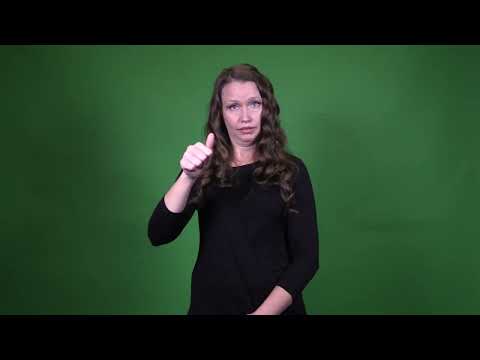
Definition: At the lowest level or position.
Sign for LOWEST in ASL
Practice Activities:
Cultural Context:
Practice Activities
One of the most effective ways to master the sign for LOWEST in ASL is through mirror practice. Stand in front of a mirror and sign slowly, watching your handshape, palm orientation, and movement. This allows you to self-correct and become more aware of any unintentional variations.
Recorded signing is another practical technique. Use your phone or camera to film yourself signing full sentences that include the sign for LOWEST in ASL. When you replay the video, evaluate your facial expressions, hand movement, and clarity.
Contextual practice helps solidify your understanding. Use the sign for LOWEST in ASL in daily conversations—such as talking about the lowest score on a test, the lowest shelf in a cabinet, or the lowest point in a story. This type of practical usage makes the sign more memorable and meaningful.
Advanced drills can help you build fluency. Try speed drills where you alternate between related vocabulary signs like low, lower, lowest, high, and highest. Challenge yourself to sign these in sequences with increasing speed, while maintaining accurate execution.
You can also practice with a partner. Have them sign a sentence and include a blank, and you fill in the blank using the correct sign for LOWEST in ASL. This type of interactive drill builds comprehension and response time.
SEO Cultural Context
Understanding the cultural context of the sign for LOWEST in ASL is essential for respectful and accurate use. In Deaf culture, signs are deeply connected to visual and spatial concepts. The sign for LOWEST in ASL reflects this visual-spatial logic, as it physically moves downward to indicate a low or base level.
This sign can be used in multiple social and educational contexts—such as school settings when discussing test scores, or in casual conversation when describing geographical features or emotional states. For example, a Deaf student might use the sign for LOWEST in ASL when explaining that they got the lowest grade in a class. It’s a sign that connects directly to real-life experiences.
There may be some regional variation in how the sign is formed. In some areas, the movement might be more exaggerated, or the palm orientation might be slightly different. However, the core concept remains consistent: a downward motion that aligns with the idea of “lowest.”
Deaf culture also emphasizes the importance of clarity and facial expressions. When signing the sign for LOWEST in ASL, your facial expression should match the concept—such as a slight frown or lowering of the eyebrows to emphasize the extremity of the situation. This non-manual signal helps convey the emotional weight of what you’re signing.
Extended Definition
The sign for LOWEST in ASL typically involves using the dominant hand in a flat “B” handshape. Start at about chest level and move the hand downward in a smooth, steady motion. The palm usually faces downward or slightly forward, depending on your regional variation.
This sign builds on the root concept of “low.” While “low” may start at a mid-level and move slightly downward, the sign for LOWEST in ASL takes this a step further. It begins higher and drops lower, indicating the extreme or bottom-most point of something. It’s a superlative, and that distinction should be clear in your movement.
Related signs include LOW, LOWER, and BOTTOM. It’s important not to confuse these. For example, LOWER may involve a two-handed motion with one hand lowering an imaginary object, while LOWEST uses a single hand and focuses on the concept of extremity.
A common error is not lowering the hand enough, which could make it look like the sign for LOW. Another mistake is using the wrong handshape—such as a bent hand or a loose palm—which can obscure the meaning. Be sure your hand is flat and your motion is deliberate.
Tips for Beginners
If you’re new to ASL, learning the sign for LOWEST in ASL can feel intimidating at first, but don’t worry—it’s a sign built on logic and visual metaphor. Start by mastering the sign for LOW, and then practice extending the downward motion to understand the difference between LOW and LOWEST.
Focus on the direction and clarity of movement. Many beginners make the mistake of not moving their hand far enough down, or they move too quickly, which can make the sign unclear. Practice slowly at first, then build up speed as your confidence grows.
Use facial expressions to match the intensity of the sign. For example, when signing the sign for LOWEST in ASL in a sentence like “That was the lowest point of my day,” a serious or sad expression can help convey your meaning more effectively.
Don’t be afraid to ask for feedback. If you’re in a class or learning environment, ask your teacher or peers to watch your signing and point out areas for improvement. The more you sign, the more natural it becomes.
Connections to Other Topics
The sign for LOWEST in ASL connects closely with other degree-related signs such as HIGHEST, TALLEST, and SHORTEST. These are all superlatives and use exaggerated movement to show extremity. Understanding this group of signs helps build your vocabulary around comparisons and measurements.
Another related concept is RANKING. When discussing scores or levels, signs like FIRST, SECOND, and LAST often come up. The sign for LOWEST in ASL is frequently used in the context of ranking, especially when indicating the bottom of a scale.
The sign also connects with emotional vocabulary. For instance, “lowest point” can describe an emotional state, so you might use the sign alongside signs like SAD, DEPRESSED, or TIRED. This makes it useful in storytelling and personal sharing.
Spatial grammar in ASL also plays a role. The sign for LOWEST in ASL often uses space to indicate a conceptual bottom, so understanding ASL’s use of physical space for abstract ideas is helpful.
Finally, the sign fits into the broader category of mathematical and scientific terminology. When discussing data, graphs, or environmental conditions (like temperature or elevation), LOWEST is a critical vocabulary word. It’s commonly used in educational settings, especially in STEM subjects.
Lengthy Summary
The sign for LOWEST in ASL is a visually intuitive and culturally meaningful sign that expresses the superlative form of “low.” It uses a flat “B” handshape and a deliberate downward motion to indicate the lowest point, level, or condition. Whether describing test scores, emotional states, or physical positions, this sign is essential for clear and expressive communication.
Learning this sign involves more than just hand movement. It requires attention to detail, facial expressions, and spatial awareness. Beginners should take the time to understand how it differs from related signs like LOW and LOWER, and practice it in a variety of contexts to reinforce their understanding.
Culturally, the sign for LOWEST in ASL reflects the Deaf community’s value on visual-spatial logic. It’s a sign that is used in everyday conversation, academic settings, and storytelling. Understanding how and when to use it appropriately shows respect for the language and the people who use it.
Practice is key. Use mirrors, videos, and real-life examples to integrate the sign into your daily signing routine. Work on drills that include related vocabulary and sentence structures. Engage with others and seek feedback to refine your skills.
By connecting the sign for LOWEST in ASL with broader topics like ranking, emotion, and measurement, you gain a deeper understanding of how ASL communicates complex ideas. Each sign you learn builds a stronger foundation for fluency and cultural competence.
Keep practicing the sign for LOWEST in ASL in diverse situations. With consistent effort and mindful learning, you’ll not only remember the sign—you’ll use it with confidence and clarity. Keep signing, stay curious, and enjoy every step of your ASL journey! ✨
Extended Definition:
Synonyms: smallest, least, bottommost, inferior, minimal
Educational resources: Find related learning materials in our course bank!
Want more? Check out some of our popular learning activities on the homepage!
Need to look up a sign? Use our highly rated dictionary: https://aslinteractive.com/best-asl-dictionary/
Follow us on tiktok: https://www.tiktok.com/@aslinteractive. More social media links at the bottom of this page!
Long-tail Keywords: what is the sign for lowest in ASL, how do you sign lowest in ASL, ASL sign for lowest
Categories:
tags: lowest in ASL, ASL comparative signs, ASL measurements, ASL rankings vocabulary, ASL adjectives
Tips for Beginners:
Connections to Other topics:
Summary:
Want more? Check out some of our popular learning activities!
ASL Interactive Resources
ASLInteractive YouTube Channel
Follow us on tiktok: @aslinteractive.com
Follow us on Instagram: aslinteractive
Facebook page: aslinteractive
Facebook group: aslinteractive
LInkedIn: ASL Interactive LLC
Twitter: @ASL_interactive
*Some information on this page is AI-generated. AI can make mistakes. Please check the information.


Responses