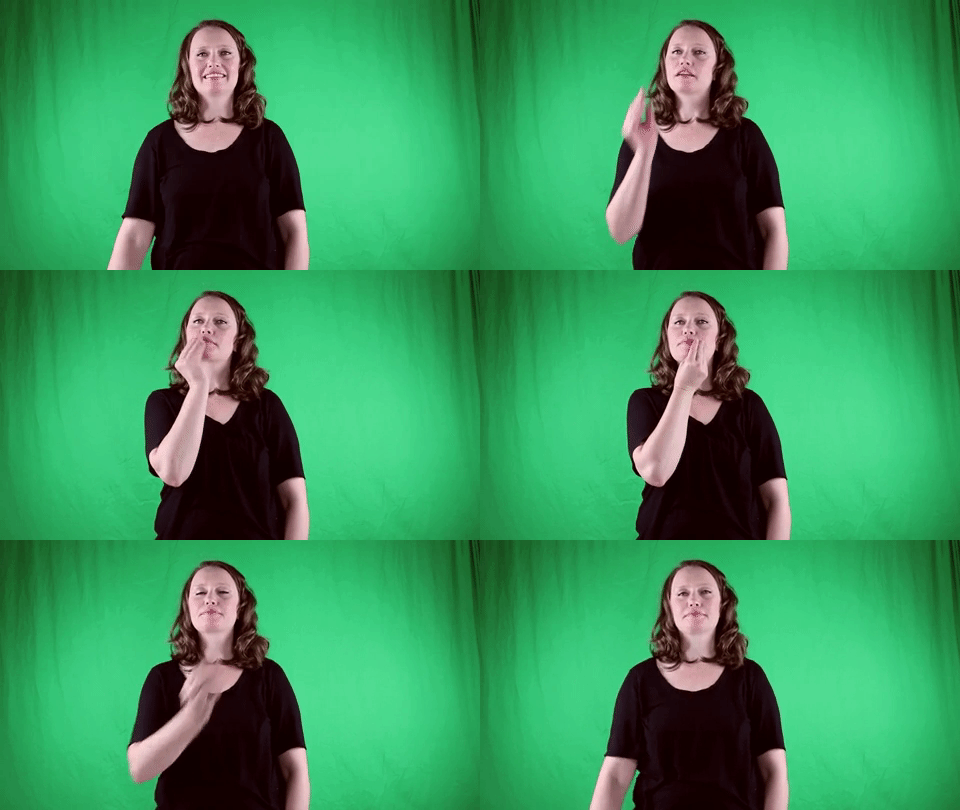
Definition: A piece of cloth or paper used at meals to wipe the mouth and hands.
Sign for NAPKIN in ASL
Practice Activities
One of the most effective ways to learn the sign for NAPKIN in ASL is through targeted practice that builds confidence and accuracy. Start by using a mirror to observe yourself while signing. This helps reinforce handshape, palm orientation, and movement direction. Make sure your facial expressions are relaxed and natural, as overexaggeration can distract from the clarity of the sign.
Record yourself signing the word in full sentences. For example, sign “I need a napkin” or “Where is the napkin?” This allows you to review your fluency and catch any mistakes you may not notice in real time. Try watching fluent ASL users sign similar sentences and compare your own signing style.
Use the sign for NAPKIN in ASL during real-life moments, such as at meals or when role-playing restaurant scenarios. Practicing in context helps solidify the vocabulary in your memory. You can also play interactive games with friends or classmates, such as charades or speed-signing challenges, to reinforce your recall.
For more advanced learners, incorporate the sign into structured drills. Alternate between signs like “tissue,” “paper,” and “napkin” to strengthen your ability to differentiate similar vocabulary. Practice fingerspelling the word followed by the sign to build both receptive and expressive skills.
SEO Cultural Context
Understanding the cultural context behind the sign for NAPKIN in ASL enhances both comprehension and respectful communication. In Deaf culture, cleanliness and visual clarity are essential, especially during shared meals or social gatherings. Signing about a napkin is more than just vocabulary—it reflects an awareness of communal norms and etiquette.
The sign for NAPKIN in ASL may vary slightly by region, especially between East and West Coast communities. Some signers may use a motion representing wiping the mouth, while others may show a folding action. Both are correct, depending on the context and local norms. It’s important to observe and respect regional variation rather than assuming one version is universally used.
Deaf culture values directness and clarity. When signing in social or dining situations, it’s expected that signs like NAPKIN, SPOON, or FORK are performed clearly and without ambiguity. In fast-paced or casual conversations, native ASL users may abbreviate motions, but learners should aim for clarity first.
The sign for NAPKIN in ASL is commonly used in educational settings, Deaf events, or daily life—especially around food. Whether attending a community potluck or ordering at a Deaf-owned café, knowing this sign supports smoother interactions and deeper cultural connection.
Extended Definition
The sign for NAPKIN in ASL typically uses a motion that mimics wiping the mouth or chin, symbolizing the function of a napkin. The dominant hand, often in a flat “O” or closed “5” handshape, taps or slides along the corners of the mouth or chin area. The movement is usually small, repeated once or twice, and performed with relaxed facial expression.
Be aware that the sign for NAPKIN in ASL is sometimes confused with related signs such as TISSUE or WIPE. These signs may share similar handshapes or movement but are placed differently on the face or body. For example, TISSUE often involves a motion near the nose, while NAPKIN focuses more on the mouth area.
Learners should also distinguish between napkin and paper towel. While both may involve a wiping gesture, the context and size of the motion help define the intended object. When unsure, fingerspelling the word before using the sign can help clarify your meaning.
Some ASL users may also use a classifier to represent a napkin, especially in storytelling or descriptive contexts. For example, a flat object classifier (CL:flat) can represent the napkin when discussing folding, placing, or throwing it. These classifiers add depth to your communication and are useful for intermediate to advanced signers.
Tips for Beginners
If you’re just starting out, learning the sign for NAPKIN in ASL can be both fun and practical. Since the sign mimics a familiar action—wiping your mouth—it’s easy to remember. Start by watching a video of a fluent signer and repeat the motion slowly until it feels natural.
One common mistake is placing the hand too low or too high on the face. Aim for the corners of the mouth or just below, and keep the motion gentle. Overemphasizing the movement can make the sign look unnatural or be mistaken for other signs.
Another tip is to pair the sign with fingerspelling. This reinforces the meaning and helps you remember the vocabulary. For example, fingerspell “N-A-P-K-I-N” and then perform the sign. Over time, your muscle memory will build, and you’ll be able to recall the sign quickly and accurately.
Don’t be discouraged by regional variations or slight differences in motion. The most important thing is to be understood and to use the sign in context. Watching native signers and asking for feedback can help you refine your technique.
Connections to Other Topics
Learning the sign for NAPKIN in ASL naturally connects with other signs commonly used in dining or social settings. For instance, the sign for FORK uses a tapping motion with a “V” handshape on the palm, mimicking the use of a utensil. Pairing NAPKIN with FORK in full sentences helps learners develop situational fluency.
The sign for TISSUE is another related concept. It usually involves a pinching motion near the nose, distinguishing it from the mouth-focused NAPKIN sign. Practicing both signs together can help reinforce the correct placement and movement.
You might also explore the sign for CLEAN or WIPE, which uses a sweeping motion on the palm. Since NAPKIN often implies cleaning, these signs are useful in expanding your vocabulary and understanding of related verbs.
The sign for RESTAURANT, made by moving the “R” handshape from one side of the mouth to the other, is frequently used alongside NAPKIN in ASL. Practicing phrases like “I need a napkin at the restaurant” combines multiple signs and solidifies your understanding.
Another useful connection is the sign for TABLE or EAT. These provide context in which NAPKIN is likely to appear. Creating visual narratives or role-play activities around meals can help you reinforce the vocabulary in a memorable way.
Lengthy Summary
Mastering the sign for NAPKIN in ASL is a meaningful step in building everyday vocabulary and engaging more fully with Deaf culture. This sign is practical, visually intuitive, and deeply connected to common social experiences such as eating, cleaning, and interacting at gatherings or restaurants.
You’ve learned that the sign involves a simple, mouth-focused motion that communicates the act of wiping. It’s important to use the correct placement and handshape to avoid confusion with similar signs like TISSUE or WIPE. By practicing with mirrors, recordings, and in real-life contexts, you’ll develop confidence and clarity in your signing.
Cultural awareness also plays a crucial role. The sign for NAPKIN in ASL is not just about vocabulary—it reflects norms of cleanliness, visual communication, and social etiquette in the Deaf community. Respecting regional variations and maintaining clarity will help you become a more effective and respectful communicator.
For beginners, patience and repetition are key. Start small, focus on accuracy, and gradually increase the complexity of your practice. Use connections to related signs like FORK, CLEAN, or RESTAURANT to build thematic fluency and strengthen your memory.
With consistent effort, you’ll not only remember the sign for NAPKIN in ASL but also be able to use it naturally in conversations. Keep practicing with real-life scenarios, challenge yourself with advanced drills, and stay curious about the cultural layers behind each sign. Keep signing and growing your ASL skills every day!
Synonyms: serviette, hand towel, tissue, paper towel, table wipe
Educational resources: Find related learning materials in our course bank!
Want more? Check out some of our popular learning activities on the homepage!
Need to look up a sign? Use our highly rated dictionary: https://aslinteractive.com/best-asl-dictionary/
Follow us on tiktok: https://www.tiktok.com/@aslinteractive. More social media links at the bottom of this page!
Long-tail Keywords: what is the sign for napkin in ASL, how do you sign napkin in ASL, ASL sign for napkin
Categories:
tags: napkin sign, ASL table items, ASL dining vocabulary, food-related ASL signs, tableware in ASL
Want more? Check out some of our popular learning activities!
ASL Interactive Resources
ASLInteractive YouTube Channel
Follow us on tiktok: @aslinteractive.com
Follow us on Instagram: aslinteractive
Facebook page: aslinteractive
Facebook group: aslinteractive
LInkedIn: ASL Interactive LLC
Twitter: @ASL_interactive
*Some information on this page is AI-generated. AI can make mistakes. Please check the information.


Responses