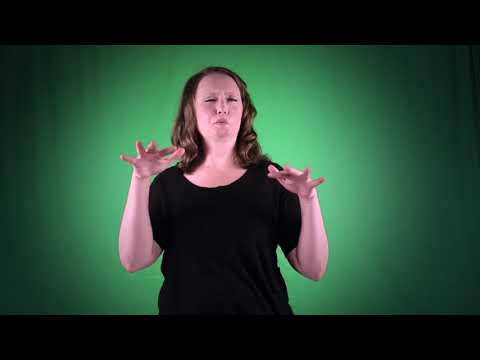
Definition: The intensity of sound.
Sign for NOISE LEVEL in ASL
Practice Activities
One of the most effective ways to master the sign for NOISE LEVEL in ASL is through consistent and varied practice. Start with mirror work by standing in front of a mirror and signing the phrase slowly. Observe your facial expressions and hand movements to ensure clarity and accuracy. Facial grammar plays a crucial role in conveying the intensity of the noise, so pay attention to how your face supports the meaning.
Another great method is using recorded signing. Record yourself signing the phrase and then watch the video to evaluate your fluency, speed, and accuracy. Compare your video with native signers or instructional content to identify areas for improvement. Signing in context is also important. Use the sign for NOISE LEVEL in ASL during real-life situations like in a classroom, at a party, or while discussing sound environments with others.
Advanced learners can challenge themselves with drills that include varying degrees of noise. Practice differentiating between “quiet,” “moderate,” and “loud” using the appropriate facial expressions and intensity in signing. You can also incorporate this sign into full dialogues or storytelling scenarios where characters respond to different noise environments. Practicing regularly in these diverse ways ensures that the sign becomes second nature and well-integrated into your everyday ASL skills.
SEO Cultural Context
Understanding the cultural importance of the sign for NOISE LEVEL in ASL helps deepen your appreciation of Deaf culture. In Deaf spaces, visual and environmental awareness is heightened, and noise levels often need to be managed visually. This is especially true in classrooms, social events, or public settings where Deaf individuals rely on visual cues to maintain a comfortable and inclusive environment.
The sign for NOISE LEVEL in ASL reflects a need to communicate about environmental sound visually. While Deaf individuals may not hear the noise, they can feel vibrations or see the effects of sound. Controlling noise levels is crucial in settings like Deaf schools or community centers, where too much vibration or movement can be disruptive. This sign helps maintain visual harmony and respect for shared spaces.
There are some regional variations in how this sign is expressed. Some communities might combine signs for “sound” and “amount” or “volume,” while others may use a more standardized compound sign. Regardless of the variation, the cultural function remains consistent: to convey the level of auditory activity and its appropriateness in a given setting. The sign for NOISE LEVEL in ASL gives Deaf individuals a clear and respectful way to manage their environments.
Extended Definition
The sign for NOISE LEVEL in ASL typically involves a combination of the signs for “noise” or “sound” and “level” or “degree.” The sign for “noise” is often expressed by vibrating or shaking open hands near the ears or mouth area, mimicking the concept of sound waves. The sign for “level” may involve a flat palm moving horizontally to indicate consistency or degree.
When put together, the sign for NOISE LEVEL in ASL communicates the concept of how much or how little sound is present in a space. This compound sign can be modified easily by changing facial expressions and the intensity of movement. For example, raised eyebrows and a slight movement may indicate a low noise level, while a furrowed brow and exaggerated movement can show a high or disruptive noise level.
Common errors include confusing the sign for “noise” with “music” or using incorrect facial expressions. Another mistake is signing “level” in a vertical direction, which changes the meaning. It’s essential to understand that ASL relies heavily on spatial orientation and non-manual signals to convey subtle differences. Mastering the sign for NOISE LEVEL in ASL requires attention to these features to ensure your message is both grammatically correct and culturally appropriate.
Tips for Beginners
If you’re new to ASL, learning the sign for NOISE LEVEL in ASL can feel challenging at first, but it’s a rewarding step toward fluency. Begin by breaking the sign into smaller components. Learn each part—”noise” and “level”—before combining them. This helps you understand the concept more clearly and reduces the chance of error.
Use a mirror to practice not only your handshape but also your facial expressions. Beginners often forget how crucial facial grammar is in ASL. The same hand movements can mean something entirely different depending on your face. For example, a calm face might mean the noise level is acceptable, while a tense expression shows it’s too loud.
One common beginner mistake is overemphasizing the sign, making it look unnatural or forced. Keep your movements smooth and controlled. Also, avoid relying solely on English grammar. ASL has its own structure and syntax, so try to think in visual-spatial terms. Practicing with a partner or tutor can also help you get real-time feedback and accelerate your learning of the sign for NOISE LEVEL in ASL.
Connections to Other Topics
The sign for NOISE LEVEL in ASL is closely related to several other signs and concepts in American Sign Language. One related sign is “quiet,” which is often used to request lower noise levels. It’s typically signed by placing an index finger over the lips or using a flat hand to indicate silence. This sign is frequently used alongside noise level discussions.
Another connected concept is “loud” or “volume,” which may be signed by gesturing near the ears with intensified motion. This helps specify the type of noise level being discussed. Understanding how to modulate your signing for volume helps increase clarity and emotional expression in your communication.
The sign for “environment” is also relevant. In ASL, this is often signed by circling one hand around the other to indicate surroundings. Talking about the noise level often involves describing the environment, such as a noisy classroom or a quiet library.
Signs like “comfortable” and “disturb” are also useful when discussing noise levels. You might use “comfortable” to describe an acceptable noise level or “disturb” to express that the noise is too loud. Mastering these related signs and concepts will enhance your ability to discuss auditory conditions fluently and naturally in ASL.
Finally, the concept of “visual alerts” ties into discussions about noise. Deaf individuals often use flashing lights or visual indicators instead of auditory alarms. Understanding the sign for NOISE LEVEL in ASL can help explain why visual signals are necessary and preferred in Deaf spaces.
Lengthy Summary
The sign for NOISE LEVEL in ASL is a foundational concept for anyone looking to communicate effectively in American Sign Language. It combines elements of “noise” or “sound” with the concept of “intensity,” “volume,” or “degree,” all of which are expressed using precise hand shapes, movements, and facial expressions. This sign is particularly important in Deaf culture, where sound is experienced differently and often needs to be discussed visually.
From a cultural perspective, the sign for NOISE LEVEL in ASL reflects the Deaf community’s emphasis on environmental awareness and visual communication. Whether in classrooms, meetings, or public gatherings, this sign allows for respectful management of shared spaces. Regional variations may exist, but the overall function remains consistent—communicating how much sound is appropriate or present.
For beginners, mastering this sign involves understanding its components, practicing with accurate facial grammar, and avoiding common mistakes like confusing it with unrelated signs. Practice through mirror work, recorded videos, and real-life scenarios can make a big difference. Advanced learners can deepen their skills by incorporating the sign into full conversations and thematic discussions.
Connecting this sign to related concepts like “quiet,” “loud,” “environment,” and “disturb” adds to your functional vocabulary and allows you to express more nuanced ideas. These connections also help reinforce the grammar and visual logic that are central to ASL.
In summary, learning the sign for NOISE LEVEL in ASL is more than memorizing a gesture—it’s about understanding a cultural and linguistic tool that supports respectful communication and community awareness. Keep practicing daily, explore regional variations, and use the sign in meaningful ways. Your efforts will not only improve your ASL skills but also deepen your connection to the Deaf community. Keep signing and stay motivated!
Synonyms: sound intensity, volume, decibel level, loudness, auditory level
Educational resources: Find related learning materials in our course bank!
Want more? Check out some of our popular learning activities on the homepage!
Need to look up a sign? Use our highly rated dictionary: https://aslinteractive.com/best-asl-dictionary/
Follow us on tiktok: https://www.tiktok.com/@aslinteractive. More social media links at the bottom of this page!
Long-tail Keywords: what is the sign for noise level in ASL, how do you sign noise level in ASL, ASL sign for noise level
Categories:
tags: noise level vocabulary, ASL environment signs, sound intensity in ASL, descriptive ASL signs, noise-related terms in ASL
Want more? Check out some of our popular learning activities!
ASL Interactive Resources
ASLInteractive YouTube Channel
Follow us on tiktok: @aslinteractive.com
Follow us on Instagram: aslinteractive
Facebook page: aslinteractive
Facebook group: aslinteractive
LInkedIn: ASL Interactive LLC
Twitter: @ASL_interactive
*Some information on this page is AI-generated. AI can make mistakes. Please check the information.


Responses