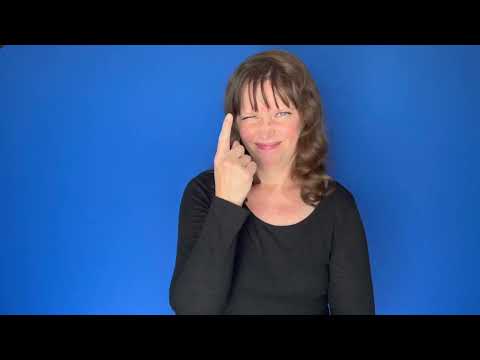
Definition: Not clearly understood or expressed
Sign for NOT UNDERSTAND in ASL
Practice Activities
Learning the sign for NOT UNDERSTAND in ASL takes more than just memorizing handshapes—it requires consistent, meaningful practice. Mirror work is one of the best ways to start. By standing in front of a mirror and signing the phrase repeatedly, learners can monitor their facial expressions, hand placement, and movement. The facial expression is essential here, as this sign often includes a puzzled or confused look to emphasize meaning.
Another effective method is recorded signing. Set up your phone or webcam and record yourself signing the phrase in different contexts. This allows you to play it back and identify any inconsistencies or errors. It’s also helpful to compare your recording to fluent Deaf signers or ASL teachers demonstrating the sign for NOT UNDERSTAND in ASL.
Contextual signing deepens understanding. Try using the sign in full sentences or during role-play conversations. For example, when someone signs a question, respond with the sign for NOT UNDERSTAND in ASL to indicate confusion or lack of comprehension. This exercise builds fluency and helps you transition from isolated signs to natural language use.
Advanced learners can incorporate drills that mix multiple signs with similar meanings. Practice switching between UNDERSTAND, DON’T UNDERSTAND, KNOW, and CONFUSED. This will sharpen your decision-making and reinforce the distinctions between these signs in real-time communication.
SEO Cultural Context
In Deaf culture, clarity and directness are highly valued. The sign for NOT UNDERSTAND in ASL is used frequently in conversations to indicate that something wasn’t clear or that clarification is needed. This sign is not just about the literal meaning—it also communicates a willingness to learn or a need for repetition, which is a respectful and necessary part of ASL discourse.
Facial expressions play a major role in this sign. A furrowed brow or slight head shake adds depth and emotion to the message. Without the correct facial expression, the sign may be misinterpreted or seem flat. This cultural emphasis on expressive communication is a key difference between ASL and spoken English.
There can be slight regional variations in how the sign for NOT UNDERSTAND in ASL is performed. In some communities, the movement from the forehead outward (similar to the sign for UNDERSTAND) is paired with a head shake and a furrowed brow. In others, the sign may be preceded by a negative marker like NOT or a simultaneous facial cue to indicate negation.
It’s important to note that using the sign for NOT UNDERSTAND in ASL is not a sign of weakness or lack of intelligence. In Deaf culture, it is perfectly acceptable—and encouraged—to ask for clarification. This shared understanding fosters better communication and mutual respect.
Extended Definition
The sign for NOT UNDERSTAND in ASL is a combination of the sign for UNDERSTAND and a negation. Typically, the sign starts with a closed hand near the temple, and the index finger flicks upward to indicate the lightbulb moment of understanding. To modify it to mean NOT UNDERSTAND, you add a head shake and a negative facial expression, or you can insert the sign for NOT before UNDERSTAND.
This sign is directional and expressive, so it’s vital to keep your movements crisp and your facial cues clear. Beginners often forget the head shake or the confused look, which can lead to misunderstanding. Another common mistake is confusing it with the sign for DON’T KNOW, which involves a different handshape and movement.
It’s also important to know that ASL uses non-manual signals (NMS), like facial expressions, head tilts, and mouth movements, to convey grammatical information. The sign for NOT UNDERSTAND in ASL relies heavily on these signals. For example, raising your eyebrows while signing UNDERSTAND turns it into a yes/no question. But when you shake your head and furrow your brow, it communicates confusion or a lack of understanding.
When using this sign in conversation, context matters. If someone is explaining something complex and you sign NOT UNDERSTAND, it tells them to slow down or rephrase. In a classroom setting, it’s a tool for active participation. In social settings, it shows engagement and the desire to connect more clearly.
Tips for Beginners
If you’re just starting to learn the sign for NOT UNDERSTAND in ASL, give yourself grace. It’s a complex sign that combines handshape, movement, and facial expression. Start by mastering the UNDERSTAND sign on its own. Make sure your index finger flicks out cleanly from the temple, and keep your hand relaxed.
Once you’re comfortable with UNDERSTAND, practice adding the negation. A simple head shake while signing UNDERSTAND often suffices. You can also practice combining the sign for NOT (a thumb brushing off the chin) with UNDERSTAND to emphasize the negative meaning. Both versions are correct, and which one you use may depend on personal preference or regional norms.
Avoid the temptation to drop the facial expression. It might feel awkward at first, but in ASL, facial grammar is just as important as hand movement. Use a mirror or video to check your expressions, and adjust as needed. Over time, it will feel more natural.
Repetition is key. Don’t just practice it once—use the sign in various scenarios. Respond to a video, sign it during mock conversations, or quiz yourself with flashcards. The more you use the sign for NOT UNDERSTAND in ASL, the more fluent you’ll become.
Connections to Other Topics
The sign for NOT UNDERSTAND in ASL connects closely with several other essential signs and concepts. One of the most obvious is the sign for UNDERSTAND. Learning both signs together helps you grasp how ASL uses negation and facial expression to flip a meaning.
Another related sign is KNOW, which involves tapping the forehead with a flat hand. While KNOW conveys certainty, NOT UNDERSTAND conveys confusion or lack of information. The contrast between these signs helps learners appreciate the nuances of meaning in ASL.
The sign for CONFUSED is also useful to learn alongside NOT UNDERSTAND. CONFUSED uses a swirling motion near the forehead and often includes a furrowed brow. While both signs express a lack of clarity, NOT UNDERSTAND is more about not grasping a specific idea, whereas CONFUSED can show general puzzlement.
Consider learning the sign for EXPLAIN as well. This is a great follow-up sign when you want to say, “I don’t understand, please explain.” It helps build conversational fluency and encourages proactive communication.
Finally, explore questions like WHAT, WHY, and HOW. These signs are often used in the same conversations where NOT UNDERSTAND appears. Mastering these question words helps you ask follow-up questions and keep the conversation flowing.
Lengthy Summary
The sign for NOT UNDERSTAND in ASL is a powerful and expressive tool that plays a vital role in clear communication. It combines the familiar UNDERSTAND sign with a head shake or the addition of NOT to transform its meaning. Mastering this sign involves more than just hand movement—it requires a deep understanding of facial expression, non-manual signals, and cultural context.
From mirror work to contextual role-play, there are many ways to practice the sign for NOT UNDERSTAND in ASL effectively. Beginners should focus on building muscle memory for the flicking motion and remembering to include facial expressions. Using tools like video recordings, flashcards, and structured drills can make your learning process more dynamic and engaging.
Culturally, this sign reflects key values in the Deaf community—honesty, clarity, and a commitment to understanding. Using the sign for NOT UNDERSTAND in ASL in conversation is a sign of active listening and respect. It shows that you’re invested in the communication process and willing to ask for clarification when something isn’t clear.
This sign connects to other key ASL concepts, including UNDERSTAND, CONFUSED, KNOW, and question words like WHAT and WHY. Learning these connections helps you build a broader vocabulary and start thinking in ASL rather than translating from English.
Whether you’re just starting out or refining your skills, keep practicing the sign for NOT UNDERSTAND in ASL in real-life scenarios. Sign with friends, take part in ASL communities, and don’t be afraid to make mistakes. Every time you sign, you build confidence and fluency.
Keep signing, stay curious, and remember: asking for clarification is not a weakness—it’s a step toward true understanding.
Synonyms: confused, unclear, puzzled, perplexed, baffled
Educational resources: Find related learning materials in our course bank!
Want more? Check out some of our popular learning activities on the homepage!
Need to look up a sign? Use our highly rated dictionary: https://aslinteractive.com/best-asl-dictionary/
Follow us on tiktok: https://www.tiktok.com/@aslinteractive. More social media links at the bottom of this page!
Long-tail Keywords: what is the sign for not understand in ASL, how do you sign not understand in ASL, ASL sign for not understand
Categories:
tags: miscommunication signs, ASL feelings and emotions, ASL negation signs, deaf culture communication, basic ASL vocabulary
Want more? Check out some of our popular learning activities!
ASL Interactive Resources
ASLInteractive YouTube Channel
Follow us on tiktok: @aslinteractive.com
Follow us on Instagram: aslinteractive
Facebook page: aslinteractive
Facebook group: aslinteractive
LInkedIn: ASL Interactive LLC
Twitter: @ASL_interactive
*Some information on this page is AI-generated. AI can make mistakes. Please check the information.


Responses